


By Diana Alzeer
In early September 2025, the US administration announced sanctions against three prominent Palestinian human rights organizations: Al-Haq, Al Mezan Center for Human Rights, and the Palestinian Centre for Human Rights (PCHR), under Executive Order 14203, which targets the International Criminal Court (ICC) and engagements with the court.
The same sanctions have been used against ICC officials, judges, and the United Nations Special Rapporteur on the Occupied Palestinian Territories, Francesca Albanese. The intention of this order is to cripple accountability efforts for Palestinian victims at the ICC and ultimately to undermine their advocacy, which amplifies the experiences of Palestinians as they endure one of the darkest chapters in history, with a raging and ongoing genocide in Gaza, alongside other crimes, including starvation, collective punishment, apartheid, forced displacement, torture, and sexual- and gender-based violence.
In the context of the three organizations, these sanctions not only try to cripple the work they do with the ICC but also disrupt all their operations, given the financial constraints stemming from such an alarming escalation against human rights advocacy for the Palestinian people. This further jeopardizes the work of the court, accountability mechanism, and the human rights movement and will have wider implications, creating a chilling effect on the global fight against impunity and the defense of human rights.
This move marks a serious escalation in efforts to shield Israel from accountability for its ongoing genocide and for other atrocities in Gaza and against the Palestinian people. These sanctions are more than political posturing; they form part of a coordinated campaign of genocide denial and an attack on the very foundations of international justice.
Actions for justice in Palestine will be smeared and even criminalized. What matters is that we, as a global movement, resist the culture of fear and stay true to our principles against all forms of oppression. Divide and rule tactics are already at play, but unity is essential to preserve our shared humanity. If we allow the powerful to isolate and break us, rebuilding could take generations. We owe it to other struggles and to future generations.
Over the past 22 months, Israel’s genocidal campaign and relentless attacks on homes, schools, hospitals, and all elements of life in Gaza have resulted in the killing of at least 65,000 Palestinians directly by shootings or Israeli bombardments, according to the Palestinian Ministry of Health. However, real estimates indicate a much higher number, with thousands of people missing or trapped under the rubble. The death toll of the Ministry of Health doesn’t account for the deaths caused by lack of humanitarian access, lack of health care, and other indirect deaths resulting from this ongoing genocide.
According to the Lancet the actual death toll is 40 percent higher than the figures reported by the Ministry of Health. Another report, authored by Professor Richard Hil and Dr. Gideon Polya, published by Middle East Monitor via Instagram, and titled “Skewering History: The Odious Politics of Counting Gaza’s Dead,” estimates that as of September 3, 2025, around 680,000 people have been killed during the genocide in Gaza, with an estimated 380,000 children among this number.
Entire neighborhoods have been destroyed, medical infrastructure is devastated, and the conditions for civilian life have been rendered impossible. Legal experts, UN officials, and prominent human rights organizations have warned that Israel’s actions amount to genocide. On September 16, 2025, the UN Independent International Commission of Inquiry on the Occupied Palestinian Territory, including East Jerusalem, concluded that Israel is committing genocide in Gaza.
Yet the response from Israel’s allies, especially the United States and some European capitals, has been not only to deny these crimes but also to actively undermine efforts to investigate and address them. Sanctioning Palestinian organizations that have presented evidence to international legal bodies is a proactive attempt to silence truth-telling and suppress the demand for justice.
“UN experts dismayed by US sanctions against Palestinian human rights organizations.”
https://www.ohchr.org/“US sanctions against Palestinian NGOs a blatant attack on human rights.”
https://www.amnesty.org/“ACIJ condemns US sanctions on Palestinian human rights organizations supporting the ICC.”
https://acij.org.au/“US uses UCC sanctions against three leading Palestinian rights groups.”
https://www.hrw.org/“US government’s sanctions against Palestinian human rights organizations are indefensible.”
https://www.accountabilitycounsel.org/“Defending justice against intimidation: The Coalition for the ICC condemns shameful sanctions against Palestinian human rights organizations.”
https://www.coalitionfortheicc.org/“Solidarity statement with Palestinian organizations in the face of Israel’s genocide.”
https://ishr.ch/latest-updates“Statement from Just Peace Advocates, ICJP Canada, Arab Canadian Lawyers Association (ACLA), and Canadian Lawyers for International Human Rights (CLAIHR).”
https://www.instagram.com/p/DOYmLgbDzam/
This is how genocide denial operates in practice. It is not only the refusal to acknowledge atrocities; it is a calculated effort to silence those who do, while continuing to shield Israeli perpetrators and providing Israel with weapons and political support. Ultimately, this makes the United States and others complicit in the genocide in Gaza and in the other international crimes committed against the Palestinian people.
Palestinian civil society has long been targeted. For decades, Israel has systematically harassed, delegitimized, arrested, and dismantled Palestinian human rights defenders. In 2021, six prominent human rights and civil society organizations were unlawfully criminalized by Israel. The United States also sanctioned Addameer Prisoner Rights and Human Rights Association earlier this year under a different executive order.
These organizations were targeted because of their essential work in documenting ongoing violations against Palestinians and sustaining communities. The very efforts that preserved the resilience of the people on the ground and sought accountability were the reason behind the designations. The organizations were labelled “terrorist organizations” based on secret and unsubstantiated evidence. These labels were widely condemned by the UN, EU states, and some US officials. Yet beyond condemnations, states applied little pressure on Israel to end this unlawful criminalization, just as they continue to do very little to stop Israel’s ongoing crimes and genocide against the Palestinian people.
By adopting Israel’s approach, the United States has taken the smearing and intimidation campaign to the global stage. The sanctions against these Palestinian groups are not only about Gaza; they are a warning that anyone who challenges Israel will be targeted, even when using lawful, internationally recognized channels for accountability and advocacy.
The danger of this approach extends beyond Palestine. Targeting civil society organizations, especially those engaged with international legal systems, sets a global precedent. If legal advocacy is recast as a threat to “national security,” accountability itself becomes a crime. This presents a dangerous precedent for human rights work and victims worldwide. It further isolates and divides the global human rights movement, as each organization anywhere will start to weigh the risks of engaging with Palestinian organizations and/or the ICC or be more reluctant to carry out advocacy that challenges violations in relation to Palestine and other contexts and situations around the world.
While states officials are doing very little for justice, people are stepping forward. Around the world, a diverse, decentralized movement for Palestinian rights continues to grow in strength and clarity. Far from being silenced, ordinary people are making their voices heard in courtrooms, classrooms, ports, streets, and online. Powerful actions are coming to the forefront, primarily from grassroots and decentralized groups and from those less dependent on foreign or US funding.
The Global Sumud Flotilla, for example, represents one of the boldest expressions of grassroots resistance to the blockade on Gaza. This civilian-led mission breaks through physical and symbolic barriers, asserting that collective punishment and enforced isolation must be confronted with collective courage. The Global Sumud Flotilla is the largest in-sea action for justice, with more than 50 vessels sailing to Gaza to break the blockade and provide humanitarian aid. Both Italy and Spain have formally announced that they are deploying naval vessels to assist and protect the flotilla and their citizens on board.
In the cultural sphere, Ms. Rachel, a children’s educator with a global following, used her platform to speak openly about the trauma experienced by Palestinian children from Gaza, breaking through the deliberate desensitization and dehumanization that often reduces Palestinian suffering to distant statistics.
Art has also become a space of power and resonance. The film Voice of Hind, which centers Palestinian voices with striking intimacy, received a record-breaking ovation at the Venice Film Festival premiere in early September 2025. More and more artists and public figures are speaking out, and their voices are loud and unapologetic, and that is what we need.
Student movements have ignited across university campuses worldwide. Their encampments have become powerful spaces of protest and education, reminding academic institutions and the wider public that neutrality in the face of injustice is complicity.
Workers and trade unions have also played an increasingly vital role this year. In Italy, dockworkers blocked arms shipments sent to Israel. In France, port workers refused to load military equipment destined for Israel. In Belgium, union coalitions pressed members not to handle weapons and demanded an embargo. In Spain, the government has now made a total arms embargo official, banning the export and purchase of weapons with Israel, and prohibiting ships and aircraft carrying arms or fuel from docking in Spanish ports or using Spanish airspace in order to pressure Israel over the genocide in Gaza. These actions were not symbolic; they materially disrupted the systems sending supplies that sustain Israel’s crimes against the Palestinian people.
Unions, historically critical in anti-colonial and anti-apartheid struggles, are once again stepping into their role as global actors for justice. They remind us that labor is not just an economic force; it is a moral one. By siding with the Palestinian people, these workers reinforce the principle that accountability begins at home, with the refusal to be complicit. The international legal system and its institutions, such as the International Criminal Court, UN human rights mechanisms, and the Geneva Conventions, were created not to serve power but to restrain it. Their purpose is to protect the vulnerable, prevent mass atrocity, and ensure redress when crimes are committed.
Yet powerful states that selectively undermine these systems by protecting allies, attacking accountability efforts, and punishing those who turn to law do more than fail in their duties. They actively erode the very structures that uphold our shared humanity.
This erosion is already visible. Legal advocates now face personal and professional risks. Funding streams for human rights groups are under threat. International courts are increasingly reluctant to act decisively. Meanwhile, perpetrators of atrocity crimes are emboldened by the knowledge that their impunity is being preserved at the highest levels.
We cannot afford to allow these systems to collapse. They may be imperfect, but they remain our best tools for addressing injustice globally. To protect them, we must protect those who use them, especially when under attack.
The consequences of this moment are not limited to Palestine. If the targeting of Al-Haq, Al Mezan, and PCHR is allowed to stand, it will reverberate in every region where people rely on international law for protection. From Sudan to Myanmar, Ukraine to Colombia, communities seeking justice for mass violence will find legal avenues increasingly closed.
This struggle cannot be seen as a “Palestinian issue” alone. It is a test of whether international law still holds power in the face of state violence. It measures whether human rights and legal systems are applied equally to all humans or only to those recognized by powerful states. For those of us working in this field, and those who still believe that these systems can offer hope, all human beings are equal and entitled to the same rights, protection, and access to justice. We are working on the principle that the universality of rights is essential for humanity as a whole. Yet we are at a crossroads, a moment for states, institutions, and citizens alike to decide which side of history they are on.
Despite the ongoing repression faced by Palestinian human rights defenders, the fight for justice continues. In our ongoing struggle against Israel’s settler-colonial apartheid, losing hope during an ongoing genocide and the erasure of Palestinians is not an option. While censorship and repression grow against movements worldwide, voices of solidarity are growing louder. People around the world are choosing to act, refusing complicity, demanding justice, and insisting that international law must apply to all.
This moment is not just about Gaza and Palestine. It is about whether the world will protect the fragile but essential architecture of justice built after the ruins of World War II. It is about whether global citizens, through unions, art, education, protest, and direct action, can hold the line when governments fail to act in accordance with their obligations.
To stand with Palestine today is not only to confront unlawful occupation, apartheid, or genocide. It is to affirm that all lives have equal worth, that law should restrain violence, and that justice, however long denied, is possible.
This is our collective responsibility.
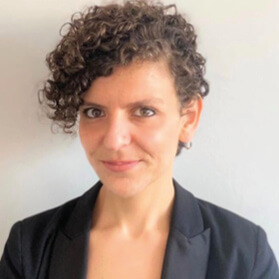
Diana Alzeer is a human rights defender and communications professional with extensive experience in Palestinian and international civil society and human rights organizations. She has worked closely with the broader human rights movement, both globally and within the Palestinian context, including leading strategic outreach and communications at Al-Haq, one of Palestine’s leading human rights organizations. Holding a BA in journalism and sociology and an MA in political science and international relations, Diana is a feminist and advocate for justice from Palestine. She is also the mother of a two-year-old, Neel, who inspires her daily and embodies her hope for a better future.
