


By Khaled Farraj
Less than a year ago, I wrote an article that was published in a special supplement entitled Walid Khalidi… A Hundred Years of Giving, published by Majallat al-Dirasat al-Filastiniyya, the Arabic counterpart of the Journal of Palestine Studies (IPS).2 It was a tribute to a polymath, historian, and co-founder of the Institute for Palestine Studies on the occasion of his centenary. Together with my colleagues on the editorial board, we kept the supplement a secret from Professor Khalidi. Had he learned about the project, he would have told us in his usual manner that it was “not a top priority.”
After the supplement was finalized and sent to print, I requested a virtual meeting with Walid before sending him the digital copy. I would have preferred to present it to him in person, but unfortunately, my circumstances – and those of the country – made this impossible.
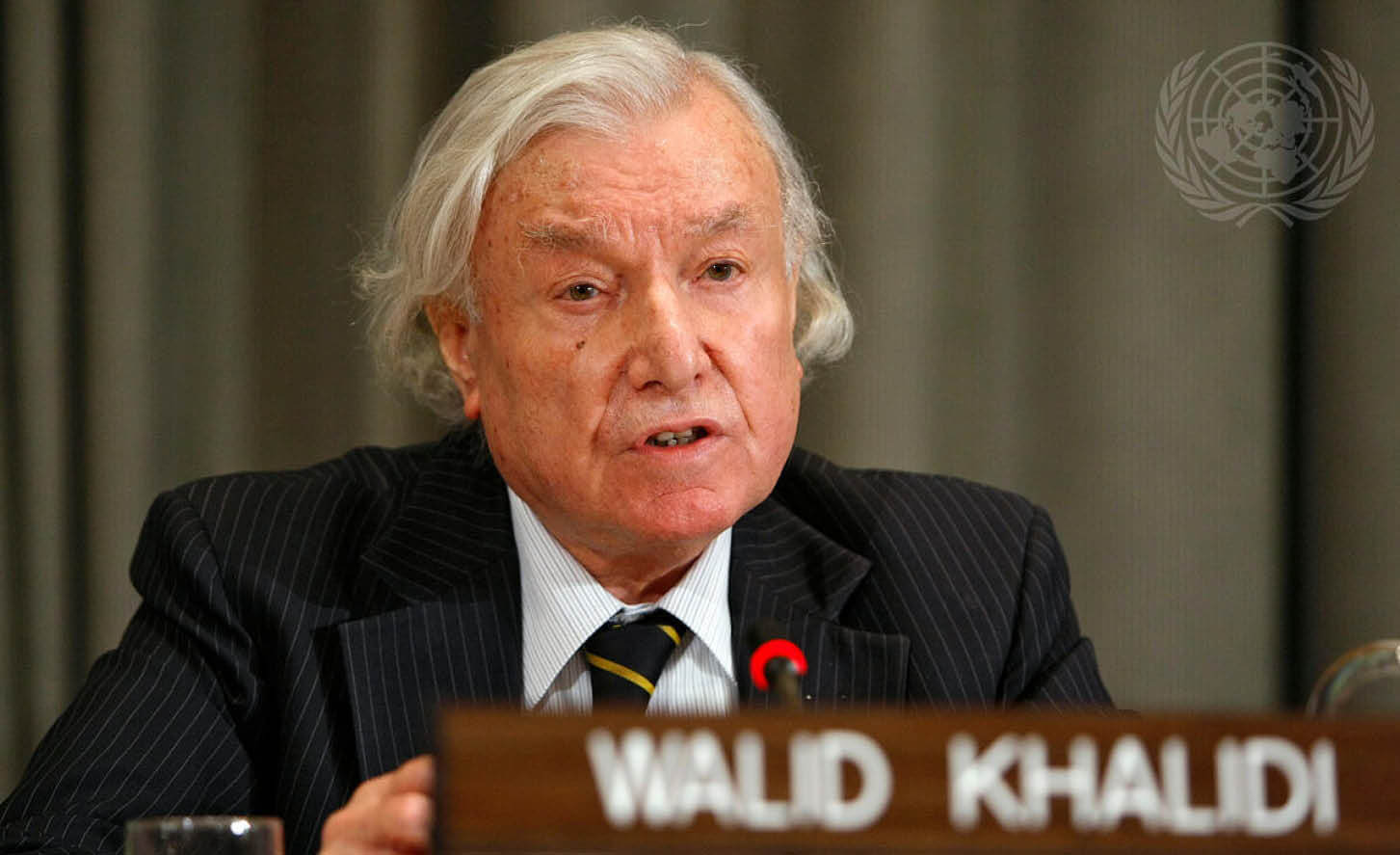
I began the meeting by asking about his health. We then spoke about the genocide in Palestine, as well as the conditions in Lebanon, which was (and still is) under a brutal Israeli assault. We also discussed IPS, its staff, and its output. Only then did I tell him that we had prepared a special supplement marking his 100th birthday. I was anxious about his reaction, given his discomfort with any form of praise. Still, I told him the names of the contributors, emphasizing that it was but a modest gesture towards someone who had given so much – and who continued to give.
Contrary to my expectations, he did not object; rather, he expressed gratitude to the editorial board and to all who had contributed. After our meeting ended, I sent the electronic version of the supplement to his assistant, who printed it and presented it to him. She later informed me that he had read it that same day and was deeply moved.
Walid Khalidi passed away on the morning of March 8, 2026, at the age of 100. Despite the realities of aging, I never heard him complain, except in his final period, when he occasionally mentioned difficulty in hearing. This led us to resort to written correspondence.
Professor Khalidi always remained engaged in his work. He concluded his memoirs only a few months before his death. And, until the end, he also oversaw the affairs and research projects of the Khalidi Library in Jerusalem, while closely following the output of IPS.
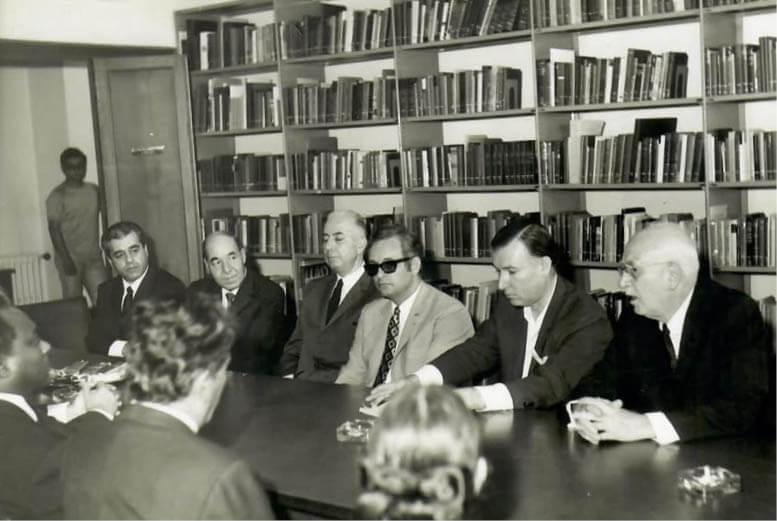
In mid-January 2026, our colleague, May Halwani, passed away. She had been Walid’s executive assistant for 40 years. He was profoundly affected by May’s passing and spoke to me at length about her devotion to IPS and to him personally. Just days after her death, he asked me to establish an award in her name, to be granted periodically to deserving devoted employees. He then asked that a second award be created in honor of our colleague Samir el-Deek, whom Professor Walid referred to as the “Sheikh of Editors.” Samir had worked alongside Khalidi since 1969, editing all his Arabic-language works as well as many leading IPS publications.
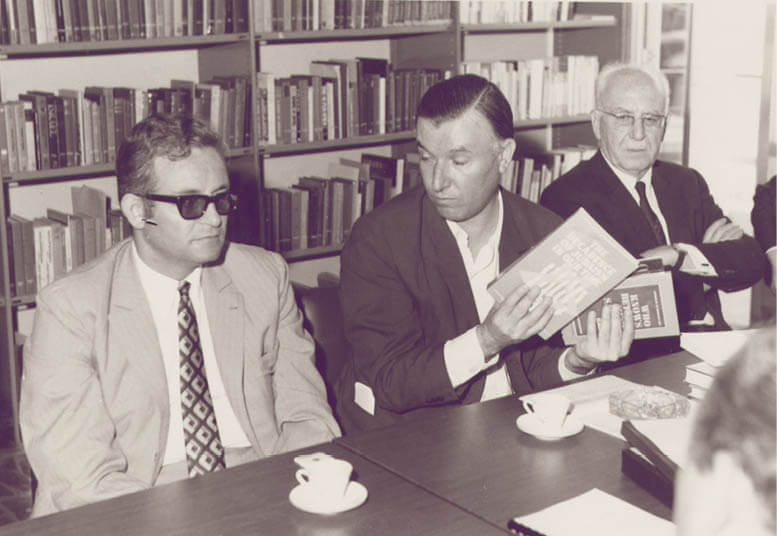
Khalidi’s concern for his colleagues, both living and deceased, revealed much about his character.
Professor Khalidi always asked after colleagues and their personal circumstances. In his last days, however, life did not allow him the opportunity to ask about the conditions of our employees in Beirut, amid the devastating war being waged by the Israeli regime.
Professor Khalidi passed away before he could ask me about the conditions in Palestine, particularly in his beloved city of Jerusalem. Just months earlier, we had agreed that the Arabic journal would publish a special supplement about the conditions imposed on the Holy City, including Israeli measures of conquest and displacement, the emptying of the city of its Palestinian residents, and settler rampages in the courtyards of Al-Aqsa Mosque. We also agreed that the Institute and the Khalidi Library would jointly publish a volume on the Church of the Holy Sepulchre.
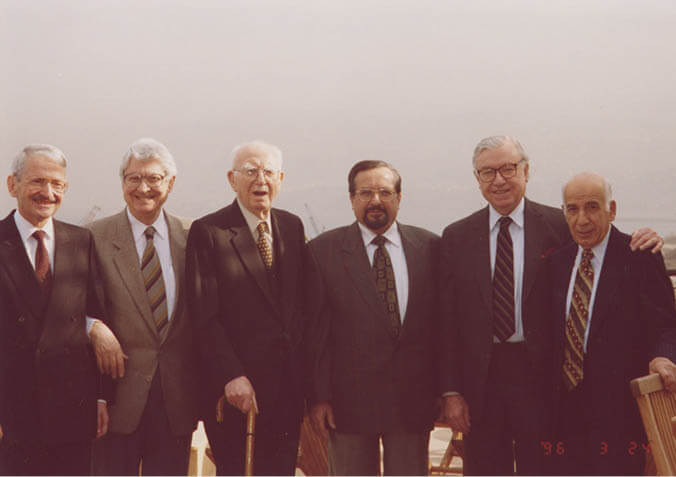
Today, I write about my teacher, someone from whom I learned so much, even before I knew him personally. I worked with him for 20 years, without ever losing contact. Walid, a sincere Arab nationalist, upheld the principle that Palestine is an Arab cause. He embodied this through the Institute for Palestine Studies, an institution supervised by a board of trustees that is composed of distinguished figures from across the Arab world and staffed by individuals of diverse nationalities
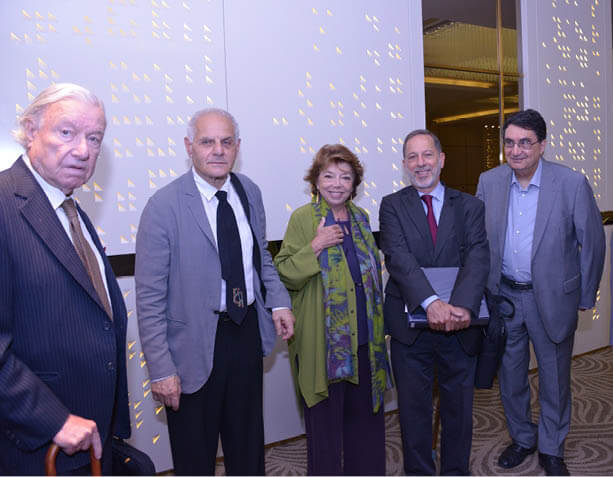
I have read all of his books, including All That Remains,3 Before the Diaspora,4 and Deir Yassin.5 I have learned from the dozens of articles and introductions he wrote, as well as from countless conversations and debates we shared about the institute, politics, and life itself. There is no question in my mind that his intellectual output will be a beacon for future generations examining the heritage of Palestine and its history.
1 This article will be published in Arabic in the upcoming issue no. 147, Summer 2026, of Majallat al-Dirasat al-Filastiniyya.
2 Majallat al-Dirasat al-Filastiniyya, Issue 143 (ملحق), Special Issue: Salute to Walid Khalidi, Summer 2025.
3 Walid Khalidi,All That Remains: The Palestinian Villages Occupied and Depopulated by Israel in 1948, Institute for Palestine Studies, 1992.
4 Walid Khalidi, Before Their Diaspora: A Photographic History of the Palestinians 1876–1948, Institute for Palestine Studies, 1984.
5 Walid Khalidi,Dayr Yassin: 9 April 1948, Institute for Palestine Studies, 2003.
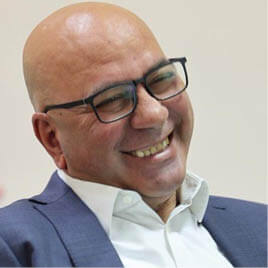
Khaled Farraj is a researcher and the director general of the Institute for Palestine Studies.
