


By Rania Hammad
The Palestinian people constitute a single nation that is rooted in the land of Palestine yet forcibly separated, amputated from one another and from their geography, and dispersed across political, legal, and physical boundaries. This is not fragmentation as an outcome of history; rather, it was designed as a method and strategy to implement the Zionist project that has led to colonization, occupation, ethnic cleansing, apartheid, and now, increasingly, genocide. Palestinians have been geographically severed into distinct and controlled spaces, i.e., the West Bank, Gaza, the territories occupied in 1948, and a vast global diaspora that spans more than fifty countries across five continents where they are even speaking different languages. However, while their realities differ in their immediate conditions, they have never constituted separate identities. Quite the opposite: Palestinian national aspirations have only strengthened, and Palestinians both inside and outside of Palestine continue to demand their rights. National consciousness has neither dissolved nor diminished; it persists with a clarity that defies the very structures that were designed to erase it.
This persistence, anchored in a shared historical experience of dispossession and in a collective awareness of injustice, transcends geography. The violence that continues to be inflicted upon Palestinians has not produced fragmentation in the sense of national disintegration but has created a dispersed unity, one that exists despite, and in many ways because of, the attempt to destroy it.

The trauma of dispossession has been internalized across generations. It is not confined to those who experienced the events of 1948, but has been transmitted across time and space, shaping the consciousness of Palestinians everywhere. This trauma of continued violence accumulates, intensifies, and binds them together.
Yet unity cannot be sustained on memory and trauma alone. Political unity, the capacity to act collectively and to shape a coherent national project, has been systematically obstructed. This obstruction has been structural, deliberate, and sustained by Israel, its allies, and the international system. Fragmentation of the Palestinian people has long been instrumental to the broader project of domination. It has been produced through force, institutionalized through legal and administrative systems, and maintained through a network of external actors whose interests have aligned in preventing the emergence of a unified Palestinian political will.
The destruction of Palestine in 1948 did not merely displace a population; it dismantled the continuity of a society. A cohesive national body was broken apart and redistributed into fundamentally different political environments: refugee camps governed by exclusion, with host states imposing varying degrees of constraint, and territories subjected to direct military control. Palestinians were not only separated by borders; they were inserted into systems that are designed to manage, contain, or neutralize them. From the outset, fragmentation was not a by-product of conflict; it was a condition imposed upon Palestinian existence.
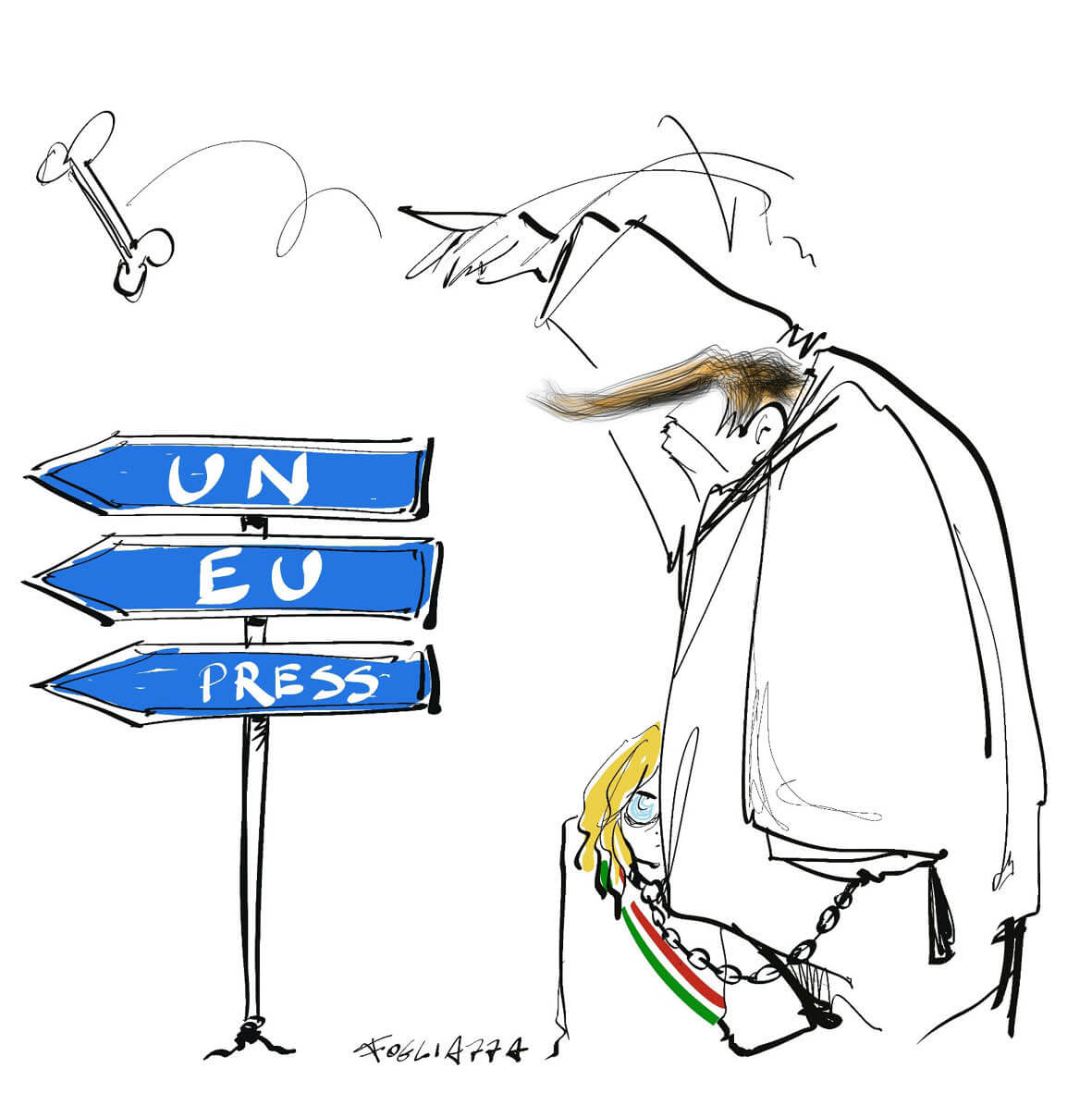
The role of external actors has been central to sustaining this condition of fragmentation. Political, military, and financial support were never neutral, but consistently reinforced structures that rendered Palestinian unity difficult and hard to achieve.
The effort to reconstruct unity through the Palestine Liberation Organization represented a direct challenge to this condition. The PLO did not emerge organically within stable territorial boundaries but in exile, as an attempt to reassemble a nation politically when it could not exist geographically. For a time, it succeeded in articulating a collective project that transcended dispersion. Yet even this form of unity was persistently constrained, displaced, and reshaped under external pressure. Its movements across Jordan, Lebanon, and Tunisia reflected the challenges that Palestinians faced over the decades in many countries, imposed by many forces that were working against their very existence.
Thus, they were forced into the Oslo Accords for lack of alternative solutions and for fear of disappearance. Yet the peace process proved to have been devised as a means to corner Palestinians into accepting what they wouldn’t have otherwise. The Oslo period marked a decisive transformation. Rather than resolving fragmentation, its framework institutionalized it. The division of the West Bank into areas A, B, and C did not function as a transitional arrangement, but became the architecture of permanent disunity, further colonization, and destruction. Palestinian governance was reduced to the administration of disconnected enclaves, while control over land, borders, and movement remained in the hands of the occupying forces. What emerged was nothing resembling sovereignty, but a system of delegated authority operating within the limits imposed by occupation.
The political fracture between Fatah and Hamas must be situated within this broader structure. It cannot be understood as a self-contained failure of leadership. Hamas’s rise in prominence came as a result of widespread Palestinian disillusionment with Fatah for its failure to deliver the peace, freedom, or security promised by the Oslo Accords; however, that failure was directly caused by Israel’s intentional intransigence and unwillingness to compromise with the Palestinians. Critics referred to this as a “trust deficit” problem, where – paradoxically – settlement expansion accelerated while negotiations were taking place. That was a strategic way for Israel to delegitimize Fatah and fuel resentment, opposition, and internal divisions with the overall goal of preventing Palestinian statehood. The 2006 elections, widely recognized as free and fair, produced an outcome that was rejected not because of procedural flaws but because of its political implications. The subsequent isolation, sanctions, and violence only deepened and entrenched divisions and disunity – a desired outcome, facilitated by occupation forces and Israeli governments. Geographic and political separation between Gaza and the West Bank became materially enforced through blockade, siege, and administrative division, and this created the basis for the current dangerous and destructive state.

At the same time, fragmentation has acquired a profound psychological dimension, particularly within the diaspora. Distance did not provide separation from events, and the destruction of Gaza, transmitted in real time, collapsed the boundary between observer and victim. Palestinians in exile experienced continuous exposure to violence against their own people, which has produced trauma that is indirect yet deeply internalized as vicarious trauma, moral injury, and the reactivation of intergenerational memory.
And yet, within this condition, a different form of unity persists. Palestinians identify not only with the states in which they reside but also with the places, villages, towns, and landscapes of their origin, many of which no longer exist yet remain central and important. This continuity of belonging, carried across generations and geographies, reflects a national identity that fragmentation has not succeeded in dissolving – and never will.
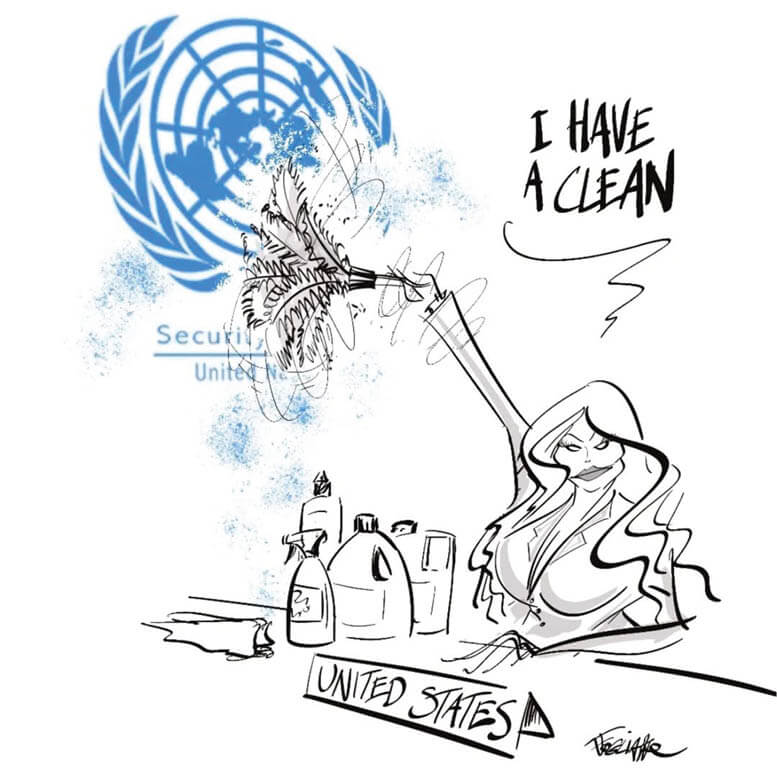
A people that is structurally divided continues to experience itself as a single body that is searching for home. A nation prevented from existing as a continuous territorial entity continues to exist as a coherent political and historical reality with aspirations of statehood, freedom, and return. And it is precisely because fragmentation has been so deeply embedded that unity has become not only a political objective, but a historical necessity.
Drawings by Gianluca Foglia Fogliazza.

Rania Hammad is a writer and activist based in Italy. Rania is a member of the Global Network on the Question of Palestine and national coordinator for Italy of the Palestine International Friends Alliance. She is a contributing writer for several media outlets specializing in Middle East politics, Palestine and international relations. She is the author of Palestina nel cuore (1999 and 2002), Vita tua Vita mea (2004), Ritorno a Gaza (2025), Gaza muore mentre il mondo tace (2026).
