


By Khaled A. Khatib
Kaph Books/Sharjah Art Foundation, 2023/2024, high-quality hardcover
Available via Sharjah Art Foundation at shop.sharjahart.org.
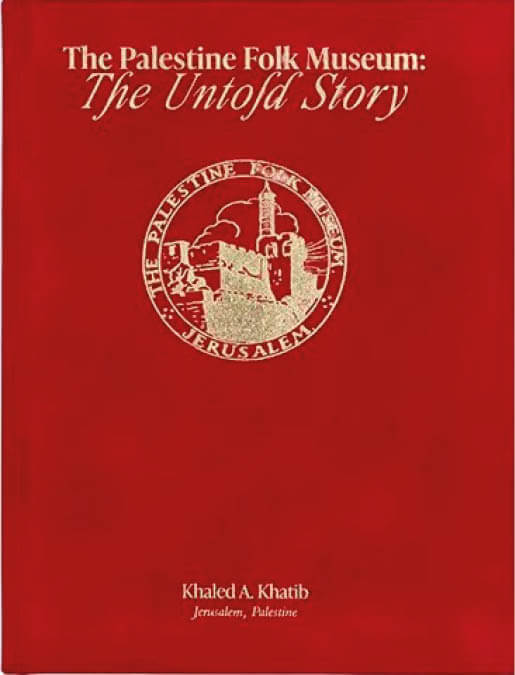
The book is a fascinating deep dive into a “lost” piece of Palestinian cultural history. It explores the history of a collection of costumes, jewelry, and everyday objects that was first assembled during the British Mandate era. It traces a turbulent path, with chapters titled Colonial Origins, Survival and Revival, and Perspective.
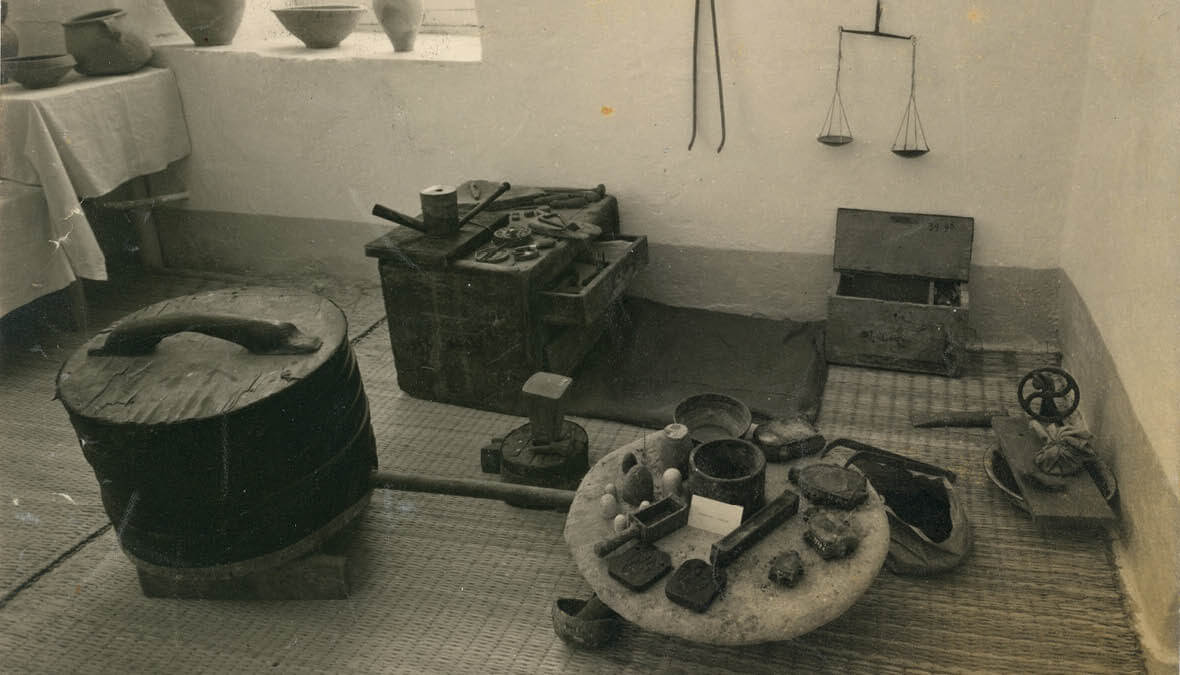
The Palestine Folk Museum was originally established in the 1930s by a group of mostly British citizens living in Palestine. The first meeting of the executive committee was held in 1935, following up on an idea that had floated around since 1926, when a number of individuals expressed a keen interest in Palestinian traditional life and heritage. An extremely modest, two-room exhibition was put together inside the centuries-old Muristan building inside Jerusalem’s Old City.
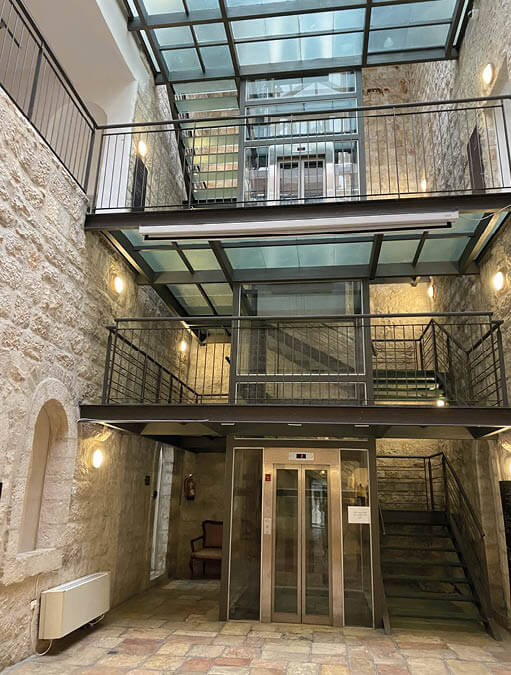
The book follows the museum collection through periods of near-destruction and long dormancy, and concludes with the collection’s eventual “repatriation” to its current home at the Palestinian Heritage Museum (PHM) that is part of the Dar al-Tifl al-Arabi Association in Jerusalem. PHM was officially reopened in 2012 in a magnificent nineteenth-century building inside the compound of Dar al-Tifl in East Jerusalem. In addition, the book draws parallels between the museum’s colonial beginnings and the broader relationship between Palestinians, the British, and early waves of (Jewish) immigration.
The book’s researched material is based mostly on retrieved old documents, log books, newspaper articles, and personal correspondence that was obtained from various sources and matched with available scripts and records in the PHM archives. As it turned out, a number of influential people were directly involved in shaping the Folk Museum during the ten or so years of its operation during the Mandate era, and up to its termination in 1948. British politicians, archaeologists, artists, scholars, consuls, and others worked together for that purpose over many years of political turmoil and instability. Local Palestinian Arab and Jewish notables and academics were also part of the team, each contributing in their own field of ethnographic specialty.
The book focuses on the years between 1917 and 1948, when Palestine was entirely under British Mandate rule. Through the Folk Museum story, the fragile local political climate at the time is touched upon, with special emphasis on the nonmilitary working relations between the British colonialists, the Indigenous Palestinian population, and the new Jewish immigrants.
The museum’s story furthermore takes the reader through the twenty or so years of Jordanian rule, between 1948 and 1967, and the subsequent miraculous safeguarding and preservation of the original Folk Museum collection of close to 2,000 items throughout the critical years of the Israeli occupation.
The book also makes reference to Hind Husseini and the Deir Yassin massacre that led to the establishment of Dar al-Tifl orphanage and, at a later stage, the multi-sectoral landmark institution it is today in Jerusalem. The history and operation of the present-day Palestinian Heritage Museum is told within the context of the changing social climate in Palestine in the later years of the nineteenth and early twentieth centuries.
In short, the book is more than just a museum catalogue; it is a study of cultural preservation under occupation. It highlights how objects that had been gathered a century ago by colonialists have been reclaimed as vital symbols of Palestinian national identity and proof of deep roots in the land.
