


By Dimitri Diliani
I write during a season when the world speaks of peace, yet our lives remain burdened by daily hardships imposed upon us as Palestinians by the genocidal state of Israel. I carry with me the memory of our ancestors, whose presence as Christians in this land shaped the faith that we continue to live today. Their footsteps, from Jerusalem to Bethlehem to Nazareth, remind us that faith is inseparable from the soil of our homeland, Palestine. When I speak of Palestinian Christians, I speak of an Indigenous people who have been here since the time of Christ, and our faith is embedded in the land itself. We did not arrive with the Zionist project; we are the descendants of its original inhabitants, and our presence in this land is ancient and unbroken.
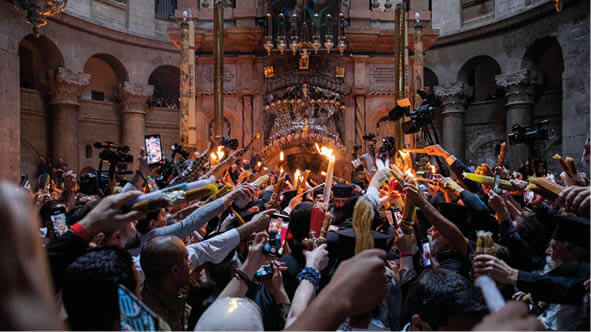
Today, the numbers of Palestinian Christians reflect the toll of living under an Israeli military occupation regime that systematically strips us of our rights. By the end of 2024, Christians in the internationally recognized borders of Israel represented about 1.8 percent of the population, with a further decline in Jerusalem and the rest of the West Bank, where Christian communities now make up approximately 1.5 percent living under Israeli military rule. In Gaza, a once-thriving Christian community had been reduced to fewer than 1,000 members, even before Israel’s ongoing, devastating genocide that has destroyed homes, churches, and entire families. These figures reflect the deepening pressures of a Western-backed genocidal colonial project. The Nakba of 1948 expelled Christian families alongside their Muslim brothers and sisters through massacres, forced displacement, and dispossession. This ongoing tragedy is perpetuated by Zionist militias, which became the core of the Israeli genocidal army, carrying out the same objectives through genocide, apartheid, land seizures, and colonial-settler expansion.
We remain because our Palestinian identity does not yield to force.
We remain because our Christian history began here.
We remain because our faith in humanity calls us to perseverance.
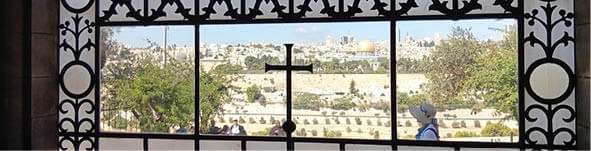
I have witnessed the continuous erosion of our rights and land through bigoted laws, written to privilege the occupier, and the illegal colonial settlements built on our stolen land. The apartheid wall divides the orchards of our ancestors, and military infrastructure surrounds our homes with a suffocating grip. Even the tourism that once anchored our communities in Jerusalem, Bethlehem, and surrounding towns has been strangled by Israeli policies that restrict movement and economic opportunity. Every aspect of our lives, from marriage to education, from the ability to stay in our homes to the future of our children, is governed by Israeli colonial military control.
This is the deliberate implementation of the Zionist ideology that elevates Jewish religious identity above all others, embedding supremacy into both law and policy. The Israeli Nation-State Law of 2018 enshrined this view into law, clearly defining the state as a bastion of Jewish supremacy. This has created an environment where Palestinian Christians are treated as unwelcome, with extreme ideologically driven Zionist terror that is justified as part of a “cultural” or “religious” tradition. In Jerusalem, Christian clergy are spat upon, and the desecration of churches is openly defended by Israeli officials. Settler militias, supported by the Israeli genocidal army, target Christian villages such as Al-Taybeh, where homes, churches, and farmlands are destroyed. Israeli terrorist groups, such as Hilltop Youth and Lehava, operate without consequences, emboldened by the state support, while the terror they perpetuate goes unchecked by Israeli authorities.
The genocide in Gaza has laid bare the logic of this system. Palestinian Christian institutions were bombed in the same manner as civilian homes. The Orthodox compound and the Holy Family Catholic Church were struck, while the Al-Ahli Hospital, a Christian-run institution, was destroyed, killing patients and staff. These Israeli genocidal war crimes demonstrate that no sacred space is safe, and that the Palestinian presence itself is the target.
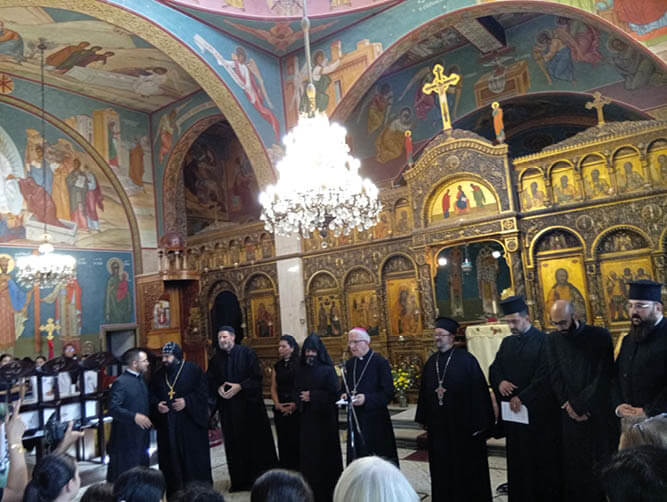
In the West Bank, the situation for Palestinian Christians is similarly grim. Christian cities, including Bethlehem, Beit Jala, and Beit Sahour, are hemmed in by expanding illegal colonial settlements and military checkpoints. Access to the Holy Sepulcher in occupied Jerusalem requires permission from the Israeli forces that view our very presence as an inconvenience.
Our land is the foundation of our identity and history. Yet, despite all this, we remain. Our churches continue to resist, defending properties that have been Christian for centuries. Our schools and hospitals persist under pressure, providing essential services to all Palestinians. These are acts of defiance and national responsibility.
The Palestinian Christian diaspora, particularly in Latin America, carries the legacy of this struggle. Their success reflects resilience, but their distance is a reminder of the displacement and pain that forced them to leave. Many families continue to consider departure because they fear for their safety and the future of their children under an ever-tightening occupation that is supported by the so-called “Christian West.”
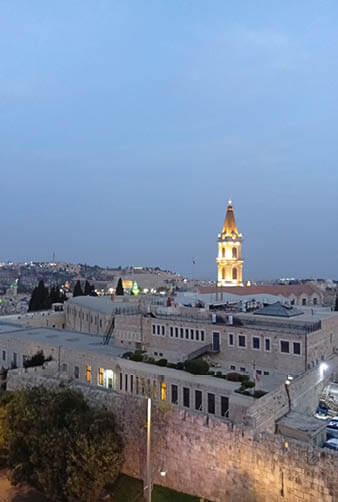
We remain because we are bound to this land by faith, history, and identity. We share our fate with our Muslim brothers and sisters, united by the suffering we endure and the hope that sustains us. This Christmas, I call upon the global Church to take action. The genocide in Gaza, the apartheid in the West Bank, and the Zionist ideology of supremacist terrorism that fuels the Israeli oppression of our people must be confronted. We call for moral action that will protect our land, our churches, and our future.
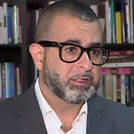 Dimitri Diliani currently serves as chairman of the board of directors at Anastasia Software Development Co. He has served on boards across industries such as ICT, finance, and security solutions and held key positions that include CEO of Wassel Group and United Consultants Media and Business Services. In 2009, Diliani became the youngest member of Fatah’s Revolutionary Council, chairing the social development committee. Currently, he serves as the spokesperson for Fatah’s Reformist Democratic Faction and is president of the National Christian Coalition in the Holy Land. He holds a BSc in biochemistry, an MA in industrial psychology from Upsala College, and an MBA in finance from Fairleigh Dickinson University in New Jersey, USA.
