


By Omar Da’na
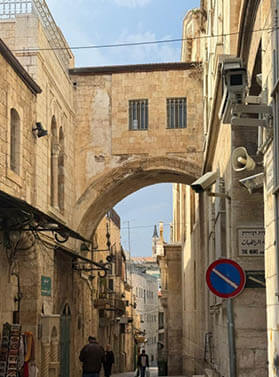
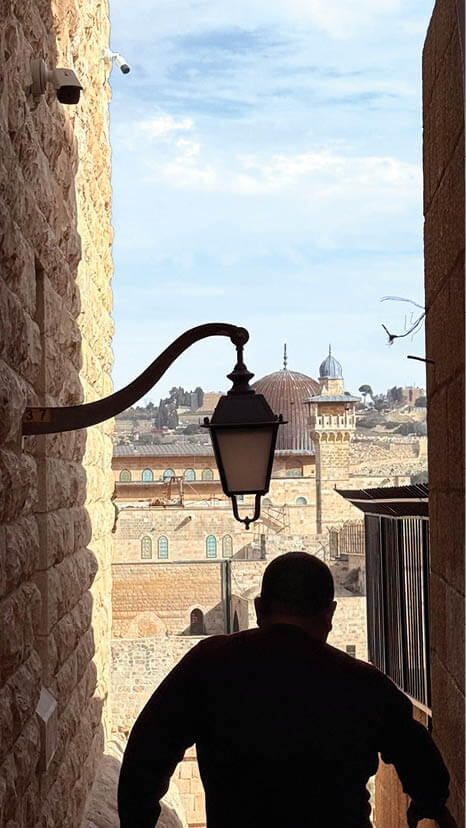
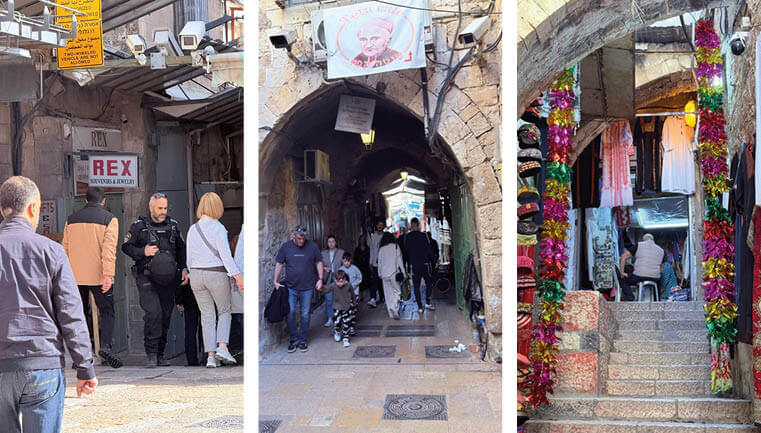
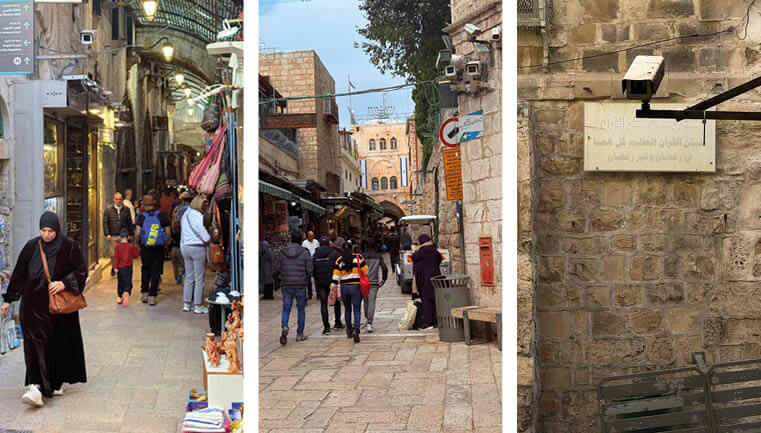
In the Old City’s narrow streets, the cameras are as constant as the ancient stones. A glint of glass atop a lamppost; a dark orb tucked under an arch – each an unblinking eye watching every move. Under this gaze, a Palestinian on the way to dawn prayers at Al-Aqsa knows he is never alone. The Israeli police’s surveillance system – Mabat 2000 – blankets the Old City with thousands of CCTV cameras, covering virtually every corner of its winding alleys. Since 2017, authorities have aggressively upgraded these networks with artificial intelligence, enhancing facial recognition capabilities to give themselves unprecedented powers of monitoring and control. Where once soldiers stood on ramparts, now algorithms and operators in distant rooms track the movement of residents and worshippers in real time. In effect, a “smart” occupation has emerged: high-tech, all-seeing, and deeply intrusive. Palestinians in Jerusalem often say that “Big Brother” is always watching – whether at the Damascus Gate plaza, in Silwan’s hillside streets, or around the sacred precincts of the Haram al-Sharif. And they are not wrong: a recent mapping found an average of one to two cameras every five meters in parts of the city. This is Jerusalem under digital siege, its people living under a perpetual lens.1
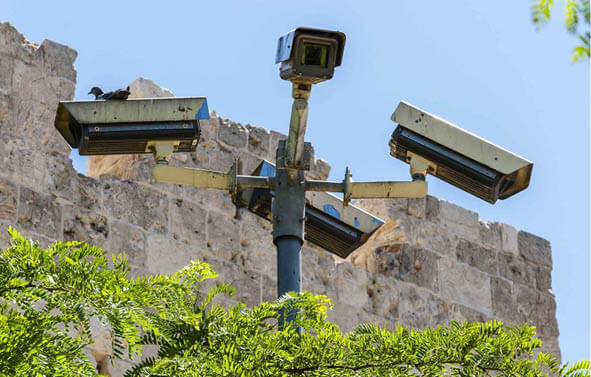
Israeli officials claim that this vast surveillance apparatus is about “security” and preventing violence. But for Palestinian Jerusalemites, the lived reality is one of omnipresent intimidation and control. The constant watch is a daily message that every gathering, every protest, even every prayer could be under scrutiny – and that any form of dissent will be caught on camera. Facial recognition checkpoints now augment the physical walls and barricades: Amnesty International’s 2023 Automated Apartheid report revealed how an experimental system known as “Red Wolf” was deployed to scan Palestinians’ faces and feed a massive database, automating decisions on who can pass through checkpoints.2
In Hebron, this technology literally dictates movement; and in East Jerusalem, too, its reach is expanding. Amnesty found that after protests – like those against evictions in Sheikh Jarrah – Israeli authorities flooded Palestinian neighborhoods with yet more cameras and AI tools, aiming to keep Palestinians under near-constant observation. Under this regime, even the simple act of walking to one’s home can become a high-tech identification checkpoint. As Amnesty’s Secretary-General Agnès Callamard put it, Israel is using sophisticated surveillance to “supercharge segregation and automate apartheid.”3 Now a Palestinian may be barred from entering her own neighborhood by an algorithm’s decree – her biometric profile flagging her as unwelcome on land her family has inhabited for generations.
Israel’s high-tech surveillance web in East Jerusalem enforces an “automated apartheid” – and Palestinians are fighting back with resilience and hope.
The surveillance extends into the digital sphere as well, turning social media into a minefield for Palestinians. Israeli intelligence agencies monitor Facebook, WhatsApp, and other platforms tirelessly. Dozens of East Jerusalem residents in recent years have been arrested for nothing more than posts on social media – often on nebulous charges of “incitement” that hinge on a word of protest or a poem of grief. In one especially chilling case, a 16-year-old girl was arrested after she posted “Forgive me, mother” on Facebook – a phrase Israeli police bizarrely interpreted as intent to commit an attack (it was in fact a song lyric). This is predictive policing turned dystopian: Advanced algorithms and special police units trawl through online expressions of Palestinian identity, looking to pre-empt any hint of resistance.
In the tense days following October 7, 2023, this digital dragnet went into overdrive – scores of Palestinians were detained or interrogated simply for posts or private messages deemed sympathetic to Gaza, under a draconian “zero tolerance” crackdown. The result is a pervasive chilling effect: People self-censor heavily online, knowing that a lament for a slain relative or a patriotic song could land them in a cell. Freedom of expression – a basic civil liberty – has been gutted in the digital realm of Jerusalem, as every word is subject to surveillance and misinterpretation.4
Nor does Israel’s technological dominance stop at passive surveillance. Increasingly, it has weaponized spyware and cyber tools to infiltrate Palestinian life. The notorious NSO Group’s Pegasus spyware – a tool that can turn a smartphone into a pocket spy – has been deployed against Palestinian activists and civil society leaders. In 2021, the phones of several Palestinian civic figures, including some in Jerusalem, were found to be infected with Pegasus, essentially bugging their most private communications.5 Such digital intrusions blur any line between security and political repression: What justification can there be for secretly listening in on human rights defenders if not to undercut their advocacy? For Palestinians, it often feels that every device is potentially compromised, every email or call observed. In East Jerusalem, community organizers now assume their phones are tapped and their chats surveilled – a reasonable suspicion when an occupying power openly uses cyber warfare techniques against a subject population.
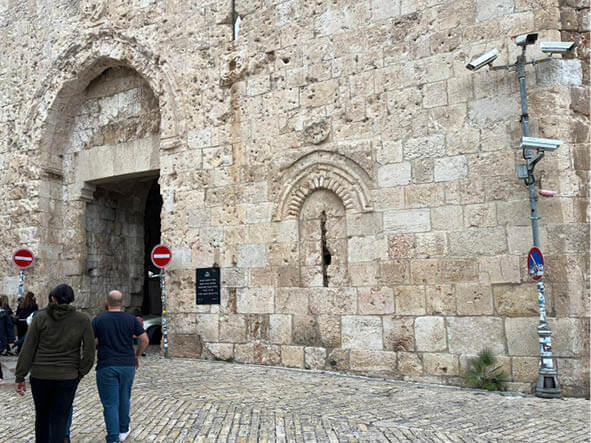
On the streets, Israel’s high-tech grip manifests in more visceral ways. Surveillance towers and cameras are often flanked by militarized police units equipped with cutting-edge crowd-control gear. When Palestinian youth gather at Damascus Gate or Issawiya to protest, they are met with tools straight out of a science fiction nightmare. One such weapon is “skunk water” – a noxious chemical liquid fired from water cannons that leaves its targets drenched in a putrid stench that can linger for days. Skunk water has been sprayed liberally in Palestinian neighborhoods since the mid-2010s, effectively punishing entire communities with a smell so foul it makes areas temporarily uninhabitable. Israeli forces also deploy mobile IMSI catchers – fake cell towers that can intercept phone communications or send mass texts warning residents not to “disturb order.” Over the Old City, drones buzz in the sky during times of tension, providing live video feeds to command centers; at times these drones even drop tear gas from above, blanketing historic plazas in chemical haze. It is a twenty-first-century police state in action: Mass surveillance combines with automated force, enclosing Palestinian Jerusalemites in an environment where every movement is monitored and can be met with immediate, high-tech retribution. As one Palestinian journalist observed, even if protesters aren’t arrested on the spot, their faces will be captured and they “can be arrested later.” The message is clear – “we are watching, and we will get you eventually.”
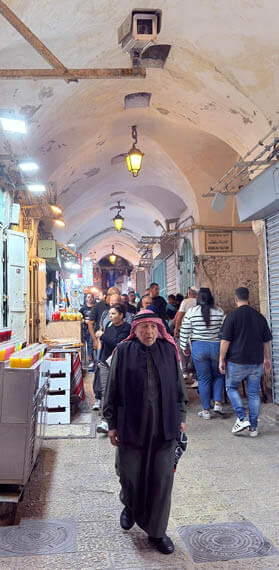
The human impact of this digital domination is profound and multi-layered. Psychologically, it has woven a climate of constant fear and uncertainty into daily life. “I’m being watched the whole time … every time I see a camera, I feel anxious, like you are always being treated as if you are a target,” admits Neda, a resident of the Old City. Palestinians describe how the omnipresence of surveillance invades their privacy, represses activism, and erodes social life, leaving them feeling constantly exposed.6 The simplest interactions – chatting in a café, attending a community event – are shadowed by the awareness that the state’s digital eyes and ears are always listening. Many have retreated from public squares and limited their social media presence, weary of the risk that an algorithm will mislabel them a “threat.” This mass surveillance is not just an academic concern about privacy – it is trampling fundamental rights and freedoms.
Amnesty International has warned that Israel’s AI-powered surveillance in Jerusalem blatantly violates the right to privacy and exacerbates a climate of repression, deterring people from exercising their freedoms of expression and assembly. Indeed, knowing that one’s face is catalogued in some secret database or that one’s neighborhood is blanketed in cameras inevitably deters open protest. Community gatherings that once thrived in Jerusalem’s plazas now often feel like scenes in a panopticon – watched by police, recorded by machine, and liable to be broken up at will. In addition to the threat of physical force, Palestinians now must contend with the risk of being tracked by an algorithm or barred from their own streets by a digital profile, an intolerable new layer of control. As one East Jerusalem activist put it, “It’s like our entire existence is tagged and under surveillance – they want to make us afraid to even leave our homes.” The sum effect is a systematic throttling of Palestinian life: a high-tech chokehold on an indigenous community’s ability to communicate, congregate, and even move freely in their city.
This extreme technological control is not an isolated policy – it is the digital extension of a broader system of domination that Palestinian and international human rights groups increasingly recognize as apartheid. Israel’s rule over East Jerusalem is characterized not only by ubiquitous surveillance, but by a web of discriminatory laws and practices that have one overarching goal: to entrench Jewish-Israeli supremacy and demographically engineer a city without a Palestinian majority. In the legal analysis of my recent study, Jerusalem Under Apartheid,7 I concluded that Israel’s policies meet all the criteria of apartheid under international law. The crime of apartheid is defined as an institutionalized regime of systematic oppression and domination by one racial group over another, with intent to maintain that regime. In Jerusalem, the intent is explicit and openly declared – Israeli officials have long pursued a “Jewish majority” in the city at the expense of the native Palestinian population. The oppression is systematic – two separate tiers of rights and privileges exist, with Jewish settlers granted citizenship, housing, and services while Palestinian natives are denied political representation, face revocable “permanent residency” status, and endure chronic discrimination in every aspect of life.
The inhumane acts to enforce this regime are plentiful and well-documented: forced evictions of families in Sheikh Jarrah and Silwan; home demolitions and residency revocations that amount to quiet deportation; police brutality and extrajudicial killings under loose “rules of engagement”;8 mass imprisonment and detention without trial; and the persecution of those who dare to oppose the system – whether they be human rights organizations shut down or youth arrested for their posts on Facebook. The technological surveillance we see in Jerusalem today is another such “inhumane act” of systematic oppression. By design, this surveillance regime serves to maintain the apartheid system: it suppresses protest against unjust policies, it deters Palestinians from claiming their rights to the city, and it helps enforce segregated spaces (for instance, monitoring and restricting Palestinian movement near settlements). In the words of Amnesty International, the expanding digital surveillance “cements Israel’s domain of control”9 over East Jerusalem and helps advance the unlawful objectives of the settlers’ enterprise. In short, every CCTV camera, every facial scan, every tapped phone line is a tool to preserve a regime of inequality.
The international community is starting, belatedly, to call this reality by its name. In July 2024, the International Court of Justice (ICJ) delivered a historic advisory opinion affirming that Israel’s policies in the Occupied Palestinian Territory – including East Jerusalem – violate international law and breach the prohibition on racial segregation and apartheid.10 It marked the first time the World Court explicitly recognized that Israel’s systematic discrimination may amount to apartheid, placing the onus on all states to work to end this unlawful situation. Likewise, the International Criminal Court (ICC) has an ongoing investigation into the situation in Palestine, which pointedly includes crimes committed in Jerusalem – from the transfer of Israeli settlers into occupied East Jerusalem (a war crime under the Rome Statute) to widespread persecution and oppression of Palestinians that could constitute crimes against humanity.11
Apartheid is defined as a crime against humanity in the ICC’s Rome Statute, and Palestinian civil society has been urging the ICC Prosecutor to add formal apartheid charges to the docket. The legal framing of Israel’s rule as apartheid is not mere rhetoric; it is a powerful classification that carries weight and urgency. It says that what is happening in Jerusalem is not just a series of isolated abuses or “security measures,” but rather part of an intentional, systematic regime of racial domination. This framing cracks through the fog of contested narratives with clarity: Annexing occupied land, embedding two tiers of law, and deploying advanced AI surveillance to subjugate an entire population are not just policies, but elements of an international crime. And with this recognition comes the demand for accountability – a demand now echoing from the halls of The Hague to the grassroots protests in Palestine.
Yet, even as Israel marshals twenty-first-century technology to tighten its grip on Jerusalem, the city’s Palestinian residents continue to demonstrate an unyielding will to live free. In many ways, the surveillance regime has unintentionally fostered a new tech-savvy generation of resisters. The very tools of digital control are being met with digital-age defiance. Across East Jerusalem, youth activists attend digital security workshops to learn how to encrypt their communications and evade spyware. Encrypted messaging apps and VPN networks are being used to create community alert systems that warn of impending arrests or raids, turning the occupying power’s reliance on data against it. Local groups share tips on covering or obscuring faces to frustrate facial recognition cameras at protests. Others have taken to citizen counter-surveillance – filming and documenting the actions of Israeli police and soldiers on their own phones to hold them accountable, even if it means risking those phones being confiscated or monitored. Palestinian journalists and volunteers work quietly to map the surveillance cameras in their neighborhoods, raising awareness about blind spots and the heaviest watched zones, effectively learning the contours of the digital prison in order to navigate within it.
And crucially, social media – despite the risks – remains a battleground of narrative: Activists use online platforms to make their voices heard beyond the checkpoints and walls, ensuring that images of evictions in Silwan or police violence at Al-Aqsa reach the world in real time. Each post carries a degree of personal risk, but also the potential to galvanize global solidarity. In this way, Palestinians are reclaiming technology as a means of resistance, not just repression.
On the cultural front, Jerusalemites are refusing to let the surveillance state rob them of their community life and identity. When Israeli authorities shutter a Palestinian cultural center or ban a public gathering citing “security,” Palestinians find a way to respond. Artists hold pop-up exhibits in private homes, away from the soldiers’ cameras, displaying paintings that depict the life and history of Jerusalem’s people. Heritage tour guides organize informal tours that lead visitors through the Old City’s Palestinian landmarks and stories – a subtle retort to an occupation that tries to erase the Arab heritage of the city. Youth theater troupes stage plays in East Jerusalem basements, beyond the prying eyes of the authorities. Even the act of praying or celebrating a holiday becomes a form of civil disobedience when done en masse under the watchful cameras. A recent example saw Palestinian Muslims and Christians jointly holding a prayer vigil near Damascus Gate after a spate of arrests; they knew they were being filmed from every angle, but their very presence in that space was a statement of “we are here, we will not be intimidated.”
Each such act pushes back against the attempt to render Palestinians invisible. As a local organizer put it, “Every time they install a new camera, we put up a Palestinian flag right under it.” In other words, each attempt to erase or subdue Palestinian presence is answered by a collective refusal to be silenced. This resilient spirit – the heartbeat of Palestine in Jerusalem – continues to pulse, defying an occupation that invests billions in technology to break it.
Jerusalem in 2026 stands at a fateful intersection of oppression and resistance. Israel’s technological domination has indeed made life more difficult and dangerous for the city’s Palestinian inhabitants – it is a sophisticated machine designed to enforce subjugation in every facet of daily existence. But that machine has not broken the people’s spirit.
The story of Jerusalem’s Palestinians is, at its core, one of perseverance against the odds. The same city where an AI-powered camera can track a child walking to school is also a city where that child’s parents teach them to be proud of who they are, and where neighbors come together to support each other when the state cracks down. It is a city where international law and human conscience are increasingly aligned in recognizing the injustice that has been unfolding – and where local grassroots actors are crafting new forms of courage and creativity to confront a digital-age apartheid.
As a human rights advocate born in Jerusalem, I am awed by my people’s capacity to uphold hope amid such totalizing repression. East Jerusalem today is under a microscope of surveillance, yes – but it is also under the microscope of global scrutiny and solidarity. The world is beginning to see the stark reality that Palestinians here have long known: that Jerusalem, the heart of Palestine, beats on with unbroken spirit despite the wires and walls encircling it. And so long as that spirit endures – in the courts, in the streets, and online – the drive for freedom and justice in this city will continue, undimmed and unstoppable.
Article photo courtesy of Mounir Kleibo.
1 Amnesty International, “Israel/OPT: Israeli Authorities Are Using Facial Recognition Technology to Entrench Apartheid,” May 2, 2023.
2 Amnesty International, “Israel and Occupied Palestinian Territory: Automated Apartheid: How Facial Recognition Fragments, Segregates and Controls Palestinians in the OPT,” MDE 15/6701/2023, May 2, 2023.
3 Amnesty International, “Israel/OPT: Israeli Authorities Are Using Facial Recognition Technology to Entrench Apartheid.”
4 Orly Noy, “Legislating Apartheid: How Israel Entrenched Unequal Rule During the Gaza War,” +972 Magazine, December 2, 2025.
5 Frontline Defenders, “Six Palestinian Human Rights Defenders Hacked with NSO Group’s Pegasus Spyware,” November 8, 2021.
6 Heba F. Zedan, “”’We Have No Safety at All’: Insecurity and Continuous Traumatic Stress Among Palestinian Adolescents in Jerusalem,” Frontiers in Psychology, September 26, 2025.
7 Omar Da’na, “Jerusalem Under Apartheid,” policy paper,
https://www.linkedin.com/feed/update/urn:li:activity:7393632854955442176/.
8 Amnesty International, “Israel/OPT: Israeli Authorities Are Using Facial Recognition Technology to Entrench Apartheid.”
9 Amnesty International, “Israel/OPT: Israeli Authorities Are Using Facial Recognition Technology to Entrench Apartheid.”
10 Human Rights Watch, “World Court Finds Israel Responsible for Apartheid,” July 19, 2024.
11 Human Rights Watch, “World Court Finds Israel Responsible for Apartheid,” July 19, 2024.
 Omar Da’na is a Jerusalem-born independent policy advocacy and human rights expert. He is the author of the policy study “Jerusalem Under Apartheid.”
