


By Terry Rempel
This article was originally written four years ago for a special issue of This Week in Palestine on the Palestinian neighborhoods of Western Jerusalem. When asked by TWiP for the permission to republish an updated version of the article in the current issue, titled “Right Under Siege: A Global Call for Justice in Palestine,” I worried that my text was too dated. Clearly, had I written the piece today, the unprecedented scope and scale of destruction in Gaza and prospects for restitution would have figured front and center. So would genocide, in particular, the removal of Indigenous peoples from their lands and homelands as a central pillar of settler-colonial projects such as the one in Palestine. I would have also reflected on the implications of South Africa’s case against Israel at the International Court of Justice, especially how it situated Israel’s genocidal campaign in Gaza, both temporally and geographically, within Raphael Lemkin’s more capacious (than the Genocide Convention) understanding of genocide and related means of group destruction. I have nevertheless chosen to leave the article mostly unchanged, if only because the fundamental issues of context and history – which I address at the end of the article, however inadequately – are the issues which Gaza forces, and must force, us to reckon with. If Israel’s genocidal policies and practices of removal and replacement are seen in the microcosm of the Palestinian neighborhoods of West Jerusalem, we can see a similar process, albeit infinitely more destructive, at large unfolding in Gaza today.
Writing about housing, land, and property restitution in the western neighborhoods of Jerusalem may seem somewhat detached from present realities, as Palestinians elsewhere in the city, other territories occupied by Israel in 1967, and across the Green Line are struggling to remain in their homes, on their lands, and in possession of other properties. In June 2021 alone, OCHA reported that Israeli demolition of Palestinian-owned structures in the occupied West Bank, including the eastern neighborhoods of Jerusalem, displaced 108 people and affected nearly 2,700 others in terms of livelihoods and access to services, a seven-fold increase over May 2021 and the second highest monthly total this year.1
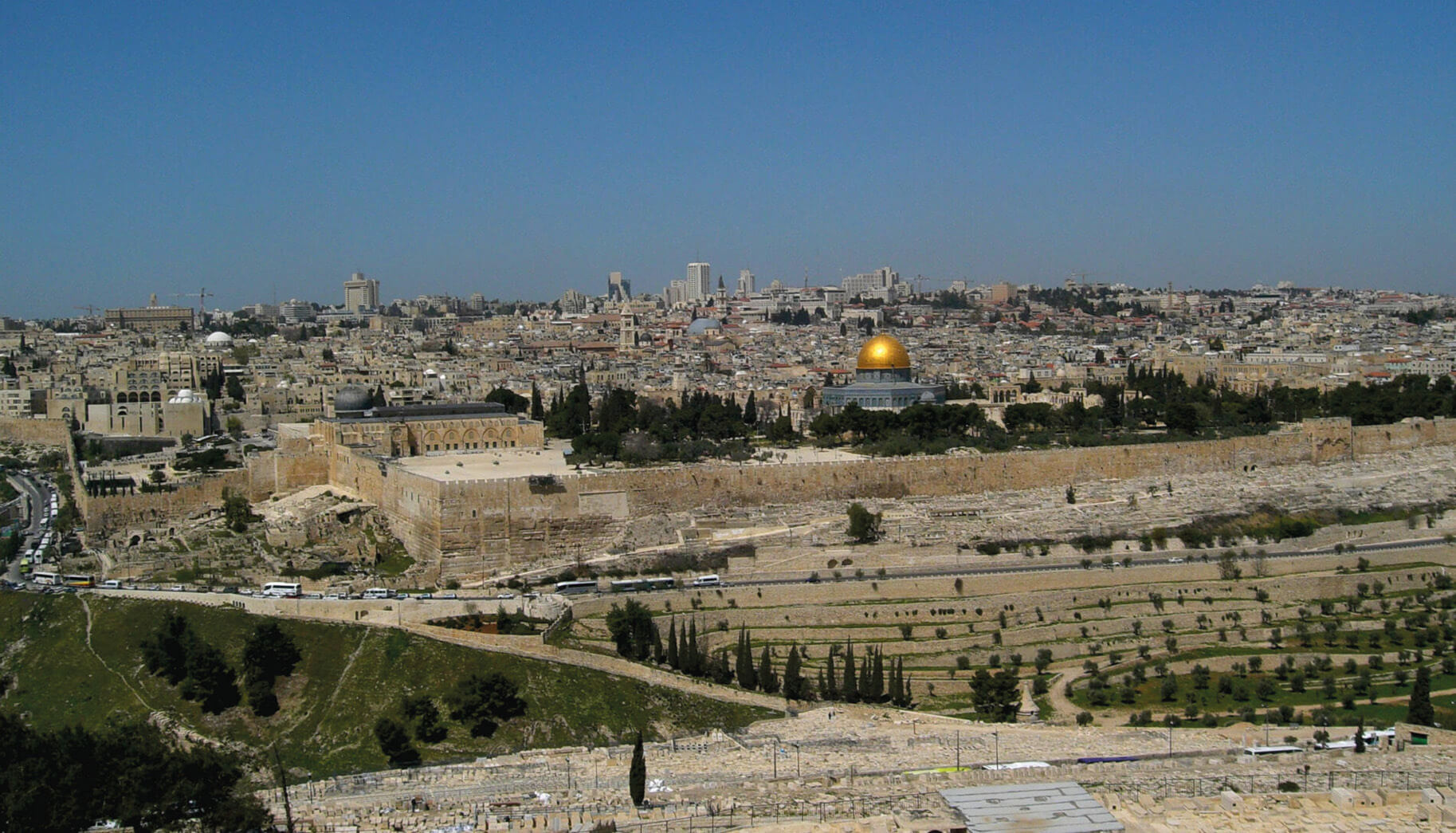
Significant as these statistics may be, they likely underestimate the scope and scale of ongoing displacement and dispossession; a more comprehensive accounting would need to consider other causes of forced displacement – eviction, revocation of residency rights, denial of family reunification, confiscation of land, etc. – in addition to the vulnerability of Palestinian citizens of Israel to displacement through the application of similar measures.
Yet, as Huda Imam observed in her “Journey through Sheikh Jarrah” in the June 2021 issue of This Week in Palestine, efforts by settlers to evict Palestinian residents from Jewish-claimed properties in the eastern neighborhood of Jerusalem over the past fifty years raise the obvious question of why the State of Israel prevents Palestinians displaced from the western part of the city, including Imam whose family has title to property in the Baqa’ neighborhood, from repossessing their homes, lands, and other properties. Before answering that question, it is perhaps useful to consider briefly the workings of restitution in Jerusalem since the 1967 war, that is to say, how Jews are able to repossess homes, lands, and properties in one part of the city while Palestinians are denied the same opportunity in the other. A few additional words about developments in the law and practice of housing, land, and property restitution for refugees and displaced persons elsewhere will help place Palestinian claims in broader context.
The legal mechanism for restitution in this particular case can be found in the 1968 Legal and Administrative Matters Law (a consolidated version appeared two years later). The law essentially aimed to address certain anomalies arising from Israel’s military occupation and subsequent application of its law to the eastern neighborhoods of Jerusalem after the 1967 war. This included the status of Palestinian residents, most of whom held Jordanian citizenship, who suddenly became absentees with regard to their homes, lands, and properties under Israel’s 1950 Absentees’ Property Law. The transfer of this property to the state – through the Custodian of Absentees’ Property and the Development Authority, the body that had been set up to launder refugee properties after the 1948 war – may have been desirable from a Zionist perspective. Enforcement of the 1950 law in the eastern part of the city, however, created what Israeli then-Foreign Minister Yair Lapid described in reference to the demolition of the Bedouin village of Khan al-Ahmar as “international challenges.” While it remains to be seen how Israel will handle the pending erasure of Khan al-Ahmar (likely to proceed after Israel gave final approval for the E1 colonization plan to proceed), the Legal and Administrative Matters Law provided a solution of sorts to the earlier problem by stipulating that Palestinian residents of East Jerusalem – i.e., those registered in Israel’s 1967 census – shall not be regarded as absentees in respect of property situated in “that area” of the city (the significance of the quotes will soon become apparent). This seemed fair enough, although it should be noted that the Absentees’ Property Law still applied to Palestinians not registered in Israel’s 1967 census, as well as to those whose residency status was revoked by Israel, to property owners who resided outside the city, and those who for other reasons were considered enemies of the Jewish state.
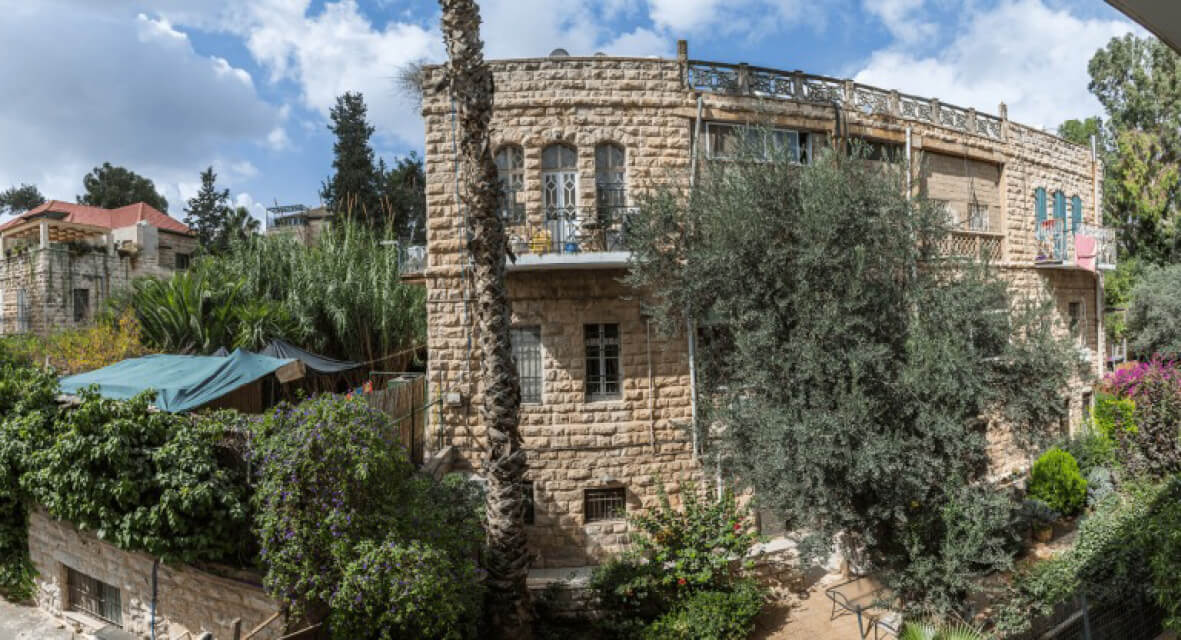
The Legal and Administrative Matters Law further stipulated that housing, land, and other properties in the city, with few exceptions (e.g., public purpose), had to be returned to their original owners. It was this provision that enabled Jewish property owners to repossess homes, lands, and properties in the Old City and eastern neighborhoods of the city that had been administered since the 1948 war by the Jordanian Custodian of Enemy Property. This again seemed fair enough. Whether Jewish organizations intent on colonizing eastern Jerusalem should be entitled to claim properties in “that area” of the city is another matter. More practically, enabling Jews to repossess homes, lands, and properties in the eastern neighborhoods of Jerusalem raised the prospect that Palestinian residents of those same neighborhoods who originated from the western parts of the city – estimated to comprise around a quarter of the population of eastern Jerusalem in 1995 – would use the law to claim their own homes, lands, and other properties in the western neighborhoods. In short, Israel prevented this from happening by restricting the application of this provision in the Legal and Administrative Matters Law to the eastern part of Jerusalem, which the law referred to discretely as “that area” of the city. Incidentally, the non-application of the 1950 Absentees’ Property Law to Jewish absentees after the 1948 war prefigured the differential and discriminatory treatment of Palestinian claims in the western neighborhoods of Jerusalem two decades later.
This was not what the United Nations Mediator Count Folke Bernadotte had in mind when he recommended in his September 1948 Progress Report that the UN affirm “the right of the Arab refugees to return to their homes” and that a conciliation commission be set up “to supervise and assist their repatriation, resettlement and economic and social rehabilitation and payment of compensation for the property of those choosing not to return.” Bernadotte’s recommendations also covered the comparatively smaller number of Jews displaced within and from Palestine as a result of the 1948 war, including those who owned homes, lands, and other properties in the eastern neighborhoods of Jerusalem. To what degree the Swedish diplomat, who had negotiated the release of prisoners from German concentration camps only a few years earlier, was influenced by precedents being set in Europe regarding the restitution of property after the Second World War is unclear. Although it is likely that his small team of advisors, including principal secretary Ralph Bunche and legal advisor Constantin Stavropoulos, were well aware of these precedents. For various reasons, including Lemkin’s correspondence with Bernadotte, all three may have also been cognizant of Lemkin’s work on genocide. Echoes of Lemkin’s more capacious understanding of genocide can also be found in the mediator’s report, in particular, his fear that displaced Palestinians who had lived in the land of Palestine for centuries would be replaced by Jewish settlers.2
Bernadotte’s recommendations formed the basis of a series of American, British, and UN draft texts that eventually coalesced on December 11, 1948, into General Assembly Resolution 194. In its Analysis of Paragraph 11 of the General Assembly’s Resolution of 11 December 1948 (1950), the UN Conciliation Commission for Palestine (UNCCP), the body set up to facilitate the implementation of Resolution 194, observed that “if refugees not returning are to be compensated for their property, those returning would re-occupy their homes and be compensated for losses and damages.” During the debate, the British representative, when asked, specifically stated that these provisions applied to refugees from the western neighborhoods of Jerusalem.
Paragraph 11 in many ways prefigured developments in law and practice governing solutions for refugees and displaced persons fifty years later, when the Palestine Liberation Organization and the State of Israel signed the 1993 Declaration of Principles. From the beginning of the 1990s, a plethora of UN bodies – the International Law Commission, human rights treaty committees, the Commission on Human Rights and its Sub-Commission on the Protection and Promotion of Human Rights, the Security Council, the General Assembly, the Economic and Social Council, the Office of the High Commissioner for Refugees, and peace-building missions – addressed a range of issues that related to housing, land, and property restitution, including its application to refugees and displaced persons. Restitution principles and procedures could also be found in peace agreements around the world as part of a standard package of elements that are widely recognized as central to durable solutions for refugees and displaced persons. While the 1990s may have been the decade of repatriation, as then High Commissioner for Refugees Sadako Ogata described the period, these years might also be described as the decade of housing, land, and property restitution. The difficulties that refugees and displaced persons encountered along the way as well as an assessment of the outcome of their efforts to return to their homes, reclaim lands, and repossess other properties are significant matters that have been elaborated by others elsewhere.3
These were among the precedents for Palestinian claims referred to in Jerusalem 1948: The Arab Neighbourhoods of the City and Their Fate in the War (1999, 2002), an edited collection of studies published by the Institute of Jerusalem Studies and BADIL Resource Center for Palestinian Refugee and Residency Rights on the eve of final status talks between Israel and the PLO. The project aimed to shed light on a chapter in the modern history of Jerusalem that is frequently overshadowed by the struggle of Palestinians to remain in their homes, on their lands, and in possession of their properties in the eastern neighborhoods of the city, a struggle that has been ongoing since the 1967 war. Presenting initial findings from the joint initiative, along with information about a related film entitled Yoom Ilak, Yoom Aleik: Palestinian Refugees from Jerusalem, 1948: Heritage, Eviction & Hope, BADIL’s newsletters from the period also carried stories about the colonization of Sheikh Jarrah and Silwan, revocation of residency rights, and denial of family reunification along with Palestinian efforts to prevent the destruction of what remained of the village of Lifta, one of four villages depopulated during the 1948 war and subsequently annexed to the western part of Jerusalem. The book also sought to provide context for concepts and realities – e.g., the terms “East” and “West” Jerusalem and the demographic division of the city before the colonization of the eastern neighborhoods – which appeared beyond question, at least in terms of the discourse in which the Middle East peace process was framed, by the time when Palestinians and Israelis gathered around the negotiating table in the late 1990s and early 2000s to deal with so-called final status issues that include Jerusalem and the refugees.
Also notable in terms of restitution principles, though hardly mentioned in the literature on Palestinian refugees during the period, including my own contributions, was the 1993 Abuja Proclamation that was adopted by the first Pan-African Conference on Reparations for African Enslavement, Colonization and Neo-Colonization. Sponsored by the Organization of African Unity and its Reparations Commission, the proclamation captures the essence of what many Palestinians today refer to as their “ongoing Nakba.” Conference participants declared that they were “fully persuaded that damages sustained by the African peoples is not a “thing of the past” but rather painfully manifest in the damaged lives of contemporary Africans from Harlem to Harare and in the damaged economies of the Black World from Guinea to Guyana and from Somalia to Surinam. German reparations to Jews (individuals, organizations, and the State of Israel) after the Holocaust recalled in the proclamation were also among the precedents that the UNCCP identified as important to Palestinian refugee claims after the 1948 war.
Significant here, of course, is that the precedent-setting Luxembourg Agreement between Germany, the State of Israel, and Jewish organizations was being negotiated at the same time that the UNCCP was seeking an agreement to repair the losses suffered by Palestinian refugees as a result of the 1948 Arab-Israeli war. Sami Hadawi, who worked in the Department of Land Settlement during the British administration of Palestine and as a land specialist with (and subsequent critic of) the UNCCP, along with the Arab economist Atef Kubursi, drew upon the same precedent some thirty years later in Palestinian Rights and Losses in 1948: A Comprehensive Study (1988). Emphasizing that no financial award, however large, could compensate fully for the loss of a homeland, they argued that an accurate assessment, which included both material losses and human suffering, would provide an indication of the magnitude of the 1948 Nakba. Notably, they added that an assessment of losses suffered since then would require a separate investigation. The establishment of a World Jewish Restitution Organization to pursue claims in post-Communist eastern Europe in the 1990s, along with campaigns for the release of dormant accounts in Swiss banks, and reparations from German companies for slave labor, reignited interest in German reparations as the Middle East peace process got under way. It was these precedents that refugee activists, Palestinian unionists, politicians, and personalities in national institutions, researchers, NGOs, and independent figures in Palestine also drew upon in a petition entitled “Restitution: A Basic Human Right,” issued on the eve of final status negotiations between the PLO and Israel. The petition continued a long and diverse tradition of Palestinian resistance to displacement and dispossession, much of which has been overlooked and ignored in conventional accounts of high-level negotiations that have attempted to find solutions to the so-called refugee problem – not necessarily the problems faced by refugees.
The losses suffered during the Nakba, as Sami Hadawi, Atef Kubursi and so many others have pointed out, extended well beyond the loss of homes, lands, and other properties. This is evident in the descriptions of pre-war life in the western neighborhoods of Jerusalem and in surrounding villages of the city, found in the chapters of Jerusalem 1948, many of which rely upon memoirs and oral history interviews with displaced residents. The displacement and dispossession of Palestinians from Baqa’, Qatamon, Talbiya, the Greek Colony, and the many other neighborhoods that make up the western parts of the city marked “the loss of an entire world that exemplified Jerusalem and Palestine” before its conquest during the 1948 war and subsequent dissolution. As Salim Tamari observes in the introduction to the book, Jerusalem was “a city of considerable social mobility, of ethnic diversity, and of communal conflict that was tempered by a fair amount of mutual dependence on local solidarities.” The map of real estate holdings in the western neighborhoods (attached to the book), which Sami Hadawi, himself a refugee from Qatamon, first prepared for the New York–based Palestine Arab Refugee Office in the late 1950s (one of the numerous initiatives mentioned above), reflects the emerging realities in Jerusalem, as described in the book on the eve of the 1948 war. Tamari’s further observation that the portrait of the city is one that today is unrecognizable – an observation that can hardly be overstated – further underscores the limitations of a narrow definition of restitution that is centered on the return of homes, lands, and other properties, as significant as these may be.
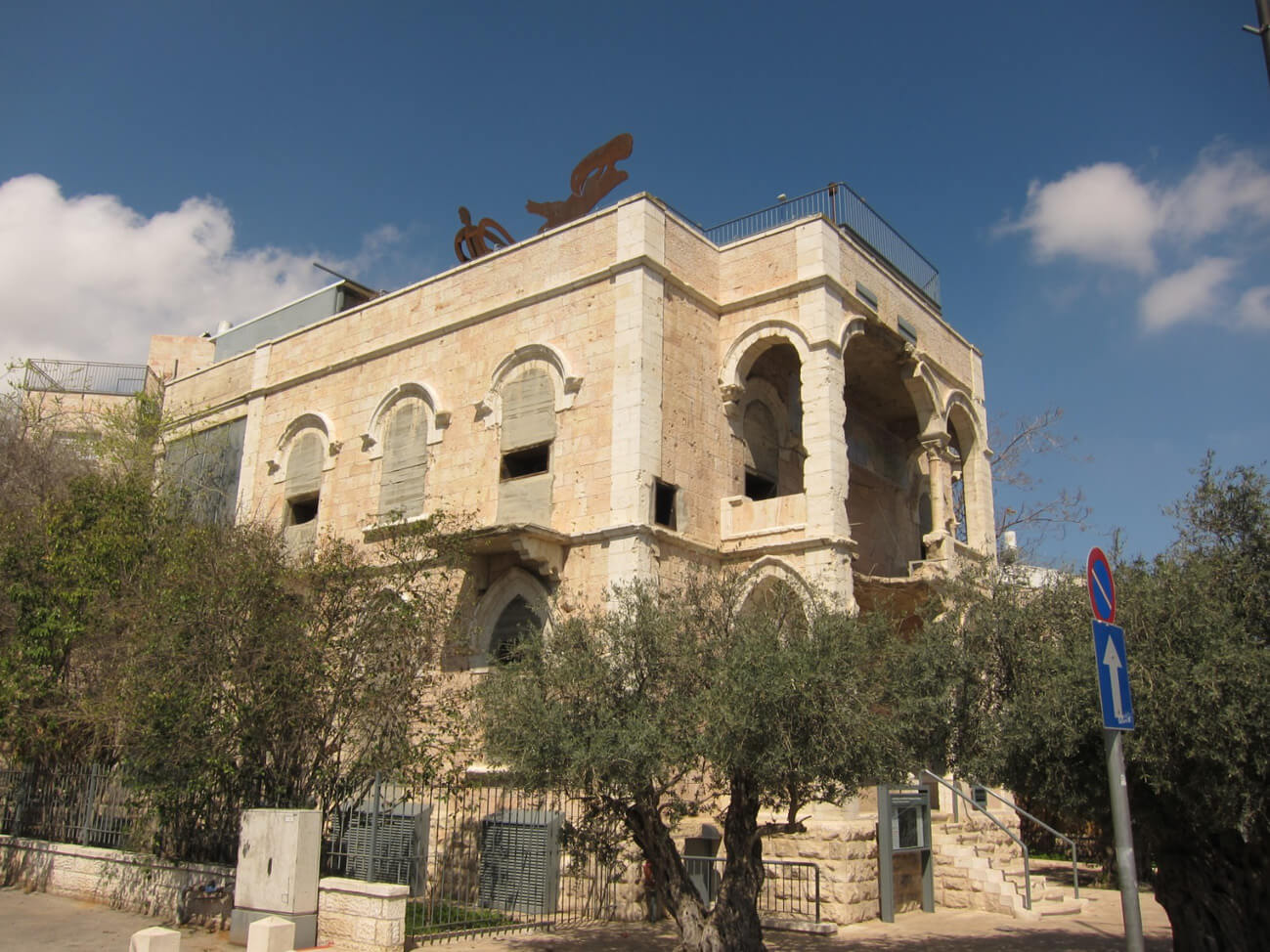
It is this broader loss that Palestinian representatives, such as jurist Henry Cattan, a refugee from the Baqa’ neighborhood, along with Arab and other allies perhaps sought to redress during the drafting of Resolution 194, when they demanded that paragraph 11 also address the economic, social, and political rights of the refugees. From their perspective, in addition to the individual rights of return, restitution, and compensation, the resolution should have also affirmed the right of Palestinians as a people to return to their homeland, a demand that took another twenty-five years of struggle to codify in General Assembly Resolution 3236 (only to be vetoed by the United States in the Security Council). It remains, in practice, unrealized to this day. It is this broader definition of restitution, that is to say, restitution as decolonization that resonates in the findings of a 2018 BADIL survey of refugee and internally displaced youth in Palestine, Israel, and major Arab host countries. While many youth struggled to conceptualize what return would look like in practice, something that the editors of the Survey of Palestinian Refugees and Internally Displaced Persons (vol. 9) attributed to inadequate or absent discourse of return, most respondents nevertheless “recognized that physical return alone is not enough; that return must be sustainable and create an environment that not only addresses the injustice, but fulfills the social and economic rights of the returnees.”4 In addition to property documentation and socio-economic rehabilitation, they also identified reparations for the various crimes and violations arising from colonization as the most important problems to be addressed once their return has been realized.
Reading news in the spring of 2021 about the ongoing Nakba in Jerusalem (which ranged from forced evictions and demolitions to the revocation of residency rights, along with Palestinian efforts to preserve what remains of the depopulated village of Lifta) from the vantage point of Canada (where stories of the unmarked and yet to be identified graves of well over a thousand Indigenous children – and most likely many more – who perished in Church-run residential schools funded by the Canadian government have filled, and fueled, the news over the summer), I am reminded of Tom King’s observation in The Inconvenient Indian: A Curious Account of Native People in North America, published in 2012: “Most of us think that history is the past. It’s not. History is the stories we tell about the past.” Summarizing his narrative journey through hundreds of years of Indigenous history, King, an Indigenous author, activist, and academic from the Cherokee nation, concludes that “in terms of attitudes, in terms of dispossession and intolerance, nothing much has changed. [History] turns out to be our present. It may well be our future.”
Returning to Gaza, it is not hard to find King’s words reverberating in the literature on Palestine. Introducing his graphic novel Footnotes in Gaza, for example, Joe Sacco writes: “As someone in Gaza told me, ‘events are continuous.’ Palestinians never seem to have the luxury of digesting one tragedy before the next one is upon them. When I was in Gaza, younger people often viewed my research into the events of 1956 with bemusement. What good would tending to history do them when they were under attack and their homes were being demolished now? But the past and present cannot be so easily disentangled; they are part of a remorseless continuum, a historical blur.” I am also reminded of the observation made by Elias Sanbar, the Palestinian historian and author of “Palestine 1948: l’expulsion,” published in the French-language daily Libération on the eve of Israel’s 1982 invasion and the massacre of refugees in Sabra and Shatila, asserting that “Palestinians are the American Indians of the Jewish settlers in Palestine. In their eyes,” Sanbar writes, “our one and only role consists in disappearing.”5
Why are these observations important, and what do they have to do with Palestinian restitution in the western neighborhoods of Jerusalem? Simply put, they bring to the fore an analytical framework that is absent from much of the scholarly and policy production in recent decades on housing, land, and property restitution for refugees and displaced persons, with the notable exception of comparative work on South Africa. Of course, settler colonialism in Palestine has its unique features – the presence of an Indigenous Jewish population that predates Zionist colonization, the impossibility of non-Jews to assimilate within the Jewish state, and one of the world’s largest refugee populations (exceeded only in recent years by Syria), to name a few – but this is no different from other settler colonies, and it should not preclude a considered comparison of the phenomenon. Understanding settler colonialism as “structure and not an event,” with land as its “specific, irreducible element,” as Patrick Wolfe so usefully explains in “Settler Colonialism and the Elimination of the Native” in the Journal of Genocide Research (2006), arguably helps to better explain Israel’s dispossession of Palestinians in Jerusalem, elsewhere in the territories occupied by the Jewish state since 1967, and across the Green Line, ongoing since the 1948 war. The analytic also helps to explain the country’s domestic legislation – from the 1950 Absentees’ Property Law and 1970 Legal and Administrative Matters Law to the plethora of Basic (Constitutional) Laws governing Israel Lands (1960), Human Dignity and Liberty (1992), and Israel as the Nation-State of the Jewish People (2018) – under which restitution is virtually impossible.
While there is a rich body of early literature to draw upon, most notably the writings of Fayez Sayegh, complemented by an emerging corpus of new research, some of which can be found in the journal Settler Colonial Studies, the challenges of restitution for Palestinian refugees and displaced persons, including those who originate from the western neighborhoods of Jerusalem, in a settler-colonial context, whether historical or today, have barely been touched upon.6 Fruitful areas of inquiry might include a more critical consideration of international law; the colonial origins of important doctrines such as sovereignty, in particular; whether and how the handling of Indigenous claims by settler colonies such as the United States and Canada impinge on their respective foreign policies regarding housing, land, and property restitution for Palestinian refugees; the roles that wider solidarity movements have played and continue to play in reparations for colonialism (and its settler-colonial variety); comparative research on restitution as decolonization in Africa (beyond post-apartheid South Africa), Asia, and the Americas; and, lastly, consideration and foregrounding of Indigenous resistance to dispossession and their struggles for restitution. This is not to dismiss the value of existing research, nor to suggest that the cases are the same. I merely wish to emphasize that in the absence of a settler-colonial analytic, the research on housing, land, and property restitution for Palestinian refugees is arguably ahistorical and incomplete, which in turn raises critical questions about its relevance for both policy and solidarity. As the NDN Collective observes in The Right of Return Is Landback: “Although our peoples come from different nations and geographies, the struggles against settler colonialism are the same. Not because we or our struggles are the same, but because settler colonists share playbooks.”7
1 OCHA, “West Bank Demolitions and Displacement: An Overview-June 2021.”
2 Raphael Lemkin, Axis Rule in Occupied Europe: Laws of Occupation, Analysis of Government, Proposals for Redress, Washington, DC: Carnegie Endowment for International Peace, 1944, 79; and, Progress Report of the United Nations Mediator on Palestine, Paris: United Nations, 1948, 14.
3 See, for example, the cases, refugee learning tours, and seminar conclusions in Terry Rempel (ed.), Rights in Principle, Rights in Practice: Revisiting the Role of International Law in Crafting Durable Solutions for Palestinian Refugees, Bethlehem: BADIL Resource Center, 2019. On South Africa see, BADIL & Zochrot, “Thinking Practically About Return”, al-Majdal 49 (2012), 39–45. For a recent legal study see, Lena El-Malek, Stolen Nation: The Right to Reparation of Palestinian Refugees, London: I.B. Taurus, 2024.
4 Nidal al-Azza and Lubnah Shomali, “Survey of Palestinian Refugees and Internally Displaced Persons 2016–2018,” BADIL Resource Center, 2019.
5 More recently, see Audra Simpson, “We Are Not Red Indians (We Might All Be Red Indians): Anticolonial Sovereignty Across the Borders of Time, Place and Sentiment,” July 26, 2015.
6 For an early account, see, Anis al-Qasem, Racist Regimes and the Lands of Indigenous Peoples, Paper No. 22, London: The International Organization for the Elimination of All Forms of Racial Discrimination, 1981; more generally, on refugee and Indigenous studies, see Sedef Arat-Koç, “Decolonizing Refugee Studies, Standing up for Indigenous Justice: Challenges and Possibilities of a Politics of Place,” Studies in Social Justice 14/2 (2020), 371–90.
7 NDN Collective, The Right of Return Is Landback; on solidarity, see Steven Salaita, “American Indian Studies and Palestine Solidarity,” Decolonization: Indigeneity, Education and Society 6/1 (2017), 1–28; for an overview of solidarity in the context of Israel’s genocidal campaign in Gaza. see Kim Alley, “Global Grassroots Indigenous Internationalism in a Time of Genocide,” Native American and Indigenous Studies 12/1 (2025), 160–9.
Terry Rempel is an independent scholar. His current research interests include the study of Palestinian refugees before “Palestinian refugee studies,” new histories of the Palestinian refugee regime, and Canadian foreign policy on Palestinian refugees. He resides in Canada on Treaty Six Territory, the lands of the Cree, Saulteaux, Blackfoot, Dene, Nakota and Metis Nations.
