


By Omar Da’na
On a crisp morning in Gaza, amid a landscape of shattered concrete, the aroma of freshly baked bread wafts from a makeshift community kitchen. A circle of women, sleeves rolled up, stirs giant pots of lentil soup and kneads dough for thousands of displaced neighbors. In war-torn Rafah and Khan Younis, these tekiya – community kitchens – have sprung up as lifelines. They do far more than fill empty stomachs. By employing hundreds of locals as cooks and helpers and by sourcing produce from Palestinian farmers who have managed to keep their production going, finding ways to grow small crops amid the rubble, they inject wages into families and sustain local agriculture. This scene is a microcosm of Palestine’s economic resilience: grounded in care, cooperation, and a refusal to surrender even in the darkest times. It is resilience as resistance – an economy of survival and hope that is defying a system of engineered despair.
That system of engineered despair is painfully real. After two years of genocidal onslaught in Gaza and over 76 years of ongoing dispossession, the Palestinian economy remains trapped in a colonial chokehold. Military occupation, settler colonization and land theft, and a 17-year blockade on Gaza have conspired to make Palestine’s economy one of the most restricted on Earth. Israel’s permit regime and separation walls fragment markets; 793 checkpoints strangle commerce; and resources such as water, land, and energy are weaponized to undermine Palestinian livelihoods. Gaza’s isolation is particularly brutal: even before the latest war.1 Then came the carnage after October 2023. In a single year of war, Israeli bombardment decimated Gaza’s infrastructure: over 42 million tons of rubble2 now blanket entire neighborhoods, two-thirds of all buildings have been damaged or destroyed, and the economy lies in ruins. By early 2024, Gaza had lost roughly two-thirds of its pre-war jobs, some 200,000 positions wiped out. Unemployment in the Strip has since surged to nearly 80 percent, a staggering figure that conveys not only lost livelihoods but also a systematic attempt to make life unlivable. This economic strangulation is warfare by other means. And yet, despite these objective horrors, Palestinians continue to do what they have always done: refuse to vanish. They organize, they rebuild, and they reimagine an economy that is rooted in dignity and self-determination.
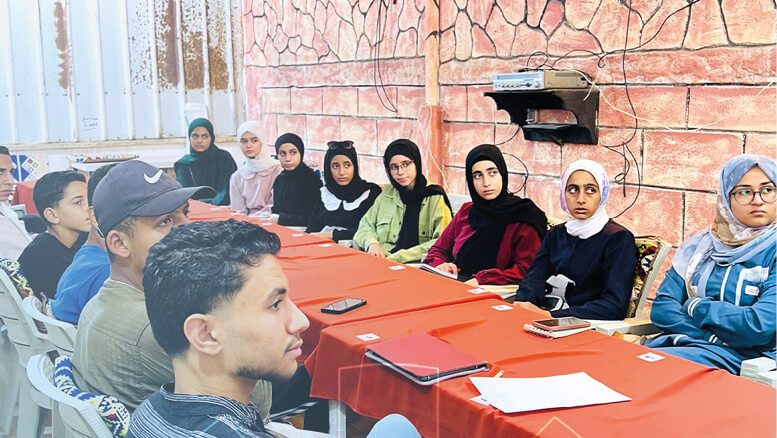
Young Gazan freelancers collaborate at a solar-powered tech hub in Deir al-Balah, Gaza. Initiatives like the TAQAT hub provide crucial internet, electricity, and workspaces – enabling youth to keep working and innovating even amid war.3
Crucially, Palestinians are not content with merely bouncing back to a status quo of precarity; they are “bouncing forward” – innovating models of economic justice even under siege. The animating vision is one of economic sovereignty: the ability to provide for their communities’ needs and futures without dependency on the occupier or international aid. This vision is bold, given that donors and NGOs have long dominated the development sphere. But today a decolonial, feminist, rights-based approach is gaining ground, driven by activists, cooperatives, and community leaders. It insists that the path to a resilient Palestinian economy must center the people – especially women and youth – and the land itself, rather than top-down plans or perpetual humanitarian relief. In practical terms, this means cultivating what Palestinian scholar-activists call a “resistance economy,” built on collective effort, mutual aid, and ingenuity. From Gaza’s rubble to West Bank villages, people are crafting livelihoods that also fortify their freedom struggle. The result is an impassioned, ground-up economic movement that is hopeful yet unflinching in naming the forces it confronts: military occupation, apartheid policies, and settler-colonial theft.
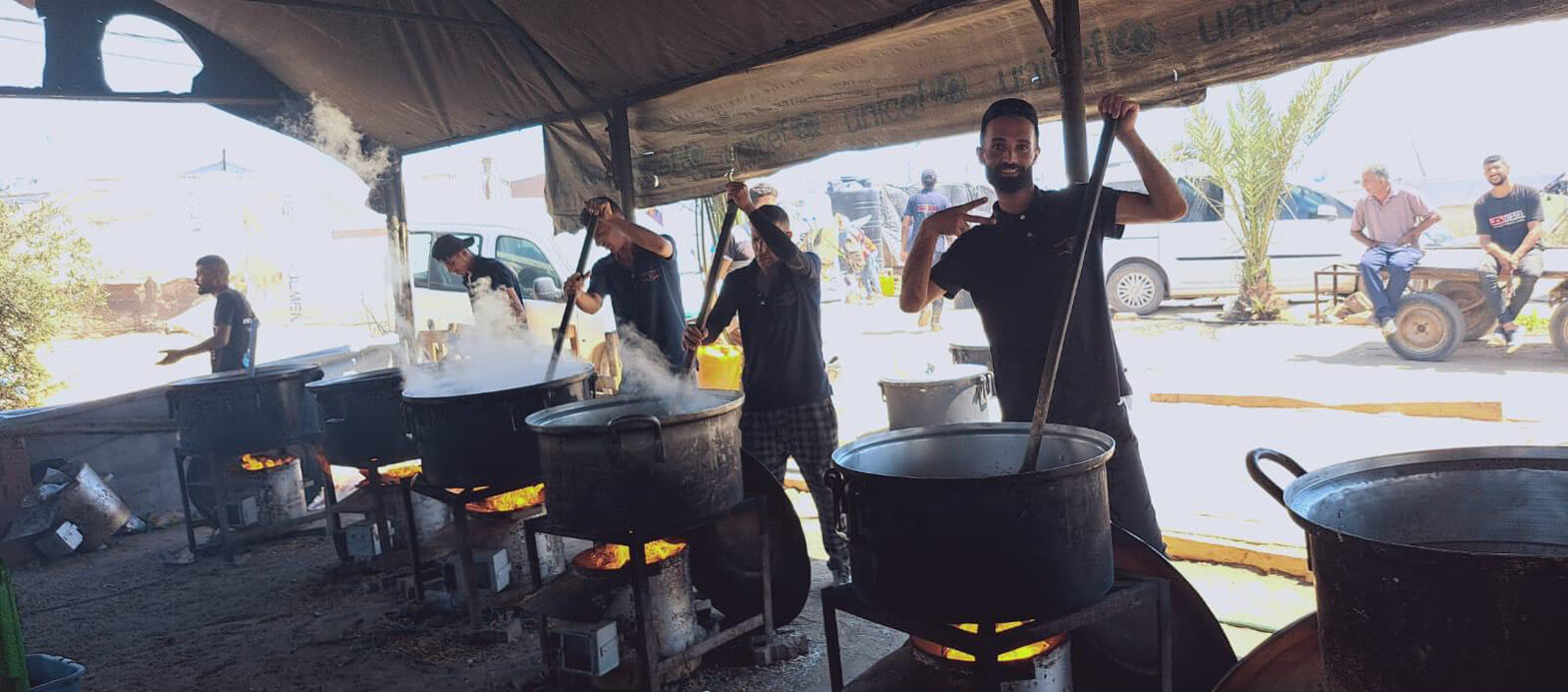
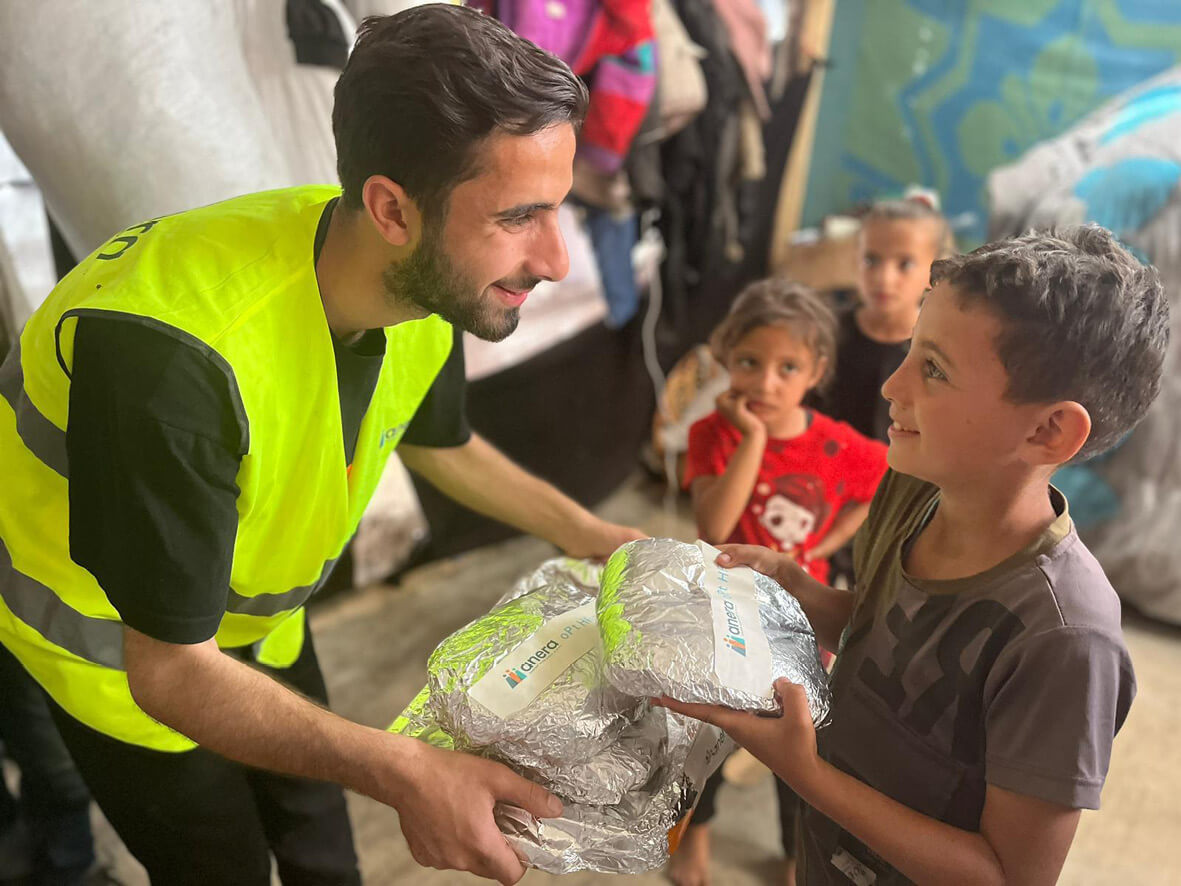
Women are at the forefront of this economic resistance, even if their work is often invisible or undervalued. For generations, Palestinian women have been the backbone holding families and communities together through war, displacement, and crisis. They juggle waged jobs (when available), farming family lands, volunteering in their neighborhoods, and an immense load of unpaid care work at home. (Indeed, Palestinian women perform nearly eight times more unpaid care work than men – one of the most unequal divisions in the world.) This burden is a testament to patriarchy’s toll, but it is also the source of a profound societal strength. In moments of breakdown – a lockdown, a bombardment, a pandemic – it is women’s informal networks that step in to provide childcare, elder care, food, and comfort, keeping the social fabric from tearing apart. One striking example comes from the Gaza community kitchens mentioned above: These are largely women-led care economies in action. When formal services collapsed under bombardment, women mobilized to feed entire neighborhoods, effectively treating care work as vital infrastructure.
Such efforts underscore a feminist economic principle: care is as critical to the economy as concrete or oil. Recognizing this requires expanding our definition of “productive” labor to include the labor of love and survival traditionally done by women. Imagine if policies and aid treated these community kitchens and home-based care circles as essential services worthy of investment – akin to power grids or factories. In Gaza, that’s precisely what happened on a small scale. Local organizations helped pay stipends to the women running the kitchens, formally acknowledging their labor as part of the rebuilding process. The result was a virtuous cycle of economic justice – caregivers earned income, families were nourished, and dignity was upheld amid destruction.
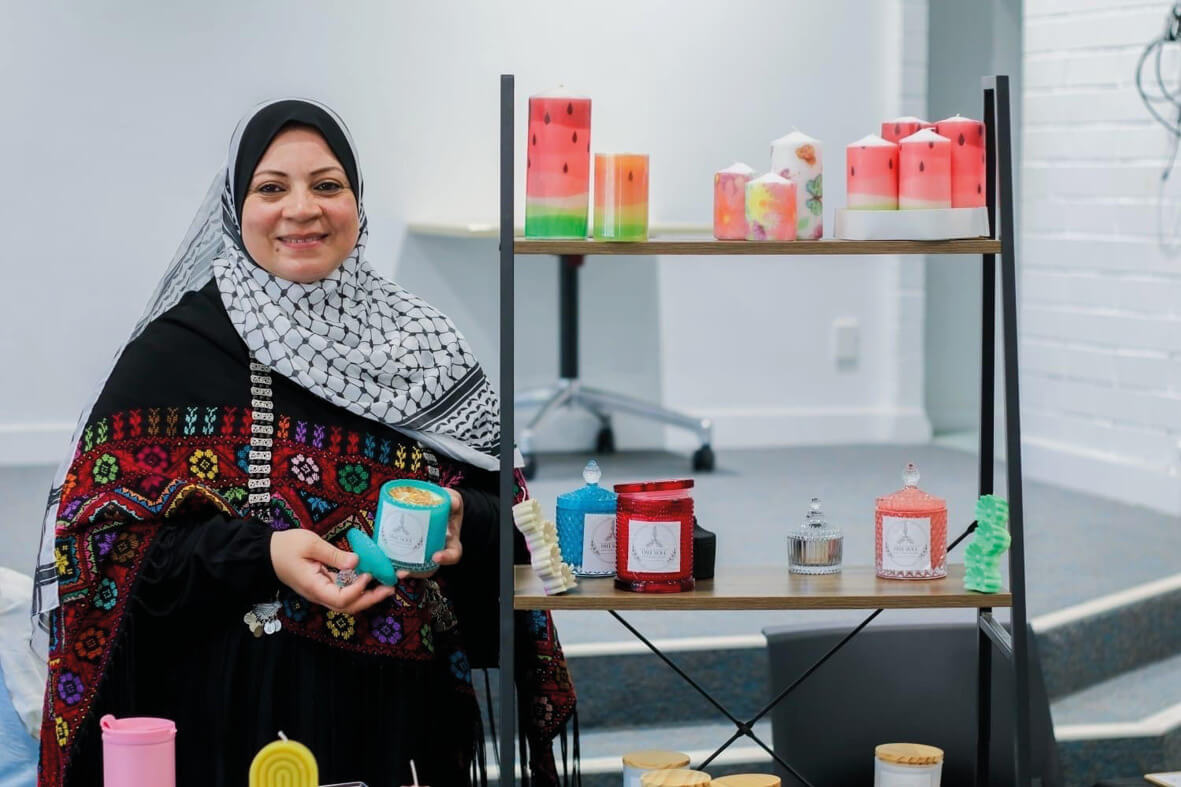
Women are not only caring, they are also building and leading formal enterprises that embody resilience. Across Palestine, women-led cooperatives have blossomed, proving that collective ownership can unlock opportunities even where markets and mobility are restricted. In the West Bank town of Dura, for instance, two dozen women banded together to produce traditional Palestinian foods such as maftoul (hand-rolled couscous) and grape molasses. With time and support, their small partnership grew into a thriving business – a cooperative that now boasts a two-story processing center and an annual budget of 2 million shekels. The Dura cooperative not only generates stable jobs, it has become a pillar of the community, strengthening social bonds and inspiring local women to seek economic independence. “We love the cooperative more than our homes,” one member laughed, while rolling a batch of couscous, highlighting how this enterprise had become a second family. Similar stories abound: In villages near Hebron, women’s co-ops are baking bread and pastries for regional markets. In Gaza, a sewing cooperative of war widows produces school uniforms and face masks to supply local schools.
Each of these initiatives is a seed of a more democratic economy – one where profits are shared, decisions are made collectively, and women assert control over resources. To truly fortify such models, experts suggest policy shifts such as dedicating procurement quotas for women-led businesses, improving access to childcare and safe transport for women workers, and expanding microfinance that is tailored to women entrepreneurs. The structural barriers are real – Palestinian women’s labor force participation remains under 20 percent, among the lowest in the world, and female unemployment is roughly double that of men – yet the success of these cooperatives offers a blueprint for change. Economic resilience, it turns out, will be feminist – or it will be fragile. No economy can be resilient if it ignores the genius and labor of half the population.
If women are the backbone of resilience, Palestinian youth are its kinetic energy – innovators tirelessly forging new paths in the harshest of circumstances. The numbers paint a bleak picture: youth unemployment in Gaza was about 75 percent even before the recent war, and by mid-2024 it had skyrocketed to nearly 80 percent. For young women, it’s even worse – approaching an almost total absence of formal jobs. In any other society, such statistics would spell a “lost generation.” Yet travel (virtually, if not physically) into Gaza’s neighborhoods or West Bank refugee camps, and you find not a generation lost, but one busy problem-solving a future.
Take the example of a modest building in Deir al-Balah, central Gaza: here a group of fresh graduates and tech entrepreneurs have created TAQAT, a co-working tech hub, literally amid the rubble. Founded in April 2024 during a lull in fighting, TAQAT offers young freelancers a lifeline – free desks, solar-powered electricity, and high-speed internet – in a place where power cuts and connectivity blackouts are daily torment. Within months of opening, over 2,000 people applied for 500 spots at the hub, desperate for the opportunity to resume online work and support their families. One digital marketer described TAQAT as “a lifeline”: Living in a tent after his home was bombed, he finally had reliable electricity and Wi-Fi to restart his freelance business, thanks to the hub’s solar panels and generators. Another young woman, a computer science student, said the space allowed her to continue her studies and pick up coding gigs despite the chaos around her.
These stories illuminate a broader trend: across Palestine, youth are leveraging technology and creativity to circumvent the barriers of occupation. Before the war, thousands of Gazan youth were active on global freelancing platforms, offering graphic design, translation, and programming services to clients abroad – often working offline and uploading work in the few hours of electricity they had each day. Others set up community innovation labs: one group of engineering students in Gaza City began 3D-printing spare parts for medical devices that couldn’t be imported due to the blockade, while a team in Nablus developed a low-cost water filtration system for villages under settler attack.
Every such initiative chips away at dependence on outside aid or Israeli supplies. Crucially, these young innovators are not working in isolation – they form peer networks, share knowledge via Telegram groups during internet outages, and nurture what some call a “repair economy.” By fixing broken generators, repurposing scrap metal, or writing code that bridges logistical gaps, Palestinian youth are not just earning an income; they are modeling the economy of tomorrow. They imagine a Palestine where being cut off from global markets is no longer a curse because local talent and digital connectivity can transcend checkpoints. If the siege has bred this kind of ingenuity, one wonders what these youths could achieve in a free Palestine with full access to the world.
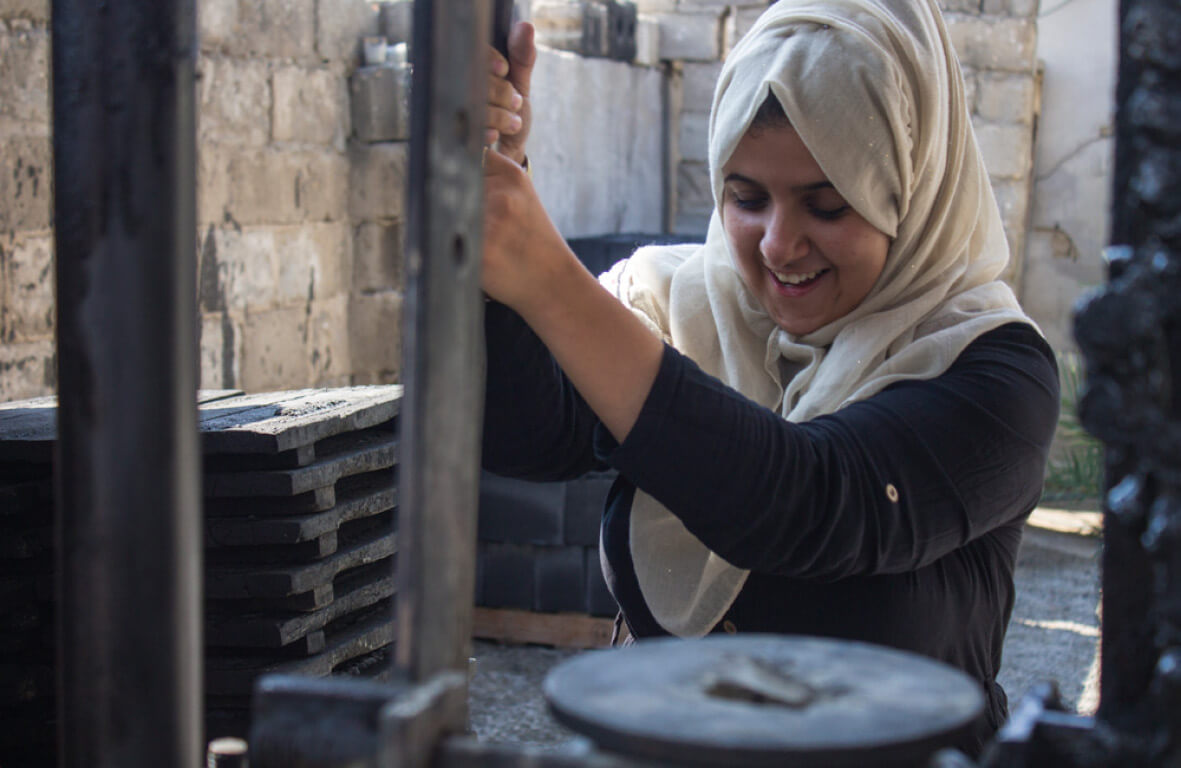
Any discussion of resilience would be incomplete without Gaza’s steadfast spirit of regeneration. Where does one begin in a territory subjected to what UN experts call “a livestreamed genocide” and years of total blockade? Perhaps in the rubble itself. Gaza now contains 14 times more debris4 from destroyed buildings than all the debris of previous wars since 2008 combined. Mountains of concrete and twisted metal are everywhere – but Gazans are finding ways to turn this destruction into renewal. Within months of the 2023 onslaught, local entrepreneurs and engineers mobilized to recycle rubble into building blocks. It’s not a novel idea – after a 2014 war, a young female engineer, Majd Mashharawi, famously invented affordable bricks made from war debris and coal ash, a project she dubbed “Green Cake.” Her innovation made headlines for enabling Gazans to rebuild homes despite Israel’s ban on cement imports. Mashharawi’s philosophy, echoing that of many Palestinians, was that “we cannot rely on aid alone; we must build our own future.” Today, dozens of small workshops across Gaza have embraced that ethos, grinding rubble into aggregate for new concrete and training youth in basic construction skills. In Khan Younis, one father-son team started by making tombstones from bombed-out concrete5 – a grim but necessary business – and then shifted to crafting paving stones for roads. Such grassroots recycling not only provides materials for reconstruction, it gives people a tangible way to reclaim agency from the ruins of war.
Alongside rubble recycling, Gaza’s turn to renewable energy stands out as a story of community-driven resilience. Before the war, faced with chronic power outages imposed by Israel, Palestinians in Gaza led a quiet solar revolution: By 2023, at least one-third of Gazans and over half of Gaza’s businesses had solar panels on their rooftops. This proliferation of solar power – the densest concentration of rooftop solar in the world – kept lights on in hospitals and homes when the grid went down. Even now, under the shadow of destruction, solar panels glint atop the few intact roofs, and neighborhoods have rigged up micro-grids with shared generators and batteries. Every ray of sun harnessed is a small victory against the siege.
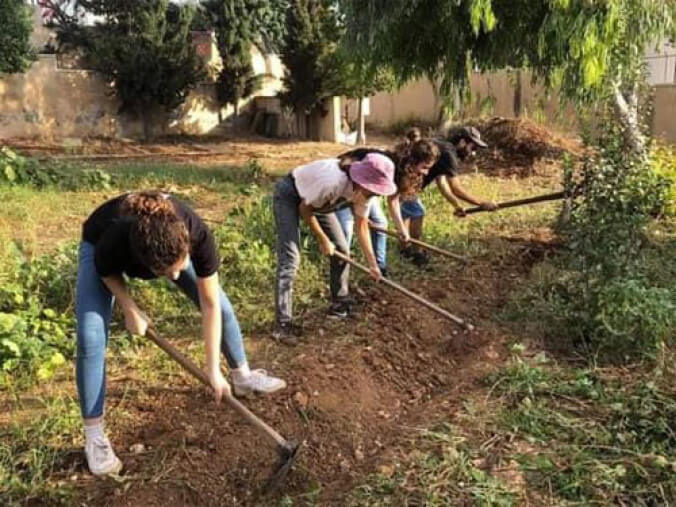
These community micro-infrastructure projects, from desalination units to neighborhood wells, are the skeleton of what a free Palestinian economy could look like: local, self-sufficient, and focused on basic needs such as water, food, energy, and shelter. They also embody the adage “necessity is the mother of invention.” Gaza’s people have become unwilling experts in sustainable survival, pioneering techniques in water harvesting, urban farming (rooftop vegetable gardens are proliferating to counter food shortages), and solidarity-based distribution of goods. Imagine if global donors invested in scaling up these local solutions – training thousands of Gazans in green construction trades, funding solar cooperatives, or rebuilding agriculture through seed banks and hydroponics. The international community often asks how to “help Gaza”; Palestinians are showing the way by helping themselves, if only the world would listen and support rather than impose and control.
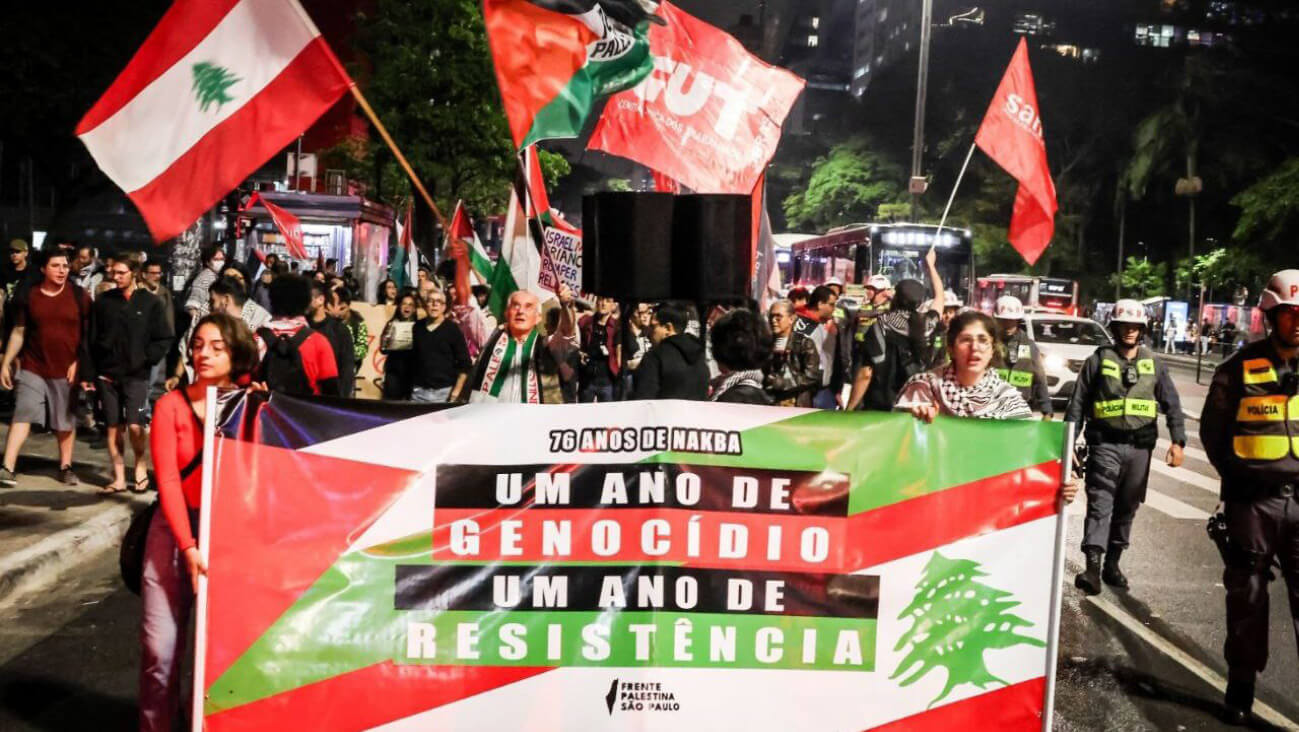
Finally, Palestine’s economic resilience draws from a wellspring of global solidarity and justice-seeking that extends far beyond its borders. Palestinians do not struggle alone. Across the Global South – from South Africa to Brazil, India to Ireland – activists, social movements, and even governments have increasingly embraced the Palestinian call for freedom as part of their own quests for justice. They recognize the familiar patterns of colonial exploitation and racial apartheid in Palestine’s plight. This has translated into a growing chorus demanding that Israel’s impunity end and that Palestinians be allowed to live and trade as equals.
One powerful vehicle has been the Boycott, Divestment, Sanctions (BDS) movement, launched by Palestinian civil society in 2005. In the 20 years since, BDS has galvanized unions, churches, universities, and artists around the world to boycott companies and institutions complicit in Israel’s oppression of Palestinians. Its economic impact on Israel is debated, but its political message is resounding: Ordinary people worldwide are willing to take action to uphold Palestinian rights when governments fall short. Notably, many of BDS’s strongest backers hail from the Global South, recalling how international boycotts helped topple apartheid South Africa. Trade unions across Africa, Asia, and Latin America have endorsed BDS as a “key form of solidarity with Palestinian workers,” linking their struggles against neoliberalism and neocolonialism with the Palestinian struggle.
This global pressure matters. It was South Africa’s government that in 2023 led an initiative at the International Court of Justice to seek legal opinion on Israel’s culpability for genocide in Gaza. Countries like Chile and Namibia have pulled ambassadors, while others have canceled trade deals or military cooperation with Israel in protest. Such steps, while modest, begin to challenge the structural violence that suffocates Palestine’s economy. They also give Palestinians hope that the world has not completely abandoned them.
In practical terms, Global South solidarity can bolster Palestinian economic resilience by pushing for fairer trade policies (for instance, preferential import of Palestinian products), direct support to grassroots projects, and protecting Palestinians’ rights in international forums. It can also mean sharing knowledge from other liberation struggles: how Latin American cooperatives built post-conflict economies, how Indigenous movements elsewhere reclaimed land and resources, how feminist budgeting can reshape a recovery plan to be more inclusive. For Palestinians, knowing that millions around the world see their fight for economic justice as part of a broader human struggle infuses their efforts with strength and optimism. It is a reminder that the quest for a resilient Palestinian economy is not a parochial issue, but a global test of justice – as activist Angela Davis said, “Palestine is the moral litmus test for the world.”
Where do we go from here? As Palestine rebuilds from yet another catastrophe, there is an urgent opportunity to reset the trajectory – to replace the paradigm of perpetual humanitarian crisis with one of people-centered economic sovereignty. This requires action at all levels.
For international observers, the takeaway is both sobering and inspiring. The sobering part is the clarity that there can be no true economic resilience under endless occupation. Justice – including economic justice – requires freedom. The international community must not shy away from this truth: humanitarian aid and development projects will never substitute for the liberation of a people and their economy. The hopeful part is realizing that Palestinians are already mapping the road from relief to reconstruction to sovereignty. They ask us, as allies, not to pity them, but to stand with them in concrete ways: support their businesses, amplify their campaigns, pressure our own governments to end complicity in repression. As this chapter of Palestinian history unfolds, one can imagine a future article in This Week in Palestine, years from now, celebrating a truly independent Palestinian economy – one no longer suffocated by checkpoints and blockades, where innovation flourishes not just out of necessity but out of opportunity. Getting there will take unwavering commitment from Palestinians and genuine solidarity from the world. Economic resilience is not a technocratic goal; in Palestine, it is a form of resistance – one that we, as global citizens, have a stake in. In the steadfast determination of Palestine’s women, youth, and communities, we see the blueprint of a more just economy, and indeed a more just world. It is now on all of us – local stakeholders and international allies alike – to help turn that vision into reality. Palestinians have shown they will not vanish; it’s time to ensure that their economy doesn’t either, and in fact, that it prevail and prosper as a cornerstone of an independent, dignified future.
At the grassroots, Palestinians will continue to organize cooperatives, community enterprises, and solidarity networks; they have already proven their effectiveness. What these groups need is greater support and recognition. One recommendation is for Palestinian authorities and NGOs to channel more funds to community-driven projects – trust the people who are doing the work on the ground. Imagine if a fraction of international aid bypassed expensive foreign contractors and instead went to local women’s associations, farmer cooperatives, and youth startups. The impact would be direct and multiplied within communities.
At the policy level, the Palestinian leadership (both the Palestinian Authority and de facto authorities in Gaza) should adopt an explicit strategy of economic decolonization. This could include investing in sectors that enhance self-sufficiency (agriculture, renewable energy, tech), providing tax breaks or grants for cooperatives and social enterprises, and reforming laws that hinder women and youth from starting businesses. For example, easing registration for cooperatives or guaranteeing a percentage of public procurement for local producers would strengthen the domestic market.
Any such strategy, of course, runs up against the immovable wall of Israeli restrictions – which is why political action for freedom is inseparable from economic strategy. Palestinian officials and advocates must persist in leveraging international law and diplomacy to demand an end to the blockade and occupation. This means pursuing cases at the International Criminal Court for the deliberate destruction of civilian infrastructure (a war crime), pressing the UN and world governments to enforce the recent ICJ advisory opinion declaring the occupation illegal, and calling for targeted sanctions or an arms embargo until Israel complies with its obligations. Some of these steps may sound far-fetched in the current global power imbalance, but history shows that sustained pressure can bring change. South Africa’s apartheid economy eventually buckled under global boycotts and isolation; so too can the structures buttressing Israeli apartheid, if enough states and civil societies choose principle over profit.
Meanwhile, international stakeholders – from donor agencies to solidarity movements – have a crucial role. Donors should prioritize “localization” of aid: funding Palestinian-run initiatives and aligning all projects with the goal of reducing dependence on Israel’s economy. They must also ensure that aid does not inadvertently entrench the status quo (for instance, infrastructure projects that benefit illegal settlements or bypass Palestinian labor). International civil society can help by expanding campaigns to boycott settlement products, divest from companies complicit in the exploitation of Palestinian land (such as those that extract in occupied quarries or run checkpoints), and by pressuring their lawmakers to oppose trade deals that perpetuate Palestinian economic captivity. Global activists might also support practical exchanges – bringing Palestinian farmers, engineers, and entrepreneurs to learn from peers in other countries who faced similar challenges under oppression. These forms of solidarity fuel Palestinian resilience not with charity, but with shared struggle and knowledge.
Palestinians often say that sumud – steadfastness – is their most abundant resource. The story of Palestine’s economy, even in 2025, is not merely one of victimhood under colonial assault; it is also one of sumud in action, every single day. A women-run farm cooperative reviving heirloom seeds in Jenin; a collective of disabled youth in Gaza repairing broken wheelchairs for their community; fishermen in Gaza City forming a union to demand access to the sea; volunteers escorting West Bank farmers to protect the olive harvest from settler attacks (over 10,000 olive trees were vandalized by settlers in 2023, yet Palestinians replanted saplings in defiance). These acts may seem small against the enormity of apartheid and military aggression, but they are the sturdy threads that, woven together, form a fabric of economic self-determination. Each cooperative, each kitchen, each startup and union and savings group, is an assertion: “We have the right to live and thrive on our land.” In the face of an occupier intent on making Palestine unviable, Palestinians are keeping viability alive through sheer will and collective creativity.
Author’s note: This article is dedicated to the grassroots economic warriors of Palestine – the cooperative members, volunteers, farmers, and young innovators – who teach us how to build hope amid ruins.
1 UN Palestine, “Fact Sheet on Youth in Palestine,” United Nations, November 22, 2022.
2 Mohammed Salem, Hatem Khaled, Emma Farge, and Nidal Al-Mughrabi, “A Year on, Gazans Wonder How to Clean Tonnes of War Rubble from Israeli Offensive: Clearing Gaza’s toxic rubble seen taking years and costing $1.2 billion, but needs to start soon to save lives,” Reuters, October 26, 2024.
3 YouTube, “A Tech Hub Has Risen Among the Rubble in Gaza,” themedialine, January 28, 2025; and Ahmed Abd al-Salam, “A Tech Hub Has Risen Among the Rubble in Gaza,” themedialine, January 28, 2025.
4 Ibid.
5 Ibid.

Omar Da’na is an independent policy advocacy and human rights expert with over 20 years of experience in the Middle East and North Africa. He has led national, regional, and global advocacy initiatives and specializes in international law, human rights education, and humanitarian policy.
