


Courtesy of the European Legal Support Center
In Christmas Eve 2024, Arsenal FC dismissed Mark Bonnik, a 61-year-old kitman, following a smear campaign by Zionist groups. His dismissal was for tweeting against genocide and in solidarity with Palestine. Instead of defending their staff’s right to free speech and to oppose genocide, Arsenal submitted to pressure.
Dima (pseudonym) is a Palestinian Jordanian, a mother, and a skilled worker who in Germany was separated from her one-year-old after German authorities deemed the child a “security threat.” She then realized it was she who was investigated by the infamous security services for Palestine solidarity.
Filmmaker Dror Dayan faces a trial for denouncing on X the criminalization of the slogan “From the river to the see, Palestine will be free.”
Nouraldin Alsweirki, a Palestinian employee in the Netherlands, was fired by the software company Speakap B.V. over LinkedIn posts in which he supported the right of the Palestinian people to resist the Zionist settler-colonial occupation.
The same happened to Mohamad S., a Lebanese marketing professional who was working as a senior media testing manager at Zalando SE (an online fashion retailer) in Berlin. He received a termination of his contract following his expression of solidarity with Palestine.
These cases – Mark, Dima, Nouraldin, Mohamad, Palestine Action, Urgence Palestine, Samidoun – are not aberrations. They are the visible edge of a vast system of repression. They are only the tip of the iceberg.
Similar repression also reaches campuses. Across Europe, events have been cancelled, student sit-ins banned, and symbols of solidarity with the Palestinian people prohibited. Universities have become laboratories for securitization. At Leiden University’s The Hague Campus, this dynamic is especially clear. Freedom of Information documents (FOIA) reveal that the Dutch National Coordinator for Security and Counterterrorism (NCTV) collaborated with university administrators to monitor Palestine solidarity activism as an “existential threat.” The university closed the campus citing vague “security risks,” later deploying undercover guards, mandatory ID checks, and visitor codes, transforming the academic space from a space of debate and critical thought into surveillance zones.
The repression of solidarity with Palestinians has moved from targeting individuals to targeting groups and collectives.
Police brutal crackdown on protestors in the streets of Berlin, Paris, Rome, and others found their justification in a mainstream media narrative that stripped the demonstrators of their moral agency and dehumanized them.
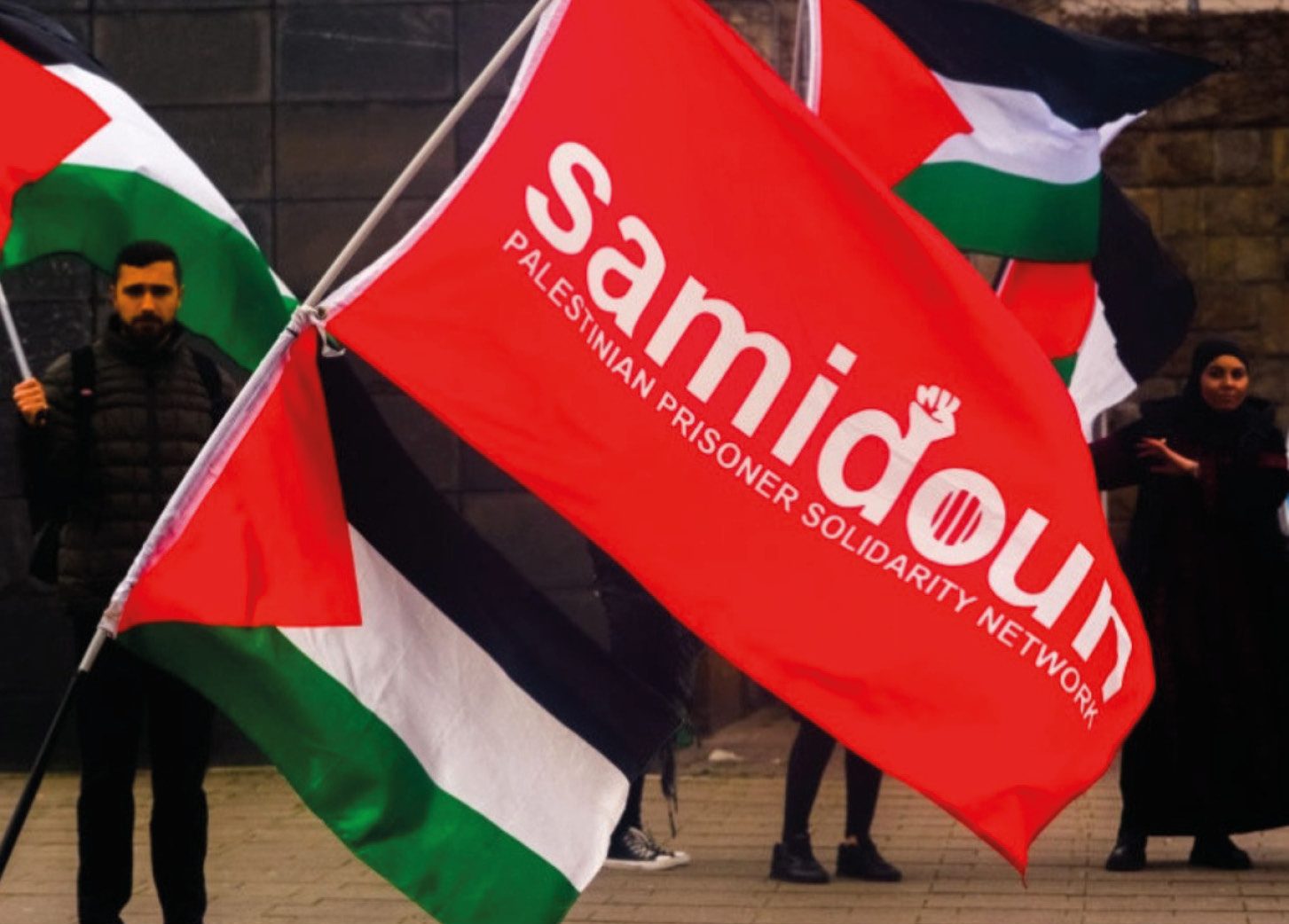
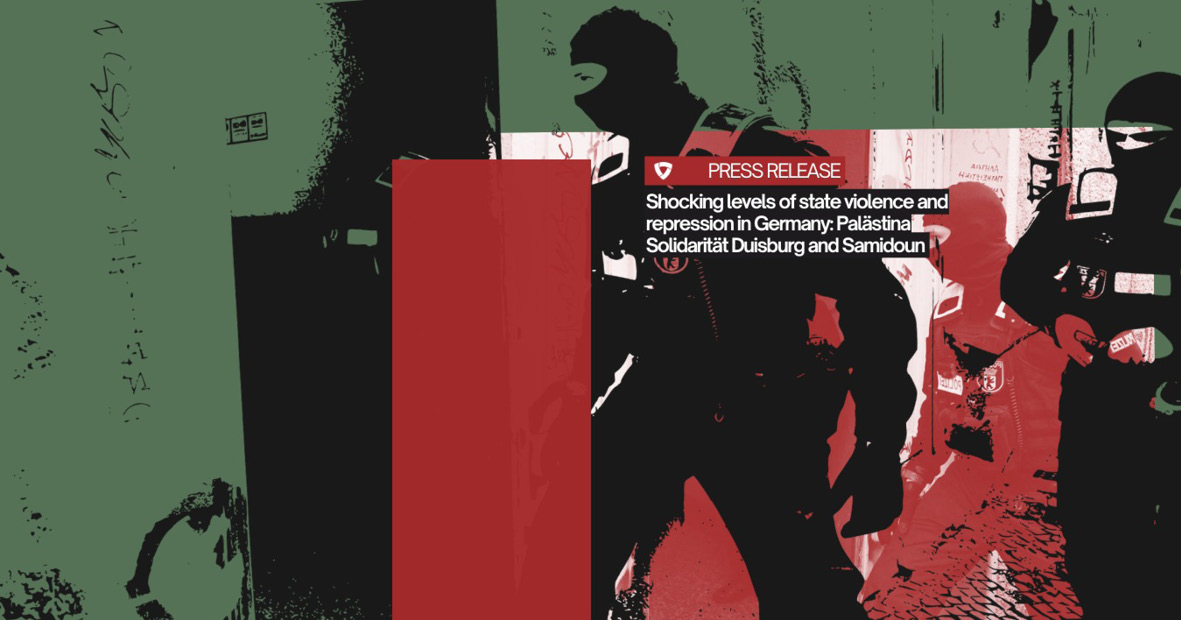
What started with individuals soon extended to entire communities, collectives, and organizations. Authorities in Europe are not only going after lone voices, they are also systematically trying to dismantle collective efforts and networks that sustain resistance. And when the cynical weaponization of antisemitism failed to achieve its goals, the authorities defaulted to their predicted tactic: “anti-terrorism” laws, a trend we identify across Europe and the UK. In the UK, Palestine Action faces criminalization for direct action against arms companies complicit in the Israeli genocide in Gaza. In France, Urgence Palestine is targeted under counter-terror frameworks; Germany has banned Samidoun. Belgium and Italy are escalating measures that could pave the way for future proscriptions.
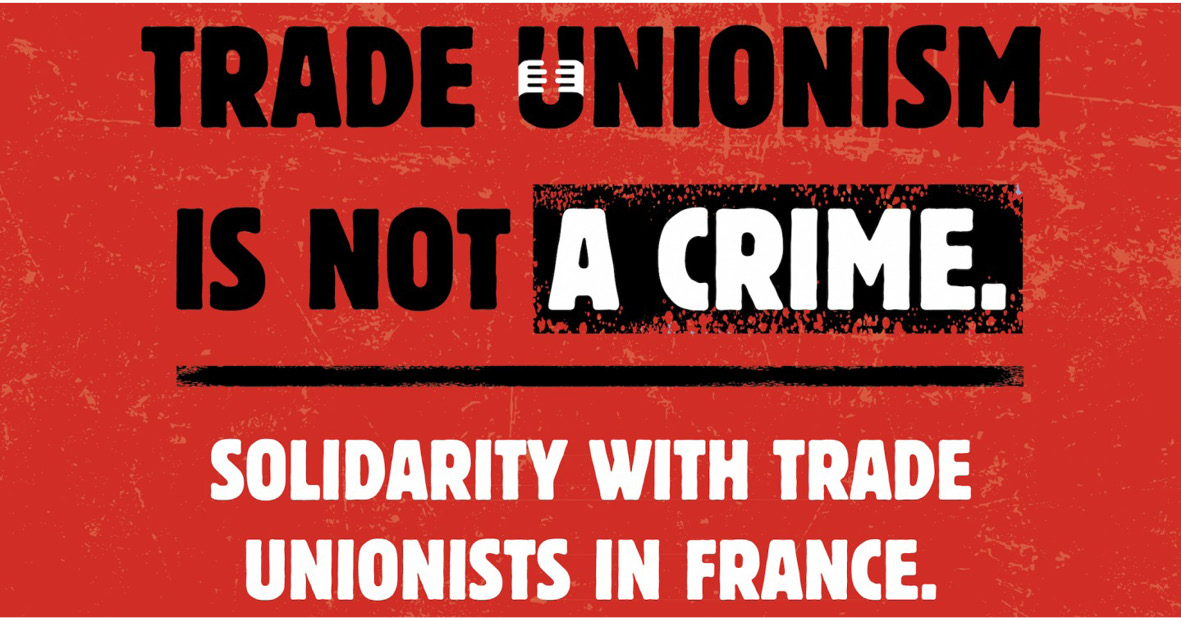
The strategy is clear: Governments across Europe deploy vague legislation and “anti-terror” laws to fragment the Palestine solidarity networks. By labelling Palestine solidarity groups “extremist” or “terrorist,” states complicit in the genocide aim to isolate these groups from the rest of the movement and reduce their legitimacy.
The repression of Palestine solidarity did not start in October 2023. Since 2019, the ELSC has monitored and documented thousands of cases of repression across Europe and Britain. But this repression has escalated sharply in response to the solidarity movement’s growth – a natural moral reaction to a live-streamed genocide. The scale is staggering. In Germany alone, we have made public 766 cases since 2019 through our “Index of Repression,” a continuously updated database that tracks these incidents. Similar indexes will be published for other countries in the EU and for Britian. Germany is neither unique nor exceptional.
Europe’s architecture of repression entails the targeting of individuals and the proscription of groups; the firing of employees and police crackdowns; the weaponization of antisemitism and the enactment of draconian anti-terror laws. This architecture forms a pillar in a triangle of Europe’s complicity in Israel’s genocide in Gaza.
This repression manifests across all sectors: academia, public institutions, media, finance, culture, education, employment, immigration, and more. No place is exempt from the machinery of silencing. Each tactic they use, serves the same purpose: to isolate, exhaust, and intimidate those who speak against genocide. Repression, in short, is the ruling class’s primary tactic to silence dissent against its policies.
Consider Europe’s complicity in Israel’s genocide in Gaza as a triangle. The first pillar is material support, including arms exports and financial aid. The second is political support, which provides diplomatic cover for Israel’s crimes by justifying and legitimizing them. But these two pillars can’t stand without a third: the systematic silencing of internal dissent. Without suppressing opposition at home, political and material support for genocide becomes impossible.
“Western democracy” has a clearly defined limit: you are free to speak only until you challenge the ruling class and its vested colonial and geopolitical interests. The moment you do, the facade of tolerance vanishes, and the machinery of repression is unleashed. This repression is the product of coordinated networks that involve government institutions, corporate entities, media platforms, and advocacy and lawfare groups.
Such repression, however, is not new. What we are currently witnessing in Europe is the culmination of a decades-long attempt by authorities and institutions to conflate the Palestinian identity and solidarity with terrorism and antisemitism. An Orwellian strategy is employed to portray the Other as a barbaric threat and the Self as the paragon of moral security. The language used by European media, politicians, and police to justify Palestine solidarity repression is designed to prevent any divergence from colonial mainstream narratives. As part of this strategy, we see enormous efforts by European politicians and mainstream media echoing the “us versus them” and “civilized versus uncivilized” dichotomy of 9/11.
But the Palestine solidarity movement is fighting back because as long as – and wherever – there is oppression, there will be resistance. This fight is not so much about saving so-called liberal Western democracies but rather about defending those who oppose genocide and seek accountability.
Through our work, the ELSC defends and empowers the movement, enabling it to continue speaking out against genocide and the complicity that enables it. We expose these acts not as isolated cases but as part of a systematic, colonial-rooted policy of silencing dissent. A policy that seeks to crush opposition by denying support and exhausting the movement with bureaucracy, tremendous legal fees, and personal retaliation. This is exactly what we confront.
We recognize legal victories as vital for individuals and significant for the movement and the collective struggle. In Dima’s case, we appealed, and the court ruled that the child, separated for months from the mother, must be allowed to reenter Germany. Nouraldin won his case after being unjustly fired. We have a case against Arsenal for Mark’s dismissal.
We cannot defend everyone, as the scale of repression exceeds any single organization’s capacity. But by creating crucial legal precedents, we hope to deter perpetuators of repression and, simultaneously, let targets of repression know that they are not alone and that – equally important – they can fight back.
In the last two years, we have seen a massive movement that is defined by its moral clarity and its refusal to be intimidated. On the streets of European cities, we have witnessed the most brutal police suppression week after week: broken hands, bleeding faces, head injuries, and throats suffocating under police arms. And yet, the people have refused to be intimidated, continuing to take to the streets every single week for two years. This movement has made it possible to reach a point where protesting Israel’s participation in Eurovision, UEFA is no longer a taboo; that a demand to impose sanctions and boycotts on Israel is no longer the topic of marginalized leftists. This movement’s voices and actions are leading to the isolation of the Zionist entity on every single front, no matter the repression.
Understanding the limits of the law – especially within racist, anti-immigration, anti-Arab, anti-people of color, and anti-working class regimes and systems – we know that appealing to the implementation of laws is not the salvation. Rather, we see it as one strategy among many to expose and challenge these systems. Through strategic legal actions we seek to protect the movement’s capacity to continue to speak out, demand an end to genocide, disrupt complicity, and refuse submission to repression.
We must always remind ourselves that this is not about saving “liberal democracies.” It is about defending the people who oppose genocide and seek accountability, ensuring that they are not smashed and silenced. For years to come, we need to remain steadfast; this is not going to end soon. The worst could be still ahead of us, as per Israel’s genocidal and colonial plans. And while regimes have built an architecture of repression, we must continue to build an architecture of resistance. The legal front is only one pillar of this architecture.
The European Legal Support Center (ELSC) is the first and only independent organization defending and empowering the Palestine solidarity movement across Europe through legal means, providing free legal advice and assistance to associations, human rights NGOs, and groups and individuals advocating for Palestine in mainland Europe and Britain.
