


By Ruwa Jabr
The role of export promotion in Palestine has been undergoing a substantive and deliberate transformation. Operating within an economy shaped by fragmentation, restricted mobility, and recurrent shocks, Palestine Trade Center (PalTrade) has moved beyond a narrow focus on trade facilitation toward an integrated export development model, one that systematically links market intelligence, physical market presence, digitalization, human capital, and private sector partnerships. Central to this shift has been the recognition that sustainable export growth requires institutional adaptability, proximity to markets, and collaboration with private actors as co-builders rather than passive stakeholders.

Private sector partnerships now sit at the core of PalTrade’s approach. Rather than acting solely as an intermediary, PalTrade increasingly positions itself as a connector between Palestinian enterprises and international buyers, service providers, financial institutions, and ecosystem actors. These partnerships enable firms to integrate into value chains, test market demand, and move beyond episodic export transactions toward longer-term commercial relationships. In a context where uncertainty is structural, partnerships have become a primary mechanism for sharing risk, validating competitiveness, and sustaining access to external markets.
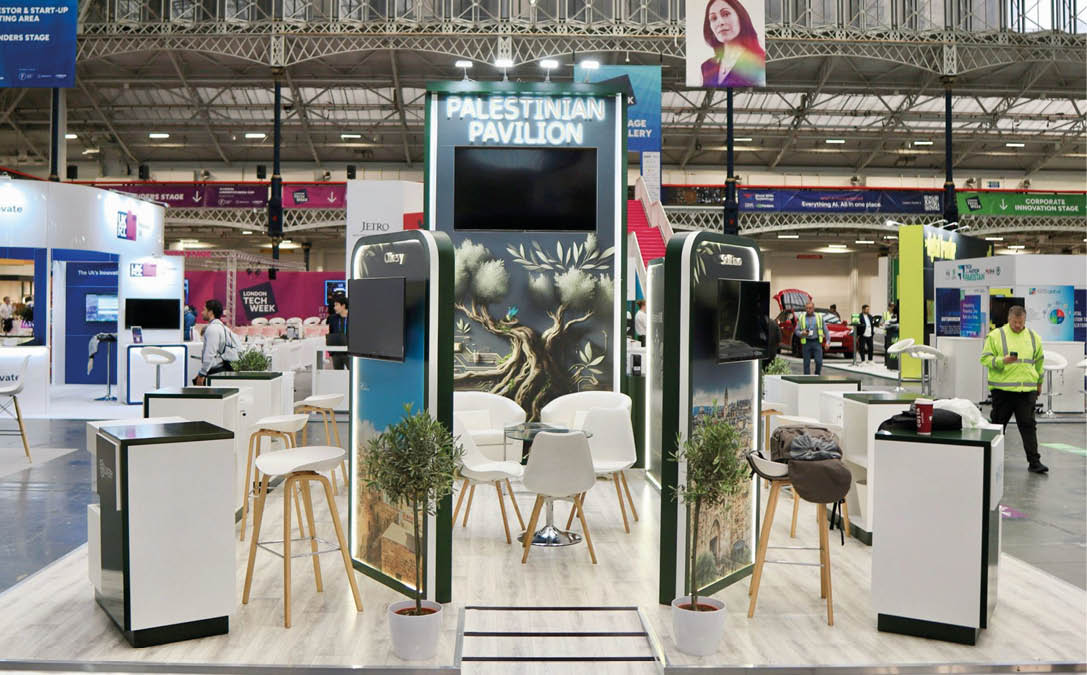
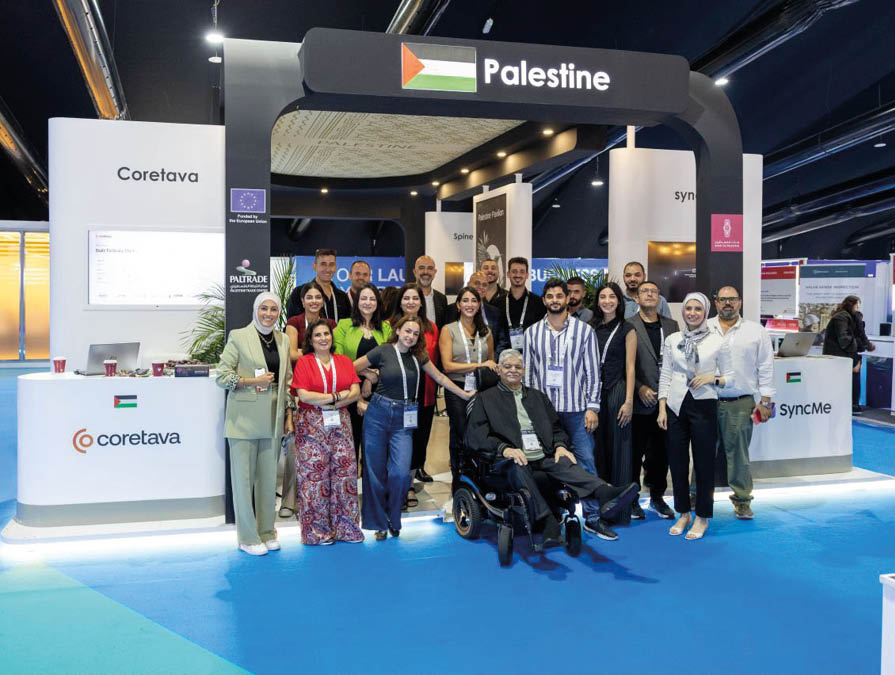
This transformation also reflects an expanded understanding of what constitutes an export. While agriculture, manufacturing, and agro-processing remain central to Palestine’s productive base, PalTrade has broadened its scope to explicitly include ICT, digital services, and technology-enabled business models. Software development, digital platforms, creative services, and data-driven solutions are increasingly recognized as viable export pathways, less constrained by geography and closely aligned with global demand. Importantly, ICT is not treated as a stand-alone sector, but as a crosscutting enabler embedded across PalTrade’s export support architecture, strengthening competitiveness in both traditional and emerging industries.
A cornerstone of this evolution is the Market Intelligence Hub, established as a centralized and continuously updated function providing exporters with structured market insights, regulatory and standards guidance, buyer intelligence, and sector-specific analysis. By shifting from ad hoc advisory services toward a systematic intelligence function, PalTrade has reduced information asymmetries that often prevent firms from making informed export decisions. The hub also serves as a shared interface between exporters and private market actors, translating demand signals into actionable guidance and supporting more strategic positioning across goods and services exports.

This digital backbone is complemented by investment in shared physical export infrastructure. The establishment of a warehouse and logistics hub in Rotterdam represents a shift from short-term promotion toward sustained operational engagement in European markets. By offering a physical consolidation point for exports, the warehouse reduces logistics friction, lowers trade costs, and improves delivery predictability, particularly for small and medium-sized exporters facing scale constraints. Together, the Market Intelligence Hub and the Rotterdam warehouse demonstrate how digital intelligence and physical execution can be combined to address structural barriers to trade.
This integrated model is now being extended through PalTrade’s representative office in Saudi Arabia, designed to translate centralized market intelligence into on-the-ground engagement in one of the region’s most strategically important markets. Functioning as an operational extension of the Market Intelligence Hub, the Saudi office connects Palestinian exporters directly with buyers, chambers of commerce, and private sector partners, enabling real-time validation of market demand and faster conversion of intelligence into commercial opportunities. By combining data-driven insights with permanent market presence, the office strengthens credibility, shortens pathways to partnership, and reinforces PalTrade’s shift toward sustained, relationship-based export promotion.
Human capital development further reinforces this model. Export competitiveness, particularly in ICT and service-driven sectors, depends as much on skills as on access. PalTrade has increasingly worked at the intersection of trade and employment, linking exporters with demand-driven training and talent development aligned with international market requirements.
Taken together, these shifts illustrate PalTrade’s repositioning as a modern export promotion institution, one that integrates goods and services, digital intelligence and physical presence, and private sector partnerships as core infrastructure for resilience. As Palestine navigates its digital horizons, this partnership-led, systems-based approach underscores the role of adaptive institutions in enabling sustainable, private sector-driven export growth under constraint.
 Ruwa Jabr is the CEO of the Palestine Trade Center (PalTrade) and one of its youngest leaders, with over 20 years of experience in trade and export development. She has led major strategies to strengthen Palestinian SMEs, promote exports, and enhance market intelligence. Her career includes senior roles at PalTrade and leadership positions with international NGOs such as Oxfam. Ruwa is also an entrepreneur and a strong advocate for youth and women’s economic empowerment. She holds a master’s degree in business management, combining strategic leadership with hands-on expertise.
