


By Juliette Bejani and Ambarina Zenab
The Convention on the Rights of Children (CRC) aims to guarantee the right to life, safety, and well-being for children around the world. Unfortunately, however, this convention and the international community have failed Palestinian children. Displacement, lacking access to healthcare and food, interruptions in their education, and unlawful arrests plagued Palestine’s children even before the start of the 2023 war. But October 7, 2023, has exacerbated the unjust conditions that Palestinians have endured under the Zionist occupation. The siege on Gaza, imposed since 2007, and repeated wars over the past two decades have not only destroyed homes, educational facilities, healthcare, and access to resources and nutrition – they have also left a psychological impact on the mental wellbeing of children, who over the past years have been subjected to unimaginable trauma and loss.
October 10, 2025, marked the beginning of the first phase of the latest ceasefire in Gaza, yet attacks by the Zionist entity have persisted, and the agreement has been violated daily –which is underreported by mainstream international media.1 These ceasefire violations continue to endanger the right to life of Palestinian children and reflect the deep failure of the international community to enforce international law. In late December 2025, the IDF announced that it would block from entering the occupied territories 37 aid organizations that have – as much as possible within the longstanding restrictions and blockades imposed by Israel – facilitated the distribution of necessary food supplies, shelter, and medical support.2 Without these resources and amid the daily ceasefire violations, children continue to suffer.
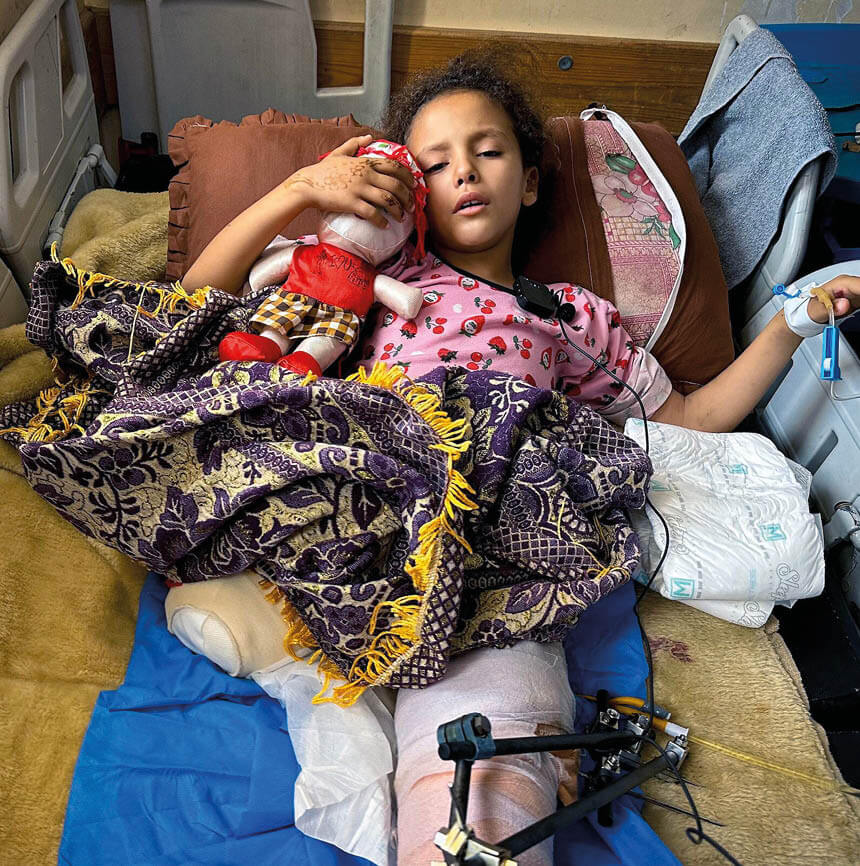
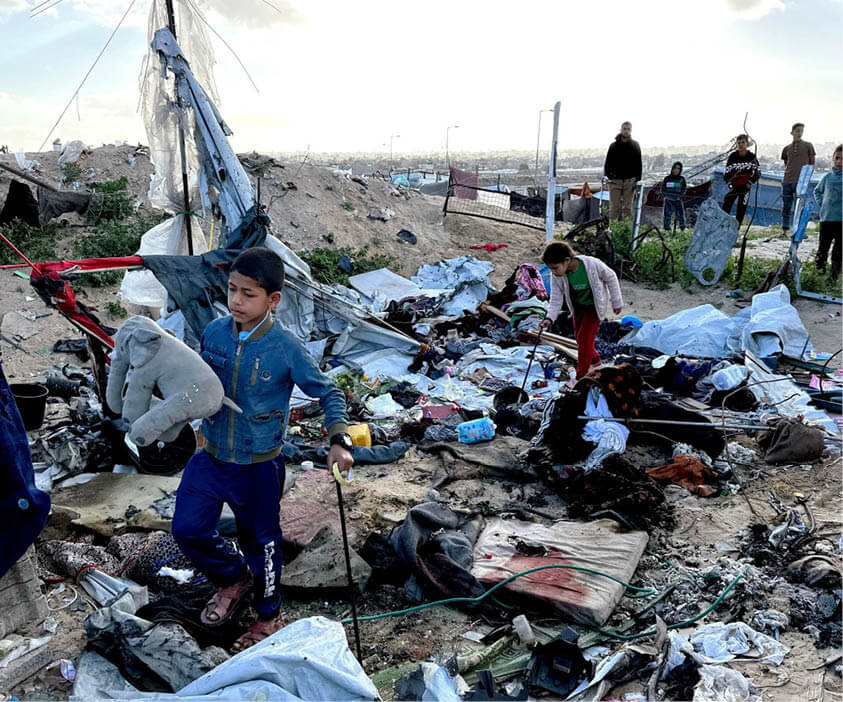
According to OCHA’s latest Humanitarian Situation Report, 1.7 million Gazan Palestinians remain displaced from their homes in late March 2026.3 Gaza’s children have found temporary shelter in the remnants of destroyed homes, makeshift tents, and overcrowded schools, with living conditions deemed “unfit for survival” as far back as late 2024.4 The CRC asserts the right to adequate housing. But while over 330,500 housing units have been completely destroyed,5 only 125,000 tents suitable for temporary shelter are currently inhabitable.6 This past winter, rain and storms have flooded and shattered tents, leaving families exposed to the elements, and 14 people including children have died in freezing temperatures due to the lack of accommodation.7
Despite the October 2025 ceasefire in Gaza, living conditions for Palestinian children remain unsustainable. As of February 2026, UNICEF reports that over 120 Palestinian children in Gaza have been killed despite the ceasefire.38
Even though blocked crossing have imposed severe limitations, the UN Shelter Clusters have attempted to provide adequate resources and temporary housing to the displaced in Gaza, and offered assistance to those impacted by weather-based damages. Thus, 7,720 households have received aid in late February and early March, which included 240 sealing-off kits for tents, 1,595 bedding items and kits, 711 tarpaulins, 983 clothing kits and vouchers, and some tents.8 At least 1,500 hygiene promotion sessions and 400 cleaning campaigns by UNRWA have benefited at least 400,000 displaced people in the Gaza Strip.9 Yet this is in no way sufficient.
Following the unprecedented destruction and displacement in the Gaza Strip, education is severely challenged. Even though the right to education is explicitly mentioned by the CRC, it has become a luxury that only the most fortunate children can enjoy. According to UNICEF, 97 percent of schools in Gaza have been destroyed since 2023,9 and PCBS reports that as of March 10 of this year, 143 schools and universities have been completely obliterated, and 366 universities and schools have been partially destroyed.10 In late October 2025, the Palestinian Ministry of Education reported that 20,080 students had been killed in Palestine since October 7, 2023.10 Furthermore, UNICEF stated in November 2025 that 658,000 school-age children had had limited access to face-to-face education for over two years.11
In light of funding cuts and damaged educational facilities, educational activities have been relocated to new spaces. Makeshift classrooms have been created in tents and damaged buildings in the attempt to continue education, and create some sense of normalcy, amid uncertainty and war. For the first time in two years, UNICEF launched a Back to Learning Campaign across Gaza in January 2026. Within this initiative, kits for early childhood development and wellbeing were introduced. Adaptive learning systems have been implemented to help children catch up on their studies amid unpredictability and reconstruction efforts, however limited. But access to basic materials such as pens or notebooks is scarce, and the children who are able to access education are finding it extremely difficult to focus on coursework due to trauma.12 In the first week of March 2026, UNRWA reports, 58,543 students participated in basic literacy and numeracy learning endeavors.13 The week after, 59,980 children, including 838 with disabilities, received their education across 75 UNRWA shelters, as per the organization’s register.14 All this while UNRWA is facing attacks from the Zionist entity, including the targeted destruction of physical structures and attempts to delegitimize the organization’s work.15
In the West Bank, widespread displacement and movement restrictions are limiting safe access to education. As Al Jazeera reported in February 2026, Israel has for years withheld the customs revenues it owes the Palestinian Authority, rendering the latter unable to pay Palestinian teachers more than half their salaries. This has limited children’s access to educational resources and hampers the functioning of public schools, where teaching days have been reduced to three and four instead of five days per week.16 Moreover, teachers at many village schools face restrictions when commuting due to checkpoints and safety concerns. In some instances, and currently due to the war against Iran, children attend online courses, which places a heavy burden on parents, particularly if they are working, and poses its own problems for large families when not enough devices are available. The forced evacuation of refugee camps in Jenin, Tulkarem, and Nour Shams has left children struggling to attend school. Due to mass displacement from Jenin alone, 1,200 children from the refugee camp have been left without schooling, while students in government schools lost 100 days of classes during the first semester of the current school year.17
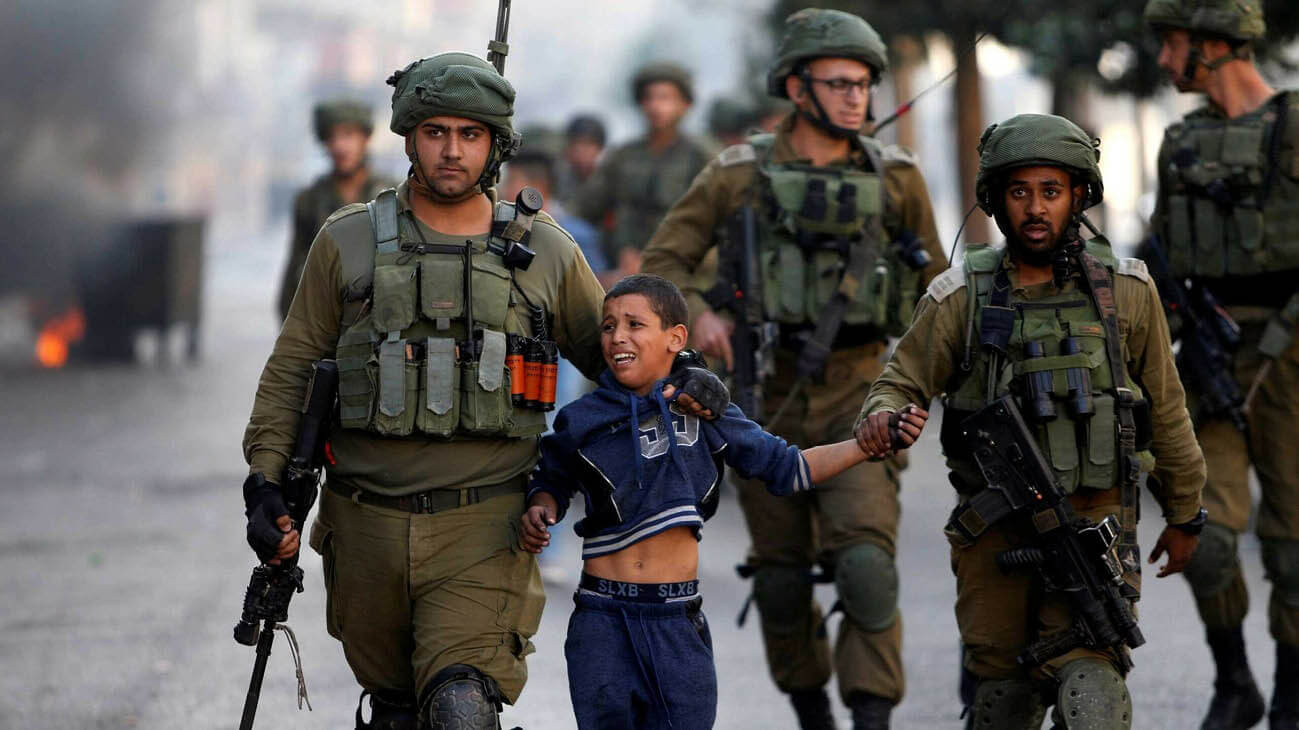
Since October 7, the conditions faced by Palestinians in Israeli prisons have deteriorated severely. As of late December 2025, 351 children were detained in Israeli prisons, 51 percent of which were held in administrative detention without charge. (This number does not include children detained in Israeli military detention sites or interrogation centers; no data is available regarding the number of children or adults detained in these locations).18 Arrests are most often carried out through illegal methods such as blindfolding, night raids, or physical assault. Moreover, they are often arbitrary, and children are denied a lawyer.19 In the Gaza Strip, 10,000 children are missing, but there is a lack of data on if they are buried under rubble, maimed beyond recognition and buried in a mass grave, separated from their families and lost, or detained by Israel, as the UN raised concerns about the possible mass detention of thousands including children.20 Child prisoners have reported being beaten and denied healthcare, food, and water, which could lead to severe illnesses or even death, as in the case of Palestinian teenager, Walid Ahmad.21 This structural violence represents a form of psychological warfare.16 Children are separated from their families, tortured, and denied their right to a healthy childhood, impairing their psychological growth and health.
Statistics on displacement, malnutrition and starvation, killings, illegal arrests, and limited access to education and healthcare facilities indicate that Palestinian children are denied their rights.
These data suggest clear violations not only of children’s rights but also of International Humanitarian Law (IHL). Like every other child, Palestinian children have the right to be protected from violence and abuse. Even in a war zone, it is illegal for arrests to be carried out without access to lawyers and courts.22 In such circumstances, Palestinian children may grow up without any reason to believe in human rights or the value of law. The Israeli prison system, which should represent the execution of the law, operates in total illegality and with unspeakable violence.
Children’s health has deteriorated to an unimaginable level. As of early September 2025, the Ministry of Health reported, at least 42,011 children were injured, and at least 21,000 children suffered permanent disabilities.23 PCBS reports that children have lost sight, hearing, mobile function, and limbs during the genocidal war on Gaza, and 18 percent of 4,800 amputees are children.24 Since the ceasefire, however, reportage on the health conditions and injuries of children has been severely limited.
With medical aid and access to resources destroyed by the IDF, and a near total blockade on the entry of humanitarian aid imposed for months, children have been pushed into survival mode. As of March 2026, only 17 hospitals are functional, and access to medication and treatment is limited, if available at all.25 Despite the heavy limitations placed by the Israeli government and protesters on the entry of humanitarian aid, the United Nations and other aid agencies are attempting to provide medical resources and treatment to children. UNICEF has provided mental health treatment through counseling and psychological outreach, and UNRWA reports that 520,000 displaced children have received mental health support services. But only six UNRWA health centers, four temporary health centers, and 28 medical points remain operational.26
As most of the water infrastructure has been destroyed by Israeli bombardment, and pollution and contamination are infiltrating drinking water sources – with 83 percent of water tanks deemed nonfunctional – UNICEF and its partners are attempting to repair water pipes and reopen water pump stations to counter illnesses such as hepatitis A and acute watery diarrhea. Many children have developed waterborne illnesses amid limited access to potable water and functioning healthcare centers. PCBS reports that, as of July 2025, 95 percent of households were unable to access safe drinking water. Due to contamination, 43 percent of children suffer from diarrhea, 58 percent struggle with fevers, and 25 percent have experienced acute respiratory infections.27
If the international community upheld its values and respected its vows to abide by international law, it would move beyond words and take action, be it through economic sanctions, weapons embargoes, or diplomatic measures.
According to UNICEF, 101,000 children require treatment for acute malnutrition.28 Before the ceasefire was announced, almost all imports of food into Gaza had been halted, with OCHA reporting that in September 2025, Israel allowed less than 26 percent of the daily requirement to enter.29 Moreover, when a very limited number of food distribution centers was implemented by the US-supported so-called Gaza Humanitarian Aid Foundation, the IDF frequently attacked and killed civilians collecting food.30 Thus, in mid-August 2025, the Integrated Food Security Phase Classification (IPC) estimated that through June 2026, 41,000 children in Gaza would face the risk of death from hunger and malnutrition, while 132,000 children under five might face severe malnutrition, as 26 percent of Gaza’s population was facing IPC phase 5 (the most severe level of food insecurity).31 The situation slightly improved following the ceasefire, when 5 percent of Gaza’s population was estimated to face IPC Phase 5; Gaza’s population was almost entirely in IPC phases 3 or 4 in late 2025.32
Even though the food security situation improved following the ceasefire, it remains extremely fragile. UN Secretary-General António Guterres warned in December 2025, that 1.6 million people (more than 75 percent of Gaza’s population) “are projected to face extreme levels of acute food insecurity and critical malnutrition risks.”33 Children and breastfeeding women are most affected, with around 101,000 children aged six to 59 months expected to suffer from acute malnutrition through mid-October 2026, and 37,000 pregnant and breastfeeding women are projected to require treatment by the same date.26
With world attention focused on the joint US-Israeli attack on Iran, the aid situation has deteriorated further, particularly when Israel in early March closed all crossings to Gaza for four days. But the amount of aid Israel permitted subsequently has been reduced even more than what had entered before the assault on Iran. Euromed Monitor declared these measures “not only a breach of the ceasefire agreement but [possibly] also … a grave violation of international humanitarian law.”34 Moreover, Israel is currently studied for genocide at the ICJ for the mass killings and famine levels it has created in Gaza.35 If done intentionally, the imposition of living conditions intended to bring about the physical destruction of a population in whole or in part constitutes a genocide.36 Children are the first victims in these conditions, as they are most vulnerable to hunger and related illnesses.
Thus, although a “ceasefire” has been declared in Gaza, the situation for Palestinian children remains beyond dire. When children’s rights are so openly and continuously disrespected, legal systems lose their credibility. Protecting Palestinian children is therefore a matter that touches upon children of the entire world, as they can no longer rely on the legal order. The continuous lack of accountability has enabled the war and attacks on children to be extended to other countries, such as Iran and Lebanon. While reporting on Palestine and Gaza has decreased, it remains crucial to stay alert and raise the issue, as the situation continues to represent a threat to childhoods and legal systems. The international public must pressure their governments for well overdue action and oblige Israel to uphold international law and protect the children of the region.
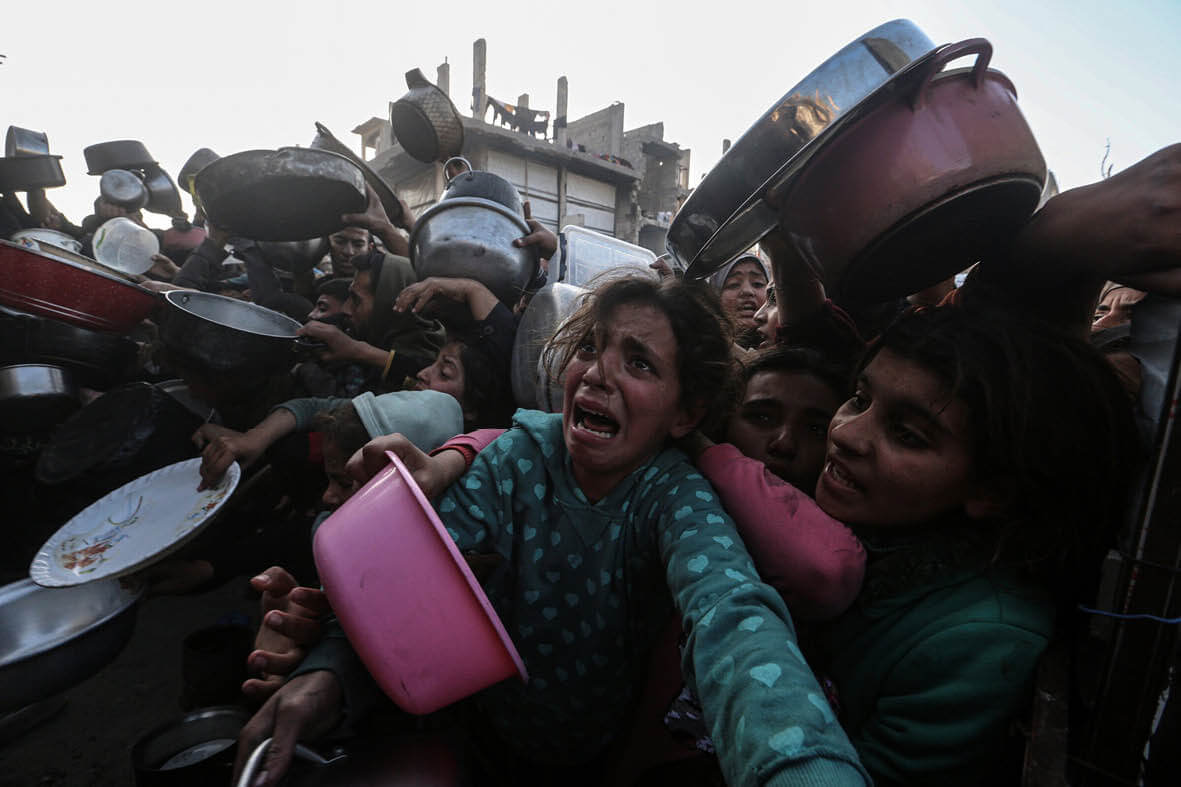
The Palestinian Central Bureau of Statistics (PCBS) reports that between October 7, 2023, and March 1, 2026, at least 18,592 children were killed in the Gaza Strip, and thousands remain buried under the rubble.39 Relief Web reported that in the West Bank, 233 children were killed between October 2023 and March 2026.40
Aid agencies must be given access to Gaza to provide necessary medical treatment, food packages, and resources to the displaced. Instead of temporary solutions, a permanent, abided-by ceasefire is the first step. Humanitarian aid, medical supplies and personnel, water and food, alongside alternative spaces for education, must be prioritized to create stability. Consistency in the implementation of these initiatives requires structure and continuity, rather than temporary band-aid solutions to the violence and destruction that Palestinian society has faced by the Zionist occupation.
In late December 2025, the Israeli Prison System held 351 Palestinian minors on “security grounds” and 106 for being illegally in Israel, as documented by B’Tselem.41
While the international community must ensure accountability, we must also give agency to the voices of the Palestinian children. Initiatives such as The Gaza We Want by UNICEF demonstrate that the dreams and aspirations of Palestinian children are connected to peace, safety, and security.37 Many children have expressed, through their art and in interviews, the simplest of wishes – walking safely to school, being with friends in the classroom, and sleeping soundly and safely at night. These are the very fundamental rights that the CRC promises every child, but for the survivors amid the ceasefire, these rights still feel inaccessible. Living under conditions of survival under the Zionist occupation reconditions a life to uncertainty and violence, which in turn impedes healthy development and well-being, reinforcing a cycle of trauma and struggle that will impact a child well into adulthood. While we look towards the future of Gaza’s children, reconstruction and recovery involves the consideration and input of children, as their existence and life beyond survival guarantees the continuation of the Palestinian nation.
1 Aljazeera Center for Public Liberties and Human Rights, “Gaza’s Tragic Present and Uncertain Future: Gaza Ceasefire Violations, Shelling, Arrests, and a Fragile Return to Rafah,” Aljazeera, February 18, 2026.
2 UN Office of the High Commissioner for Human Rights, “Israel Ban on 37 Aid Groups Makes Life Unbearable for Genocide Survivors in Palestine, Say UN Experts,” United Nations, January 15, 2026.
3 OCHA, “Humanitarian Situation Report, 27 March 2026,” United Nations Office for the Coordination of Humanitarian Affairs.
4 “Conditions in Gaza ‘Unfit for Human Survival,’ Acting UN Relief Chief Tells Security Council,” OCHA, November 13, 2024.
5 Palestinian Central Bureau of Statistics, “Destroyed Buildings,” accessed March 31, 2026.
6 The Palestinian Information Center, “Night of Rain and Ruin: Struggle to Survive in Mawasi Khan Yunis,” December 12, 2025.
7 Elis Gjevori, “Fourteen Palestinians, Including Children, Die in Gaza amid Storm Byron,” Alazeera, December 12, 2025.
8 OCHA, “Humanitarian Situation Report, 6 March 2026.”
9 UNICEF, “After Two Years of War: Gaza’s Education System on the Brink of Collapse,” November 4, 2025.
10 Wafa News Agency, “Education Ministry Says 20,080 Students Killed Since Start of Israeli Aggression on Palestine Since Oct. 7,” October 28, 2025.
11 UNICEF, “After Two Years of War: Gaza’s Education System on the Brink of Collapse.”
12 Sarah Ferguson and Tong Su, “Getting Children in Gaza Back to Learning,” UNICEF USA, February 5, 2026.
13 UNRWA, “Situation Report #212 on the Humanitarian Crisis in the Gaza Strip and the Occupied West Bank, including East Jerusalem,” March 11, 2026.
14 UNRWA, “Situation Report #213 on the Humanitarian Crisis in the Gaza Strip and the Occupied West Bank, including East Jerusalem,” March 18, 2026.
15 David Hearst, “Israel’s Campaign Against UNRWA Could Set Precedent to Dismantle Other UN Agencies, Chief Warns,” Middle East Eye, April 3, 2026.
16 Al Jazeera Staff, “Israel Deprives Palestinians of Proper Education by Withholding Revenues,” Al Jazeera, February 13, 2026.
17 European Commission, “Resilient Women: Protecting Education Amid Conflict and Displacement,” December 6, 2025.
18 Defense for Children International Palestine, “More Than Half of Palestinian Child Detainees Have No Charges,” March 18, 2026.
19 Save the Children, “Stripped, Beaten and Blindfolded: New Research Reveals Ongoing Violence and Abuse of Palestinian Children Detained,” July 10, 2023.
20 Save the Children, “The Missing Children of Gaza,” 2025.
21 Julia Frankel, “Israeli Judge Closes Case of Palestinian Teen’s Death in Prison Despite Evidence of Starvation” ABC News, March 25, 2026.
22 International Humanitarian Law Databases, “Rule 99: Arbitrary Deprivation of Liberty is Prohibited” International Commission of the Red Cross, no date.
23 Save the Children, “Gaza: 20,000 Children Killed in 23 Months of War – More than One Child Killed Every Hour,” September 6, 2025.
24 PCBS Report directly shared to PLSC and AUB by the Palestinian Central Bureau of Statistics Registers & Statistical Monitoring Directorate (RSMD) Gender Statistics Department.
25 Palestinian Central Bureau of Statistics, “Destroyed Buildings” accessed March 31, 2026.
26 UNRWA, “UNRWA Situation Report #208 on the Humanitarian Crisis in the Gaza Strip and the Occupied West Bank, including East Jerusalem,” February 11, 2026.
27 PCBS Report directly shared to PLSC and AUB.
28 Humanitarian Action for Children, “State of Palestine: Gaza Strip and West Bank” Revision 1, UNICEF, February 2026.
29 OCHA, “Gaza Humanitarian Response Update | 14 – 27 September 2025,” October 1, 2025.
30 Human Rights Watch, “Gaza: Israeli Killings of Palestinians Seeking Food Are War Crimes,” August 1, 2025.
31 IPC Analysis Portal, “Gaza Strip: Acute Food Insecurity Situation for 1 July – 15 August 2025 and Projection for 16 August – 30 September 2025” IPC.
32 IPC Analysis Portal, “Gaza Strip: Acute Food Insecurity Situation for 16 October – 30 November 2025 and Projection for 1 December 2025 – 15 April 2026” IPC.
33 UN News, “Gaza Famine Pushed Back, but Millions still Face Hunger and Malnutrition, UN Says,” United Nations, December 19, 2025.
34 Euro-Med Human Rights Monitor, “Israel Capitalises on Global Distraction with Iran War to Intensify Gaza Starvation,” March 16, 2026.
35 United Nations, “South Africa vs Israel: 14 Other Countries Intend to Join the ICJ Case,” October 30, 2024; and Lemma Shehadi, “Six Countries Intervene in ICJ Genocide Case Against Israel,” The National, March 13, 2026.
36 Genocide Convention (1948), Article II(c).
37 Andrea Andres, “Voices from Gaza: Children’s Hopes for the Future,” UNICEF Australia, March 9, 2026.
38 “UNICEF in the State of Palestine Humanitarian Situation Update,” UNICEF, February 2026.
39 Palestinian Central Bureau of Statistics, “Martyrs” (daily updated numbers of Israeli violence-related deaths), accessed on March 29; note that these are only the officially registered bodies, which does not include those unaccounted for.
40 Relief Web, “’They Shoot to Kill’: Settler Violence in the West Bank,” United Nations Office for the Coordination of Humanitarian Affairs (OCHA), March 26, 2026.
41 B’Tselem, “Statistics on Palestinian Minors in Israeli Custody,” updated March 29, 2026.
42 YouTube, “UNICEF: Children in Gaza Amputated Without Anaesthesia / WION,” December 30, 2023.

Juliette Bejani is an MA student at the American University of Beirut, studying public policy and international affairs. She handles communications for the university’s Palestine Land Studies Center, including its newsletter, and has a background in creative and academic writing.

Ambarina Zenab is an MA student at the American University of Beirut in the Center for Arab and Middle East Studies. She has a background in publication and writing, visual art and illustration, and photography. Her research is centers on Islamic narratives and heritage, space, and sociopolitical identity across the region. She works with the Palestine Land Studies Center at AUB on research and writing projects.
