


An interview with Carol Mansour and Muna Khalidi
Questions by Omar Dana
OD: Documenting Resilience: Much of your work illuminates the lives of Palestinians facing displacement and war. How do you use documentary filmmaking to capture both hardship and resilience, especially among women? We’re curious how you balance depicting raw realities (bombardments, exile) with celebrating the hope and strength that persist.
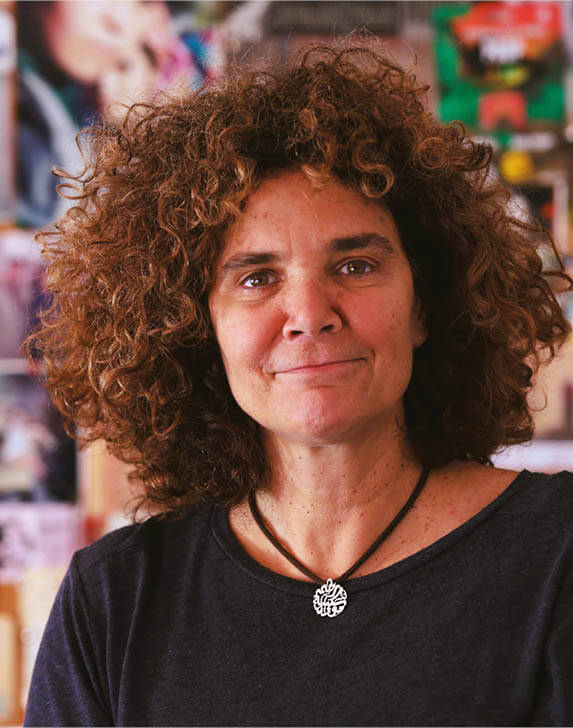
CM&MK: The occupation in Palestine has gone beyond anyone’s worst nightmare. Each day brings a new layer of devastation that feels impossible to grasp yet quickly becomes a reality that we need to grapple with and resist. In Gaza, families are being erased. People are being burned alive and massacred. Thousands are displaced again and again, forced to flee with nothing. Families are torn apart, children orphaned, parents left searching through rubble for what remains of their loved ones. The most basic conditions for life – water, food, shelter, and medical care – are stripped away, turning survival itself into a daily battle. Palestinians are being displaced and killed not only in Gaza but also across the West Bank.
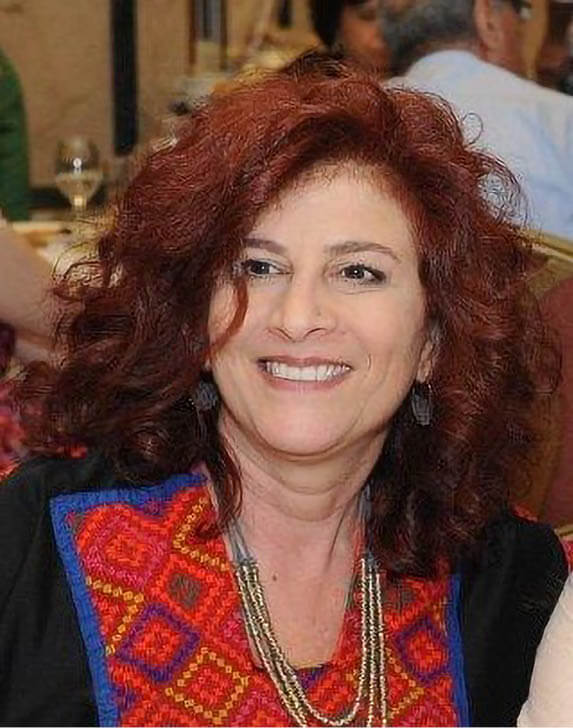
This is happening in front of our eyes, in front of the entire world, documented in real time and shared across screens. The scale of suffering is unbearable. What makes this even worse is the normalization of this criminality that is happening in front of our eyes. It has become part of our daily news. The intolerable has become expected. And yet, amid this devastation, people in Gaza and the West Bank are holding on to dignity, memory, and the insistence on existing.
No matter how dark the situation, we, as filmmakers, must never give up. As Palestinians in the diaspora, we do not have the luxury of silence, nor the privilege of turning away. We have a responsibility to tell the story. We cannot stop talking about the suffering, nor can we stop talking about the resistance. Even when the world seems so gloomy, it is our duty to create spaces where humanity is seen and heard. It is our duty to keep fighting in every way possible: through films that document and testify, through social media that amplifies voices, through conversations that challenge injustice wherever it appears. We may not be able to change everything, but we can refuse to normalize cruelty. We can insist on dignity. As long as we continue to tell these stories, we keep the possibility of justice alive.
OD: Memory and Motherhood: Aida Returns follows the journey of fulfilling your mother’s wish to return to Jaffa, intertwining personal grief with the collective Nakba legacy. What did making that film teach you about the role of memory and intergenerational trauma in Palestinian families, particularly between mothers and daughters? More broadly, how do themes of memory and loss shape your storytelling, and can remembering be a form of feminist resistance against erasure?
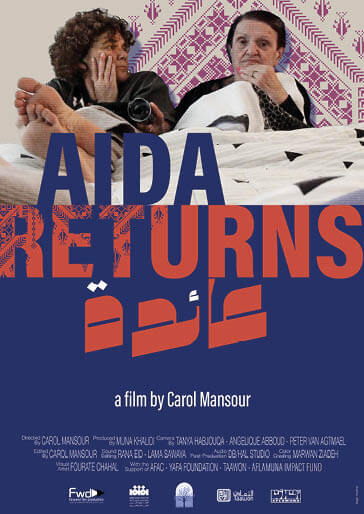
CM&MK: Aida Returns1 began long before I knew it was a film. It began as my attempt to capture my mother as she began to fade away. I started filming my mother in Montreal three years before she passed away. She had developed Alzheimer’s disease, and during her illness and gradual deterioration I visited her 21 times over three years and filmed her almost daily. She had begun to lose her short-term memory, but she never stopped reminiscing and speaking about her homeland. Even as other memories faded, Yafa remained her favorite subject.
I never intended to make a film about her. I was simply trying to feel close to her. I filmed with no goal except to hold on to her presence and, perhaps, to protect her memories of Palestine from disappearing. As she was a first-generation refugee who was displaced as a young adult, I felt compelled to capture her lived memories of Yafa, before we lost her forever. Whereas this was originally a very personal endeavor, I later saw how it was also a documentation on film of the memories of an entire community.
The idea of a film came much later, when we were finally able to smuggle her ashes back home to Palestine. When Muna saw the video that Tanya sent of Aida’s ashes arriving back in Palestine, she said: “This story no longer belongs to you alone. This is the story of every refugee and their wish to return home.” I understood that this individual act of return was no longer exclusively our family’s. We came to view it as a challenge to the imposed impossibility of return. It took on a dimension of “defiance,” where we were determined to establish that resistance to injustice will always remain and can take different forms and shapes.
My mother lived 67 years in exile. I spent 55 years with her, absorbing her stories, her descriptions, experiences, and anecdotes of her homeland like they were my own. Between Palestinian generations, especially between grandmothers, daughters, and mothers, this becomes an act of survival against erasure; especially in a community where women are traditionally the keepers and tellers of stories. Along with inheriting her memories and those of all our parents who were displaced from Palestine, we also inherited – in every fiber of our being – the trauma they were subjected to. We are now passing it on to our children. This manifests differently for different people at different times. For us it manifests as an urge and a need to tell the story in order to document our memories and stand up to injustice. In that sense, memory is not only grief. It is continuity. It is resistance. And through cinema, it becomes testimony.
OD: Women’s Voices in Focus: In Stitching Palestine, you centered Palestinian women’s narratives and creative expressions (such as embroidery) as a form of storytelling. Why is it important to you to foreground women’s voices and perspectives in telling the story of Palestine? Are there particular moments from your films when a woman’s testimony or art sparked a deeper understanding of the struggle?
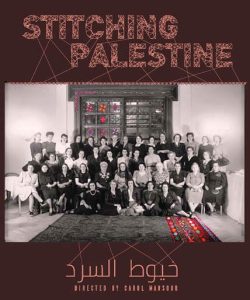
CM&MK: Stitching Palestine2 began as a small project that aimed to create visuals to accompany an art exhibition by Palestinian artist Mona Hatoum organized in collaboration with Inaash Association in Lebanon. Centering Palestinian women and their experience was for us a strategic decision. We decided to move beyond the techniques, mechanics, and motifs of tatreez (embroidery) into exploring the significance of this very Palestinian form of cultural art and cultural heritage. We set out to examine issues of identity and belonging through the relationship between embroidery and Palestinian women as they play the central role as the creators of tatreez, the keepers of memory, and the storytellers in our community. Being interested in the intimate spaces of women, this presented an opportunity to have long and deep conversations with a number of amazing Palestinian women. We are often asked about how we chose the women, and why “poorer” “refugee” women were not more present in the film. Our choice of the women was deliberate. We wanted to portray and emphasize that issues of identity, of belonging, and the longing to return were shared among Palestinians across social, economic, political, and educational lines. So, we chose 12 strong and articulate women who, for the most part, did not conform to the prevalent stereotypes of a refugee woman or even a woman interested in tatreez.
By the end of the exhibition project, we found that we had in fact gathered scores of hours of interviews. When interviewing subjects for our films, we rarely ever ask straightforward close-ended questions and prefer to open a long discussion that allows people to talk freely and bring to the table whatever is important to the topic and to them. When we sat down to review the footage, we found that we had a treasure.
We felt privileged to have this rich material in our possession and were compelled to explore our findings further and deeper. And so Stitching Palestine was born as a long -form documentary film that we began to work on in our free time in 2013. It actually took us four years to complete the process of reviewing and editing and to pull it all together. This is when we started brainstorming with our close friend Sahar Mandour, herself a journalist specialized in Palestine and a novelist, to weave the film together. Through her text, that is emotive but not melodramatic, we “stitched” the film together, building on common themes. Working together as a group of women, tackling issues that are faced by women, was an expectational experience and shaped how we have been approaching the majority of our work. Whether it is to actualize smuggling Aida’s ashes or forming technical teams for our other films, we have found a lot of both personal and professional benefit in working predominately with teams of women. Especially since we often tackle what some refer to as “sensitive” topics.
One of the most striking moments for us while working on Stitching Palestine was the realization of the extent of pain mixed with longing that remains with women even after decades have passed and even when they are living what appears to be very comfortable lives on the individual level. It was striking to see that the depth and intensity of these feelings have not waned over time but have, if anything, become more rooted and solidified.
Centering women allows the story of Palestine to be told with greater sensitivity and depth. Their testimonies transform abstraction into intimacy, which results in the struggle not only being understood intellectually but also being felt on a deeper level.
OD: Challenging Structures: As female filmmakers working across Lebanon and Palestine, have you faced structural challenges or biases in the film industry or society that might not be as pronounced for your male counterparts? How have you navigated or pushed back against these obstacles? Do you think that opportunities for women in documentary filmmaking have improved over the decades, and if so, how is that impacting the kinds of stories that get told?
CM&MK: As documentary filmmakers based in Lebanon, we have not ourselves faced any major obstacles on the basis of gender. In fact, very often the contrary is true. Working on the issues that we tackle in our films, we believe that our being women has played a facilitating role. It allowed for a different kind of access, particularly to intimate, domestic, and emotional spaces that might not be as easily accessible to male filmmakers.
In many of the environments where we work, trust is paramount. Whether it is our approach, our gender, or our experience, we have always found that people trust us and open up easily without barriers. However, we do understand the obstacles and challenges that many of our Arab and Western colleagues may be facing in their work.
Opportunities have increased overall for women across countries and across disciplines as women stand up for their own rights and claim what is rightfully theirs. This has been reflected in seeing more and more women documentary filmmakers especially among younger generations these days.
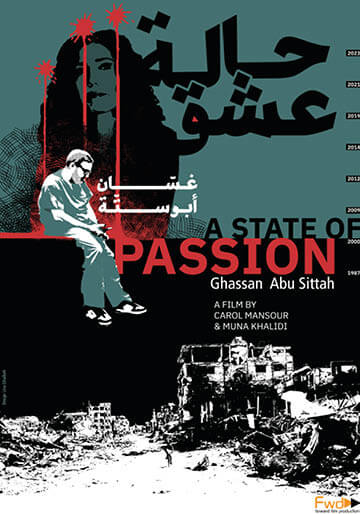
In the last few years and for our two last feature documentaries, we have chosen a slightly less orthodox way to secure funding. Aida Returns and A State of Passion3 were largely funded through individual contributions from friends, colleagues, and a wider community. This has allowed us much greater flexibility and margins of maneuver and the opportunity to experiment without having to report to men in suits.
OD: Global Impact and Solidarity: Your films have traveled to festivals and audiences worldwide. What has been the response, and do you believe that films like yours can galvanize international solidarity? Can you share any experience where a film screening or Q&A made you feel that connections were being made between Palestinian women’s experiences and global feminist or human rights movements?
CM&MK: Our films have been fortunate to travel widely, and what has moved us most is not only the critical response but also the emotional one. Audiences in very different parts of the world, whether in Africa, Asia, Europe, North America, or Latin America, have been really engaged with the film, and we regularly receive notes and emails from people who have watched the films and share with us their thoughts and gratitude. We also receive screening requests from festivals, but more importantly from organizations, institutions, universities, human rights organizations, and activist groups. Many of these are feminist organizations or collectives with whom we always engage, and very often wave screening fees, because we believe in the interconnectedness of the struggle, and we have seen firsthand how films like ours galvanize solidarity in its various forms. We observe this with the level of engagement with the impact campaigns that can be found on our films’ websites.
We are also extremely proud that we have quite a large following on Letterboxd, where regular audiences share their opinions and insights. Films alone cannot change the world, but they can open a door. Very often after a screening, we feel that people become interested in knowing more.
OD: Inspiration and Future Stories: After decades of covering topics from refugee women’s hardships to war surgeons in Gaza, what keeps you inspired to continue filmmaking? Are there emerging themes or stories about Palestinian women today that urgently need to be told? Finally, could you share a lesson or story from your career that encapsulates the strength of Palestinian women in the face of war and patriarchy?
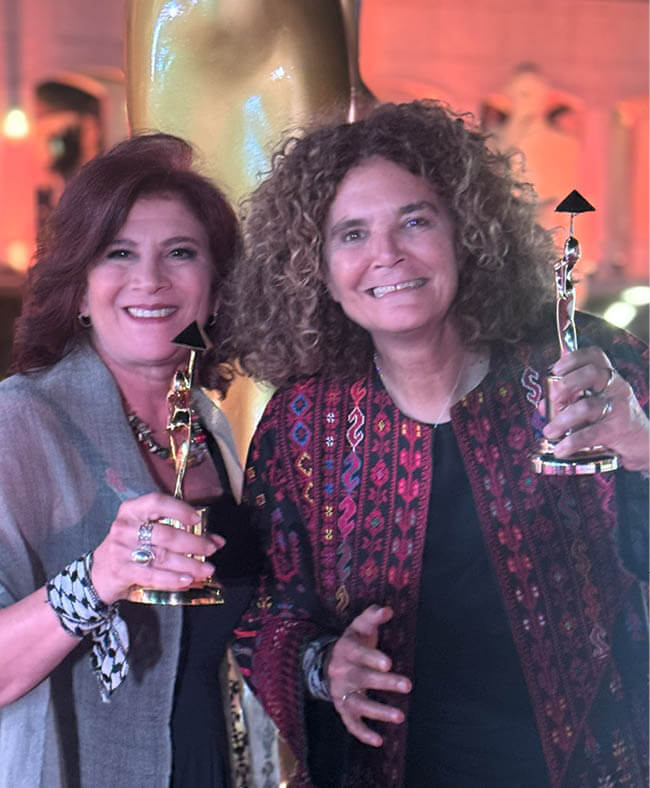
CM&MK: At the moment we are in the process of developing some ideas for a new documentary film project. It’s in the very early stages still, and we are not yet able to articulate what the film will be about. We can only say this: The theme is of course Palestinian at the core. As we always center Palestinian women in everything we do, this will again be the case. Our three Palestinian-themed films have all highlighted the role of Palestinian women in standing up to oppression, colonialism, occupation, and the violence inflicted upon Palestinians everywhere.
We believe that documentary films should serve as tools for change, and so we hope to be able to again bring something new, also useful. As long as Palestine is occupied, this will always be our foremost priority.
Carol Mansour is an independent documentary filmmaker who is deeply passionate about social justice and human rights issues and believes that film is an important medium that gives a voice to the marginalized. After ten years of working in television, she founded Forward Film Production in 2000 in Beirut, Lebanon. With over 24 years in documentary production, Mansour has covered the world from Sri Lanka to Lebanon to Yemen to Uzbekistan. She has achieved international recognition and honors for her films, with over one hundred film festival screenings and official selections worldwide. Her films on Palestine and elsewhere can be accessed via forwardfilmproduction.com.
Muna Khalidi holds a PhD in health policy and planning and has more than 34 years of experience working in the social and health development fields in Lebanon and the region. She has worked with various development and health organizations, assisting them in developing strategic plans, and designing and developing programs. In 2011, she started collaborating with Carol Mansour on the research and production of documentary films that deal with issues of social justice and human rights, bringing her experience in the academic, public, private, and NGO sectors to the documentary-making field.
1 “Aida Returns: A Film by Carol Mansour,” available at https://www.aidareturns.com/.
2 “A Homeland the Size of a Planet: A Film by Carol Mansour,” available at https://stitching-palestine.com/.
3 “A State of Passion: A Film by Carol Mansour and Muna Khalidi,” available at https://www.state-of-passion.com/.
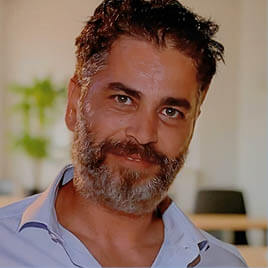
Omar Dana is a policy advocacy and human rights expert, scholar, author, and storyteller from Jerusalem with over twenty years of regional experience across the MENA region.
