Courtesy of UNFPA
I wish I could go back home and feel safe with my family. I miss clean water, good food, and living in Gaza without war,” said Aya, 15, displaced with her family to a camp in Khan Younis after their home was destroyed. This was not the first time. Aya has been displaced more than five times since the war began. Each forced evacuation came under bombs, forcing her to leave behind her belongings, schoolbooks, and fragments of her childhood. Her words capture the painful reality for adolescent girls in Palestine: a generation growing up under siege and violence, their childhoods interrupted, their rights denied.
Occupation, blockade, displacement, and violence dictate where adolescent girls live, whether they learn, and even whether they survive. Their days are shaped by forces beyond their control, stripping away the stability and opportunities every young person deserves. The universal rights of girls to safety, education, health, dignity, and a future are systematically undermined, leaving a generation to navigate adolescence under fear and loss.
More than half a million adolescent girls across Palestine are growing up amid constant uncertainty, violence, and deprivation. Overcrowded shelters, often makeshift tents along streets or the seashore, strip away safety and privacy; clean water and food are scarce; and the risk of gender-based violence rises sharply. Most schools have been destroyed, with the few remaining converted into shelters, cutting off education for hundreds of thousands. Early marriage is increasingly seen by families as a desperate coping and protection mechanism.
In Gaza, adolescent girls lack access to menstrual hygiene and sexual and reproductive health services, leaving them to manage the natural changes of adolescence in unsafe, undignified conditions. Trauma is a daily companion, with airstrikes and constant fear of violence leaving deep emotional scars. In the West Bank, movement restrictions, checkpoints, and settler violence prevent many girls from safely reaching school or health services, and harassment or intimidation is a common experience. Each of these crises is not only a humanitarian concern but a violation of rights. Every girl denied her basic rights, every girl exposed to violence, every girl stripped of dignity is a reminder of the cost of injustice.
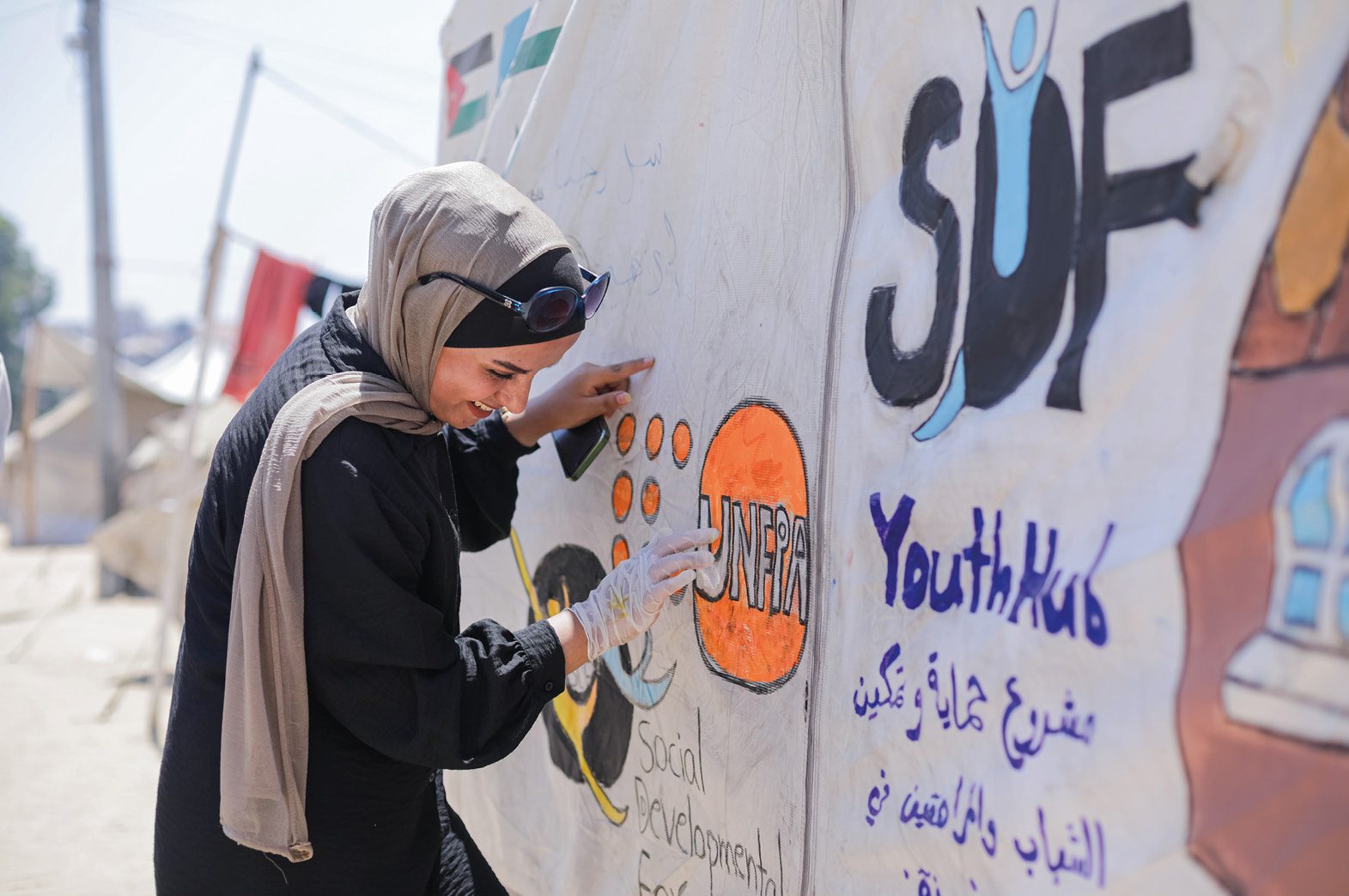
When adolescent girls speak of their lives, their words carry both anguish and resilience. One girl in Gaza, forced to manage her period without pads or privacy, whispered, “Every time my period comes, I wish I wasn’t a girl.” This cry reveals how war erodes dignity. In the West Bank, a 15-year-old explained how checkpoints often keep her from reaching school: “I wake up ready to learn, but soldiers decide if today I can be a student.” These voices reflect a generation navigating relentless barriers to live normally, yet still holding on to the dream of a life where their rights are respected and their futures are their own.
The struggles of adolescent girls in Palestine cannot be separated from the broader fight for women’s rights and justice. Their lives reveal a gendered reality of conflict where girls are not only exposed to the same violence as everyone else, but also face unique burdens because of their age and gender. Early marriage, harassment in shelters, silencing of their voices, and the stripping away of dignity are daily reminders that global commitments to protect women and girls have too often failed to become real protection or change.
And yet, adolescent girls are not only victims. Many are stepping forward as leaders, peer educators, and volunteers in their communities. They create safe spaces for other girls, share knowledge about health and protection, and offer solidarity where systems fail. Their courage calls on the world to do more than issue statements of concern. It demands recognition, resources, and accountability so the rights of Palestinian girls are not an afterthought but a cornerstone of justice.
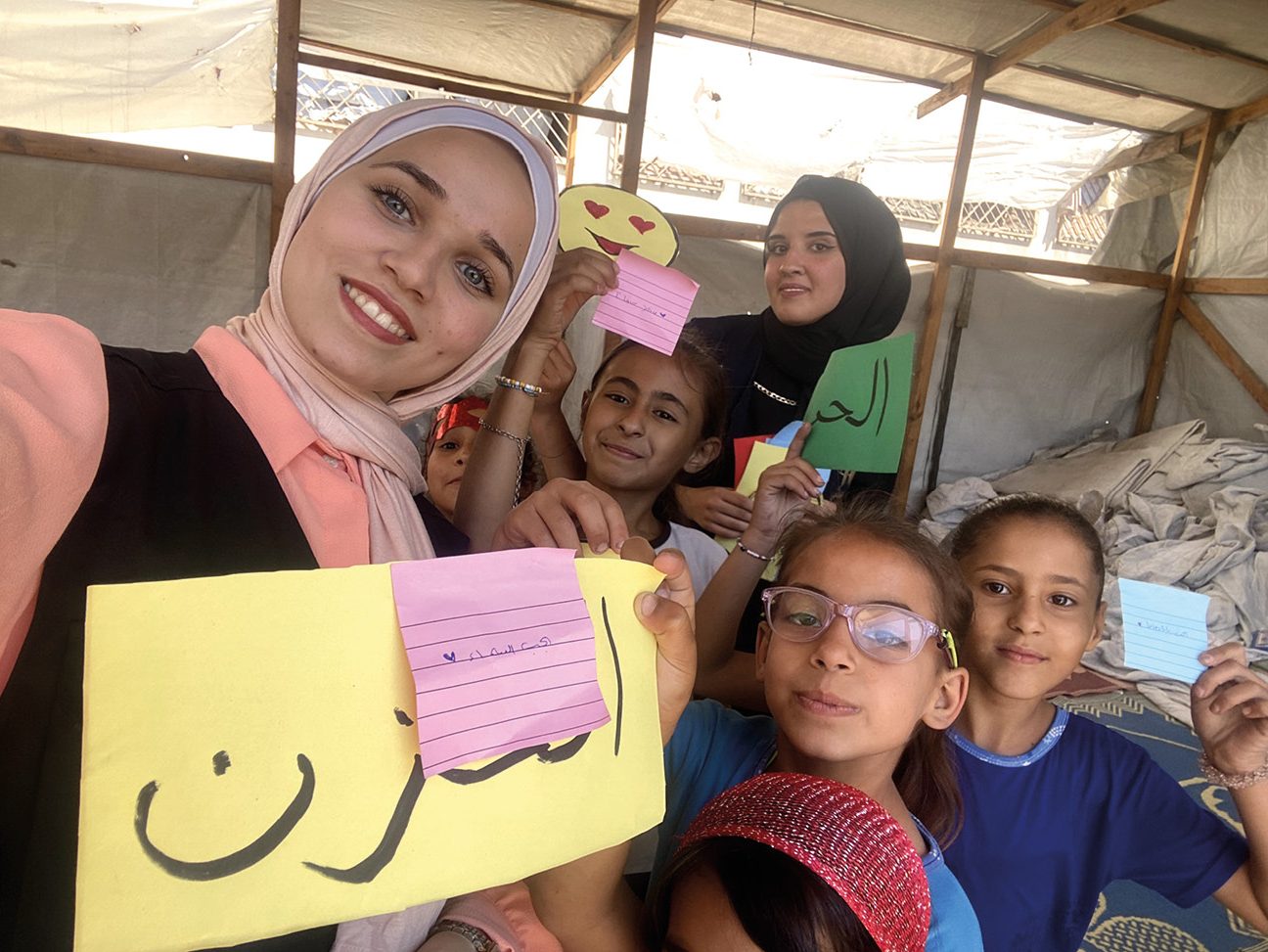
UNFPA has placed adolescent girls at the heart of its humanitarian response in Palestine, recognizing that their needs and rights require dedicated attention. In Gaza, seven youth hubs and Girls’ Tents have been established to provide safe girl-centered spaces where thousands of adolescents access life skills education, comprehensive life education, sexual and reproductive health information, psychosocial support, and leadership training. These interventions are designed not only to meet immediate needs but also to give girls the tools and confidence to protect themselves and to participate in their communities. In the West Bank, three dedicated girl-centered spaces and mobile health clinics ensure that adolescents are not cut off from critical services. These facilities integrate adolescent- and youth-friendly responsive services and comprehensive life education, while also providing safe environments where girls can seek counseling and connect with peers.
UNFPA has distributed more than 8,000 adolescent kits across Palestine. These kits are tailored to support adolescent girls and boys affected by conflict, providing essential hygiene supplies, educational materials, and protection tools that help adolescents maintain dignity, safety, and hope in conditions where these are stripped away.
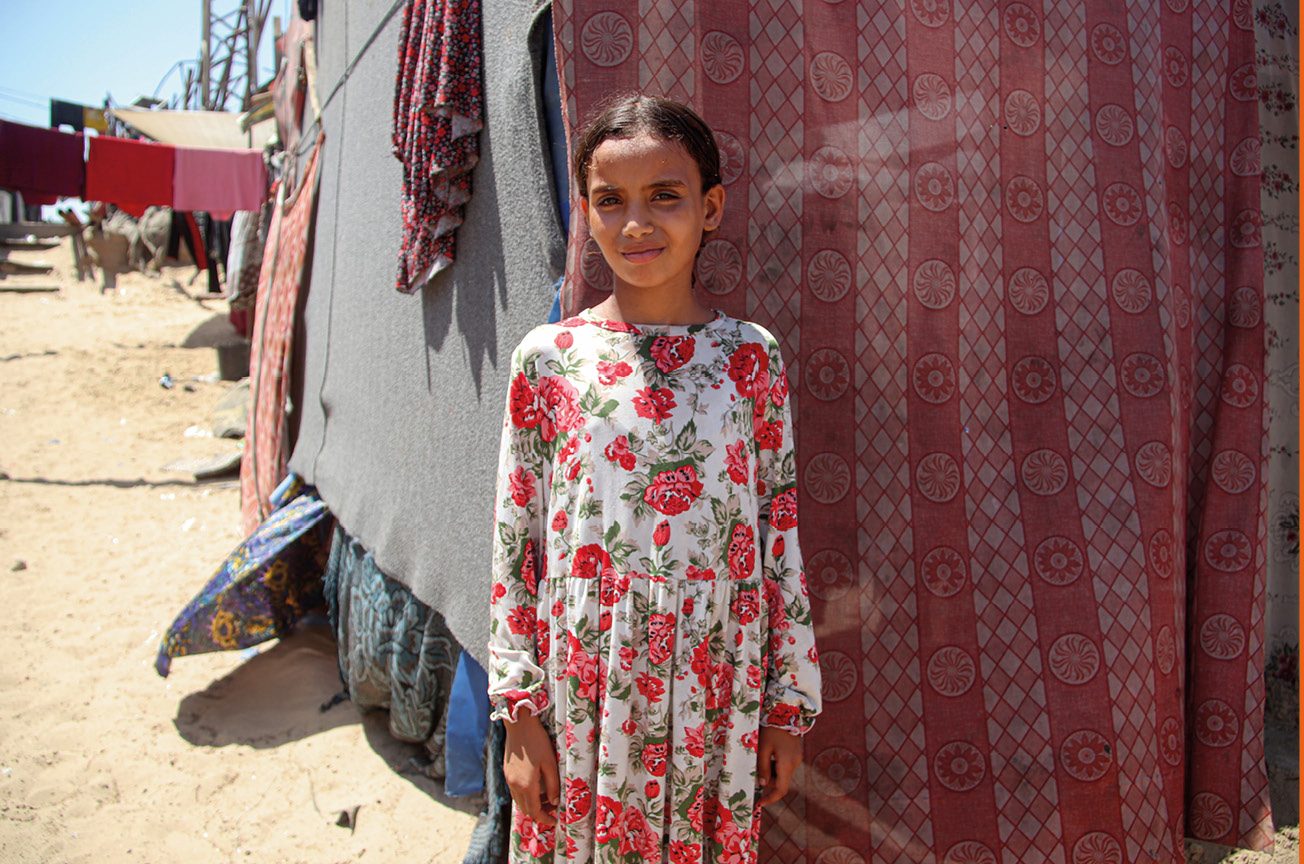
UNFPA also prioritizes adolescent girls’ leadership and agency. Through networks such as Y-PEER and the Youth Advisory Panel, girls lead awareness campaigns, peer education, and advocacy. Volunteer-run learning points keep displaced girls connected to education and health information, while youth-led initiatives offer safe spaces for self-expression, skills-building, and solidarity.
This work has been made possible with support from donors including the Government of Estonia, the Government of the United Kingdom, the Government of Canada, the Government of Sweden, the Government of Norway, the Government of Chile, and the Korea International Cooperation Agency (KOICA), whose contributions help ensure that adolescent girls in Palestine can access the protection, health, and dignity they deserve.
Adolescent girls in Palestine embody resilience in the face of relentless hardship. Yet resilience should never be demanded of children. What they deserve is justice, dignity, and the full protection of their rights. World leaders must act now. Every day that Palestinian girls are denied safety, education, and dignity is a failure of justice. Upholding their rights is not a choice – it is a moral obligation and a legal duty.