


By Aida Qleibo
In contemporary Palestine, the language of gender equality has become entangled with social uncertainty and deeply contested meanings. This apprehension does not arise from resistance to women’s dignity or justice, but from the manner in which the concept has been translated into practice: reduced to a donor-driven, depoliticized intervention, abstracted from lived realities and disconnected from the structures of occupation, apartheid, and colonial domination. As such, this discomfort is neither reactionary nor conservative – it is historically grounded, politically informed, and born of lived experience. Across colonial and post-colonial contexts, women’s rights have repeatedly been mobilized not as vehicles of emancipation, but as instruments through which domination is rendered palatable. When feminism is narrowed to individualized freedoms – abstracted from material conditions, collective struggle, and structures of violence – it becomes easily assimilated into projects that leave colonial power intact.1 Detached from struggles for self-determination, such frameworks can coexist comfortably with regimes of occupation, apartheid, and racialized law.
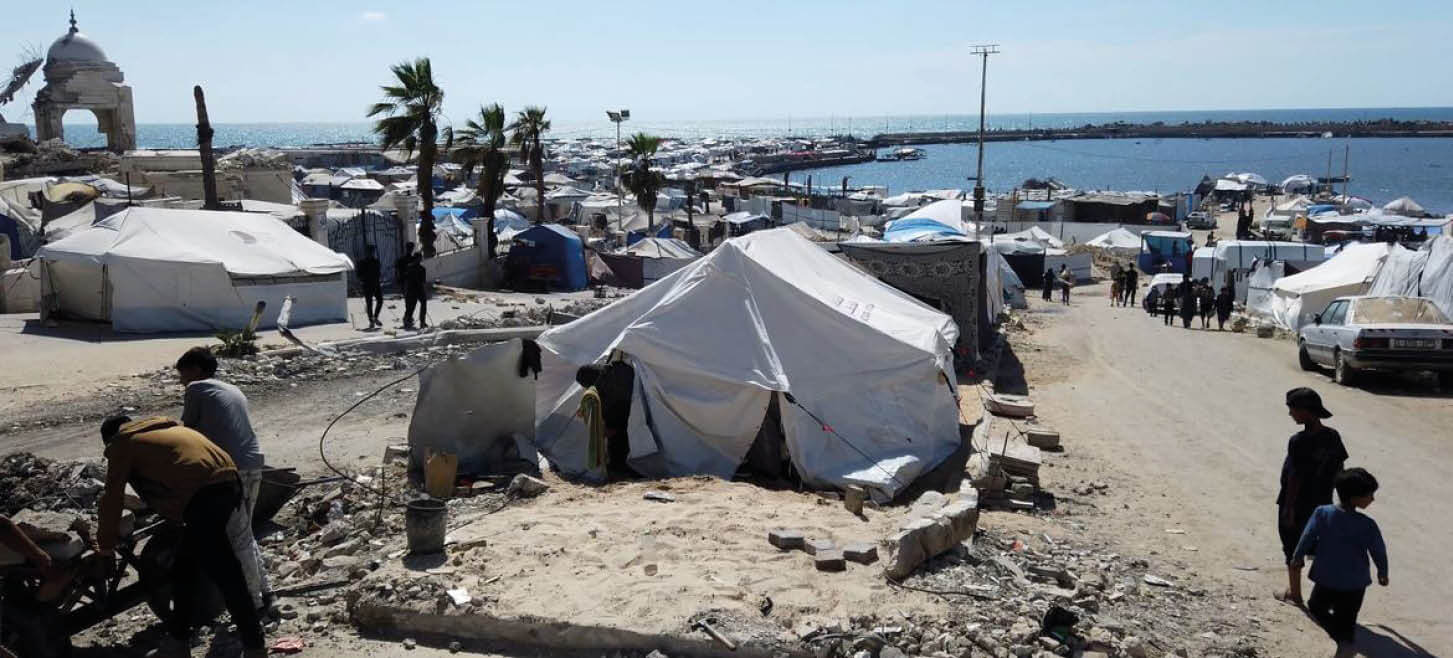
Within decolonial feminist scholarship, this process has been identified as a shift from political struggle to administrative containment: Oppression is reframed as a problem to be managed, optimized, or culturally corrected rather than dismantled. This logic is central to what has been theorized as civilizational feminism: a framework that displaces colonial violence onto the terrain of “backwardness,” allowing the structures that produce dispossession to remain intact.2 In this formulation, feminism does not challenge the system, it humanizes it. In the Palestinian case, this takes the form of empowerment discourses that circulate freely alongside military rule, settlement expansion, and legal apartheid – where gender equality is invoked as an abstract value while its material preconditions are systematically denied. Within this framework, gender is decontextualized; severed from the land, history, and political economy, reduced to a development metric rather than a site of struggle.
When feminism arrives as a donor agenda that structurally erases occupation, land theft, incarceration, and siege, it is experienced not as solidarity but as intrusion – demanding internal reform from Palestinian society while leaving the colonial system untouched. In this configuration, women are conscripted as symbols of progress within a reality engineered to deny collective freedom, normalizing domination by managing its symptoms rather than confronting its cause.
This depoliticization is inseparable from the colonial ordering of gender itself. As theorized by Maria Lugones, colonial rule imposed Western, racialized gender systems that reorganized social life in service of control. The universalization of European women’s experience depended on exclusion, producing a structure of double subjugation in which colonized women were dominated by the colonial power while simultaneously positioned as culturally subordinate within their own societies.3 In the Palestinian context, this structure endures as women are subjected to simultaneous colonial violence and gendered control within their communities – conditions the colonizer actively exploits by weaponizing moral codes to coerce, discipline, and fracture collective resistance.
This is not a historical residue but a contemporary political formation, sustained through femonationalism, where feminist rhetoric is mobilized to legitimize settler-colonial violence. Claims to equality within the dominant state are inherently relational: Women’s rights and legal status are secured through, and made possible by, Palestinian dispossession. Western frameworks that ignore this reality reproduce a hierarchy of womanhood in which some women’s freedom is rendered compatible with – indeed, dependent upon – the erasure of others. It is precisely this contradiction that has generated widespread suspicion toward “gender equality” initiatives in Palestine.
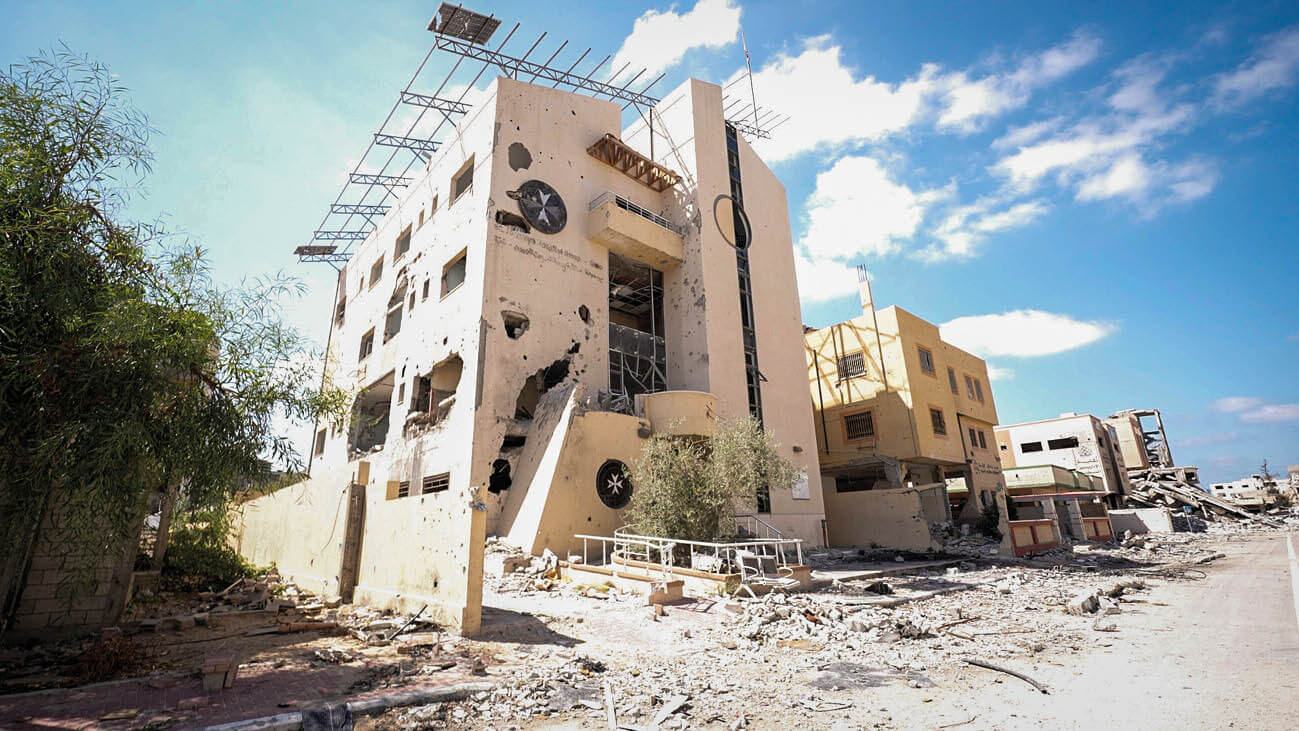
For this reason, reclaiming feminism in Palestine requires rejecting approaches that seek to improve women’s status within an inherently unjust order. A decolonial feminist praxis does not aim to integrate women into existing systems of power, but to confront the interlocking structures through which domination is produced4 – colonial rule, racialized law, patriarchy, and economic dispossession. Justice for women cannot emerge through partial emancipation or selective inclusion within a system designed to manage and contain Palestinian life.
Politics must be grounded in the indivisibility of justice, recognizing domination as intersectional, structural, and mutually reinforcing. Gender liberation is not a secondary project but inseparable from the struggle for collective freedom and national liberation.
What is required instead is a politics grounded in the indivisibility of justice – one that recognizes domination as intersectional, structural, and mutually reinforcing, rather than fragmented into separate struggles. Within this framework, gender liberation is not a parallel or secondary project, but inseparable from the struggle for collective freedom. In the Palestinian context, feminism that is detached from national liberation does not merely fall short, it risks reproducing the very conditions that make women’s oppression structurally inevitable.
It is within this framework – where women’s morality is rendered a site of regulation rather than protection – that isqat (literally “moral downfall” or “social disgrace”) was deployed by Israel as a deliberate counterinsurgency tactic aimed at undermining the national movement from within. This gendered strategy is not unique to Palestine. Similar practices were employed by French colonial forces during the Algerian War of Independence, by the FBI’s COINTELPRO program against Black women leaders such as Angela Davis, and across contexts ranging from the Suffragette movement in the UK to Latin America’s Dirty Wars, where women who resisted were morally attacked, discredited, and erased. Isqat belongs to this global repertoire of colonial governance, yet its Palestinian form was acutely strategic – systematized during the first Intifada precisely when women were leading underground schools, coordinating popular committees, and sustaining the national movement.5 Israeli intelligence did not invent the social codes it mobilized; rather, it activated existing norms of honor, shame, and respectability to fracture collective resistance. Women’s reputations, situated at the intersection of nationalism and moral regulation, thus became especially effective sites of coercion.
When feminist analysis is detached from its anti-colonial grounding, this history is obscured, and the moral regulation of women is misread as an internal cultural issue rather than a colonial strategy. Allegation alone – irrespective of veracity – was sufficient to isolate women socially and remove them from public and political life. While men were also targeted, the consequences for women were more durable, reflecting the gendered asymmetries through which honor operates. The persistent absence of broad-based Palestinian women’s leadership cannot be understood apart from this historical intervention into the conditions of political participation.

Isqat persists as a structuring force, continuing to shape political participation. By weaponizing social codes to discipline women’s political visibility, colonial power reshaped the terrain of leadership itself, producing a political field in which women’s participation carries disproportionate risk. What is often framed as cultural conservatism is more accurately understood as the cumulative effect of a colonial strategy that governed not only through force and law, but through the internal regulation of social life.6
Through legal codification, the ban on family reunification represents the juridical consolidation of this continuum of control. It does not merely separate families across geographic lines, it institutionalizes vulnerability. Following the second Intifada, the Israeli parliament enacted the Citizenship and Entry into Israel Law (Temporary Order), prohibiting Palestinians from the West Bank and Gaza from obtaining residency or citizenship through marriage to Palestinian citizens or permanent residents of Israel.7 Though framed for years as a temporary security measure, the law’s demographic objective – the preservation of a Jewish majority – was made explicit in its 2022 version.8 This legal framework operationalizes what isqat prepares.
For Palestinian women living under this law, legal existence is conditioned on marital continuity. Residency, access to healthcare, freedom of movement, and the right to remain with one’s children depend on remaining married, often irrespective of the quality or safety of that marriage.9 Divorce is therefore not a neutral personal decision but a legally consequential act that can trigger residency loss, family separation, and forced displacement. Within this power structure, patriarchal dependency is not merely social, it is produced and enforced through administrative power and legal violence.
Framing Gazan women as “protected civilians” recognizes their suffering only when they are considered apolitical victims separated from political agency, resistance, and collective struggle. While this framework seems protective, it is fundamentally exclusive, isolating women from their social and political contexts and recasting neocolonial structural dominance as a series of individualized harms that mask their genocidal nature.
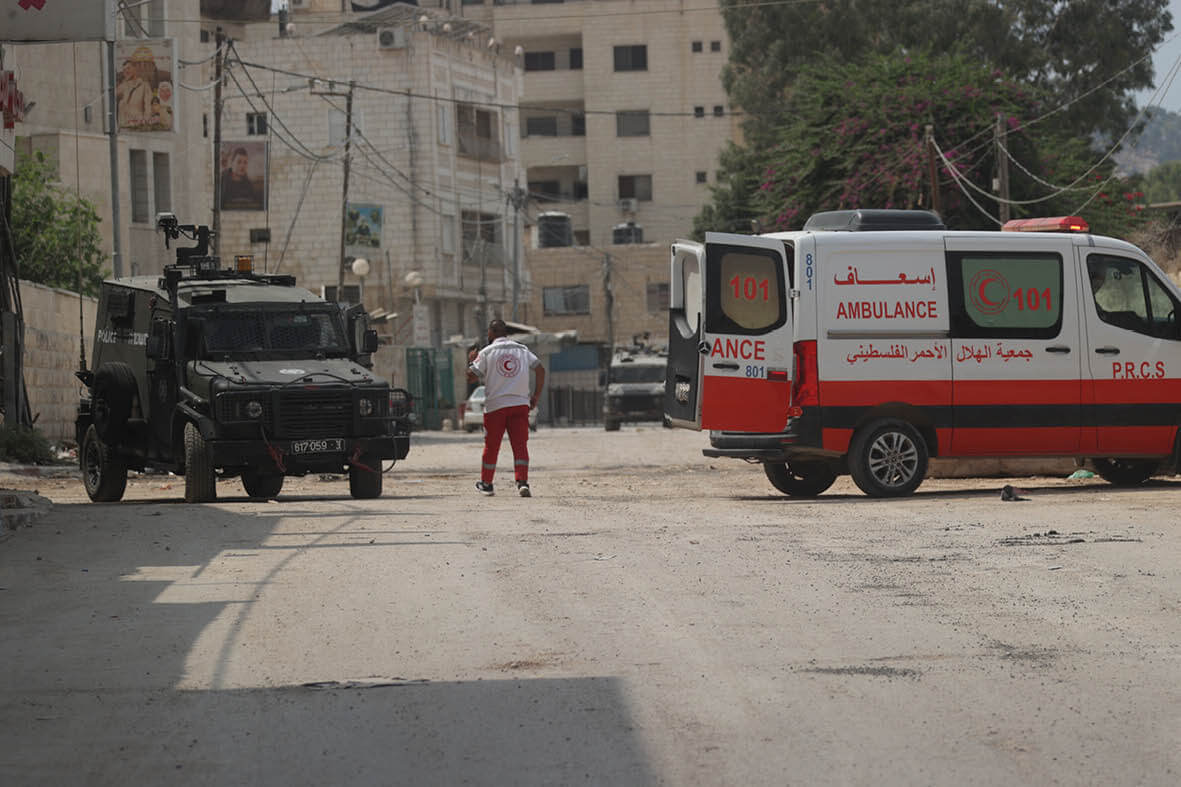
In East Jerusalem neighborhoods such as Beit Hanina, Shu’afat, Jabal al-Mukaber, Shu’afat refugee camp, Silwan, and Issawiya, women are not subject to the same immediate legal threat of residency loss under family law. Yet reporting domestic violence remains equally constrained. Here, the risk is not formal legal dispossession but social exposure and direct harm, rooted in the role of the police, who function for Palestinians not as a source of protection but as an arm of coercive control, enforcing a system built against them.
In one case documented during my research, a woman subjected to domestic violence called her brother and told him what had happened. As soon as they hung up, he went to her home, beat up the husband, took his sister and her children, and returned them to the family house. The incident was dealt with within the family, unreported and invisible to the state. This case illustrates how violence is often managed through internal communal mechanisms, while exposing the fragility of such arrangements: Although some women are embedded within family networks capable of intervention, others remain structurally unprotected, with no comparable access to support or mediation. In either case, violence –whether resolved internally or endured in silence – remains statistically invisible.
This invisibility is not incidental. Beyond entrenched social taboos, Palestinian women face the added burden of being perceived as “calling the enemy” should they contact Israeli police – transforming a private request for personal safety into a perceived act of collective betrayal by exposing family and community matters to a system experienced as hostile.
What is frequently dismissed as a cultural preference for patriarchal mediation is, in fact, a rational response to a neocolonial reality. The state’s presence in these neighborhoods functions primarily as an apparatus of control rather than as an institution that women can reasonably expect to protect them, producing a protection vacuum. Within this vacuum, Palestinian women are forced into an impossible intersectional bind: choosing between remaining in abusive domestic conditions or engaging a legal system that treats them and their communities as demographic and security threats. By displacing responsibility onto the family, the state produces the absence of data it later cites to justify nonintervention, ensuring that violence remains privatized and politically obscured.
The structural underreporting of gender-based violence in Jerusalem – produced through legal precarity and administrative displacement – reveals a governing logic that is continuous with the one applied in Gaza, rather than distinct from it. What law and bureaucracy regulate in Jerusalem, brute force in Gaza annihilates. In Gaza, women are targeted not only as civilians but as bearers of life – through the systematic prevention of birth, the destruction of embryos, and the deliberate targeting of maternity wards, fertility clinics, neonatal units, and the infrastructure that makes motherhood possible – compounded by indiscriminate bombardment, siege, and starvation that eliminate not only life but the conditions that make life possible.10 Palestinian reproduction is treated as a demographic and existential threat to be neutralized. The resulting desperation exposes a total moral collapse, epitomized by reports of women selling urine so others may simulate pregnancy to access aid – a reality in which even the biological markers of womanhood are rationed for survival.
Palestinian feminist struggle – and the support thereof – must confront domineering structures, reject fragmentation, and include the right to remain, the right of return, and the right to collective self-determination.
These dynamics become most stark in Gaza, where the humanitarian frameworks and feminist discourse through which Palestinian suffering is internationally recognized reach their limits. Suffering is recognized only when it can be framed within the category of “protected civilians,” a designation that privileges women and children, rendering Palestinian women acceptable as apolitical victims whose suffering is acknowledged only when detached from political agency, resistance, and collective struggle. While this framing appears protective, it is fundamentally exclusionary. Empathy is extended only to those whose suffering can be severed from political agency, resistance, or masculinity. Palestinian men are systematically positioned outside this frame; their detention, torture, and public humiliation are justified through legal and military measures that rationalize their suffering as necessity or collateral damage.
This selective empathy sustains the neocolonial order by reproducing a hierarchy of grievability, isolating women from their social and political context and recasting structural domination as a series of individualized harms. Yet neocolonial gendered violence is not confined to individualized violence; it is organized to disrupt the reproduction and continuity of a people – a regime of selective protection aimed at destabilizing the Palestinian domestic sphere as a site of resilience. By casting Palestinian men as security threats and Palestinian women as victims in need of rescue, colonial governance renders the family a political target. The destruction of the home – through administrative demolition in Silwan or aerial bombardment in Gaza – dismantles the primary space in which care, identity, and resistance are sustained. Feminism, in this context, cannot be separated from the right to remain, the right of return, and the right to collective self-determination; detached from these conditions, it loses its political force.
The emancipation of Palestinian women is inseparable from the humanity of Palestinian men and the liberation of Palestinian land.
In the Palestinian context, these dynamics demand a feminist praxis that rejects fragmentation and centers the agency of those who navigate intersecting systems of violence, understanding women’s liberation as inseparable from collective liberation. The emancipation of Palestinian women is inseparable from the humanity of Palestinian men and from the liberation of Palestinian land. What is required is not a politics of saving, but one of solidarity – one that recognizes the bombing of a fertility clinic in Gaza and the administrative silencing of a survivor in East Jerusalem not as separate crises, but as expressions of the same governing logic. As Angela Davis reminds us, feminism “involves so much more than gender equality, and it involves so much more than gender.” Gender cannot be treated as a discrete or abstract category; it is produced through colonial violence, racialized law, incarceration, and collective punishment. Feminism must therefore confront the structures that determine whose lives are protected, whose suffering is rendered visible, and whose existence is made conditional.
This is where solidarity must take shape – not as sentiment or symbolic alignment, but as a shared political commitment with consequence. As Indigenous Australian activist Lilla Watson so powerfully articulated, “If you have come to help me, you are wasting your time. But if you have come because your liberation is bound up with mine, then let us work together.”
1 Chandra Talpade Mohanty, Feminism Without Borders: Decolonizing Theory, Practicing Solidarity, Duke University Press, 2003.
2 Françoise Vergès, A Decolonial Feminism, London: Pluto Press, 2019.
3 María Lugones, “Heterosexualism and the Colonial/Modern Gender System,” Hypatia 22(1), 2007: 186–209.
4 Kimberle Crenshaw, “Mapping the Margins: Intersectionality, Identity Politics, and Violence Against Women of Color,” Stanford Law Review43 (6), July 1991: 1241–1299.
5 Islah Jad, Palestinian Women’s Activism: Nationalism, Secularism, Islamism, Syracuse University Press, 2018.
6 Foucault, Discipline and Punish: The Birth of the Prison, Vintage, 1977.
7 Adalah, “‘Ban on Family Unification’ – Citizenship and Entry into Israel Law (Temporary Order),” January 25, 2026.
8 Adalah, “Israel Reinstates Ban on Palestinian Family Unification, January 25, 2026.
9 Physicians for Human Rights, “Israel’s Ban on Palestinian Family Unification: Analysis and Recommendations ” Adalah, 2014.
10 UN News: Global Perspectives and Human Stories, “Gaza’s Maternal and Newborn Health System ‘Decimated,’ UN Warns” United Nations, December 11, 2025.

Aida Qleibo is a Jerusalemite Palestinian decolonial feminist activist and researcher. She holds a BA in international law and human rights, with a minor in political science, from Bard Liberal Arts College, and an MA in nonprofit management and leadership for social change from the Hebrew University of Jerusalem. Her research examines decolonial feminism, human rights, and the political structures shaping Palestinian life.
