


By Julie Abdallah

Across Palestine, children grow up under Israeli occupation, where military violence, restricted movement, and systemic limitations affect and shape to varying degrees their everyday reality. These conditions undermine children’s sense of safety and restrict their access to safe recreational spaces, cultural activities, and opportunities for creative expression. Many children also face social pressures and daily stress that can impact their confidence and emotional well-being. In such contexts, spaces that allow children to play freely, express themselves, and build supportive relationships become essential for their healthy development and sense of belonging.
While schools and families play a central role in children’s development, creative spaces are equally essential. Beyond academic learning and daily responsibilities, children need opportunities to move, imagine, and freely interact with others. Movement, imagination, and collective play can offer children ways to release tension, build relationships, and express feelings that are often difficult to put into words. In such environments, children are not only learning new skills but also discovering how to trust themselves and others.
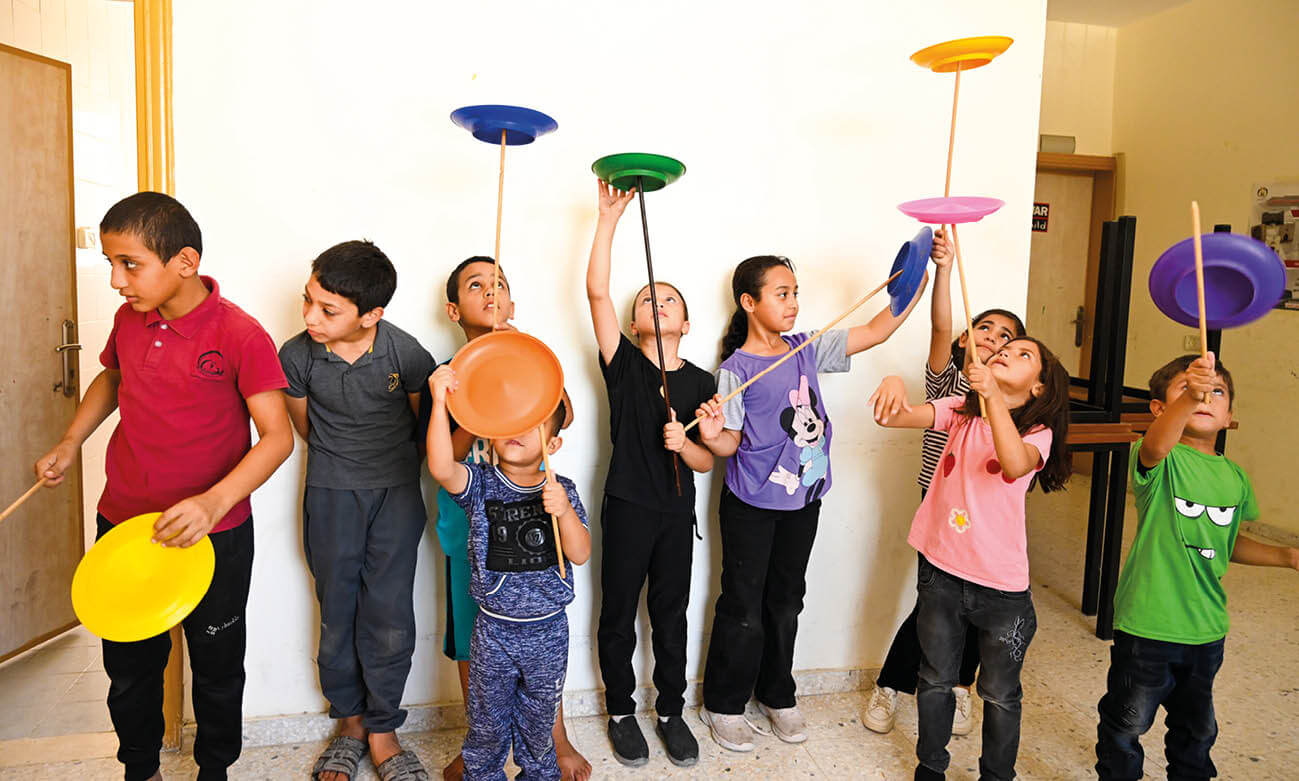
Creative activities that involve the body and the imagination can help children reconnect with a sense of joy and curiosity. Through shared play and physical exploration, they learn to cooperate, listen to one another, and navigate challenges together. These experiences contribute to a deeper sense of belonging and emotional balance, especially in contexts where everyday life can be demanding.
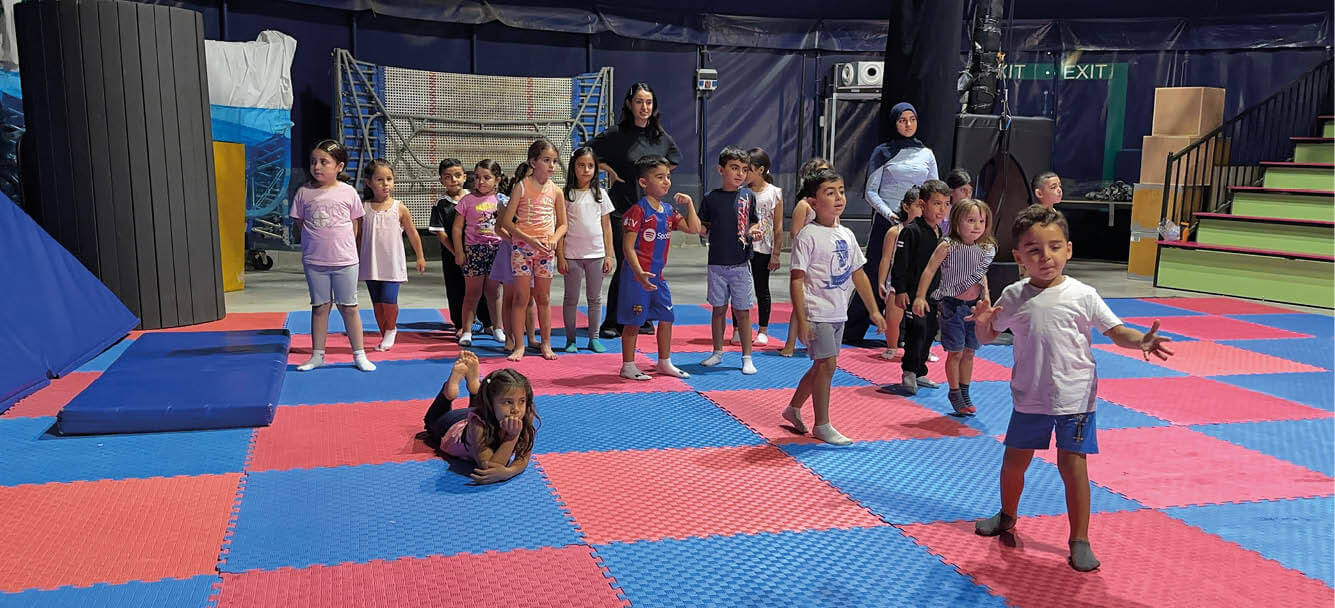
Founded in 2006 as the Palestinian Circus School and rebranded as The Palestinian Circus in 2025, the organization has worked for the past twenty years to help fill this gap. Through circus arts, it has created spaces where children and young people can explore movement, challenge themselves, and connect with others in supportive environments. Rather than focusing on competition or perfection, circus activities encourage experimentation, patience, and collaboration. In this environment, children are invited to try, make mistakes, laugh, and try again, transforming the learning process into a shared journey of discovery.
So what happens when children are given the freedom to explore, move, and express themselves without fear of failure? They encounter moments that reveal their own potential. Quiet kids find their voice through fun movements and become confident leaders. Shy ones learn to trust friends, work together in group activities, and laugh over every success. Kids from faraway villages discover their strengths through simple challenges, building curiosity, patience, and self-confidence. These moments create strong emotions, real friendships, and a deep feeling of belonging that stays with them.
Over the years, the circus has reached communities where access to artistic and physical spaces is limited. Children from remote areas come together to learn balance, coordination, and teamwork for the first time in a structured, supportive environment. In remote areas, children encounter challenges that restrict access to play and arts activities. A child who is learning to spin plates, for instance, celebrates the first moments of keeping a plate balanced: a small but meaningful triumph that fosters patience, focus, and a sense of accomplishment.
For two decades, the Palestinian Circus has transformed the lives of children across Palestine. Through circus arts, they develop confidence, creativity, and resilience while learning to support each other and take risks in a safe space. Every moment of play, movement, and performance helps children discover their strengths, build friendships, and experience joy, imagination, and self-belief, even under the challenges of life in occupied Palestine.
Similarly, children with physical disabilities experience new possibilities in circus activities. One boy with cognitive challenges discovered how to coordinate acrobatics and object manipulation with peers, turning what might have seemed like limitations into opportunities for skill-building, pride, and excitement.
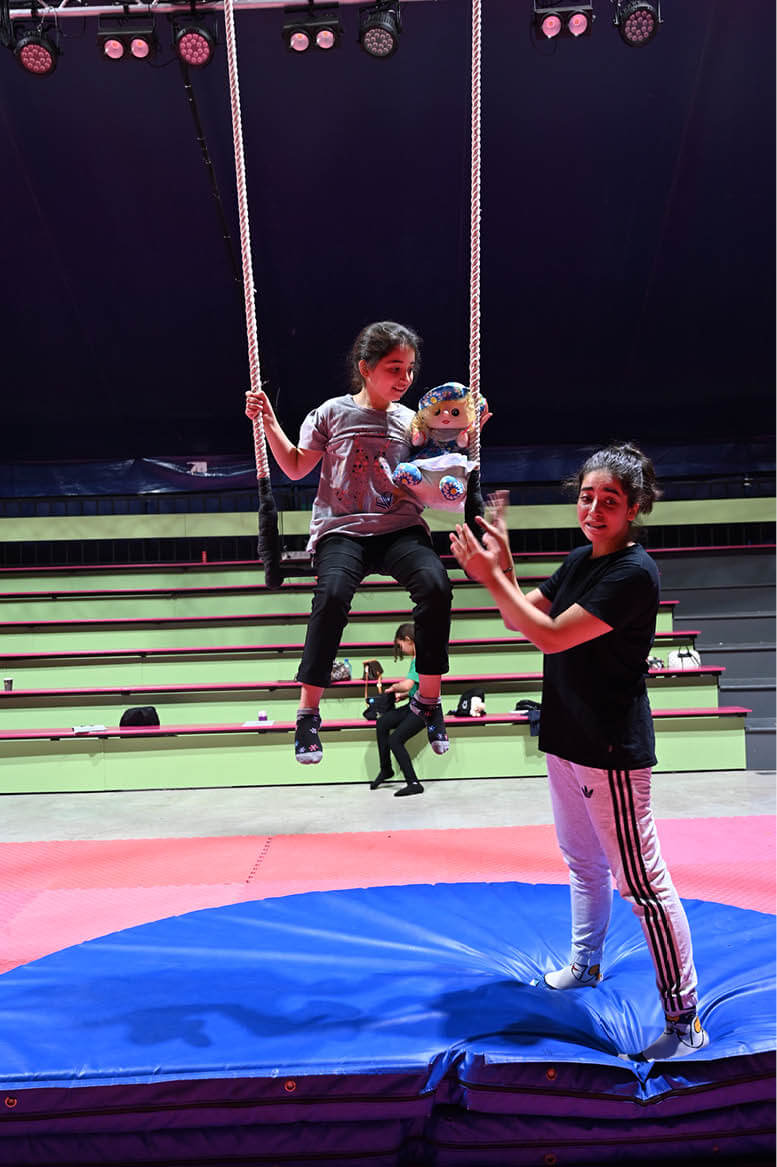
For many children, these activities offer a rare opportunity to express themselves physically and emotionally. Movement allows them to release tension and channel energy in a positive way. Working in pairs or groups helps build cooperation and empathy. As children support each other in learning new skills, they also develop confidence in their own capabilities.
Trainers working in circus programs often observe subtle but meaningful changes over time. Children who initially appear shy or hesitant gradually become more engaged. Others who struggle with concentration begin to develop stronger focus through repetitive practice and playful challenges. This safe space becomes a place where everybody learns, makes mistakes, and each participant grows at their own pace … within a family-like environment.
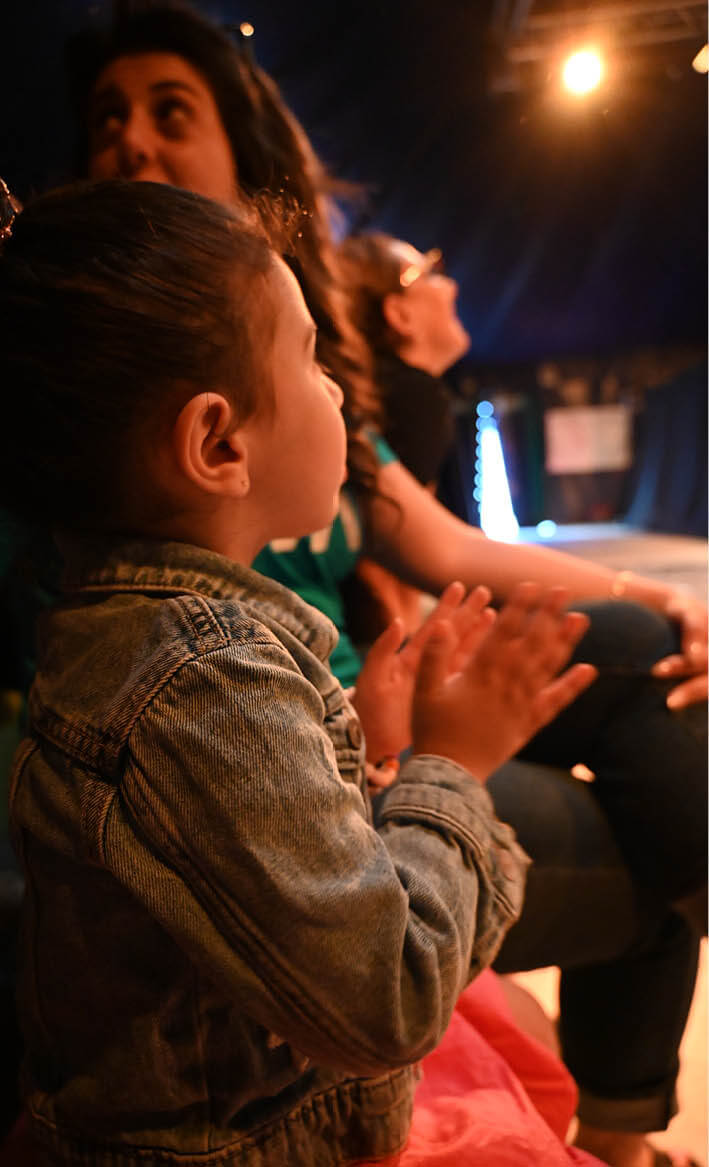
Another important dimension of circus practice is imagination. In the circus space, creativity transforms into a physical language. Children are encouraged to tell stories and express themselves as they design and carry out movements under the guidance of the trainers. This process allows them to explore emotions, experiment freely, and discover new depths of their own emotions beyond words. In doing so, children are not only reacting to their surroundings but actively shaping their own narratives through creativity and play.
Through these experiences, the circus helps children to develop physical skills and nurtures emotional resilience, confidence, creativity, and social cohesion. Every moment of trying, falling, and rising again reflects how safe, creative spaces respond directly to children’s needs for expression, recognition, and community support. Parents often notice that children return home more communicative, confident, and eager to share their learning, showing that the impact extends beyond the training space into daily life.
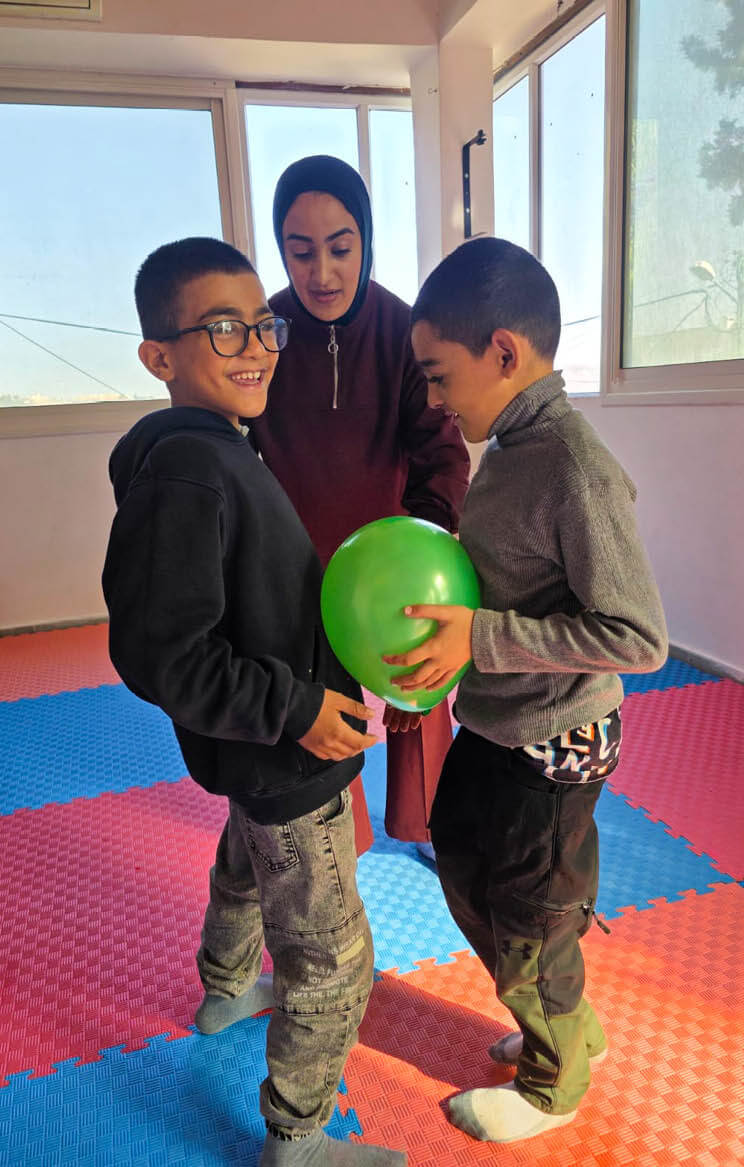
These observations are supported by internal research conducted by the Palestinian Circus.* The study highlights the significant impact of circus participation on children’s psychosocial well-being. According to parent surveys, the percentage of children demonstrating improved social skills increased from 63 percent before participation to 94 percent after joining the program. Children also showed reduced emotional distress and greater positive behaviors, such as cooperation, sharing, and connecting with others. These changes extended beyond the circus space, influencing daily interactions at home, with peers, and within the wider community, demonstrating how safe, creative spaces can foster both personal growth and stronger social bonds.
As the Palestinian Circus celebrates 20 years, it continues to grow in ways that truly reach children’s hearts. In 2026, the Mobile Tent will bring circus arts to even more children across Palestine, creating spaces where they can move, play, and dream freely. But it’s not just about being local; the circus also opens doors to international experiences, youth exchanges, and encounters with other cultures. These moments give children a sense of connection beyond the borders and a way to resist the isolation imposed by the occupation.
The magic of the circus is best seen in its people. Many of today’s performers first came as children, watching shows with wide-eyed wonder, and now they are the ones on stage, inspiring the next generation. Each performance carries a story of growth, resilience, and hope, reminding every child watching that they too can imagine, create, and belong. More than just fun or performance, the circus is a home for curiosity, courage, and creativity. It is a place where children learn that falling is part of learning, that supporting each other makes everyone stronger, and that joy, imagination, and self-belief can flourish even in the most challenging circumstances.
Through two decades of dedication, the Palestinian Circus has proven that every child deserves the chance to move freely, dream wildly, and find their hidden strength. The legacy continues, one laugh, one trick, and one step at a time.
Julie Abdallah is the communications coordinator at the Palestinian Circus, working on programs that support the growth and creativity of children and youth.
