


By Amahl Bishara
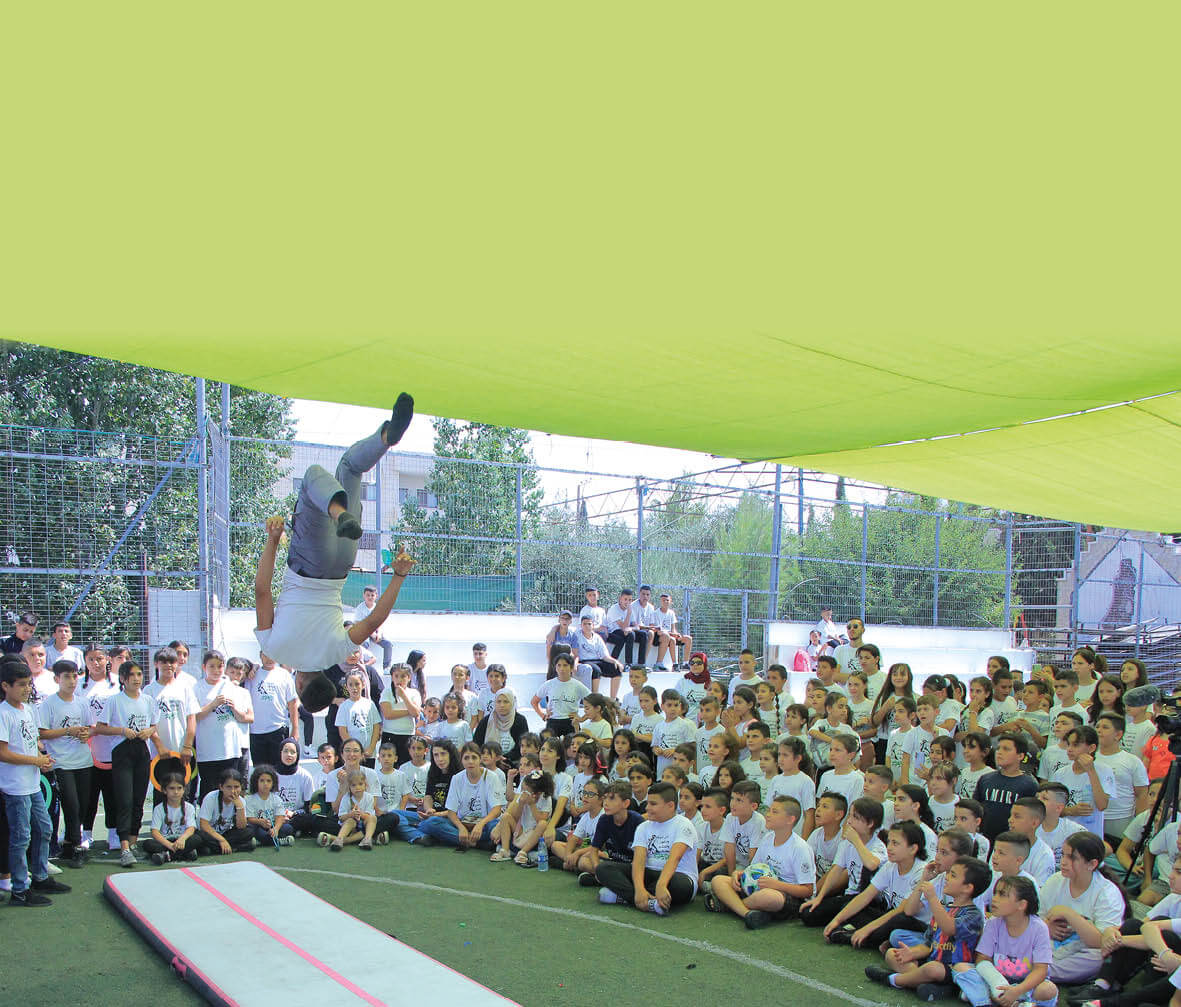
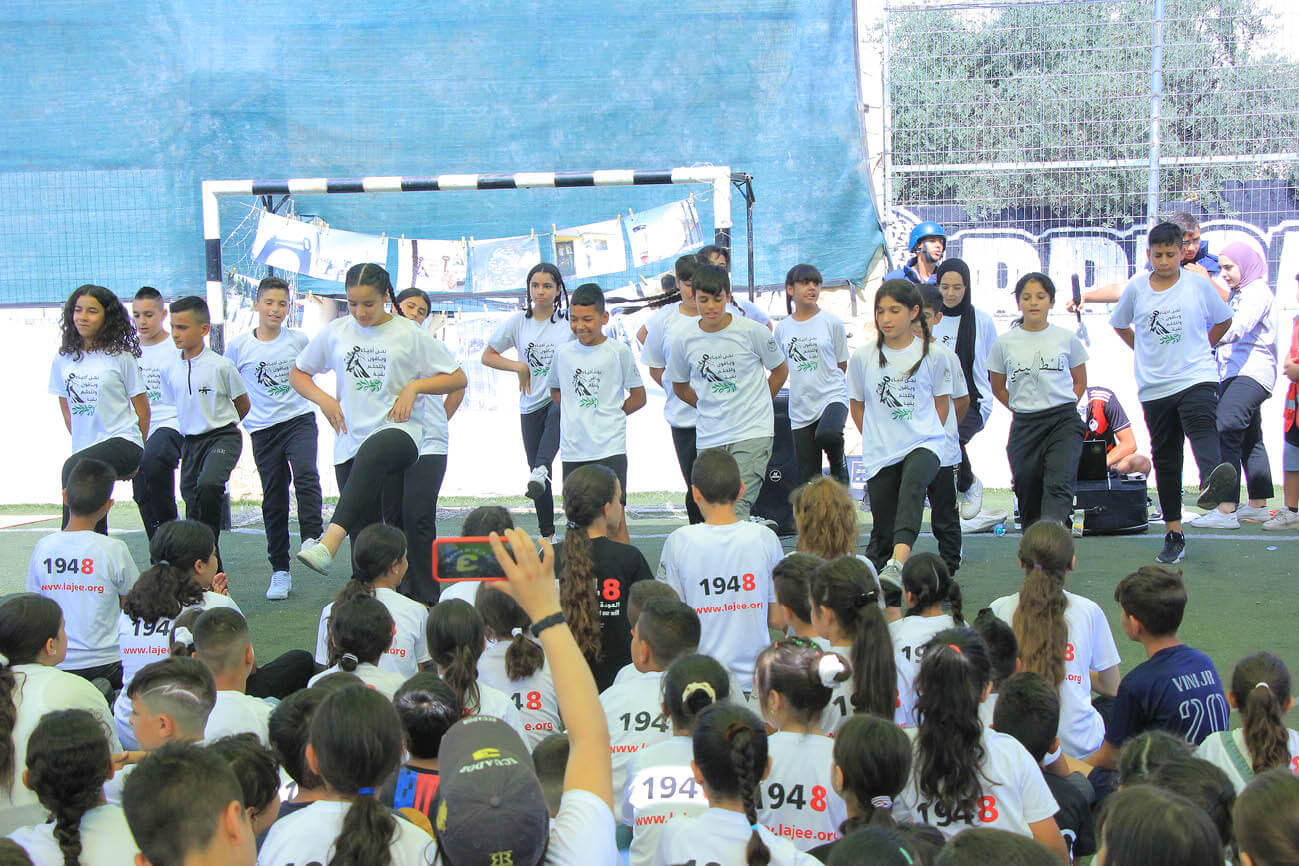
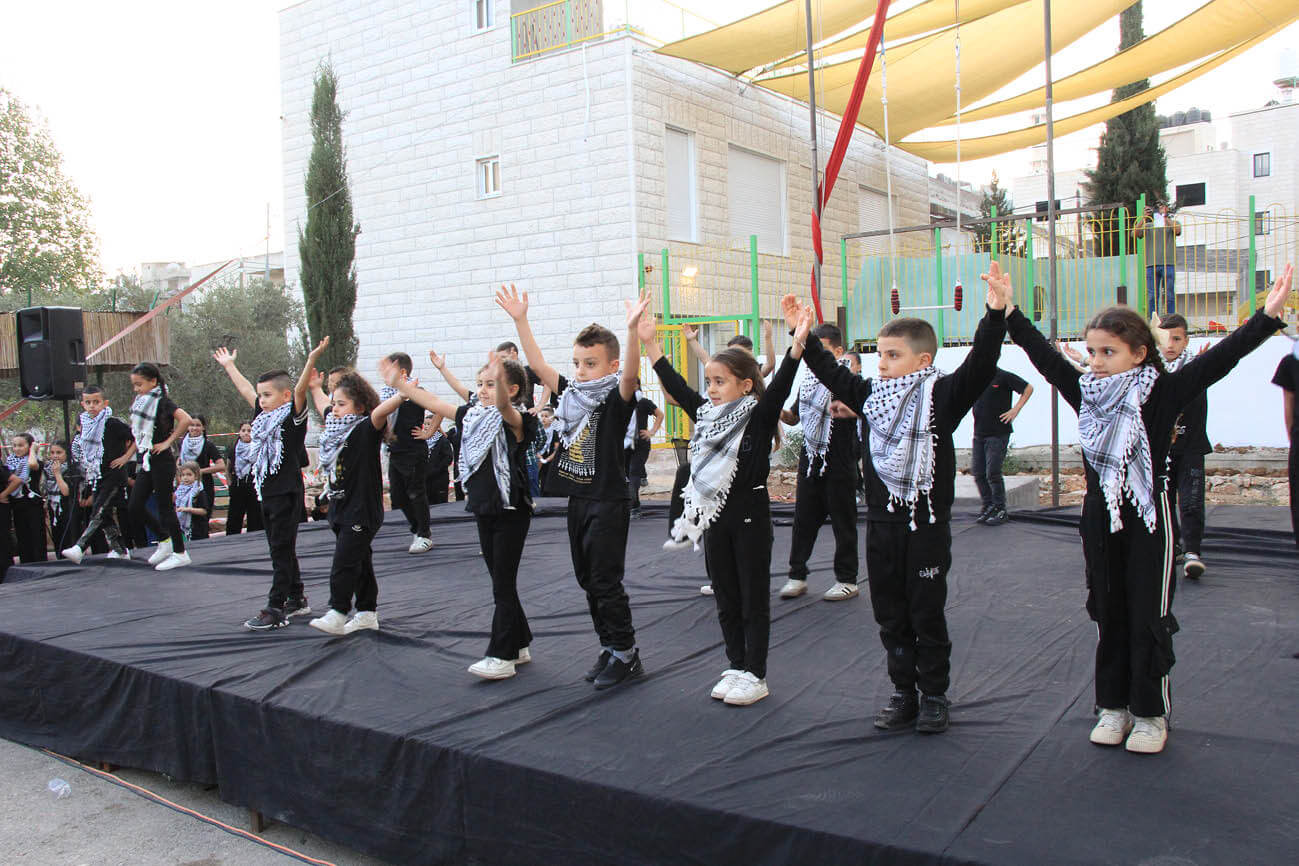
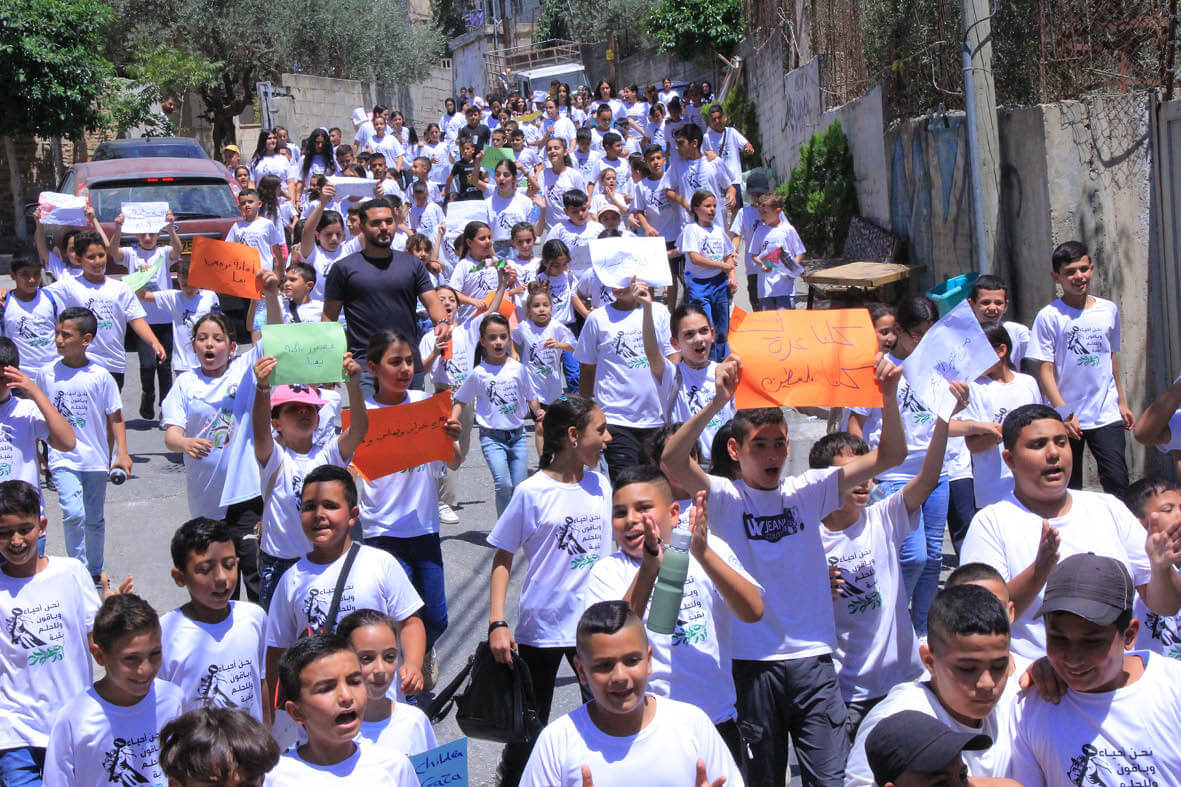
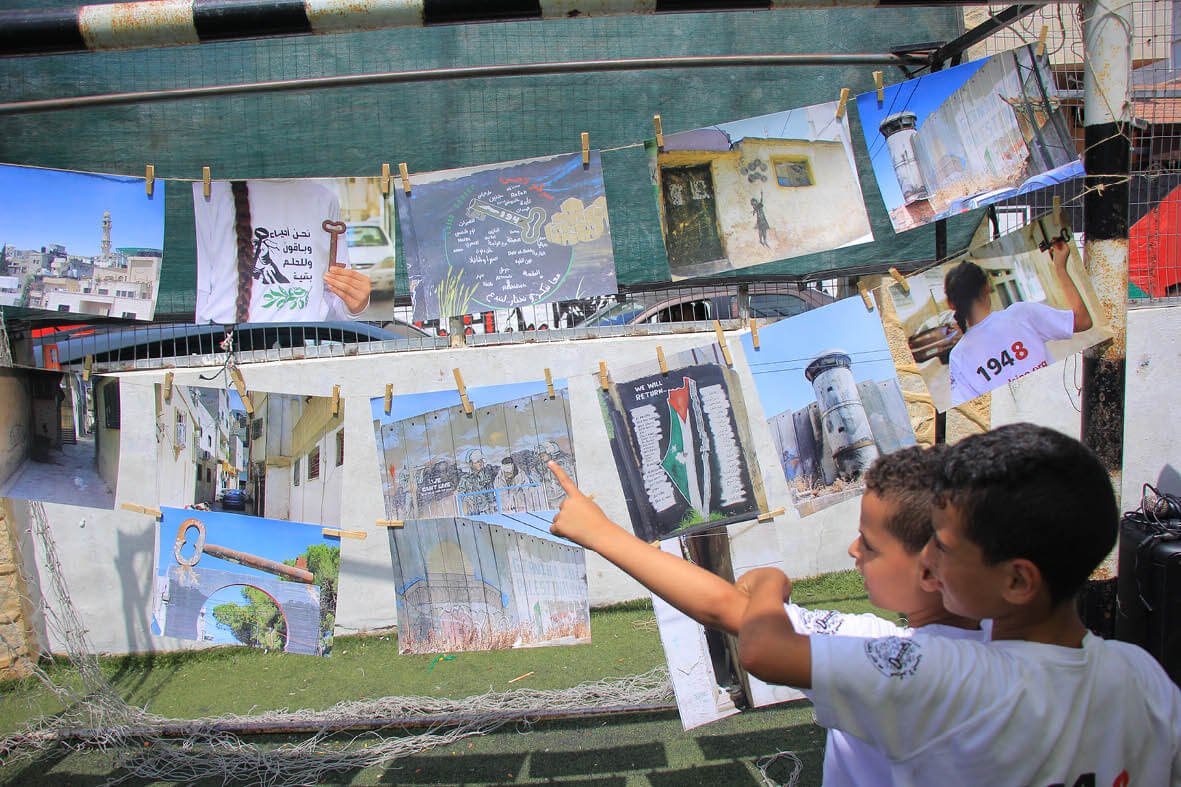
At the end of an unusual summer camp in Aida Refugee Camp, Palestine, in the summer of 2024, children were fighting off the entrenchment of the midday summer sun to stage a performance that contained a few adaptations from their usual program. Somehow, they had to react to the terrifying time of war. As always, the performance included a simple art exhibition as well as musical and dabke (Palestinian folk dance) performances. From the gymnastics program, the smaller children somersaulted across the stage in lumpy loops, and then older youth tumbled across a mat as though they were made of rubber. It was the final performance that stood out, a short play that had been created by its participants. It featured a Palestinian journalist who was documenting destruction and death – until Israeli forces killed the journalist. Colleagues then gathered around to mourn their friend, and another young journalist stood up to carry on the work. In portraying the funeral, the children were acting out a scene they had surely seen many times on their living room televisions. On this day, as frequently happens at Lajee Center, creativity was a means of grappling with the threats and fears with which Palestinian children are forced to live.
Leaders of the youth organization had hesitated to hold the summer camp at all because any kind of activity seemed almost obscene while an active genocide was taking place in Gaza. However, the children in Aida Camp still needed support and enrichment during the long summer. In the end, organizers took their cue from Palestinians in Gaza. Mohammad Al-Azza, Lajee Center’s director, recounted that he had seen videos of Eid celebrations, organized for children in Gaza. This motivated him: “If they still make time for joy in Gaza, in the shadow of all the difficulties they are facing, this is important. It encouraged us to continue with our programming as well. And frankly, I started thinking, “We must persevere, because now we can still do things for the children and for the community as a whole. Tomorrow, or even in an hour, everything could change, and we could be in the same situation as Gaza. So we should take advantage of the opportunity to work on programs that could help strengthen the steadfastness of people in the camp.”
At Aida Refugee Camp’s Lajee Center, seizing the day has been important since its establishment in 2000, and creativity has always been a group effort – a kind of child’s play that is recognized as integral to building vital futures, both in Aida and in Palestine at large.
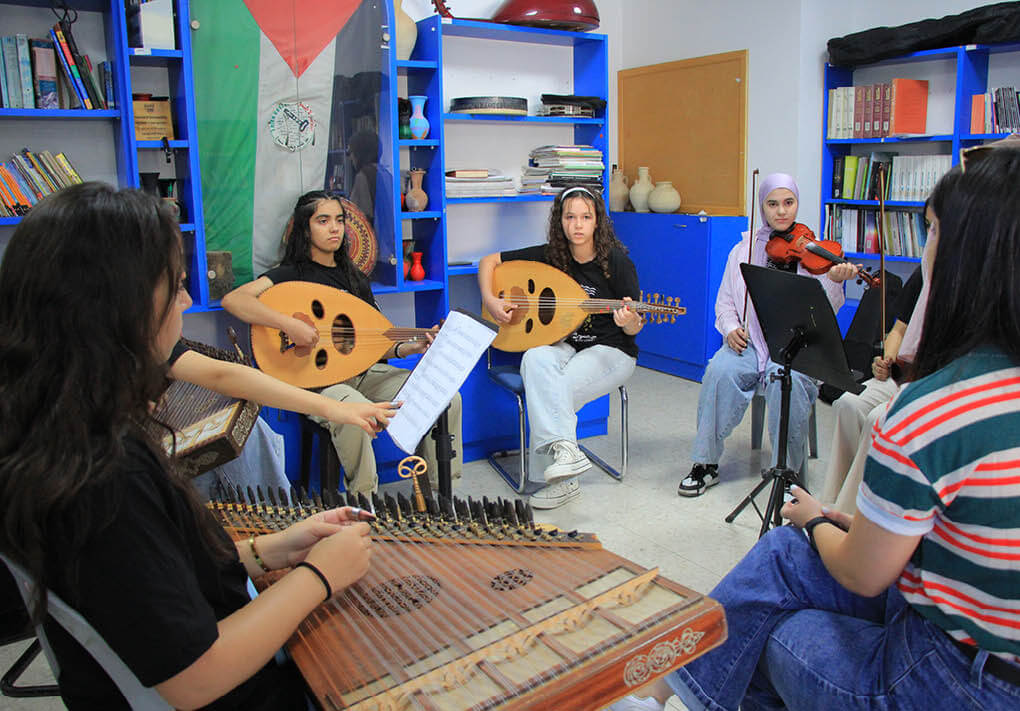
Lajee Center is a community-based, grassroots creativity and cultural center that serves people of all ages in Aida through educational, health, and cultural initiatives that are rooted in Palestinian traditions and priorities. Lajee promotes public health, environmental justice, and creativity, as well as values of social equity, national liberation, girls’ and women’s empowerment, and dignity for all. It maintains several treasured community spaces that include a library, a kindergarten, a playground, a rooftop garden, and a soccer field. Lajee Center also has a thriving music ensemble that performs original music and well-known Palestinian classics. It is home to a dakbe dance troupe that performs proudly in Palestine and has traveled to Europe many times. Moreover, the center hosts arts activities and has produced bilingual Arabic-English children’s books. All of these activities aim to give children outlets for expression and develop their creative skills while also encouraging them to contribute to their community. Thus, the music troupe performs for Mother’s Day celebrations, the dance troupe performs for a prisoner’s release, and the children’s books help share a perspective on Palestinian life with visitors from abroad.
The community around Lajee Center offers an important vantage on Palestinian society. Aida Refugee Camp, where Lajee Center is housed, is located on the outskirts of Bethlehem and home to people whose families were dispossessed of their houses and lands in the Palestinian Nakba of 1948. They come from 27 different destroyed villages, some of which are just a few kilometers away but entirely out of reach due to Israel’s apartheid system that prevents Palestinians access beyond the green line. According to UNRWA, the United Nations agency that provides basic services to Palestinian refugee camps, 7,244 Palestinian refugees were registered in the camp as of 2023, although not all of them live in the camp today. Since 2005, the separation wall has loomed over the camp. The eight-meter wall embeds watch towers and a military base, which leads to a constant presence of Israeli soldiers in and around the camp. The Israeli army frequently raids the camp and arrests people, often holding them under administrative detention (the policy of imprisoning people indefinitely without charge). Violent raids often occur at night and sometimes involve the use of large amounts of tear gas. The camp is severely overcrowded due to land shortages that were exacerbated by the Oslo Accords (that effectively prevent Palestinians from expanding beyond municipal borders set in the early 1990s), high unemployment (due to colonial closure policies that either restrict or prevent the movement of persons and goods both within the occupied territory and between the West Band and Israel), and the ongoing effects of dispossession from generations ago. In recent years, the education system that had long been the engine that drove many Palestinians’ success has faltered, as the Palestinian Authority has been unable to pay teachers’ salaries (which has resulted in the reduction of teaching days), and COVID closures and wars have disrupted the school year over and over again.
In this atmosphere, community-based organizations play an especially important role, as they provide children with spaces for enrichment, ways to develop skills, and a sense of trust in an institution. One of Lajee Center’s most exciting new initiatives has been a book publishing project for youth aged eight to fifteen years. Some of the children are focusing on visual arts and others on creative writing. The project, which is supported by the Mennonite Central Committee, aims to give students the confidence and skills to tell their stories by collaborating in the production of ten children’s books over five years. Kifah Al-Ajarma, Lajee Center’s librarian, has coordinated the efforts. The participants also work closely with Ahlam Bisharat, an artist and author from Tamoun village in the northern WB, who has published books for both children and adults. Furthermore, the children take art lessons from Mohammad Al-Ra’i, an artist from Arroub refugee camp, who has collaborated extensively with Lajee Center, including on outdoor murals. It is exciting for children to learn from these talented writers and artists and also get to know people from other parts of the West Bank.
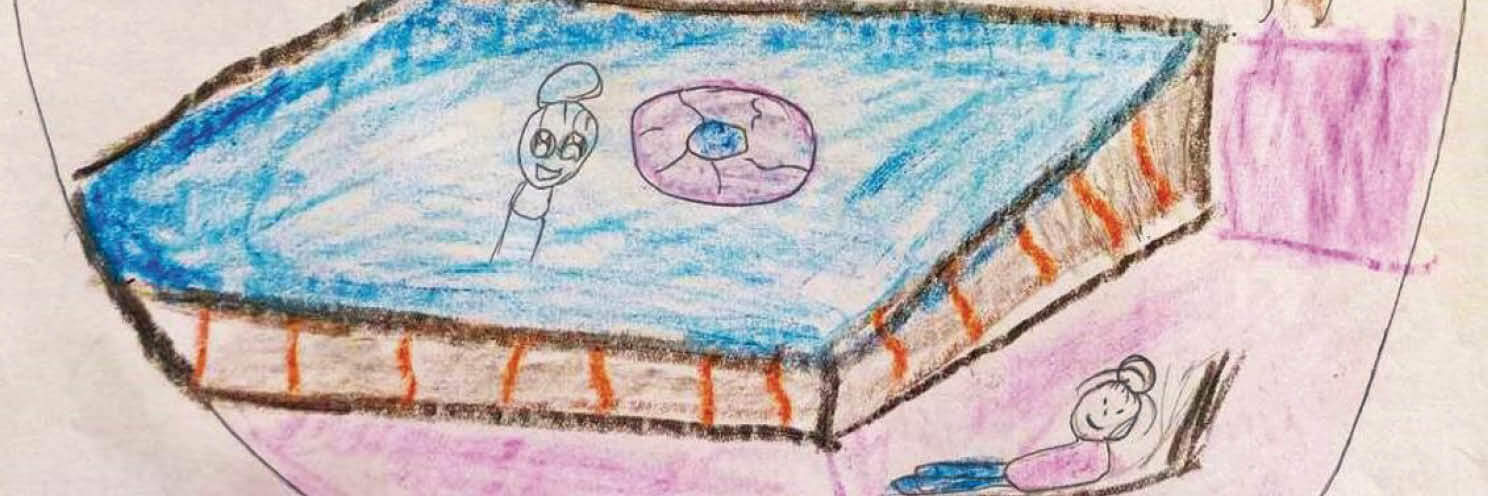
The center considers it important that the children are invited to approach these extracurricular writing activities as a kind of play in a safe space that encourages personal expression. Thus, children have played a “magic box” game to choose words that are then woven into a story; they take turns adding on to a story that grows among the group; and they write stories that are inspired by images. Workshop coordinators encourage them to go deep into their writing by delving into description and dialogue.
Finally, they write stories with an eye to publication. This year will see the publication of at least four different books that the children have created. The first tells a story that is both mystical and rooted in their lived reality of closure: Children, sitting in the streets of the camp, talk about a magical gateway that their grandmother has told them about. They locate the gateway and find themselves in a magical, green place. A bird introduces itself to them as a Palestinian sunbird who loves to help children. The bird then leads them toward Jerusalem, and from a lush field, they see the gleaming Dome of the Rock in the distance. They walk toward it, pass through the majestic archway of Damascus Gate, and explore the Old City’s markets. The children then go to Al-Aqsa Mosque to pray and visit the Church of the Holy Sepulcher. Having enjoyed their day, the magical bird encourages them to return home before dark, assuring them through tears that the fields, Jerusalem, and he himself will be awaiting their return. This beautifully illustrated story expresses children’s connection to Palestine and their longing for mobility and freedom.
Lajee Center director Mohammad al-Azza reflects on the importance of the creative writing project, explaining, “The children’s creative writing has a special significance that is not only tied to education; it is also connected to their identity and to children’s daily experiences in the camp and in Palestine as a whole. Writing can help them express something about the crises they have experienced. It is much more than a hobby, and helps build a generation with awareness and creativity that can reach the world.” In the coming months, three more books will be finalized. Whatever these children go on to do, being able to see their dreams on paper brings these dreams a bit closer. At Lajee Center, children learn essential lessons about creativity as an activity that is rooted in their history and culture and as a skill that they can explore together.
Article photos by Shiraz Omar.
Amahl Bishara is a professor of anthropology at Tufts University. She is the author of Crossing a Line: Laws, Violence, and Roadblocks to Palestinian Political Expression and Back Stories: U.S. News Production and Palestinian Politics. Working with youth at Lajee Center, she has co-produced three bilingual children’s books.
