


Courtesy of Business Women Forum
In the spring of 2005, a handful of Palestinian businesswomen boarded a plane to Tunisia, carrying little more than business cards and curiosity. The conference hall they entered would act as a foundation stone in the story of the Business Women Forum (BWF). Two hundred women from more than twenty Arab countries filled the room – lawyers, exporters, engineers, CEOs of manufacturers’ associations – each speaking not only for her company but also for an organization that represented women in her society. Between panels and coffee breaks, the Palestinian visitors listened, watched, and compared notes. They were impressed, proud of the women they met, and quietly unsettled. Why did every delegation seem to have a collective voice except for theirs? On the flight back to Ramallah, the conversation shifted from admiration to resolve. If such organizations could exist elsewhere, they decided, then Palestine would have one too.
Back home, the BWF’s establishment was launched inside Manal Zraiq’s office space. What began as informal meetings – shared coffee, exchanged frustrations, and practical ideas – quickly transformed into planning sessions. The women were not merely discussing opportunities, they were designing one. From that small office, they laid the foundation for what would become the Business Women Forum–Palestine. Maha Abu Shousheh, a founding member, states, “Shining the light on Palestinian businesswomen and their professional business achievements inspires more women in society to take the leap forward in establishing their own businesses, confidently taking credit for the work they already carry.”
The early days were modest: a borrowed meeting room, volunteer hours, and a determination to create a space where women could learn from one another, build businesses, and speak collectively. Over time, that improvised gathering evolved into a structured organization with programs, partnerships, and a national presence. “We faced difficulties,” Amali Moghrabi recalls, “but the spirit of collaboration and determination made a real difference. The forum is no longer just an idea; it is a platform that brings women leaders together and opens new horizons for success and partnership.” Today, the forum stands as one of Palestine’s leading civil society institutions, contributing to economic development and women’s participation in public life, and demonstrating how a conversation among determined women can grow into a movement with lasting social impact. Najah Osaily, a founding member, explains, “Women entrepreneurs from various cities across the West Bank and Gaza came together because they deserved a platform that cares about their issues and amplifies their voices.” Nearly two decades later, that idea has matured into a national platform that has served more than 10,000 women entrepreneurs and supported many established business leaders across the West Bank, Gaza, and Jerusalem.
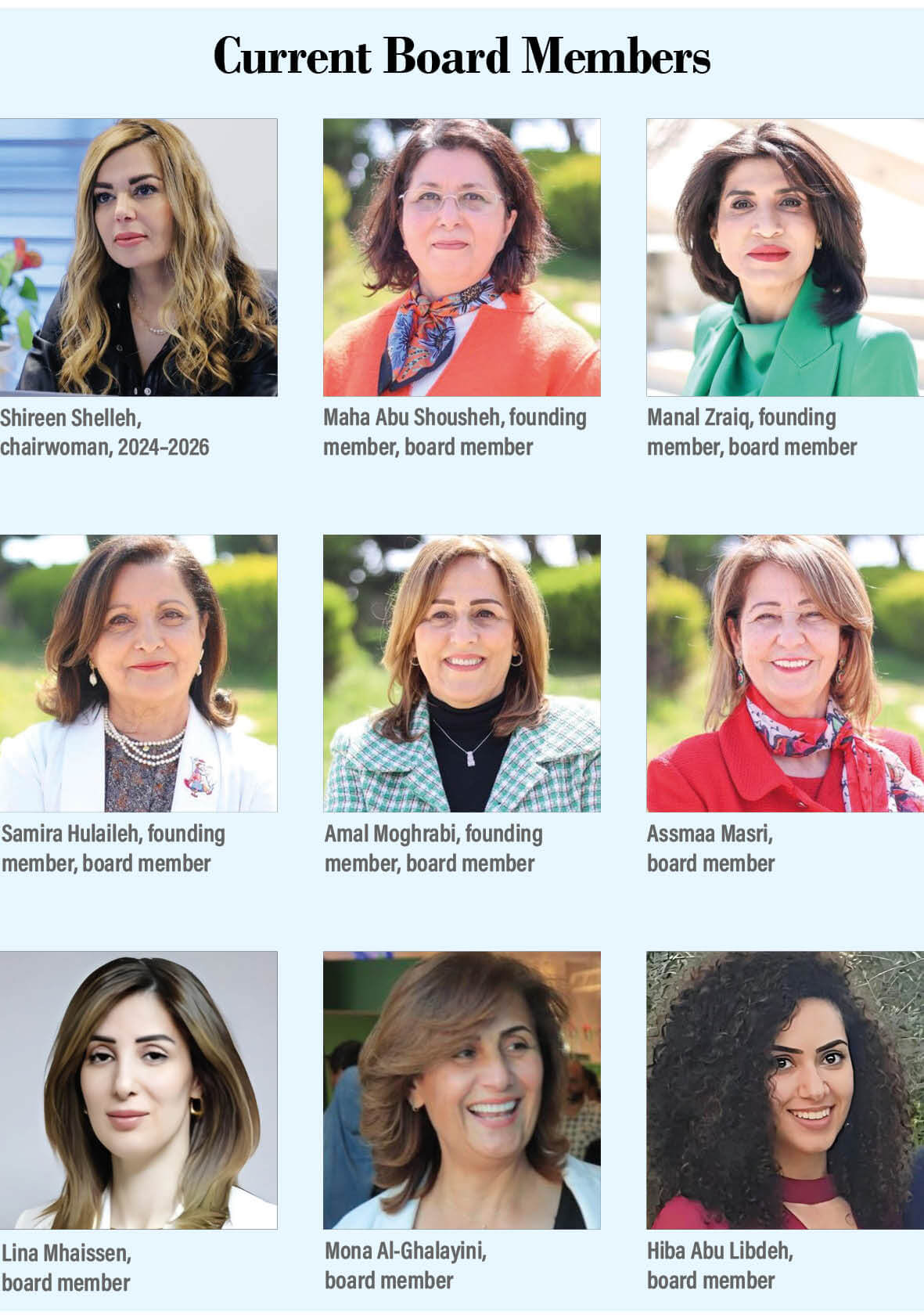
Through sustained training, mentoring, and advocacy, women supported by Business Women Forum have taken seats on boards of publicly listed companies such as banks, municipal councils, and the Palestinian Private Sector Coordination Council. Shuaa Marrar, who served as chairwoman from 2020 to 2023, explains, “Together, we supported one another, empowered women entrepreneurs and business owners, and became the collective voice of businesswomen in Palestine.” The presence of these women signals a gradual shift in decision-making spaces that historically excluded women. These achievements are not symbolic; they influence financial policy, local governance, and economic planning.
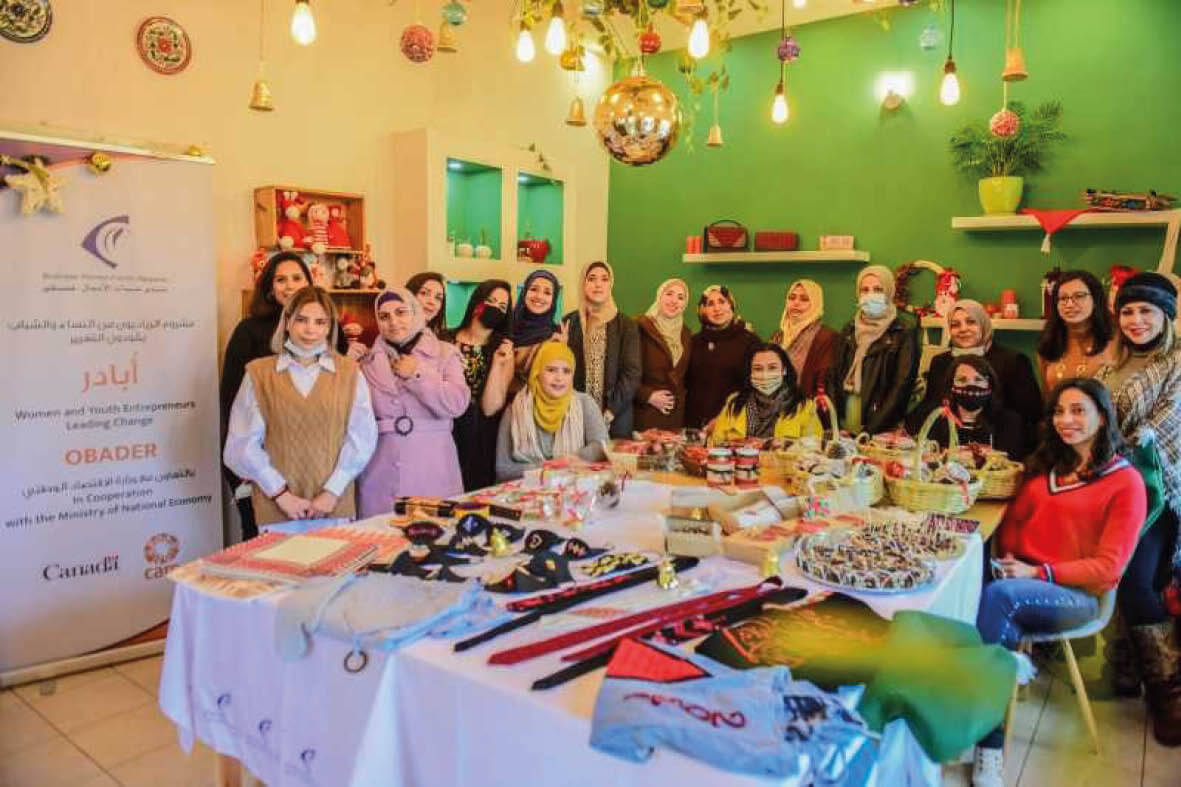
In Palestine, women fill lecture halls and graduation ceremonies; nearly half of university graduates are female. Yet once diplomas are framed and hung on living room walls, only a small fraction of these women graduates – less than five percent – enter the world of ownership and enterprise. Manal Zraiq, a founding member, states, “Economic empowerment is not just about money. It is a woman’s power to say ‘no’ to what harms her, and ‘yes’ to a future she chooses for herself and her family.” The gap between education and economic participation is where BWF chooses to work. Its programs begin long before a business exists, introducing schoolgirls to real entrepreneurs whose stories make ambition tangible. At the university stage, young women are encouraged to imagine themselves not only as employees but as founders. And when an idea finally becomes a small enterprise, the forum stays beside them: guiding formal registration, improving product quality and branding, and supporting expansion into wider markets. What might have remained a personal talent practiced at home gradually becomes a recognized, professional business that operates in the public economy. Lina Mhaissen, board member in 2024, adds that BWF is “elevating the resilience of our women in continuation of their historic struggle; it enables them to contribute to the global markets, taking pride in their achievements, as they are carrying with them an honorable history and serve as models for Palestinian women.”
BWF’s success is not defined by a single project or milestone but by the living community of women who continuously choose to support one another. From the beginning, the forum was built on a simple yet powerful principle: women giving to women by sharing their time, expertise, networks, and encouragement. In the words of board member Assmaa Masri, “BWF is a leading national platform that supports women’s economic empowerment and strengthens their leadership role in society. It is also a space for networking, exchanging expertise, and building partnerships that contribute to the growth of women-led businesses in Palestine.” Operating in Palestine has required adaptability and endurance. Periods of uncertainty have tested the organization’s stability, yet BWF has moved forward through strategic planning, a clear vision, and thoughtful risk mitigation. Having contingency plans and remaining agile have allowed the forum to respond to shifting realities while staying focused on its mission.
By combining leadership development with technological tools, the forum is positioning Palestinian women not only as participants in the economy, but as innovators within it. Current chairwoman Shireen Shelleh states, “We are building more than businesses; we are building leaders, women who access capital, sit on boards, and help shape Palestine’s economic future. True empowerment is not only about income generation, it is about influence, visibility, and ensuring that women have a voice in the systems that drive sustainable development.”
Through this collective spirit, BWF has not merely survived, it has expanded. It has strengthened services, broadened networks locally and internationally, enhanced institutional capacity, and amplified its advocacy voice. Former CEO Doa Wadi, affirms, “BWF stands today as proof to the world that supporting a woman’s ambition and will is the most lasting investment you can make in our society.” BWF serves all women across the full entrepreneurial spectrum, from home-based businesses to CEOs of established companies, offering capacity building, business development support, and tailored programs that respond to each stage of growth. The steady guidance and strategic oversight of its board of directors has also played a critical role in safeguarding the organization’s direction and ensuring continuity, even in the most challenging circumstances.
The internal processes that generate the greatest external impact are the ones that are rooted in discipline, clarity, and alignment. Strong internal policies and standardized procedures reduce ambiguity, ensure accountability, and create consistency across programs and operations. These systems allow the organization to function efficiently while maintaining high standards of delivery. The BWF’s structured program management is central to achieving measurable outcomes. Strategic planning and prioritization ensure that resources are directed toward initiatives that directly advance the mission. Monitoring and evaluation systems track performance against defined indicators, allowing for continuous learning, timely adjustments, and scaling of successful practices. Equally significant is BWF’s organizational culture of collaboration and shared purpose. When teams, partners, and members operate with aligned objectives, internal efforts translate into sustainable external results. This alignment between systems, strategy, and people strengthens credibility with stakeholders and enables BWF to consistently achieve milestones that advance women’s economic empowerment.
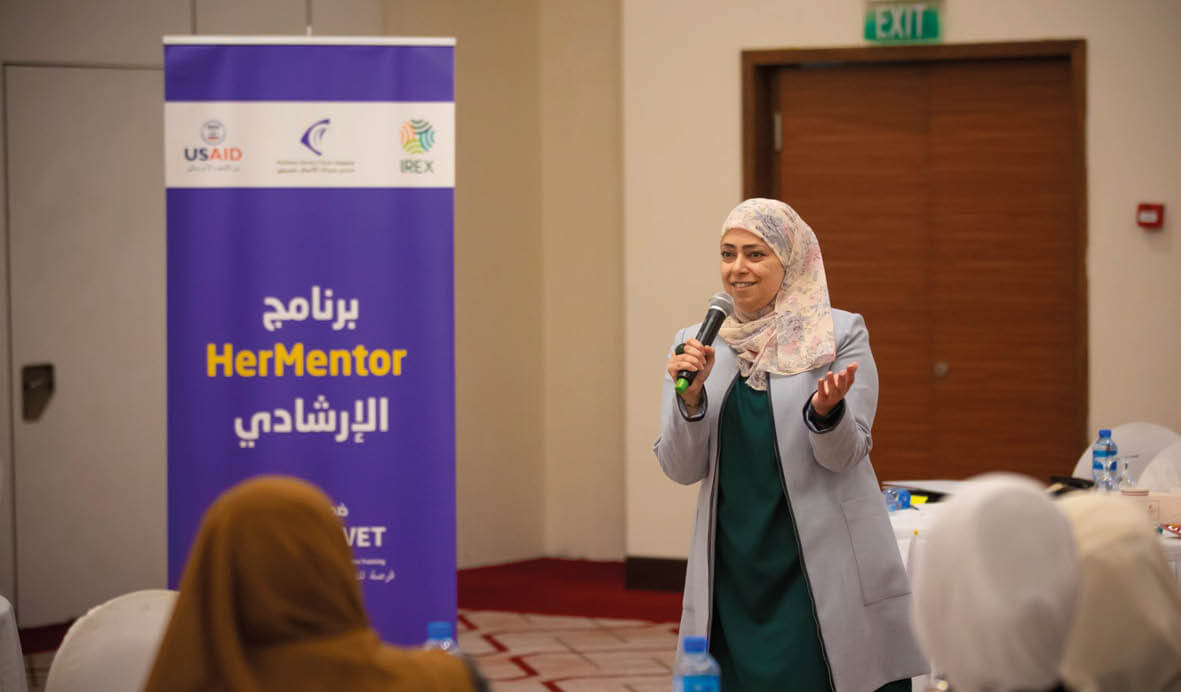
Technology is also a key enabler in expanding access, efficiency, and impact. Digital tools are integrated into program management to support data-driven decision-making and real-time monitoring of outcomes. This ensures more responsive and evidence-based interventions for women entrepreneurs. Looking ahead, BWF is preparing the next phase of empowerment through technology. Manal Zraiq adds, “By combining leadership development with technological tools, BWF is positioning Palestinian women not only as participants in the economy, but as innovators within it.” Women entrepreneurs are learning digital marketing, e-commerce, and online networking, which enables them to access international markets and collaborate across borders. BWF is currently designing the first mentorship platform dedicated to women entrepreneurs in Palestine, creating structured digital access to guidance, professional networks, and knowledge exchange.
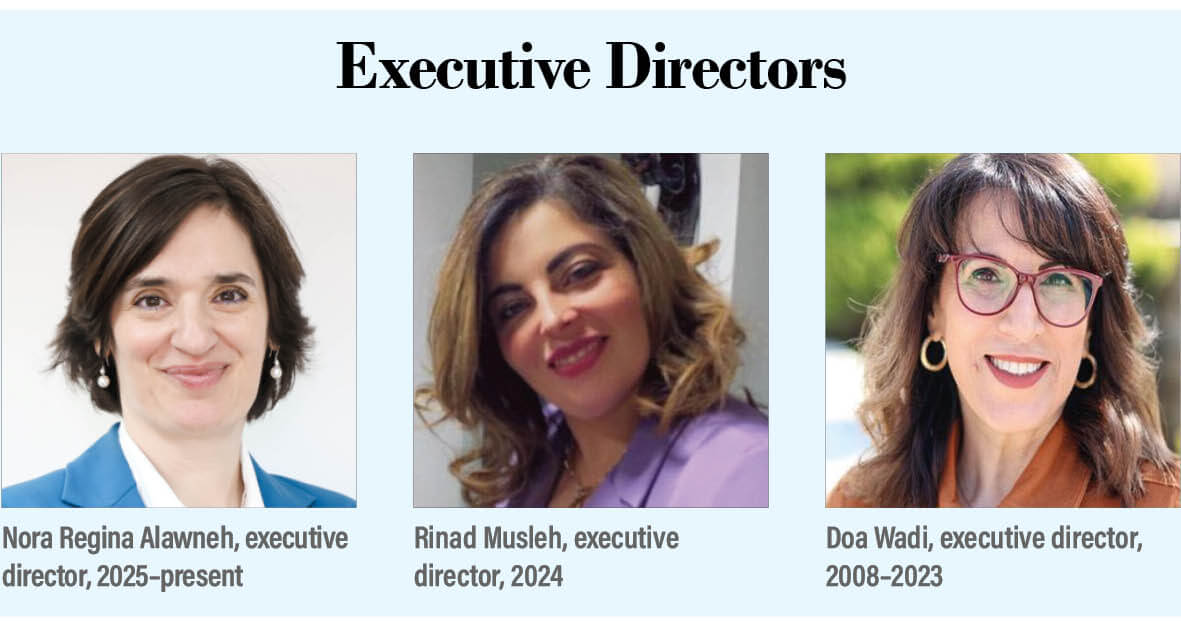
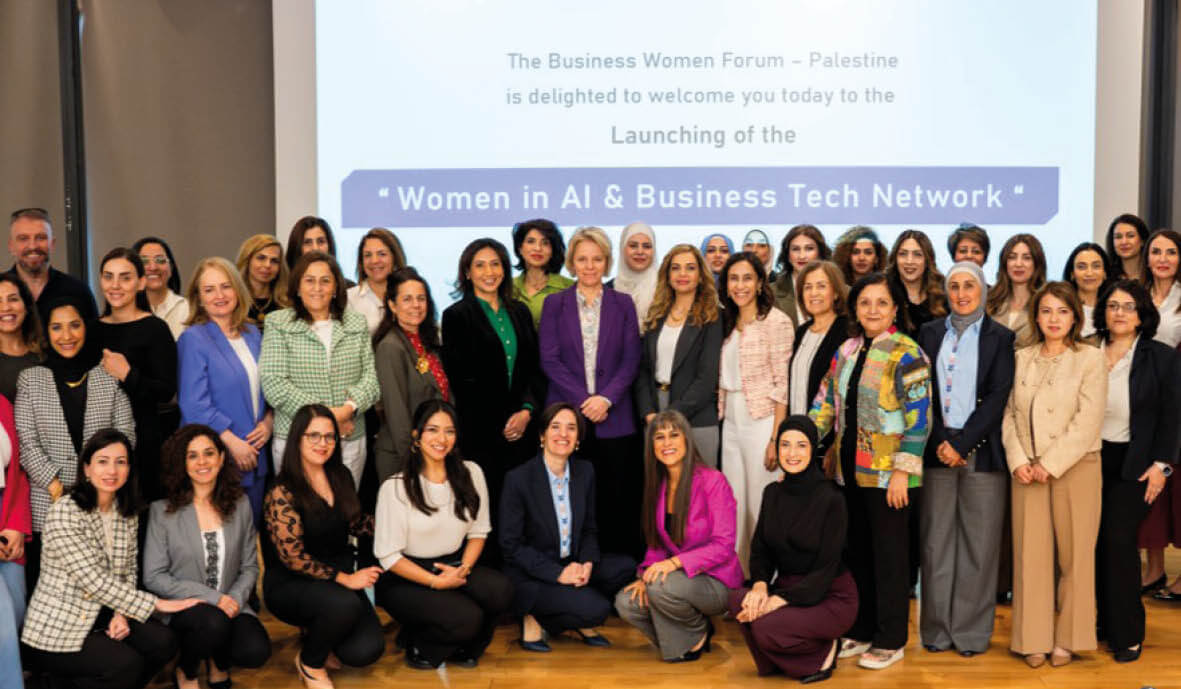
Current CEO of BWF Nora Regina Alawneh asserts, “BWF’s project ‘Women in AI and Business Technology Network’ aims to equip Palestinian women with the knowledge required to seize emerging digital opportunities, strengthen leadership, and pioneer innovation and entrepreneurship in the tech sector.” She takes pride that financial technology solutions are also embedded across programs to support digital payments, financial literacy, and credit-readiness systems. By integrating technology into both internal operations and external services, BWF models agility, transparency, and forward-looking institutional development.
Through continued support and partnership, the growing network of leaders will be able to further expand its programs, reach new communities, and ensure that more women can move from aspiration to enterprise – and from enterprise to influence.
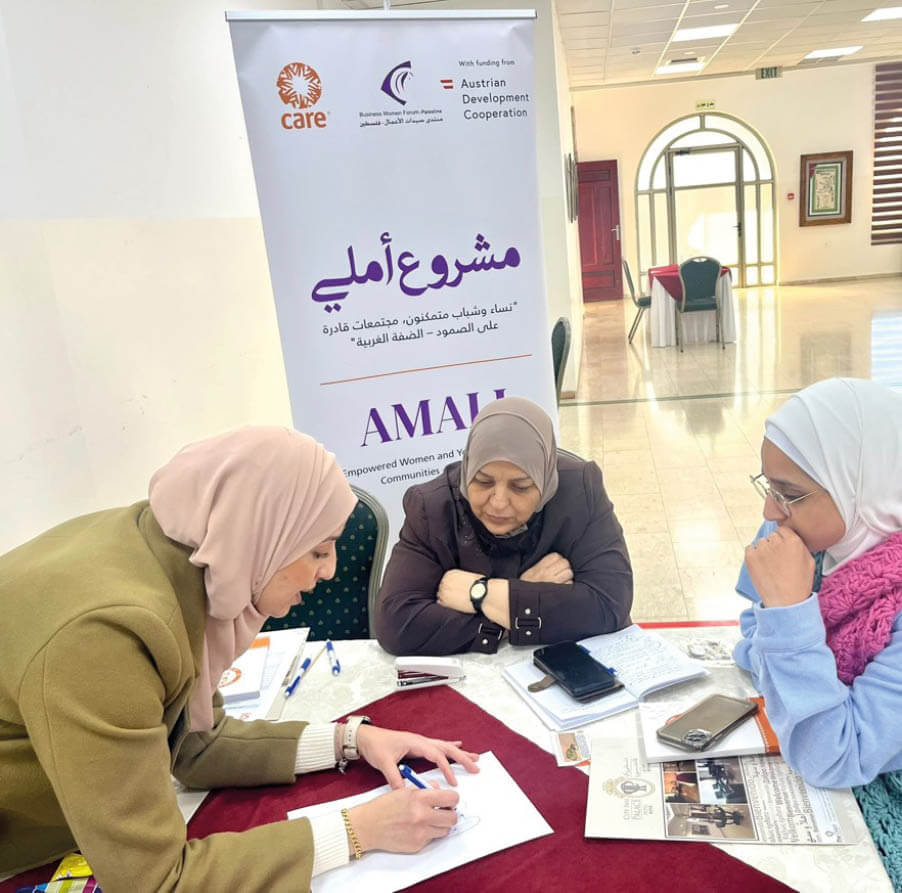
BWF’s approach is practical. Through its One Stop Shop model, women receive a pathway and set of resources that enable their economic success. Capacity-building training, individual coaching, mentoring, business development programs, access to finance, and market access support unfold together. Over 20,000 hours of training have equipped women with skills ranging from financial planning and product development to negotiation, leadership, and public speaking. Furthermore, more than 650 women have formally registered their businesses, moving from informal survival work into recognized economic participation. Hiba Walweel, a board member in 2022, notes, “Wherever women stand together, truly supporting and uplifting one another, the impact is powerful and beautifully felt by everyone. That has been my experience in the forum. I met the most wonderful entrepreneurs, and I learned so much from them.”
BWF’s impact is visible in multiple layers of the economy. The forum has organized more than fifty exhibitions and trade missions locally and internationally, linking Palestinian women’s products to buyers in Germany, the Netherlands, Jordan, and the Gulf. Through partnerships with banks, the organization has facilitated loans and seed funding exceeding US$1.5 million, allowing businesses to purchase equipment, hire workers, and expand production. Through strategic financial grants, BWF has fueled the entrepreneurial journey of over 11,000 Palestinian businesswomen, transforming ideas into enterprises or strengthening existing businesses to endure and grow. Moreover, BWF has complemented this support with entrepreneurship training and capacity-building programs, equipping women with the skills needed to manage, grow, and lead their enterprises independently.
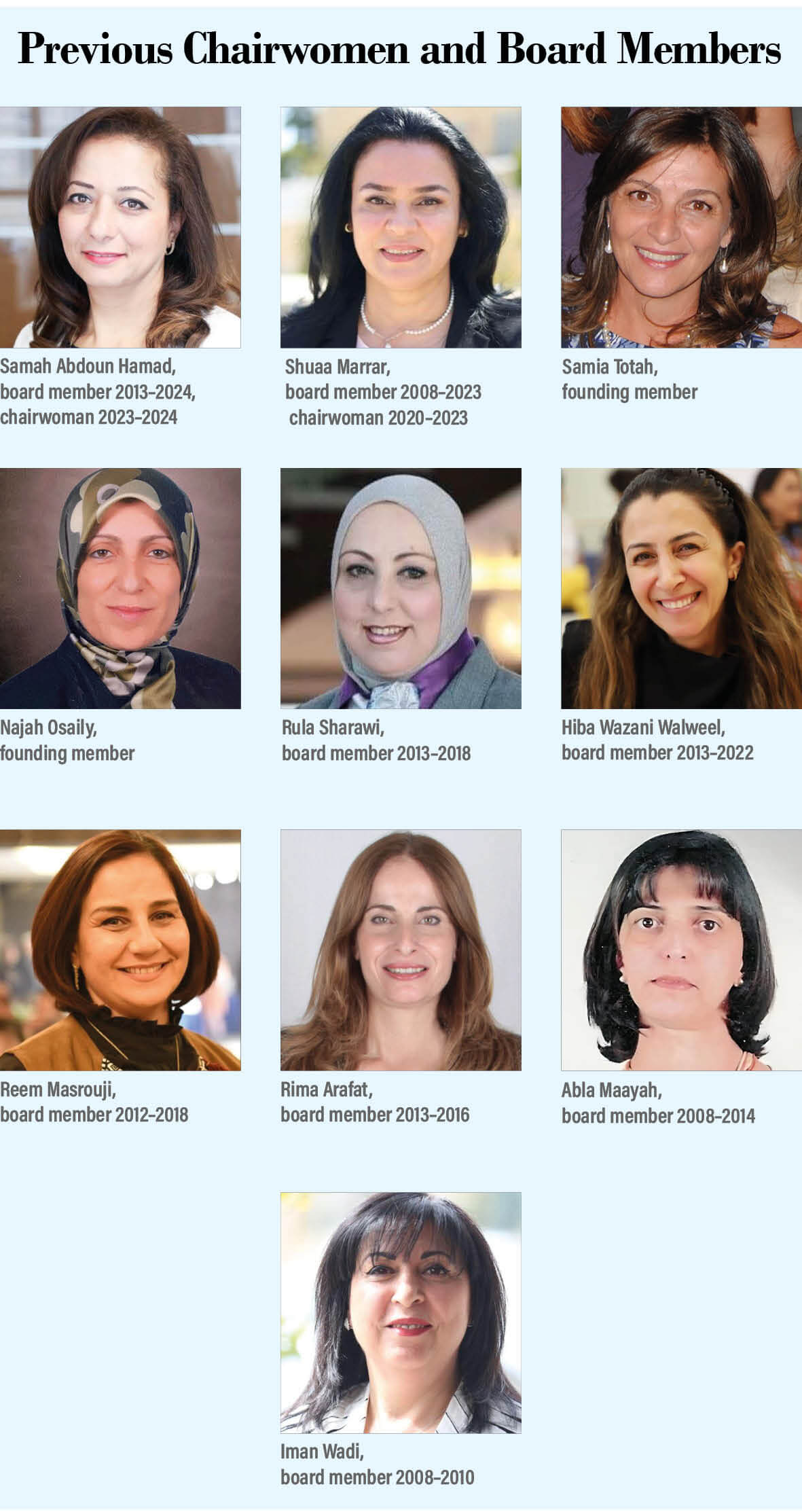
Women who once attended workshops as participants now sit on its board, shaping strategy and expanding services for other women across society. Many of them furthermore represent Palestine internationally, speaking at conferences, trade missions, and policy dialogues, carrying with them the experience of building businesses under complex economic conditions. And many of them continue to receive regional and international awards and recognition. Training women on the skills that enable them to become board members through the International Finance Corporation’s program is a highlighted achievement for BWF. H.E. Dr. Samah Hamad, chairwoman of BWF in 2023–2024 and Minister of Social Development and Acting Minister of State for Relief Affairs, describes her tenure as “strengthening executive leadership while delivering meaningful impact at a critical time.” Today many BWF members represent women at the Palestinian Private Sector Coordination Council as they lead seats on the board of directors. Samira Hulaileh, a founding member, stated, “By establishing the BWF, we have woven a powerful network of women across Palestine, the diaspora, the MENA region, and internationally. Over time, BWF has become a trusted reference for professional insight.” Their presence signals a gradual shift in decision-making spaces that have historically excluded women. These achievements are not simply symbolic; they influence financial policy, local governance, and economic planning. Hiba Abu Libdeh, a current board member, states, “Being surrounded by inspiring women leaders of Palestine has given me the strength to push further during difficult times.” Women’s representation on boards – once nearly nonexistent – has increased, with several BWF members serving on boards of financial institutions, publicly held companies, municipalities, chambers of commerce, and NGOs.
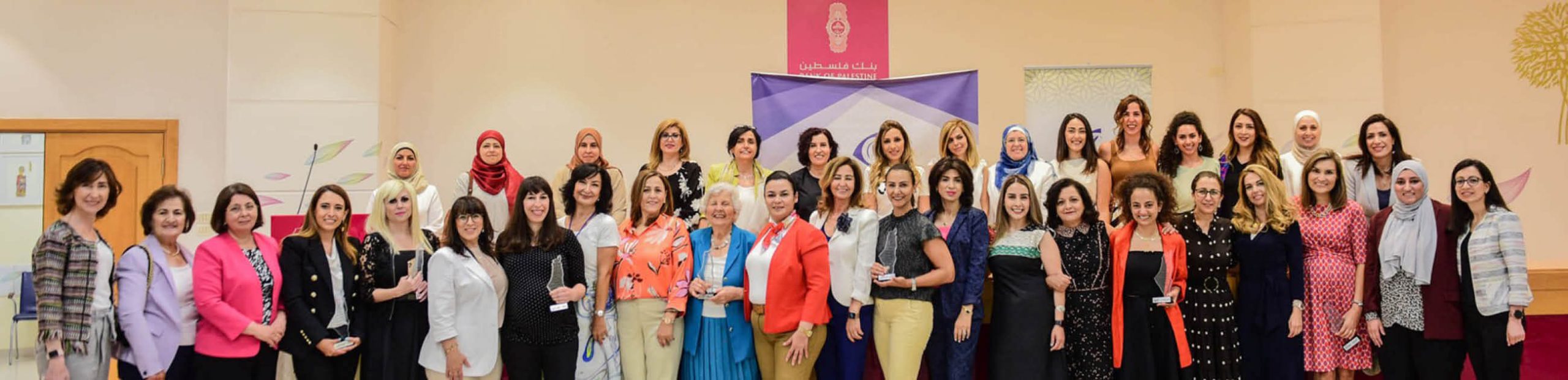
One of the most remarkable achievements of BWF is reaching and celebrating 20 years of empowering women despite continuous political, economic, and social challenges. This milestone is far more than a number; it represents resilience, continuity, and unwavering purpose. Mona Ghalayini, a board member in Gaza, explains, “The forum serves as an inspiring space to exchange experiences, build effective partnerships, and support women’s ambitions that make a tangible impact on society.” Rula Sharawi, who served as a board member in 2018, adds, “Sustaining an organization for two decades in such a complex environment reflects deep institutional strength and collective commitment. I joined at a young age and learned a great deal from the founding women entrepreneurs about decision-making and crisis management. What distinguishes the forum most is its diversity.”
Today, BWF is no longer only an organization that trains entrepreneurs, it is a pipeline of leadership. As founding member Samia Totah asserts, “Twenty years later, one looks back at what the Palestine Business Women Forum has achieved in relation to its initial establishment goals: The official registration of hundreds of establishments led by women, the training and workshops in various aspects, and the impact it has had on the lives of many women are significant and cannot be ignored.”
