


By Mona Al Ghussein
If I must die, you must live to tell my story.
If I must die, let it bring hope, let it be a tale .
The lines of the epigraph above were penned by the late Refaat Alareer, a poet, humanist, and university professor who was murdered on December 6, 2023 by a targeted airstrike against him during Israel’s genocidal campaign in Gaza. These powerful and moving words were quoted by Dr. Ralph Wilde in February of this year in his summation to the International Court of Justice regarding the illegality of Israel’s occupation of Palestine. The fact that Wilde chose to highlight the injustice of the occupation by using the late poet’s words heralds a momentous change in how Palestinian voices are now heard.
For decades, Palestinian voices have lurked in the shadows of the international community’s consciousness. Cancelled, ignored, and dismissed, our voices are now slowly and painfully but loudly being heard against the backdrop of Gaza’s untold suffering, with every minute bringing the destruction of a life, of a dream, of hope. Yet out of this hellish darkness, a bright light is seeping through, thanks to the voices of countless Palestinians both in Palestine and in the diaspora. Far more compelling than any political statements, these voices are changing the landscape and perception of Palestinian rights.
Our stories are being heard and listened to, they are resonating with a global audience despite the obstinate intransigence of so-called Western democracies led by the US and the UK whose abuse of power at the UN Security Council, where they use their veto to prevent a ceasefire, eludes polite description. Any pretense of moral superiority about human rights or their sanctity, and of adherence to a rule-based order has been blown to bits by overwhelming public exposure that has uncovered the hypocrisy and double standards in existence for decades. Not even the might of Israeli media power and control is able to dim those voices.
For me as a Palestinian and a Brit brought up in England, there were always contradictions and conflict involved in my sense of identity. First, the irony of being home in the country that brought the demise of my homeland by promising it to another people. And then living for years under a storm of language describing us as terrorists, animals, or snakes, just to name some of the more recent popular usage by Israeli officials – and not by some extremist or influencer hungry for publicity.
Our cry for freedom from the river to the sea is described as a hate crime but not Netanyahu’s repeated mantra that Israel has the right to all of “Judea and Samaria.” For decades we have lived under the boot of corrupt Zionist mythologies and narratives, and woe betide those who raise their voices in dissent: they are summarily dismissed as antisemitic.
More times than I care to remember when being interviewed or attending meetings did I have to qualify my “goodness” as a Palestinian by first expressing
sympathy for the horrors of the Holocaust, in order to demonstrate that I wasn’t some extremist but a reasonable, “moderate” human. I had to put the crimes of displacement perpetrated against my family in second place. I was expected to condemn atrocities committed against Israelis and endorse disproportionate and vengeful retaliation as “self-defense.” I listened to newscasts that described Israelis being “brutally killed,” while Palestinian children just “died.” I watched as British and American Jewish friends of mine bought homes in Palestine while I was being denied the heritage of my father and grandfather.
Today, I am no longer prepared to take second place, to appease Zionists in order to sound reasonable, or to apologize for my identity and accept racist foul language and the denial of my humanity. I want recognition and acknowledgment of my rights and of the injustices perpetrated against me. Why should my life not be equally valuable to that of a Jewish Israeli? Not less or more, but based on the fundamental principle of equity, something that has consistently been denied Palestinians by dishonest brokers such as the US. It is, they argue, Palestinians who have refused peace. What peace? One based on total subjugation and a few crumbs of control is the only solution that has ever been offered.
As a Palestinian, as a writer, and as a parent, I have no words that can adequately explain the revulsion that I and many in the world feel right now. The abhorrent stance of both the US and UK as they continue to debate and veto a ceasefire while arguing over whether or not tens of thousands of deaths, deliberate starvation, the bombing of hospitals, homes, schools, mosques, churches, and infrastructure constitute genocide, and whether to call for a “humanitarian pause.” What does that even mean? Giving the Palestinians in Gaza a few days of respite before resuming their extermination? I have watched with increasing repulsion as US officials and British MPs rush to loudly express Israel’s right to defend itself, to live in security and safety while denying the same things to my people.
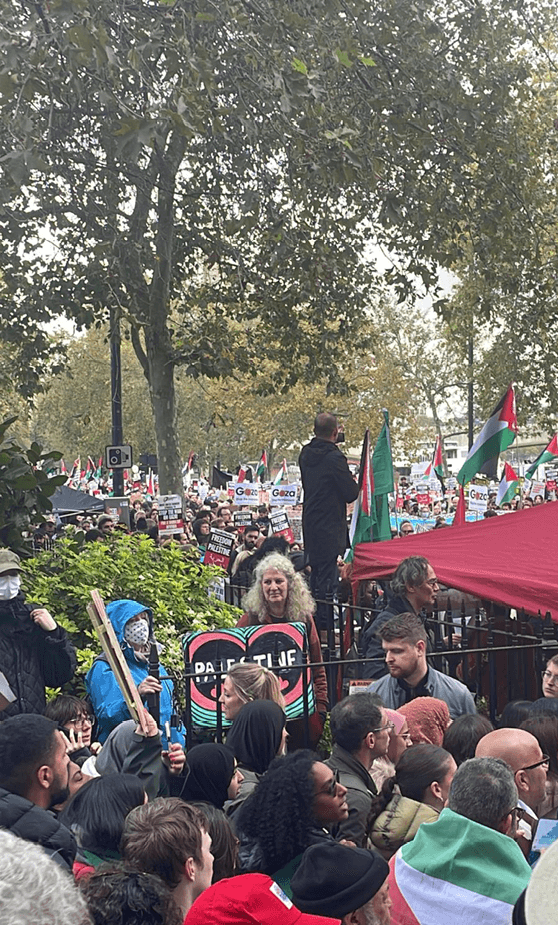
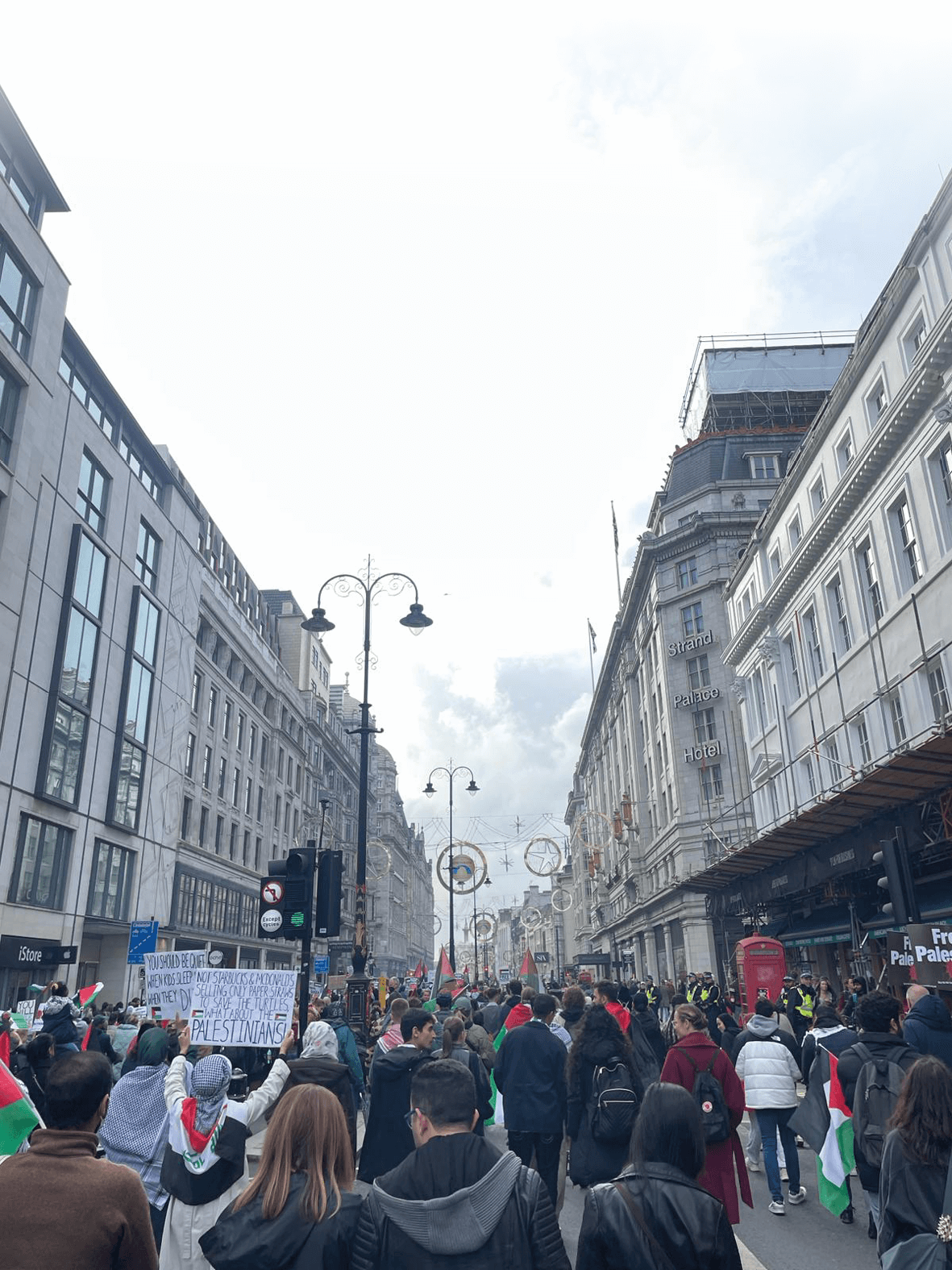
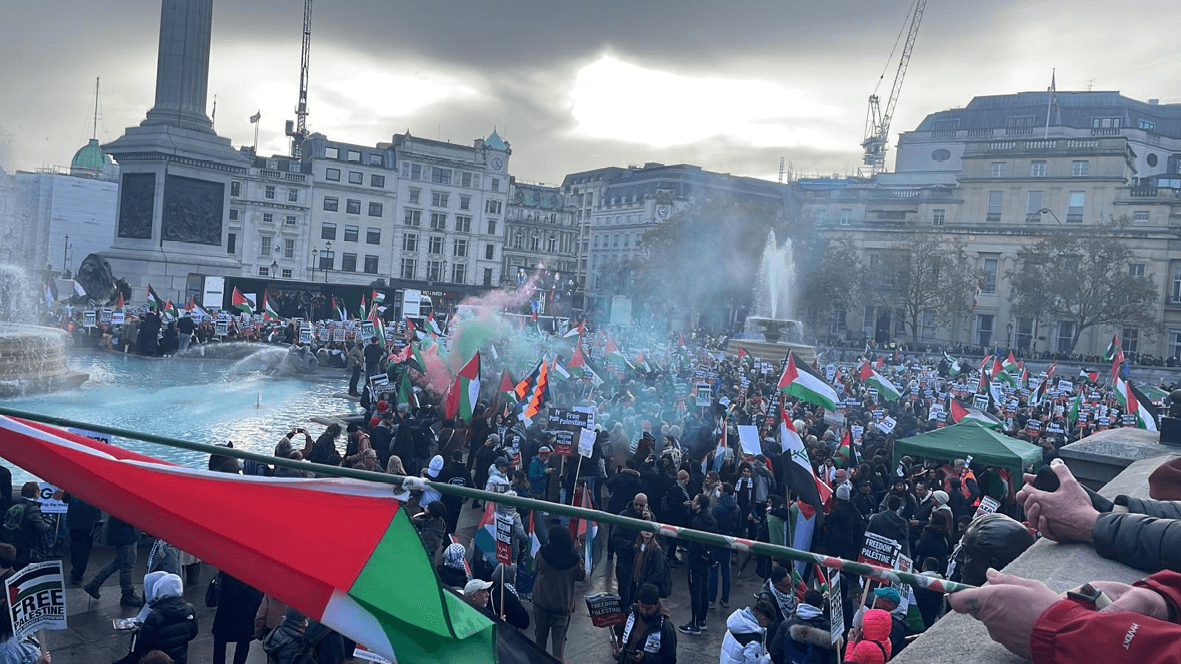
It’s also terrifying that the protests by hundreds of thousands of ordinary people in London to stop a war of annihilation are seen as an attack on democracy by Prime Minister Rishi Sunak who crudely referred to the rule of the mob replacing democratic rule. Both the government and the opposition in the UK are calling for enhanced police powers to curtail demonstrators despite an overwhelming majority of the British public calling for a ceasefire – all this to avoid calling out Israel for its war crimes and holding it accountable. This has huge ramifications as it goes to the heart of democracy and the principle of free speech, and ignores the will of the people demanding a cessation of Israel’s slaughter of Palestinians. As Labour MP Diana Abbot aptly said, this is “the first step towards a police state.” Beyond the injustice to the Palestinians, the corruption of international law and lack of accountability are a very slippery road to the global subjugation of the weak to the powerful and the normalization of atrocities concerning those who are deemed expendable.
Notwithstanding the terrible anguish and massive destruction, what is clearly emerging is the Palestinians’ own narrative, in hauntingly moving and beautiful voices that are resonating throughout the world and telling a thousand stories that are perhaps even more evocative than all the tragic pictures we see. No amount of gaslighting – whether lies about decapitated babies or poorly substantiated reports of rape, and of UNRWA employees being members of Hamas who participated in the October 7 attack – is going to cover up the truth that is seeping out. Nor will the role of the UK and the US in enabling Israel’s war crimes disappear. Nadine Murtaja, an aspiring young poet from Gaza, highlights far more powerfully than any political statement what will remain in the global community’s consciousness after all is said and done:
We walk on the shattered glass of our broken windows,
We walk on stones that once were a house carrying stories and secrets,
We walk with the screams of children, and the groans of mothers pulsating over and over in our ears.
The following lines as well, attributed to the great bard of Palestinian resistance Ghassan Kanafani, have circulated widely across social media in recent months. They encapsulate the awful price being extracted from our children to secure our future.
I wish children didn’t die.
I wish they would be temporarily
Elevated to the skies until the war ends
Then they would return home safe,
And when their parents would ask them:
“Where were you?” they would say:
“We were playing in the clouds.”
Regardless of the impact such voices have in making fundamental Palestinian rights a reality, the world landscape has been changed forever since October 7. Will we finally get our homeland back? I expect not in the foreseeable future, but it is undoubtable that the stories are changing. The genie is out of the bottle, and nothing is going to put it back in.

Brilliant a must read coming from an influential voice.