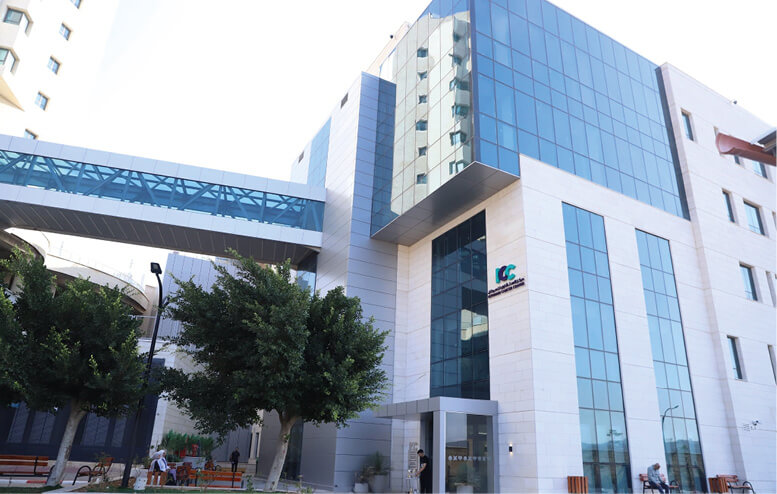
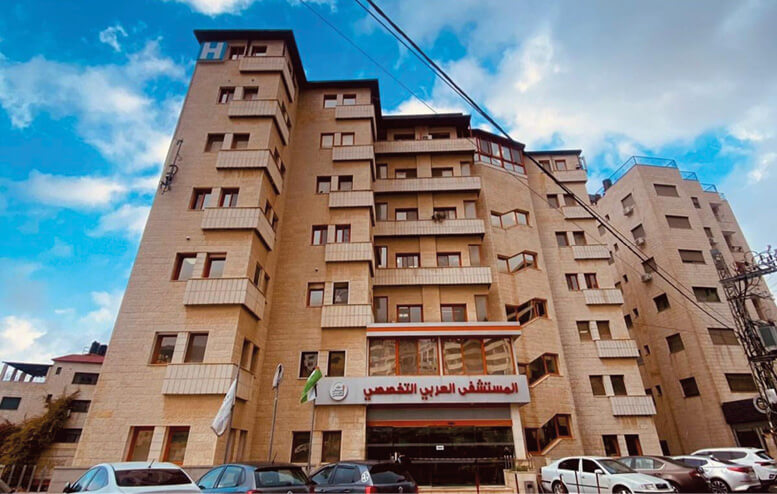
Courtesy of the Arab Hospitals Group
Palestine’s modern economy has been shaped by uncertainty: closures, restrictions, political instability, and war. In such a context, building and sustaining resilient institutions is near impossible. Yet, over the past 25 years, the Arab Hospitals Group (AHG) has defied that reality. From a single center, it has grown into the country’s largest private healthcare network, not only providing critical services to patients, but also contributing meaningfully to the Palestinian economy.
AHG was founded in 1998 with a simple but ambitious mandate: to deliver high-quality, internationally accredited healthcare to the Palestinian people at an affordable cost. At the time, many specialized services were simply unavailable in Palestine. Patients had to travel abroad, with the associated immense logistical and financial strain, to receive care. Since then, AHG has steadily filled that gap, introducing enhanced services such advanced cardiology and neurology services, kidney and bone marrow transplants, molecular genetics and advanced diagnostics, neurosciences, and most recently, a comprehensive cancer center, the only one of its kind in the country that offers comprehensive oncology services under one roof.
This expansion has been paired with a commitment to quality, backed by Joint Commission International (JCI) accreditation and other global standards. The group now operates four hospitals with over 800 beds, primarily tertiary care, and is preparing to launch new facilities in Hebron and Gaza. These investments represent more than just healthcare delivery; they are investments in human capital. A healthy population is a precondition for a productive economy.
But AHG’s impact extends beyond clinical services. Its growth has helped move Palestine toward a long-term national objective: medical sovereignty. In the early days of the Palestinian Authority, much of the health system relied on referrals abroad, at significant cost to both the public budget and patients. Through the expansion of local capacity, institutions like AHG have helped reverse that dependency. More services are now available domestically, improving access, reducing out-of-pocket expenditure, and helping narrow the trade deficit.
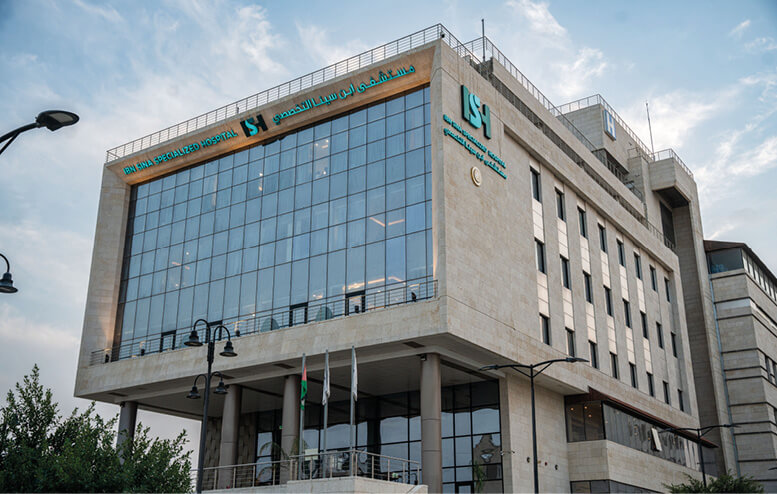
The group’s direct economic footprint is also substantial. Today, AHG employs over 1,200 people directly and supports many more through procurement and service contracts. It contributes to workforce development through training programs, residency schemes, and partnerships with Palestinian universities. It is also actively recruiting diaspora Palestinian specialists, reversing brain drain, and launching new services that would otherwise remain inaccessible.

Beyond the hospital walls, AHG is investing in long-term resilience. A solar power plant in Jericho now supplies clean energy to key facilities, while a new oxygen plant aims to meet medical and industrial demand locally, securing a critical resource and reducing import dependency. These are not side projects; they are strategic moves designed to fortify national infrastructure in a deeply vulnerable context.
Finally, and most importantly, in the wake of the Gaza war and the collapse of healthcare infrastructure there, AHG is preparing to do more. A concept design for a hospital in Gaza has already been completed, with the aim of launching when conditions allow. As Palestine looks to recover and rebuild, institutions like AHG will be central, not just to healing, but to rebuilding a stronger, more resilient future.