


By Khalil Shokeh
Paperback, 248 pages, £17.99
Buy on Amazon/Flipkart/Amazon.co.uk
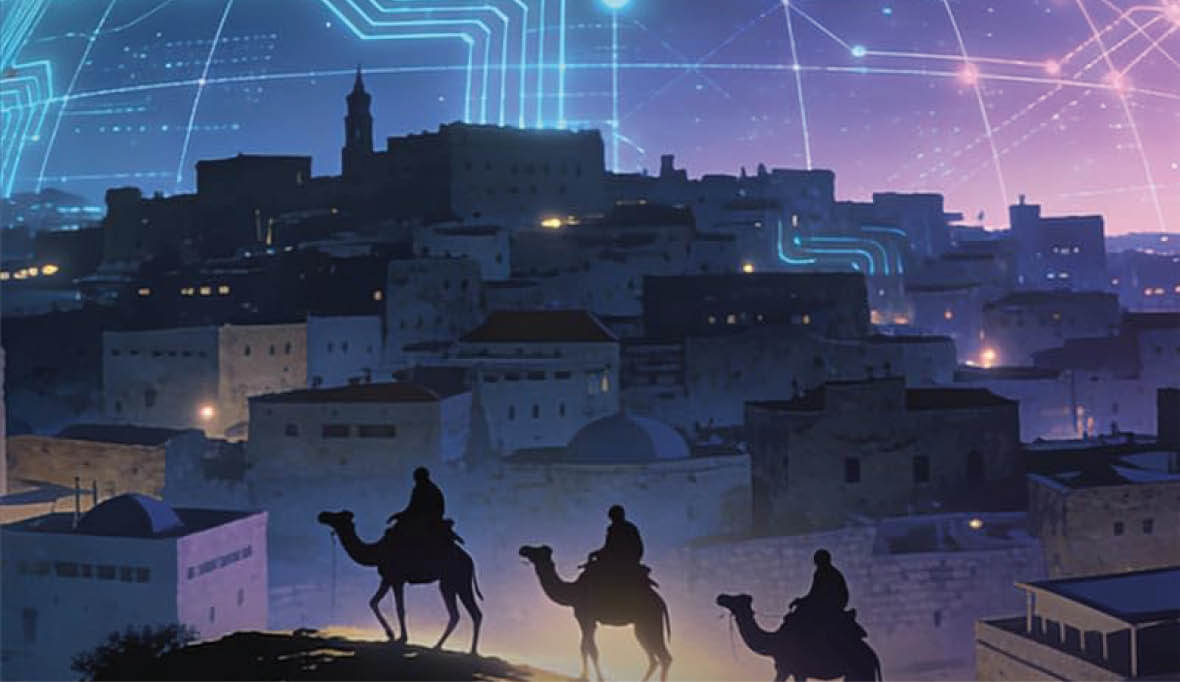
Bethlehem is more than a city – it is a living testament to layers of human history, faith, and resilience. First mentioned in ancient Egyptian records around 1350 BCE as a border town and resting place for travelers, Bethlehem has long stood at the crossroads of civilizations. From its biblical renown as the birthplace of King David and Jesus Christ to its role as a strategic outpost for the Philistines, the city has carried immense symbolic and cultural weight across millennia.
Today, Bethlehem remains a vibrant center of heritage and community life in the West Bank. Its skyline is marked by the Church of the Nativity, one of Christianity’s holiest sites, alongside mosques, bustling markets, and modern institutions. Agriculture, handicrafts, and tourism sustain its economy, while its diverse population continues to navigate the challenges and opportunities of contemporary Palestinian society.
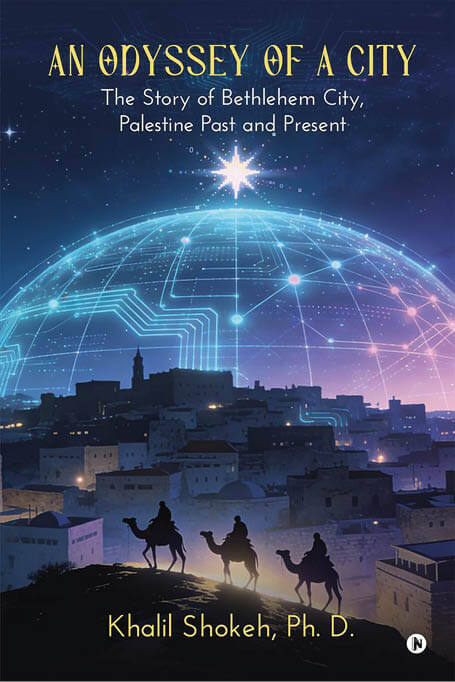
An Odyssey of a City traces Bethlehem’s past and present journey, revealing how a city rooted in sacred tradition has adapted to the currents of history. It is a story of continuity and change, of faith and endurance, and of a community that has preserved its identity while engaging with the modern world. The book invites readers to see Bethlehem not only as a place of pilgrimage but also as a living city whose history continues to unfold.
Focusing on historical and socioeconomic aspects, the book sheds light on how an understanding of critical moments in time and important lessons learned from historical developments can benefit a new way of thinking regarding future development. Conscious of the many power grabs that have taken place in Bethlehem and Palestine, with the Israeli occupation remaining in existence since 1967, the book presents a novel approach to the reading of history. To this end, it analyzes military history, including historic wars and power changes, and presents data and information regarding socioeconomic, cultural, and religious developments and the role of ethnicity.
Perseverance during the British Mandate, dealing with the British civil administration and its army, has been followed by national persistence during the Israeli occupation. A discourse of Zionist practices and atrocities shows the extent to which they have greatly hampered the city’s development. A review of Bethlehem City’s development under the Palestinian Authority, including a summary of the development strategies implemented in Bethlehem, is followed by a description of general daily life in modern-day Bethlehem.
Bethlehem’s experience under the Israeli occupation has been marked by a profound and aggressive political, social, and cultural devastation. Since Israel’s capture of the West Bank in 1967, settlements, military infrastructure, and the separation wall have encircled Bethlehem, reshaping daily life and altering the city’s historic character. Bethlehem’s identity as the birthplace of Jesus and a global Christian pilgrimage site is overshadowed by the realities of occupation. The wall and settlements not only alter the physical landscape but also symbolically challenge Bethlehem’s role as a city of openness and spiritual significance.
Bethlehem’s situation illustrates the intersection of heritage and conflict: a city revered worldwide for its religious meaning yet constrained by geopolitical realities. Its story is not only about loss but also about resilience, as communities continue to preserve traditions, sustain cultural life, and advocate for justice despite the pressures of occupation.
Documenting Bethlehem’s history ensures that the collective memory of its people, traditions, and resilience is not lost to time or political erasure. For young Palestinians and global readers alike, such a book provides a sense of identity and continuity. It allows future generations to understand the roots of their heritage, the challenges their ancestors faced, and the values that sustained them. Occupation, displacement, and globalization often threaten to fragment or silence local narratives. A written history becomes a tool of resistance, ensuring that Bethlehem’s voice remains present in the global archive.
An Odyssey of a City shows how Bethlehem is not just a site of pilgrimage but also a city of endurance, creativity, and hope. Writing Bethlehem’s history is a way of saying: We remember, we endure, and we pass this memory forward.
