


By Nada Elia
In late summer 2025, I shared with a friend that I had been feeling such deep anxiety that, some days, I could not get myself to leave the house. I don’t recall her exact answer, only that she mentioned that the way she was dealing with her survivor’s guilt was by taking small actions toward alleviating the apocalyptic situation in Gaza. Even if it’s sending just a little money to one family, or even one individual at a time, she insisted.
Survivor’s guilt. I had not considered it, let alone taken it for granted that my quasi-paralysis was a result of this condition. But I now believe there are millions of us who have not been physically, directly threatened by the intensified genocide in the Gaza Strip,1 who continue to live in comfortable houses, with heat, water, and food, who now wrestle with that “guilt.”
Guilt. An odd choice of words, when surely neither my friend nor I, nor the millions of Palestinians driven to despair by the livestreamed genocide and our inability to stop it, were “guilty” of the crimes we were witnessing. We are just Palestinians who, through circumstances mostly beyond our control, do not live in that tormented, tortured, sliver of our homeland.
But yes, we are survivors. Israel is intent on killing my people, and with survival – even if it’s mere happenstance – comes responsibility. I will not elaborate here on what donations I made, to which organizations, to alleviate my “guilt”; rather, I would like to offer that it is a practice Palestinian women have engaged in for over a century, which we are continuing today, and which has sustained us through the many catastrophes that have befallen our people. This is not to dismiss the immense sacrifices made by Palestinian men. Rather, because the latter are generally recognized and recorded, I wish to uplift the small acts of community care that women have undertaken, that tend not to be seen as “resistance,” yet without which we would not be the proud resilient people we are today. I truly believe that the Palestinian people, as a people, have evaded the defeatist attitude of some of our male political “leaders” because of women’s tending to our life needs, from distributing food to passing down our cultural heritage, to nursing our emotional and physical wounds. Below are some examples from key moments over the past century.
From Hind al-Husseini, who took in 55 children orphaned during the Deir Yassin massacre, to Matiel Mogannam and Tarab Abdulhadi, who drove around Jerusalem in convoys, handing out political leaflets, to the village women who broke down the barracks where British soldiers were holding their men, to countless women of all social backgrounds who were helping those in need, Palestinian women have engaged over decades in practices that have sustained our communities through the successive calamities that have befallen us.
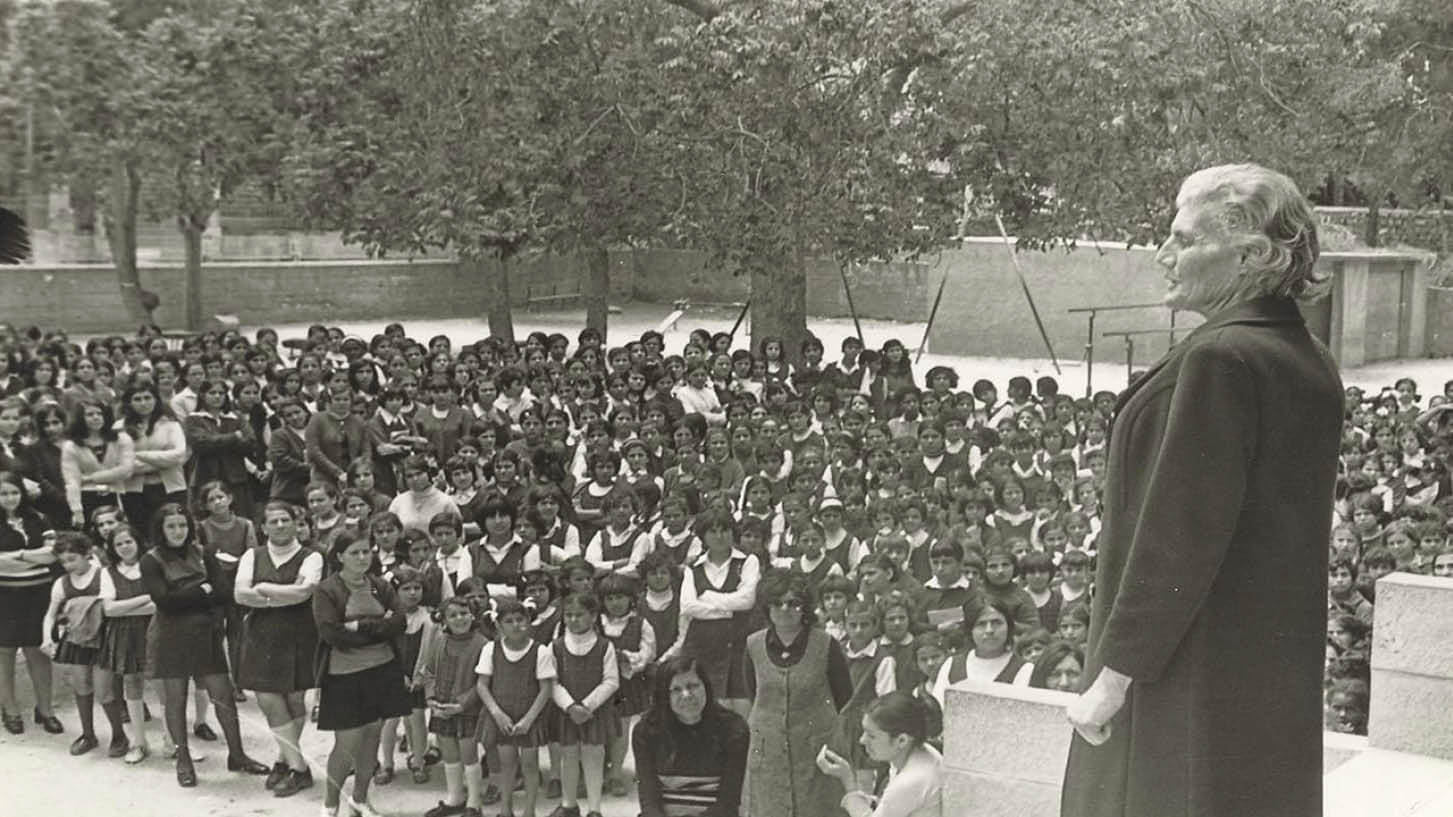
Possibly the greatest individual act of community support a Palestinian woman has engaged in, at the onset of al-Nakba, is Sitt Hind al-Husseini’s founding of Dar al-Tifl al-Arabi, the orphanage she established to shelter the children orphaned during the Deir Yassin massacre on April 9, 1948. Husseini was walking with a colleague to a meeting that evening when she came across the 55 terrorized children who had been dropped off in Jerusalem by the Zionist fighters who had murdered their parents. Husseini immediately took them off the streets, into her two-room apartment. Within days, she moved the children into a larger rented space, and eventually moved them into her grandfather’s mansion, which she transformed into Dar al-Tifl al-Arabi, an institution that houses the orphanage and school that still educates Palestinian girls and young women to this day, along with a cultural museum, and an arts college associated with Al-Quds University. Today, thousands of once destitute Palestinian girls have graduated from Dar al-Tifl as women with an unshakable sense of self-confidence and self-worth, with a solid education, and a deep understanding that they are valuable members of society with a role to play in collective and national liberation.
Phenomenal as Sitt Hind was, she was following in the footsteps of other Palestinian women who had also taken it upon themselves to use their privileges to empower others. Thus as early as the opening decades of the twentieth century, Palestinian women from elite families were not content with hosting literary salons and cultural soirees in their families’ mansions. The many women’s organizations that formed across the nation at the turn of the twentieth century were considered “social” organizations, but their members understood that, in the absence of a national Palestinian government, which would legislate women’s rights, they had to take matters into their own hands and tend to the needs of the disenfranchised.
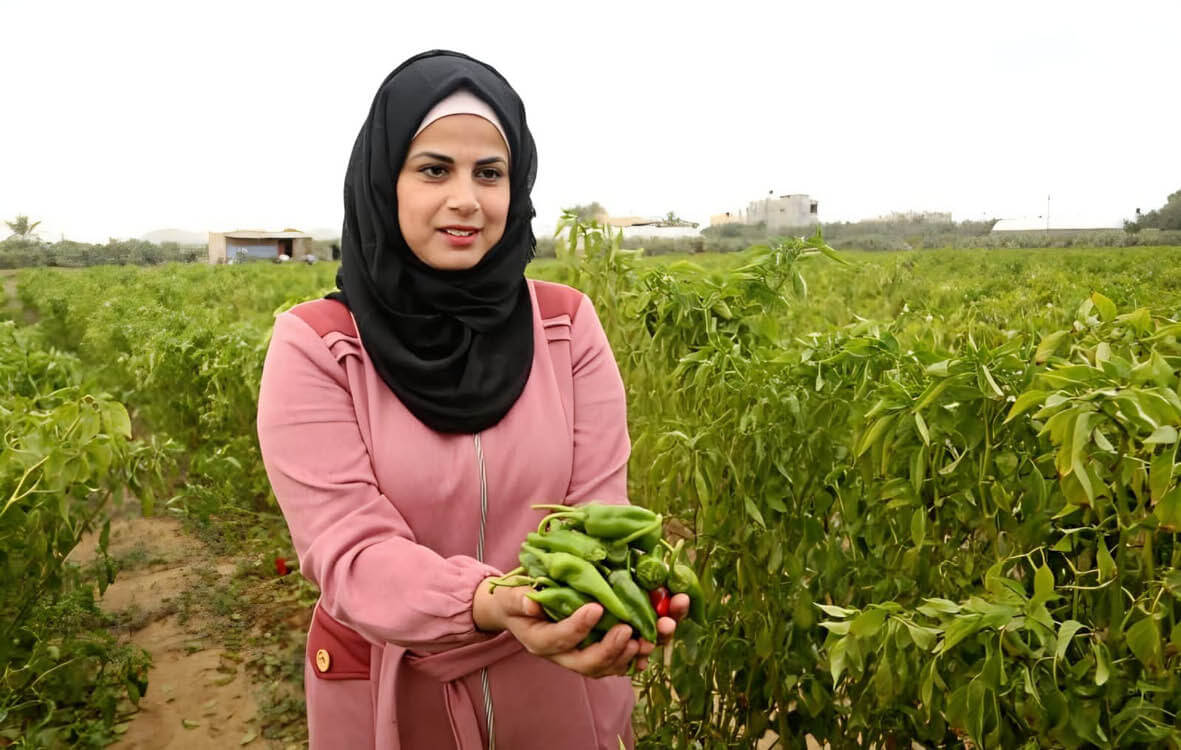
Many roamed the Palestinian countryside to set up social services in underserved villages, while encouraging parents to send their daughters, not just their sons, to school. Women such as Matiel Mogannam and Tarab Abdulhadi knew full well that they were transgressing the social norms of the day by driving around the city in convoys, handing out leaflets with their demands. They were pioneers when they spoke at each other’s respective places of worship: Mogannam, a Christian, outside a mosque, and Abdulhadi in a church courtyard. And they embraced being openly political, as they petitioned the British High Commissioner for Palestinian national sovereignty.
Not all of these activists called themselves feminists, a term that had little currency outside of very restricted circles of the educated upper class. But whether they did or not, these women were already articulating the feminist need for both social and political liberation, if all members of Palestinian society, rather than its privileged males, were to be free. They did not seek personal advancement, but community empowerment.
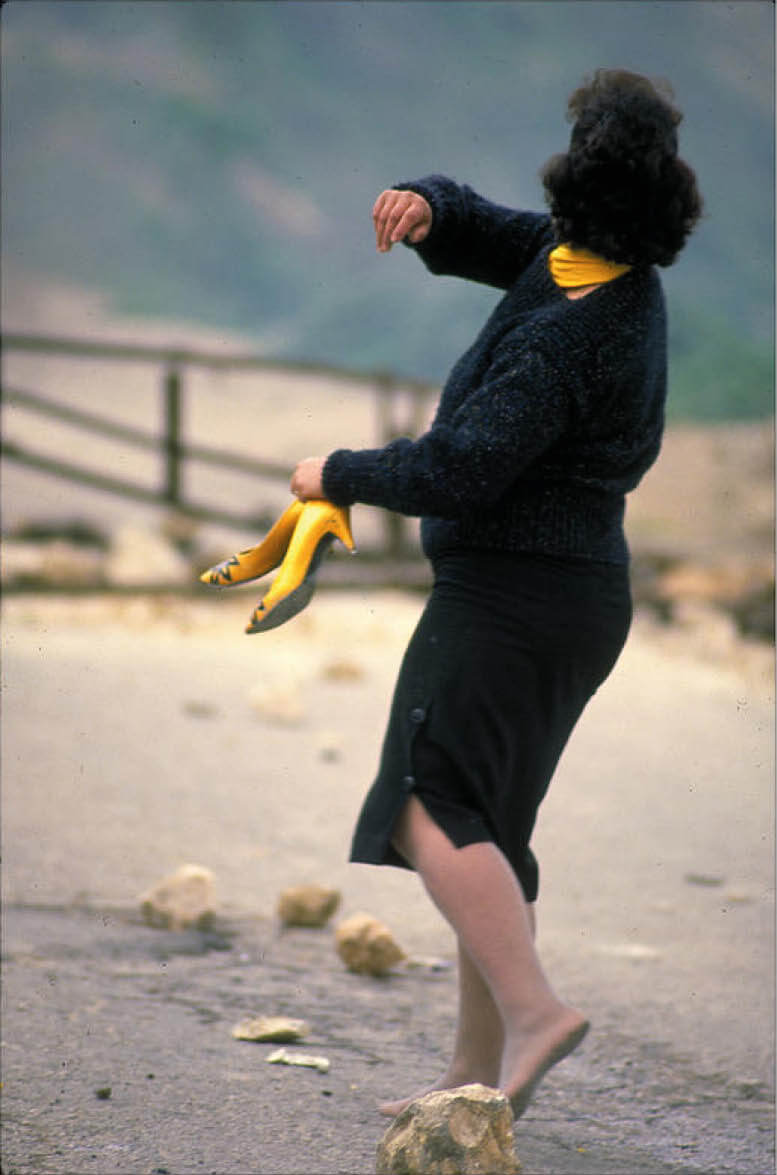
Nor was activism limited to the elite. The fellahat, rural Palestinian women, were full participants in the 1936–39 Great Revolt. They never felt helpless without men; in fact, they frequently helped men, and boys. In 1936, when British Mandate soldiers rounded up Palestinian men and locked them up in barracks in Baqa al-Gharbiyyeh, Palestinian women broke down these barracks with their bare hands to liberate their male kin. This was not an exceptional incident: Palestinian women have rescued Palestinian men, mostly boys, from the clutches of the occupier again and again, frequently by putting their own bodies on the line to allow the youth to escape. Thousands have claimed a young boy as their son or grandson, so as to accompany him to an interrogation center, as Israeli soldiers violently grabbed and threw the child into their jeeps.
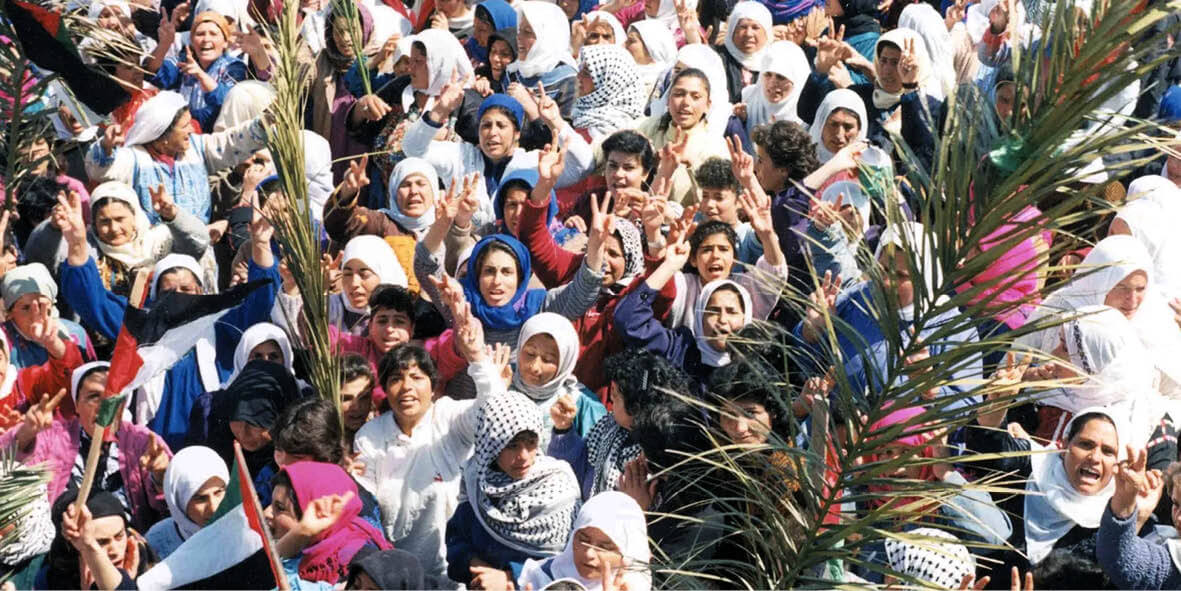
The First Intifada may be the period when women’s leadership during political turmoil, and their attention to the needs of the marginalized, is perhaps best known, as they rose to the helm of the popular committees, taking critical political decisions while tending to education, food distribution, and medical care for the wounded. Importantly, when some of these activists saw signs of domestic violence among the women they were helping, they understood that it was a trickle-down effect of occupation, and educated their community about this devastating consequence of occupation, even as they opened shelters to shield women from its immediate harm.
Women also denounced the alarming rise in femicide plaguing Palestinian society living under Israel’s brutal military occupation, and have led workshops to discuss this otherwise “domestic” issue, demanding that it be addressed with legislation meant to penalize the perpetrator, rather than foreground “mitigating circumstances” so as to pardon him.
And it was Palestinian women, Haneen Maikey, Rauda Morcos, and Ghadir Shafie, who founded and headed the LGBTQ support organizations for queer Palestinians, clashing with the Palestinian Authority as they persisted in their determination to create the social support network for marginalized youth.
When Israa Ghrayeb was murdered by her family members in 2019, for posting a photo of herself with her fiancé on social media, Palestinian women came together to form Tal’at, a movement determined to end femicide in Palestine. Their slogan, “No Free Homeland Without Free Women,” succinctly articulates the spirit behind Palestinian women’s agency throughout the century: the understanding that women are an intrinsic part of the nation, and have a role to play in our liberation.
The formation of Tal’at in the West Bank in 2019 was the immediate impetus behind the formation of the Palestinian Feminist Collective (PFC) in North America in 2020. And since its formation, the PFC has been actively engaged in numerous initiatives to alleviate the suffering of our people, from reaching out to allies, to building new alliances that would join the struggle for empowerment and liberation, to sending aid to Gaza, to supporting Palestinians in the homeland and far diaspora with legal, psychological, and medical needs.
Today, with the understanding that Palestine is indivisible, and that any talk of a “two-state solution” is mere delusion, Palestinians are actively discussing sovereignty beyond the nation-state formation, in the one land from the river to the sea. It is noteworthy that this visioning today recalls that of the opening decades of the twentieth century, when Palestinian women, seeing that they could not ask their government for rights because they did not have a government, organized to secure empowerment at the grassroots level.
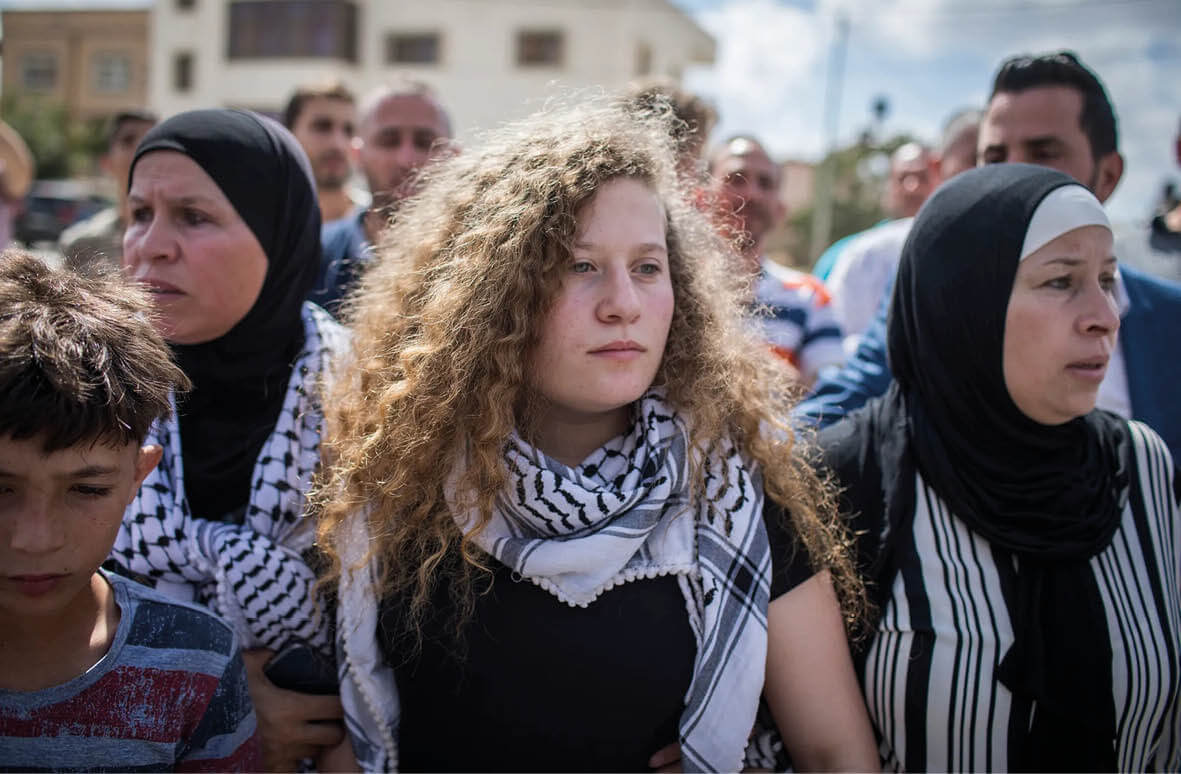
We may still be few and far between in “politics,” if by politics one understands officials elected to government positions. But at the community level, Palestinian women have always been engaged in organizing for the betterment of society, uplifting first and foremost its most disenfranchised members, because of the understanding that our society can only thrive when those on its margins are safe and thriving.
So let us continue, proudly, with our grassroots organizing, our dreaming beyond borders, our radical generosity, our embrace of all children as our own. Our survival, our sumud, come from our history of community care, which women have been instrumental in organizing. As Hind al-Husseini’s daughter, Hidaya, put it, “What men and governments couldn’t do, Palestinian women have accomplished.”2
1 It is important to note that Israel’s genocide of the Palestinian people did not begin on October 7, 2023, but has been ongoing since 1948. It intensified after October 7, 2023.
2 Sahera Dirbas, director, Nefissa Naguib and Inger Marie Okkenhaug, producers, 138 Pounds in My Pocket: The Story of Hind al-Husseini, Culture Unplugged.
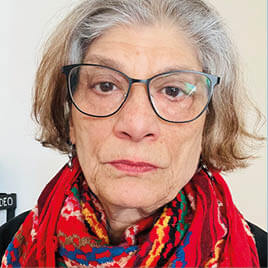
Nada Elia is associate professor of ethnic studies and affiliated faculty in the Department of Women, Gender, and Sexuality Studies at Western Washington University. A scholar-activist, she has served on the Steering Collective of INCITE! Feminists of Color Against Violence, and is currently a member of the Palestinian Feminist Collective. Elia is the author of Greater Than the Sum of Our Parts: Feminism, Inter/Nationalism, and Palestine (Pluto, 2023), Palestine and Feminist Liberation (Between the Lines, 2025), and has just completed the forthcoming Falastiniyyat: A Century of Palestinian Feminisms (Verso, 2026).
