


By Norma Masriyyeh Hazboun
“Identity does not cancel identity… What confuses identity and makes it tense is the precondition that its formation be through the negation of the other’s identity.”
Mahmoud Darwish
These days, as we live the seventy-eighth anniversary of the Nakba, Palestinians live in a place where states of emergency acquire the quality of permanence. It is an unnatural reality that is defined by many causes of death, including the pain of living, as Mahmoud Darwish tells us. Palestinians are urgently required to protect their reality of ongoing ethnic cleansing and displacement from the myth of their occupier, a myth in which metaphysics intersects with history and where a sacred status is bestowed upon the Zionist occupation activity that claims a divinely bestowed right from thousands of years ago. This has been turned into a perceived source of legitimacy for Israel to control the land of Palestine, strip us of the legitimacy of our national existence, and isolate us from ourselves and each other, aiming to erase our plight from human consciousness, as if history had crystallized such that nothing existed for a time before the Nakba and a time after it.1
In a time that witnesses the spread of violence, destruction, displacement, racism, and genocide in Palestine, we intensely miss the voice of Mahmoud Darwish. We miss, in particular, his call for proactive action in a collective manner, for the struggle to protect the truth and to restore delayed justice, in the face of denial and erasure by the Israeli occupier. Here, in the land of Palestine, the past and the future have been invaded and halted, as Edward Said says. This is why they were troubled by Said when he launched a systematic assault on the Zionist occupier by writing about the past in his book Out of Place, highlighting that the occupier refuses to confront a collective memory that refuses to forget.2
Darwish’s focus on and loyalty to the Palestinian cause – that merges the tragic and human dimensions, which has granted it universal stature – were always coupled with an eternal hope. As stated by Dr. Khalil Al Sheikh, a specialist in comparative critical studies at Yarmouk University, Darwish’s poetic experience is “an Arab dimensional, universally featured experience, with its symbolic and realistic dimensions, absolutely without parallel… because of its dimensions that belong to the world of myth.”3
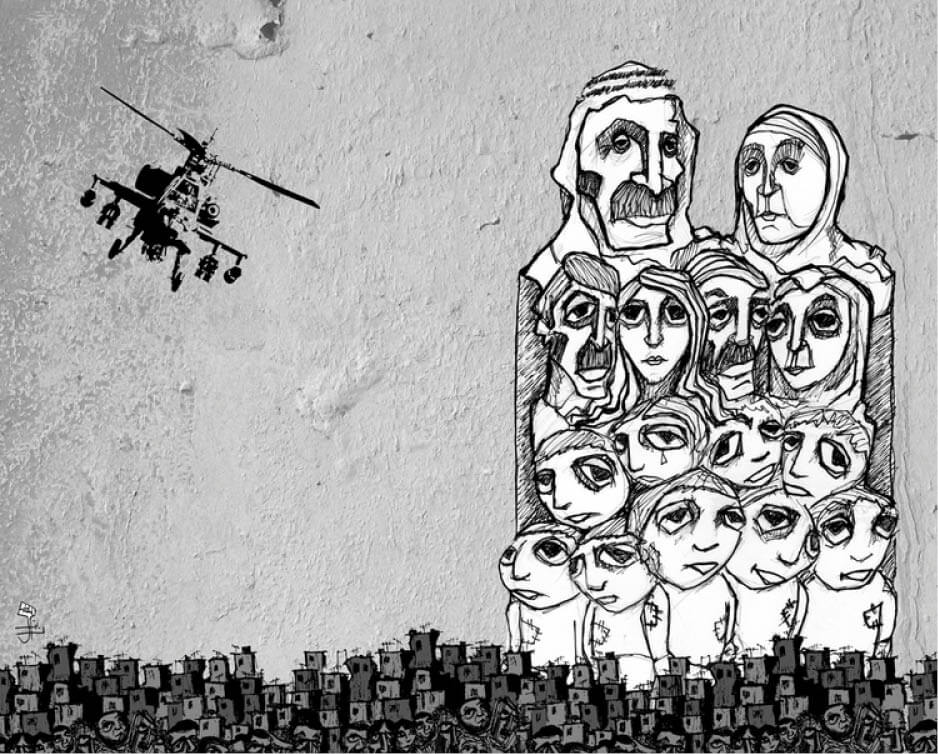
In another context, former Israeli Prime Minister Sharon declared that he “envies the Palestinians for Mahmoud Darwish, for such symbols remain a beacon for homelands if they see in their deeds a model and light along the paths of tomorrow.”4 Darwish was a resistant poet, resisting occupation and resisting despair, radical in his presentation of the human suffering of Palestinians and of all oppressed peoples. Thus came his “prescription for troubles”: By raising one’s voice and mobilizing against injustice, defend the crushed peoples whom no one sees or hears, and raise the voices of those erased from the narratives and official discourse of power. As Eduardo Galeano observes in his book Children of the Days: A Calendar of Human History: “The history written by the victors is only half the truth. The other half resides in the collective silence of those who were not allowed to speak.”5
Diametrically opposed to the altruism Darwish shows in his writings, Zionists practice a closed ideology against the entire Palestinian people, an ideology that has built Israel’s existence on the idea of absolute control over place, time, and the body, while the Zionist mythical consciousness mobilizes falsehoods and promotes a culture of deliberate forgetting and silence regarding its seizure of the land of Palestine and the displacement of its people. Yet Palestinians have not left, nor will they leave the arena of history, or disappear simply because they spoil the Zionist dream of achieving a “Jewish state” that can only be realized through the ethnic cleansing of Palestine’s original inhabitants. As Said wrote, “Perhaps the greatest war waged by the Palestinians, as a people who rose up, is a war concerning their legitimate right to summon a memory that belongs to them, and, despite that presence, their right to possess and their right to reclaim a collective historical reality, at least from the time the Zionist movement began to violate the land.”7
The Zionist Israeli occupation attempts to confiscate, indeed assassinate, Palestinian memory and the narrative of the Nakba, the Naksa (the occupation of the West Bank and Gaza in 1967), and the ongoing genocide in Gaza. According to the Palestinian Ministry of Health in the Gaza Strip, the death toll from the Israeli aggression since October 2023 has risen to 72,551 killed and 172,274 wounded as of April 21, 2026. In the West Bank, the forced displacement of over 41,000 Palestinian citizens from the refugee camps of the northern West Bank, Jenin, Tulkarm, and Nur Shams, is part and parcel of a war of attrition that is being waged on Gaza and the West Bank under the pretext of self-defense. Nor do we forget that Israel seized the opportunity of the world’s preoccupation with the war on Gaza to entrench illegal settlements in the West Bank, building 165 new illegal settlements since October 2023, including 59 outposts in 2025 alone, as reported by the Palestinian Colonization and Wall Resistance Commission of March 2026.8
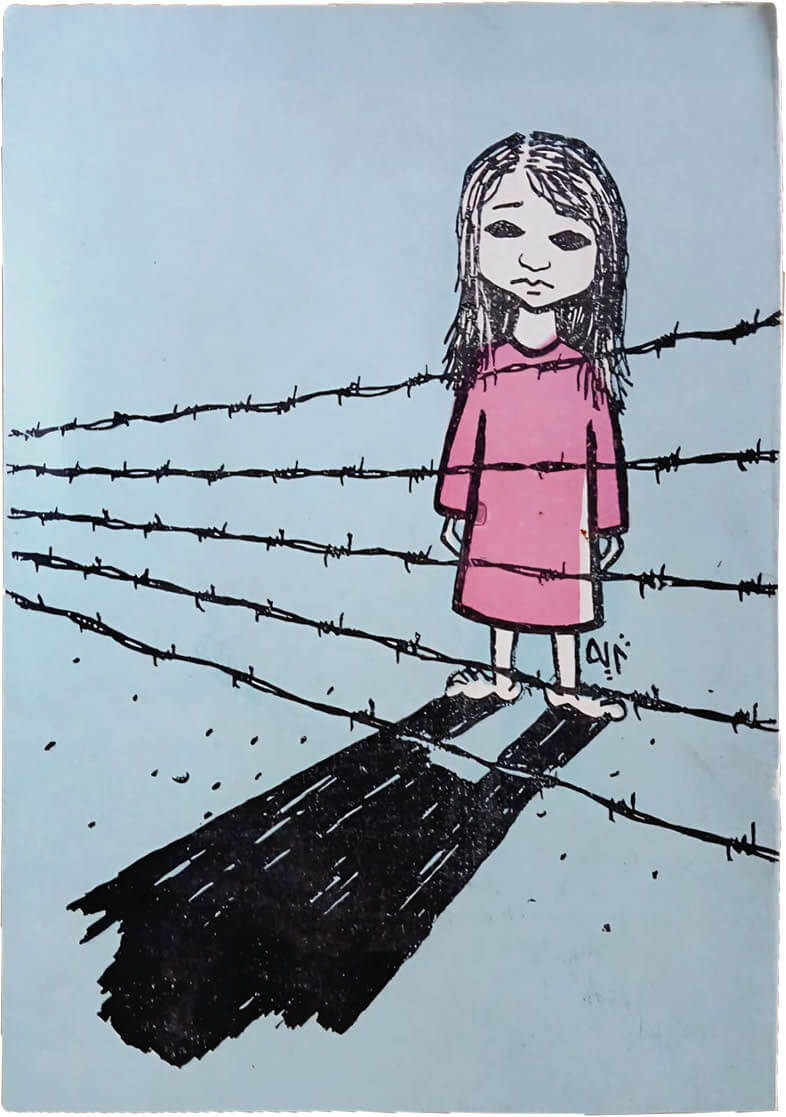
In his elegy for his departed comrade Darwish, the poet Samih al-Qasim wrote:
“You are neither Khosrow nor Caesar
For you are higher, more precious, and greater
You are the testament
And the secret of the cause…”
The occupation continues to market its lies and fabricated images, aiming to mislead global consciousness into sympathizing with the executioner rather than the victim. Israel is waging a war not only on Gaza but also on human perception in order to produce a “false legitimacy” for killing that is supported, even carried out by artificial intelligence. Palestinians defend the memory of the Nakba as the last front to save the truth of their narrative, refusing the normalization of injustice and the relativity of human justice. They achieve this by building a counter archive, dismantling the narrative of the Zionist occupation that is based on denial and distortion of objective reality, with the firm belief that injustice, if documented, is not lost. This reflects, in the words of Dr. Ihab Bseiso, “the practical deconstruction of hegemony.”9 Foucault highlights that the colonized undertake to liberate their culture and history from attempts at erasure, going beyond the use of colonial signifiers and manifestations, and inventing their own methods for giving voice to those silenced by colonialism.10 It can be said here that Gaza broke the silence with blood and forced the world to hear their voice and their pain, as they remain steadfast, unshaken.
In the historical trajectory of the Palestinian people, we find that the memory of defiance resides within them (or what Edward Said called the “logic of opposites”) as a memory that springs from the temporary, urgent, and harsh place where Palestinians live, in refugee camps and exile. It travels through their dream of the original, primal place, the “lost paradise.” The Palestinian story, in all its dimensions, reveals that the relationship between time and space has been renewed, so that the Palestinian may preserve his survival, his national identity, and his right of return, which was affirmed by international resolutions, especially Resolution 194, which remains an unfulfilled demand.11 The Palestinian remains the foundation in creating his identity through his struggle. Identity, as Adonis affirms, “is not given in advance. On the contrary, identity is movement and mobility. In other words, it is not a completed being, but a perpetual movement of becoming.”12 In the same context, Edward Said affirms that collective memory “is not something inert or passive, but rather a field of effectiveness within which the selection, reconstruction, formulation, and liberation of past events take place, and they are fused with political significations.”13
In his poem “Think of Others” from his collection Almond Blossoms and Beyond, Darwish emphasizes the importance of not forgetting the other, saying:
“As you wage your wars, think of others…
do not forget those who seek peace.
As you return home, to your home, think of others…
do not forget the people of the tents.
As you think of distant others, think of yourself…
say: ‘If only I were a candle in the darkness.’”6
And here is Gaza writing the chapters of the Nakba anew with a new title, genocide, not only the forced displacement as in the 1948 Nakba. This is a completion of the original crime that was not documented by cameras, unlike the ongoing genocide that is being documented to establish a collective narrative that protects Palestinian narrative and memory from distortion.
We say that the Nakba has not ended. Despite a century of attempts at erasure and uprooting, the Palestinian people insist on the will to survive, a symbol of steadfastness that redefines existence and forges a new life from death, new beginnings to rise up again. In the recent war on Gaza, the occupation discovered that it was fighting a consciousness that has not died and a will that cannot be broken. Elias Khoury noted: “Every end assumed by the Zionist-Israeli occupier has been transformed into a beginning by the resistance.”14 Inventing new mechanisms that are emerging from the rubble, the Palestinian cause remains alive for future generations.
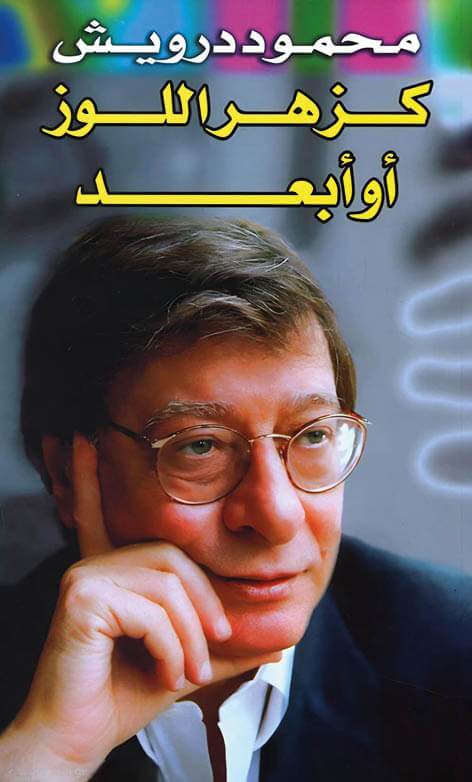
Documenting the genocidal war in Gaza, journalists have produced hundreds of images and testimonies that have laid the foundations for building a resistant, liberatory archive, and for shifting from concepts of theoretical memory to producing a resistant digital Palestinian memory through interactive, practical applications. This integrative practice, described as “applied memory,” impacts the relationship with cultural memory and the memory of place, and enables Gaza not only to confront the discourse of colonial power but also to save memory from the systematic colonial attempts at erasure and denial, transforming it into a tool for justice and accountability, as Gaza becomes a shared ethical reference for an entire generation around the world.15 American journalist Jeremy Scahill observes, “The greatest restrictions that have been broken now are that the young generation and the free people of the world have begun to realize the lies that were propagated about the Palestinians. From an objective perspective, the Palestinian cause is one of the most legitimate national liberation causes in human history.”16
The Gaza Strip breathes hope despite the wounds, with an unbreakable will and a Gazan determination that is capable of overcoming crisis and destruction, as shown in its previous experiences of war and reconstruction.
Regarding the practice of documenting memory, Bseiso says, “The centering of identity shifts from the discourse of pain and suffering to the site of action, through the reproduction of an epistemological structure in the face of the machines of uprooting, destruction, and killing.”17 Thus, since the war on the Gaza Strip broke out, the occupation has been leading an unprecedented massacre against Palestinian journalism, “turning journalists into silenced targets,” according to the annual report (for 2025) of the organization “Reporters Without Borders.” Thibaut Bruttin, the organization’s director general stated, “The Palestinian territories have become the most dangerous in the field for journalism….such that every outing to document the truth becomes a gamble with life.” Despite all this, journalists continue to document without fear in a place where truth is targeted; their cameras remaining the last lines of defense for Palestinian memory and narrative, resisting falsification or distortion.
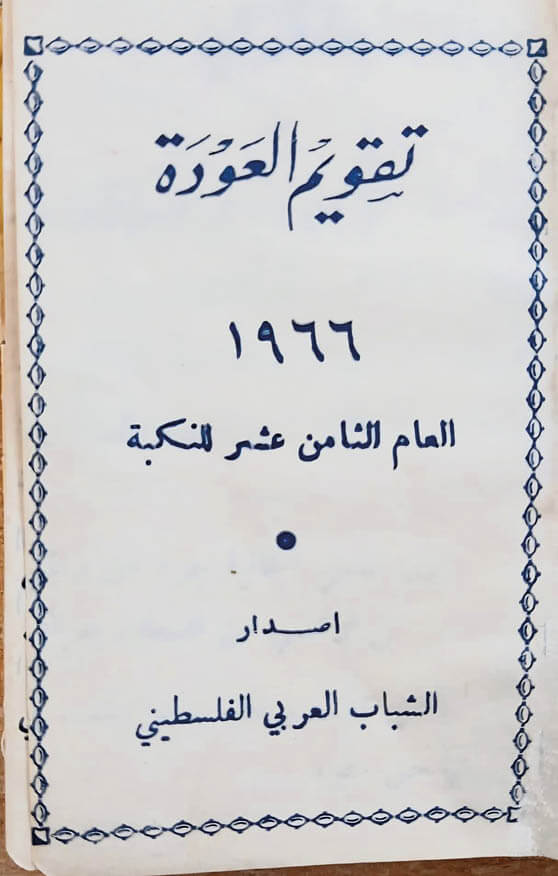
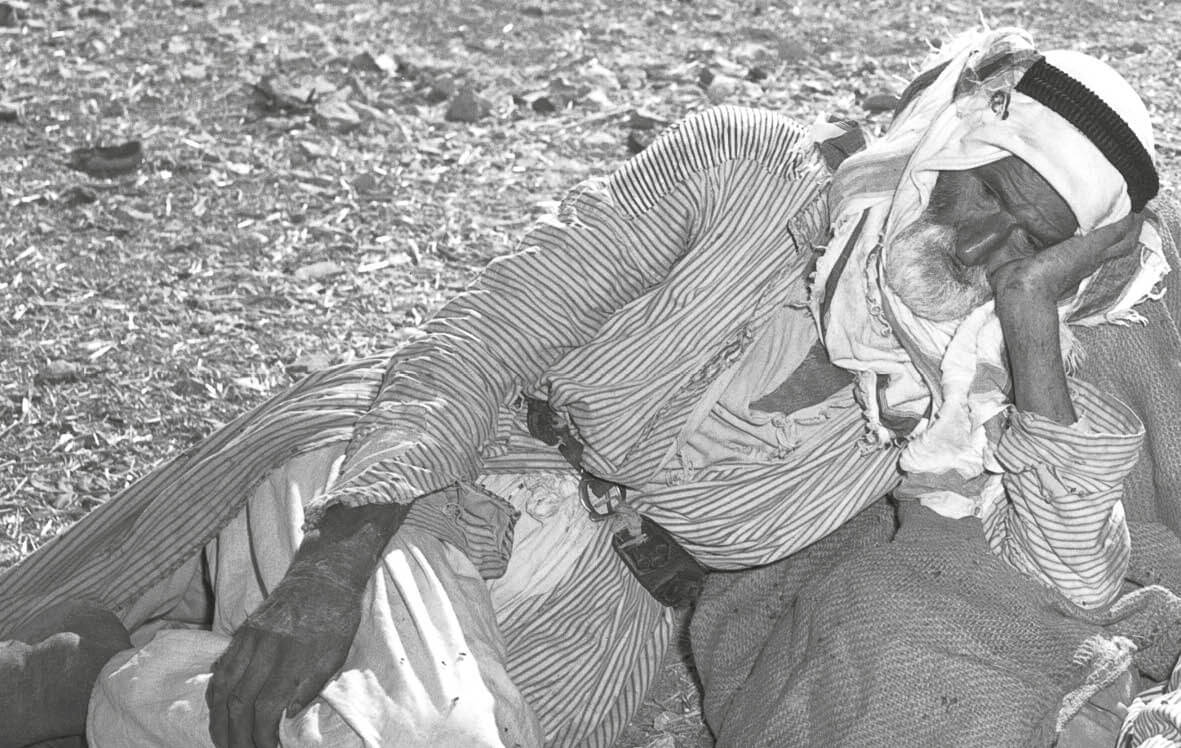
Cover of a commemorative calendar marking the 18th anniversary of the Nakba. Published by the Palestinian Arab Youth.
Approximately 262 journalists have been recorded killed under direct bombardment since October 2023, with the aim of silencing the truth. Suppressing the word and the image, Israel aims to prevent Gaza’s voice from rising above the rubble of international politics with its double standards. Journalists also have not been spared from arbitrary arrest; approximately 250 journalists have been arrested since the beginning of the aggression, and an estimated 40 to 50 journalists remain in detention, facing a “slow death” due to inhumane detention conditions.18
Journalists have not stopped documenting; rather, they continue their mission without fear, even though at least 262 journalists have been killed, many directly targeted.
The war officially stopped in early October 2025, but it did not end. In the 50 days following the ceasefire, the occupation army committed 591 violations and 164 direct shootings at citizens, homes, and tents of displaced persons, in addition to killing 365 citizens.19 In April 2026 alone, it committed 377 ceasefire violations, killing 111 and injuring 376.20 It seems to be Gaza’s destiny to live in a perpetual state of war; yet at the same time it is the wellspring of Palestinian nationalism. This duality of Gaza’s destiny between war and resistance arose after the Zionist occupation waged nine wars against Gaza over the past 59 years (since 1967). This has made the Gaza Strip a place unlike any other, and made its people heroes unlike any others. Over the years, Gaza has proven itself unbending, so the Strip has become a Palestinian model for rising from under the rubble, and a model of will, consciousness, and collective steadfastness, toward dignity and justice.21
The genocidal war on the Gaza Strip powerfully placed the Strip under the spotlight, after it had been described in the literature of the Palestinian-Israeli conflict as “the forgotten corner of Palestine.”22 On the other hand, the epic of Gaza has recently awakened global conscience; indeed, it has become a measure and test of our humanity. Through it, the Palestinian cause has returned to the center of international attention and consciousness, postponed for 78 years since the 1948 Nakba.
Returning to Darwish’s philosophy of existence as resistance, we find that his poems address the hopes and pains of Palestinians in particular, and humanity in general, in the context of the displacement of the Palestinian people. Thus, he reminds us how Palestinians sided with life and survival at the expense of death, repeating the slogan “Long live life,” awaiting the sun’s journey. He asserts: “And we love life if we find a way to it.” Darwish explains their way: “… But our way of crossing streets from one time to another used to raise the question: Who are these who, if they see a palm tree, stand silent and fall prostrate in its shade? And who are these who, if they laugh, disturb others?” And Darwish questions: Is the murder of our human security that we were born Palestinian, on the land of Palestine, and that it was destined for us to belong to this place and time?
Gazans insist on surviving, despite immense sacrifice. Their resilience is an act of resistance to prove the legitimacy of their existence on the land in the face of attempts to liquidate the Palestinian cause as well as the people.23
As the war has crushed all means of life and living in Gaza, destroying 90 percent of the Strip amid the world’s silence, Gazans resemble the phoenix, a bird that occupies in the collective Palestinian mythology a status as an extended metaphor for the collective identity that refuses annihilation.25
Therefore, the culture of return has not been extinguished in the souls of Gazans. Longing and yearning for their usurped homeland still pulls at them. Return, whether symbolic or real, physical or spiritual, is inevitable to restore balance within the framework of loss and recovery.
After two years of war and displacement, and with an officially declared ceasefire, families returned on foot along Al-Rashid and Salah al-Din streets in Gaza City, carrying their children and what remained of their belongings amid the destruction of more than 90 percent of the Gaza Strip. Tears of joy mixed with tears of loss, even though many of them found no homes to return to. Return is the Palestinians’ instinct, which has never left their mind or heart throughout 78 years of displacement. Um Ali from Nuseirat camp, who lost a three-story house with a small garden, asserts, “We lost a lot, but we did not lose our will. As long as we are alive, we will plant a new tree in the place of every stone the occupation demolished, and the sounds of our laughter will rise again, because we love life even if it has done to us what it has done.”
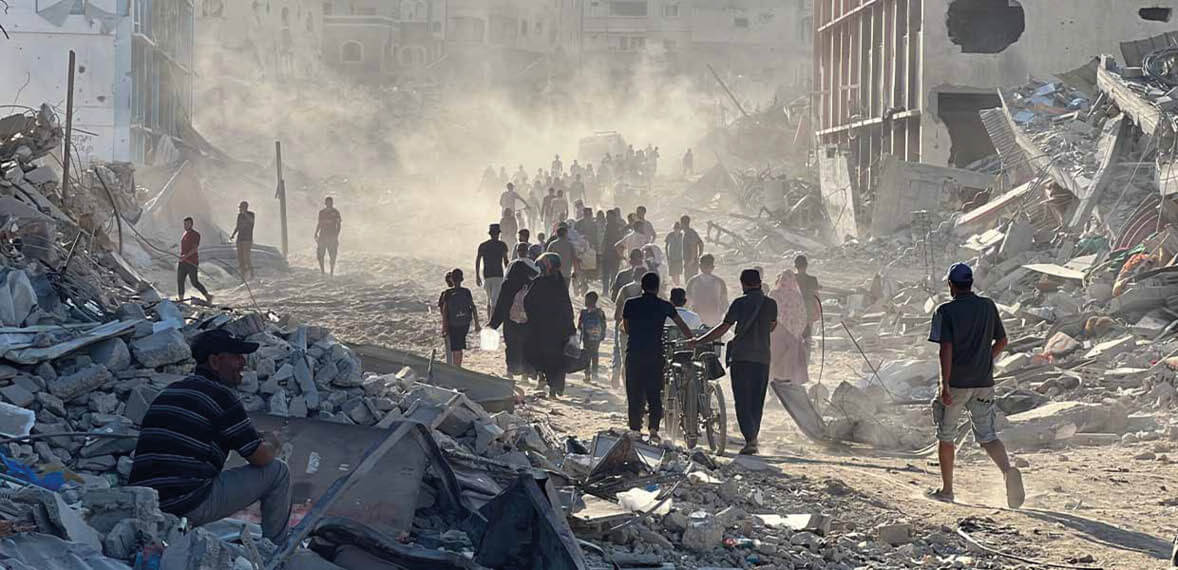
From within the pain and loss, Gazans have legitimacy to remain on their land even in the face of Israel’s US-backed plan of ethnic cleansing. Their steadfastness insists on restoring the features of life, no matter how harsh the conditions. Every family has a story of pain, every child deprived of food, education, treatment, and of their parents has an unprecedented tale. Ibrahim Asfour from the town of Al-Mughraqa in the Strip says, “The destruction stole the laughter of children, the sounds of cars, the calls of vendors, and even the chirping of birds. Everything fell silent suddenly.” He adds, “I cannot locate our house or our mosque. Everything has disappeared, as if the city was covered by a gray curtain of rubble and ash.”
But despite the grimness of the scene and the attempts to disable all means of life for an entire people, we find Gaza today standing tall in the face of political and misleading media erasure, powerfully representing the will to restore life, the dream, and hope, even if from under the rubble. While Gaza has emerged more conscious and more resilient, Palestinians everywhere take on the guardianship of collective memory and national identity, resisting erasure from geography and memory simultaneously despite the global silence that has enabled the genocide in the Gaza Strip as well as forced displacement, settlement expansion, and settler violence in the West Bank.
Darwish affirms that our roots are in Palestine, and the racist practices targeting our history and existence will not frighten us, because:
We are the descendants of the spirit of the place
We were born here… and here we shall live
And every place far from God
Or His land is exile…24
Justice has lost, legally and morally, and the universality of human rights has collapsed, buried under the rubble of demolished buildings, a tool selectively applied to some states while exempting others, according to political geography and power, not human values. So who will hold the Zionist entity accountable for its squandering of the dignity, freedom, and blood of the victims of its wars and its ongoing occupation? And how can the world hold accountable a killer who hides his crimes within algorithms disguised as science and technology? As the occupation, settlement, and Judaization are aggression against the entire Palestinian people and a threat to their entire homeland, another question arises: Do these rights violations achieve security for Israel? Or has Israel exhausted its legitimacy after 78 years of ethnic cleansing and the genocide in the Gaza Strip? Israel’s relinquishment of its humanity27 has led to its isolation and global rejection: Solidarity against the genocidal war was more prominent globally than among Arabs. Gaza has exposed the falsehood of Israeli democracy before the world, and reveals its failure to monopolize the media machine in its favor.
Gaza, as described by the Gazan poet Ahed Hallis in his “Gaza Poem”:
Gaza does not live
And Gaza does not die
But takes a respite of life
Between one massacre and another
And because it is unyielding
And because it is loyal
… Gaza will remain
And will return glorious
And will return fresh
… But amid the ashes of the holocaust.26
It must be affirmed that the issue of identity, especially in the life of any people, is nonnegotiable and fundamentally a matter that cannot be subjected to bargaining. Elias Khoury affirms this, saying, “The Palestinians have no problem, because they know who they are, and they do not need a Zionist teacher to guide them to themselves… The Palestinians leave the questions of identity and racism to the Israelis, who are searching for the identity of their state, which they will not find. As for Palestine, its identity is the land, pain, freedom, and resistance.”28
1 Norma Masriyyeh, “Accompanied by Forced Hope… A Different Reading of the Palestinian Journey 66 Years After the Nakba: Their Myth and Our Myth,” Al Quds, May 14, 2014.
2 Edward Said, Out of Place (Memoirs), translated by Fawaz Tarabulsi. Beirut: Dar Al Adab, 2000.
3 Al-Ghad, “Critics Review the Specificity of Mahmoud Darwish’s Experience at the Arab Poetry Conference,” Al Ghad Newspaper, Amman, July 25, 2011.
4 Palestinian Center for Israeli Studies, “When Sharon Envies… Mahmoud Darwish,” Ramallah: Madar Center, April 26, 2025.
5 Eduardo Galeano, Children of the Days: A Calendar of Human History, translated by Osama Al Saber, Amman: Dar Khutut Thilal for Publishing and Distribution, 2021.
6 Mahmoud Darwish, Almond Blossoms and Beyond, Beirut: Riad El Rayyes Books for Publishing and Distribution, 2005.
7 Edward Said, “Invention, Memory and Place,” Al Karmel Magazine, issues 70–71, Winter–Spring, 2002: 82–109.
8 Awad Rajoob, “Over 500 Illegal Israeli settlements, Outposts Spread Across West Bank, Palestinian Report Says,” Anadolu Ajansi, March 30, 2026.
9 Ihab Bseiso, “Gaza or the Concept of Applied Memory in the Face of Genocide,” Journal of Palestine Studies, 145, Winter 2026: 62–80.
10 Michel Foucault, The Archaeology of Knowledge and the Discourse of Language, London and New York: Routledge, 2002.
11 Norma Masriyyeh, Proceedings of the Conference “Palestinian Identity: Where To?” March 21–23, 2008. “Memory of Time and Place: The Palestinian Refugee Between Relinquished Identity and Real Identity,” Al Bireh: Center for Palestinian Heritage and Society Studies and the Family Revival Association, 2009.
12 Adonis et al, Islam and Modernity: A Symposium and a Position, London: Dar Al Saqi, 1990.
13 Edward Said, Reflections on Exile, translated by Taer Deeb, Beirut: Dar Al Adab, 2004.
14 Elias Khoury, “Kicking the Scene,” Al Quds Al Arabi, April 23, 2024.
15 Ihab Bseiso, ibid.
16 Jeremy Scahill, DropSiteNews.com, November 23, 2025.
17 Ihab Bseiso, ibid.
18 Aljazeera.net, April 20, 2026.
19 Abdul Basit Khalaf, “Palestine in 3 Months: Israel Violates the Ceasefire in Gaza and the Occupation Army and Settlers Overrun the West Bank,” Journal of Palestine Studies, Issue 145 (Winter 2026): 184–207.
20 “Gaza Media Office Reports 377 Israeli Ceasefire Violations in April,” Middle East Monitor, May 1, 2026.
21 Norma Masriyyeh, “Mechanisms of Erasure: Between the Occupation’s Desires and Refugee Dynamics in the Gaza Strip.” Paper presented at the Annual Conference on the Geo Strategic and Political Status of the Gaza Strip, Birzeit University: Abu Lughod Institute for International Studies in partnership with the Institute for Palestine Studies, November 18–19, 2014.
22 Ann M. Lesh, “Gaza: Forgotten Corner of Palestine,” Journal of Palestine Studies 15(1), 1985.
23 Khaled Dader, Malaka Shwaikh, and Saga Hamdan, “When Resilience Becomes a Burden: Reflections from Gazan Palestinian Scholars,” Journal of Palestine Studies, 2025, 54:4: 51–59.
24 Mahmoud Darwish, The Perplexity of the Return: Selected Articles, Beirut: Riad El Rayyes Books for Publishing and Distribution, 2007.
25 Bin Maamar Al Haj Issa, “A Wing That Does Not Die: The Symbolism of Rising and Myth in ‘The Tale of the Phoenix’s Wing’ by Samaha Hassoun,” Al Quds, October 25, 2025.
26 Ahed Hallis, “Gaza Poem,” Journal of Palestine Studies, Issue 137 (Winter 2024): 324–25.
27 Yahya Al Rakhawi, “Conflict Is a Vital Necessity, and Aggression Is a Survival Instinct: Searching for the Alternative War,” Perspectives, Issue 69 (October 2004): 26–30.
28 Elias Khoury, “The Aramaic Game,” Al Quds Al Arabi, September 22, 2014.
Dr. Norma Masriyyeh Hazboun, associate professor of politics – political sociology at Bethlehem and Birzeit Universities, is a former chairperson of the Social Sciences Department (two terms) at Bethlehem University. She is a researcher and has written extensively on Palestinian sociopolitical issues. She was a visiting professor at the European Commission Sponsored Master’s Programme in Human Rights and Democratization, at the Faculty of Laws, Malta University, Malta, where she presented lectures on the advocacy of Palestinian refugee rights. She holds a doctorate in politics/political sociology from the University of Leeds, UK.
