


By Zayne Abudaka and Lareen Barghouthi
Littering in public spaces is a harmful behavior that, unfortunately, many Palestinians in the West Bank engage in on a daily basis. Over the years, many civil society organizations have addressed littering, often through awareness campaigns. Without discounting the importance of such campaigns, it is clear that the littering phenomenon has not ended, nor has it been reduced. In private conversations about littering over the years, one almost never encounters anyone who would defend such littering; it is a behavior that the average person could easily consider negative. But if most of us seem to agree that littering in public spaces is wrong and harmful, why are we still doing it?
Why do we throw trash on the ground in public spaces even though we deeply love our country?
It is painful to watch fellow Palestinians throw their trash on the ground in streets, parks, and nature, especially given the millennia-old connection that our ancestors have cultivated with the land. Intuitively, one would expect that individuals who strongly identify with a place or nation would naturally look after that place, its streets, its public spaces, its shared environment. Are we not intensely connected to this land for which our ancestors have sacrificed for centuries and for which we continue to sacrifice today?
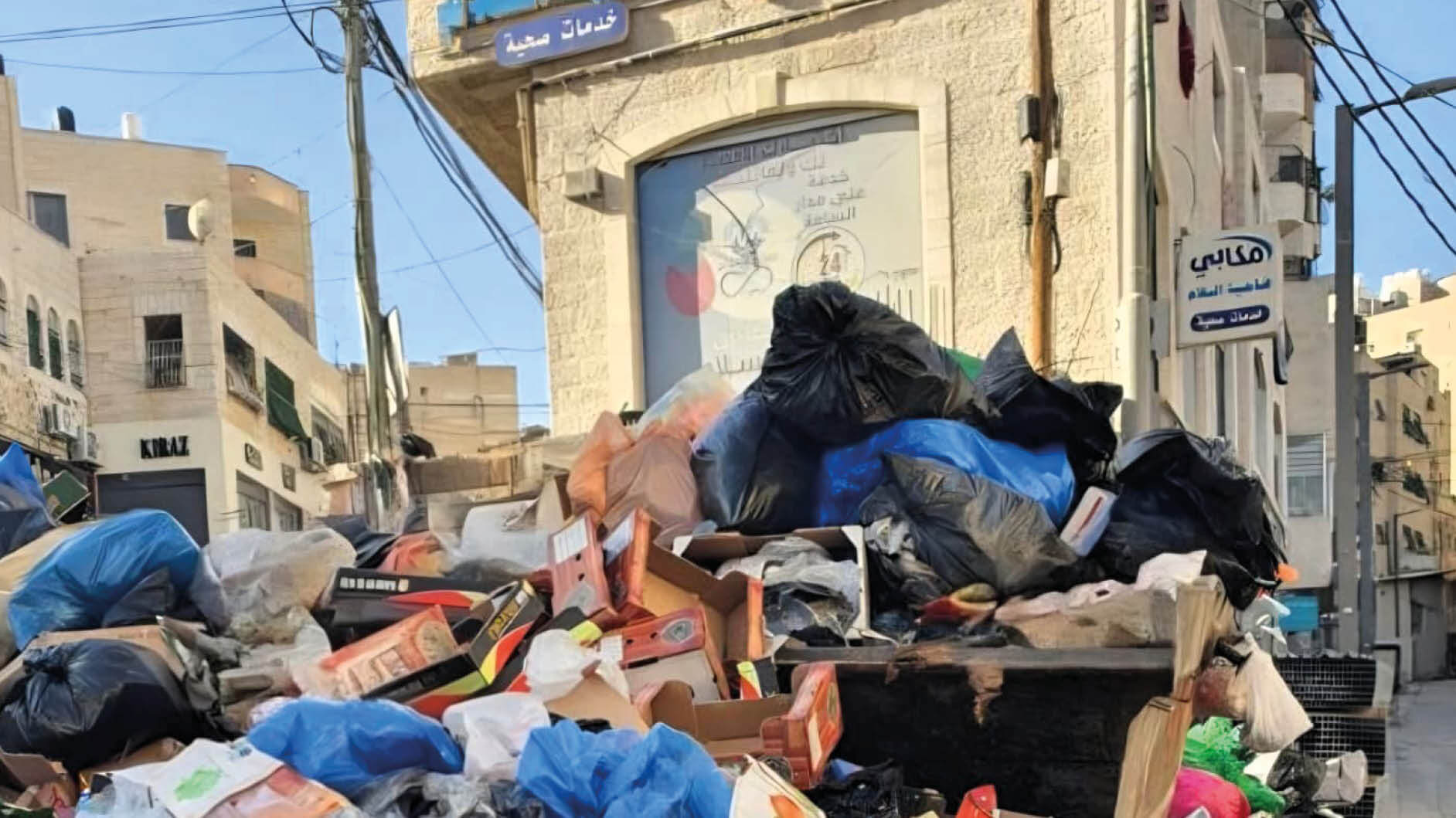
To get to the bottom of these painful questions, we started by reviewing relevant published academic literature. The goal was to identify alternative lenses through which we could understand the phenomenon of littering in public spaces. Unsurprisingly, it is by no means an understudied topic. We found many relevant theoretical frameworks that address the question from various angles and managed to narrow down the possible drivers of littering in public spaces to three main themes. The first theme concerns individuals’ psychological barriers. Attachment research has shown that people tend to take care of areas that they feel they own and control.1 Seligman’s theory of learned helplessness describes the effect of long-term powerlessness on communities: People who are constantly exposed to unmanageable situations learn to cease trying, even when trying becomes possible.2 This is not indifference; it is a psychological response to structural suppression of agency. The second theme is weak belief in collective capacity. Social Identity Theory explains how group membership affects behavior, but only if group members believe collective action to be meaningful and consistent with group norms; identification without a sense of collective capacity does not influence behavior.3 A further development of this is provided by Bandura’s collective efficacy theory, which states that groups do not believe in their collective ability to achieve goals while they are disengaged from collective maintenance behaviors, such as civic upkeep of public areas.4 The third theme is pessimism about the future. Place attachment studies reveal that the optimism that a place can be improved is a prerequisite for people to work hard on such improvement.5 A population that does not believe that its surroundings could improve has no intellectual or emotional basis for preserving them.
To explore these hypotheses, we relied on polling data collected by the Institute for Social and Economic Progress (ISEP). We used two datasets; most of the analysis builds on a representative sample of 600 West Bank Palestinians collected in May 2025, and some data points are from a sample of 400 West Bank Palestinians collected in May 2026.
The suffering produced by decades of occupation and political fragmentation drains Palestinians’ capacity for civic action.
The first lens we studied was the influence of national identity and belonging. Unfortunately for our colonizers, Palestinian national identity is strongly felt by most Palestinians in the West Bank. One does not need statistics to know this, but fortunately the numbers confirm this fact as well. In May 2025, around 80 percent of respondents agreed or strongly agreed that being Palestinian is a core part of their identity, and 82 percent saw themselves as part of the Palestinian people. These findings suggest that group belonging is likely not to be directly related to anti-social behavior, including littering in public places, and is either unrelated or inversely related to it.
Palestinians are not indifferent to their public spaces; they are exhausted. To address littering, we must rebuild collective agency and trust, not merely raise awareness.
Applying the second lens, we studied individual psychological barriers. The data reveals pervasive psychological distress. In May 2026, 85 percent reported to have experienced symptoms of anxiety (“nervous, anxious, or on edge”) for at least several days, with 35 percent having experienced these symptoms on more than half the days, and 20 percent nearly every day. Depression indicators are also concerning: 76 percent of respondents reported feeling down/hopeless for a period of at least several days. These are very high screening rates. In May 2025, the data clearly showed widespread feelings of guilt (93.3 percent), helplessness (80.8 percent), anger (77.6 percent), and low levels of hope (40.2 percent) and gratitude (32.4 percent). Those with the strongest Palestinian identification and belonging were emotionally suffering the most – they felt guiltier (97.3 percent felt at least somewhat guilty, compared with 77.5 percent among those with a weaker identification), more helpless (83.3 percent vs. 70.8 percent), and angrier (81.8 percent vs. 60.8 percent). They also experienced slightly lower levels of gratitude (31.1 percent vs. 37.5 percent). This suggests that strong national identity under occupation heightens consciousness of injustice and makes us feel guilty for being unable to change our reality. As Seligman’s learned helplessness theory suggests, the problem with guilt without agency is that it generates paralysis, not action.6 This means that the group with the most attachment to Palestinian identity currently has the least emotional readiness for positive civic engagement.
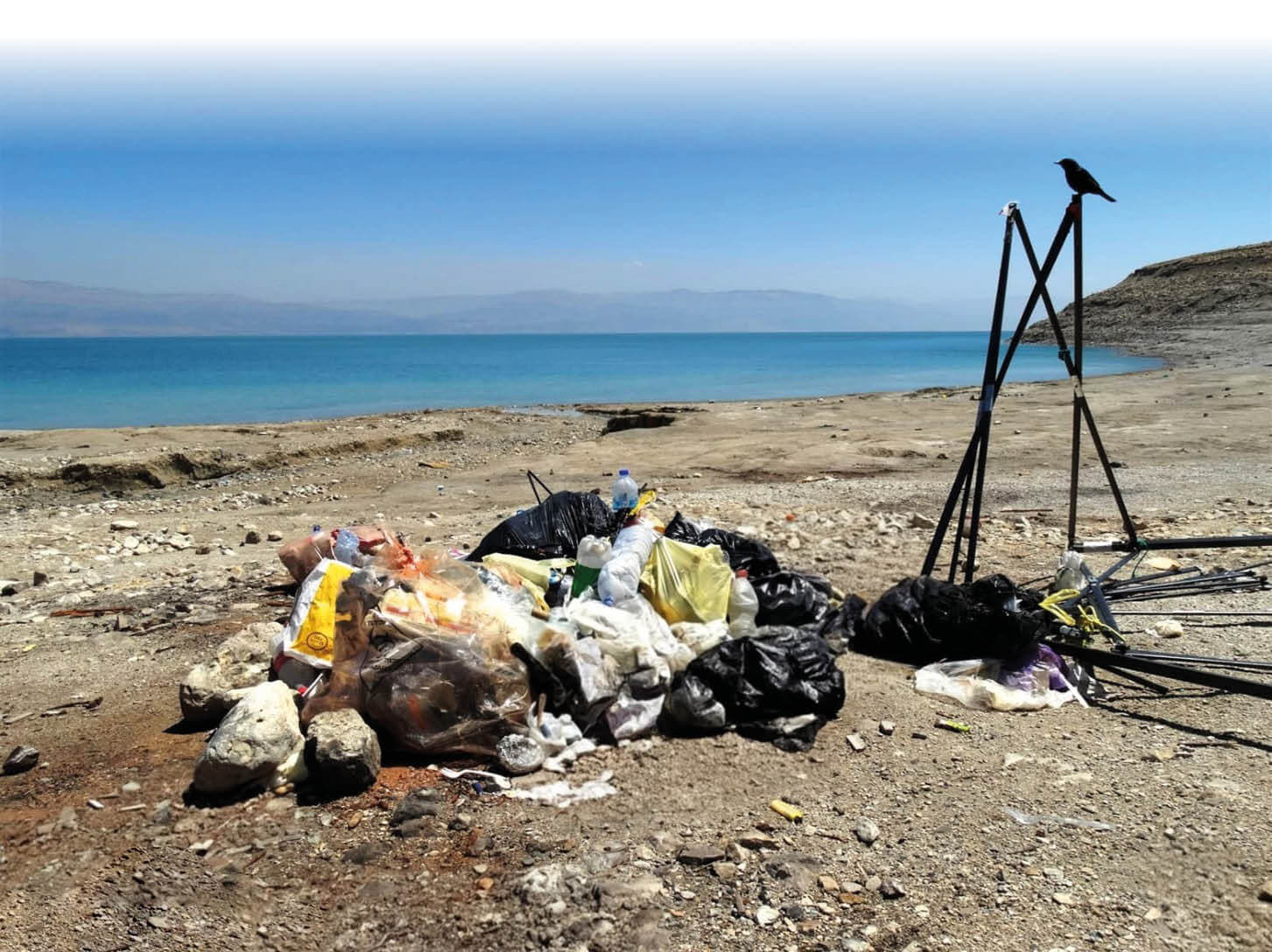
The third lens we studied was the sense of collective efficacy. According to Bandura’s theory, if individuals question the collective efficacy of the group, then their need to individually uphold shared public spaces is greatly reduced.7 At the surface, it seems that a significant base of West Bank Palestinians see their society as collectively effective. In May 2025, around 60 percent believed that Palestinians agree on a common goal, 64 percent thought that Palestinians could attain their goals as a group, and 61 percent believed that Palestinians could end the occupation together. However, when we dug deeper, we found marks of a fragmented society. In May 2025, only 52.6 percent in the West Bank believed that Palestinians were united. More recent data from May 2026 shows that only a thin majority (58 percent) feel any level of trust in the community, and only 9.5 percent report high levels of trust. These indicators show that while symbols of national unity are upheld, in practice, social cohesion and communal trust have significantly eroded, potentially weakening the sense of collective efficacy.
The fourth lens we studied focused on expectations for the future. The dominant mood when it comes to political prospects is pessimism or stasis. In May 2025, only 23 percent said that the end of occupation is closer given current conditions, compared to 37 percent who said that it is further away. This is no surprise, as it is rooted in expectations of social, economic, and political deterioration, at least in the medium-term. Only around 40 percent thought that social cohesion could improve, and one in three expected the economy to improve over the next five years (30.1 percent) and considered a political solution to be conceivable (32.7 percent). A key driver of pessimism is the expectation of a deteriorating security situation, as only one in four (24.4 percent) thought that safety could improve in the next five years. As Altman and Low note, a population that does not believe that its surroundings can improve has no intellectual or emotional basis for preserving them.8

The polling data paints a picture of a population that is experiencing high emotional distress with low levels of hope; a politically fragmented population with a large disengaged bloc; and one that maintains a strong national identity despite skepticism about collective unity and political prospects. Polling results in the West Bank are consistent with what the theoretical literature predicts for a people under the long-term loss of agency, with little influence over their environment. Palestinians do care about their public environment. However, occupation and internal division progressively take away the sense of collective power, cutting the emotional foundations for civic responsibility, even when national identity is intensely felt.
Disengagement from public spaces is not a failure of national identity per se. It is what happens when identity is separated from agency; when Palestinian individuals feel deeply Palestinian but do not believe that they can collectively act as such. Only collective optimism rooted in unity, communal trust, and hope for a better future can drive behavioral change toward positive civic engagement and ownership.
1 Irwin Altman and Setha M. Low, Place Attachment, Plenum Press, 1992; and Leila Scannell and Robert Gifford, “Defining Place Attachment: A Tripartite Organizing Framework,” Journal of Environmental Psychology, 30(1), 2010.
2 Martin Elias Peter Seligman, “Learned Helplessness” Annual Review of Medicine, 23(1), 1972.
3 Henry Tajfel and James Castle Turner, “An Integrative Theory of Intergroup Conflict,” chapter in William G. Austin and Stepen Worchel (eds.), The Social Psychology of Intergroup Relations, Brooks/Cole Publishing, 1979; and Kelly S. Fielding and Matthew J. Hornsey, “A Social Identity Analysis of Climate Change and Environmental Attitudes and Behaviors,” Frontiers in Psychology, 7, 2016.
4 Albert Bandura, Self-Efficacy: The Exercise of Control, Worth Publishers, 1997.
5 Altman and Low, Place Attachment.
6 Seligman, “Learned Helplessness.”
7 Albert Bandura, “Exercise of Human Agency Through Collective Efficacy,” Current Directions in Psychological Science, 9(3), 2000.
8 Altman and Low, Place Attachment.

Zayne Abudaka is a co-founder and the director of research at Momentum Labs and a co-founder and CEO at Quazelle, a data collection and analysis platform. He is also a co-founder and senior fellow at the Institute for Social and Economic Progress and a co-founder of the Arabic-language media channel Masa7a.

Lareen Barghouthi is a data analyst at Quazelle. She holds a degree in data science from IE University, Madrid.
