


By Issam Nassar
The mass displacement of Palestinians in 1948 – the Nakba – produced not only a refugee population but also a visual archive. Photography played a crucial role in documenting this transformation, capturing both the moment of dispossession and the prolonged condition of exile. While early photojournalistic images focused on flight and rupture, the photographic archive produced by the United Nations Relief and Works Agency for Palestine Refugees in the Near East (UNRWA), established in 1949, documented the aftermath: daily life in camps across the Middle East.
The UNRWA photographic archive constitutes one of the largest visual repositories of Palestinian refugee life, spanning more than seven decades across Jordan, Lebanon, Syria, the West Bank, and Gaza. Produced primarily by staff photographers, the images served multiple purposes: documentation, administration, and fundraising. As such, they were embedded within an institutional logic that shaped both what was photographed and how it was presented.
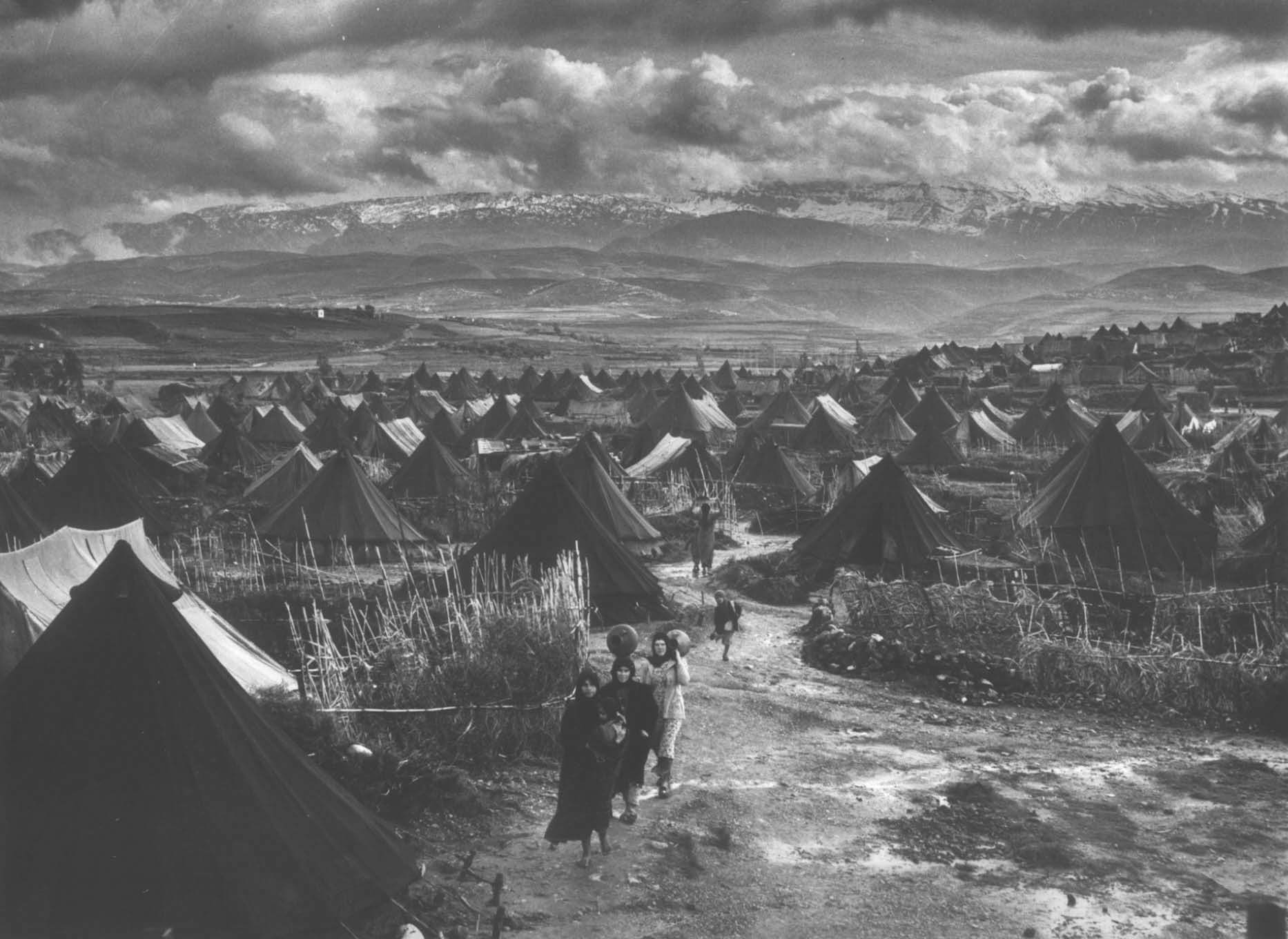
Archives, as Jacques Derrida reminds us, are not neutral repositories but sites structured by authority and order.1 In UNRWA’s case, this authority manifests in the organization, captioning, and circulation of images. Photographs were often accompanied by captions emphasizing humanitarian intervention – medical care, food distribution, education – foregrounding the agency’s role in alleviating suffering.
The photographs from the UNRWA archive are transparent records that reveal important details about the lived experience of Palestinian refugees. Visual detail, composition, and context in these images contain evidence that both reflects and exceeds their institutional framing, offering a means of reconstructing aspects of refugee life otherwise difficult to access.
Yet, as Elizabeth Edwards has argued, photographic archives remain open to reinterpretation.2 Images may contain details that disrupt their intended meaning, allowing historians to recover alternative narratives. Similarly, John Berger has noted that captions can direct or distort interpretation, making it necessary to read images both with and against their textual framing.3 The reflections that follow adopt this approach, focusing on what photographs reveal when examined closely, beyond official captions and institutional purposes.
One of the most widely circulated images in the UNRWA archive is Myrtle Winter’s 1952 panoramic photograph of Nahr al-Bared refugee camp in northern Lebanon. Taken from an elevated vantage point, the image presents a sweeping view of the camp set against a mountainous landscape.
At first glance, the photograph appears almost serene. The composition devotes a substantial portion of the frame to mountains, sky, and clouds, while the camp occupies the lower half. This visual balance evokes nineteenth-century landscape art, risking the transformation of the camp into a picturesque scene and potentially obscuring the violence that produced it.
However, a closer examination reveals a more complex reality. In the foreground, women walk away from the camp carrying water jars on their heads – a visible marker of absent infrastructure. Nearby, a child carries a school bag, while in the distance, other children gather in what may be a makeshift educational space, indicating the normalization of routines. A man tends a small garden enclosed by stones and improvised fencing. This act of cultivation suggests that many refugees, coming from rural backgrounds, sought to recreate aspects of village life within the camp, representing both practical subsistence and symbolic continuity.
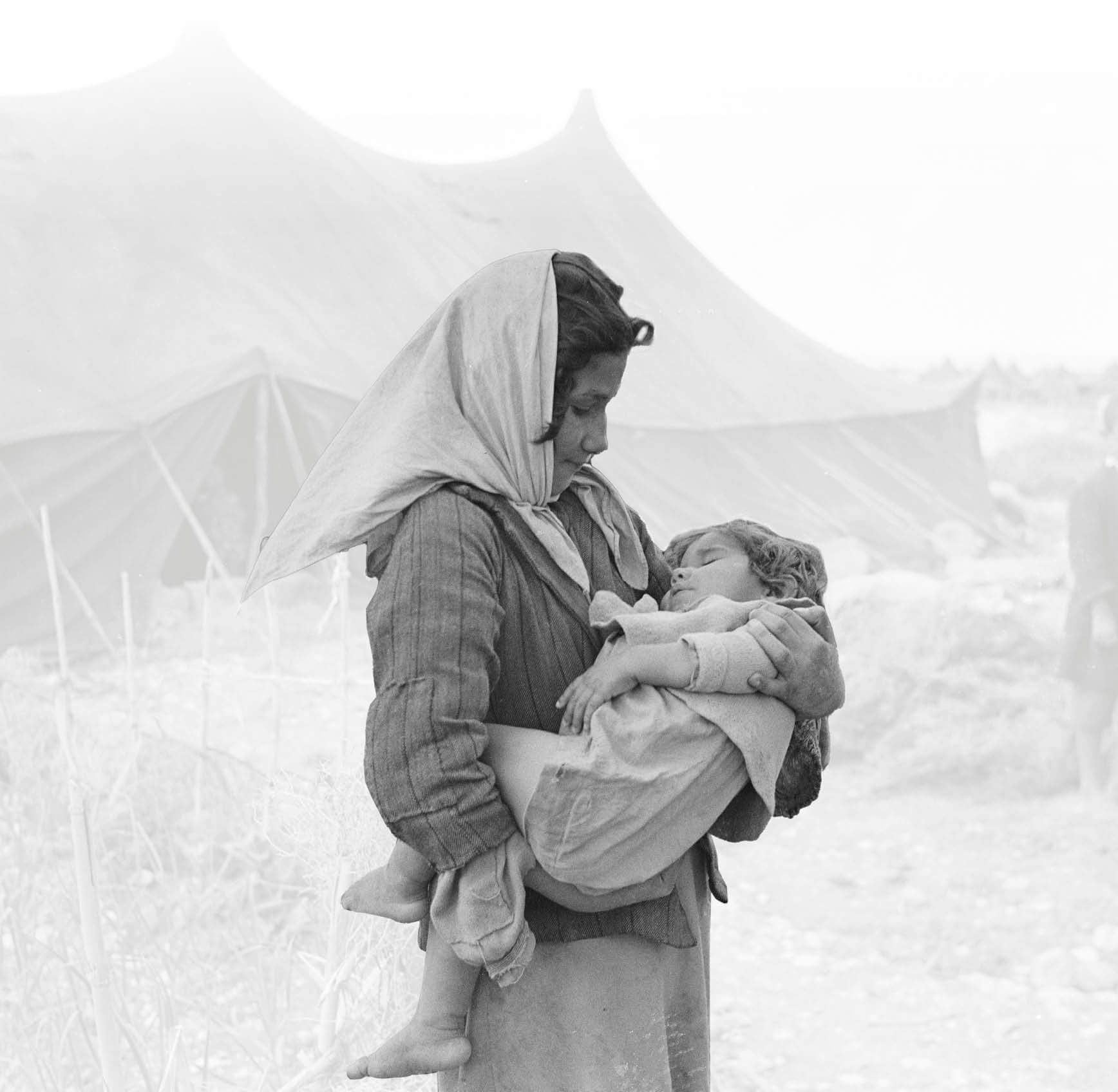
The ground appears uneven and muddy; tents offer minimal protection. Snow-capped mountains in the background underscore the severity of winter conditions. These details challenge official captions that emphasize improvement and progress. The caption accompanying the image reads: “The first camps, which sheltered the refugees who fled from their homes in Palestine as a result of the Arab-Israeli conflict of 1948, were tented… For several years some 6,000 refugees lived in these tents in Nahr-el-Bared camp beneath the mountains of Lebanon which are covered in snow for several months of the year. Many still live in the same camp, but their living conditions have been much improved with the replacement of the tents by concrete huts.”
Recognizing the absence of the violent contexts and backgrounds prevents the photographs from being read in isolation and situates them within a larger historical narrative.
While not inaccurate, this interpretation shifts attention to the institution. Reading critically involves resisting this framing and focusing instead on the visual evidence: the agency of refugees, their labor, and their adaptation to hardship. The photograph contains meanings that exceed its official narrative.
Walter Benjamin warned that photography can transform misery into an object of contemplation when presented in a visually compelling manner.4 In this image, the harmony of composition may distract from displacement. But by foregrounding details of daily activity and material deprivation, the photograph can be reinterpreted as a document of resilience and struggle rather than an aestheticized scene.
A second photograph from the UNRWA archive, taken in 1967, provides a different perspective. Unlike the panoramic view of Nahr al-Bared, this image centers on a single figure: a Palestinian woman crossing into Jordan during the war that led to the Israeli occupation of the West Bank.
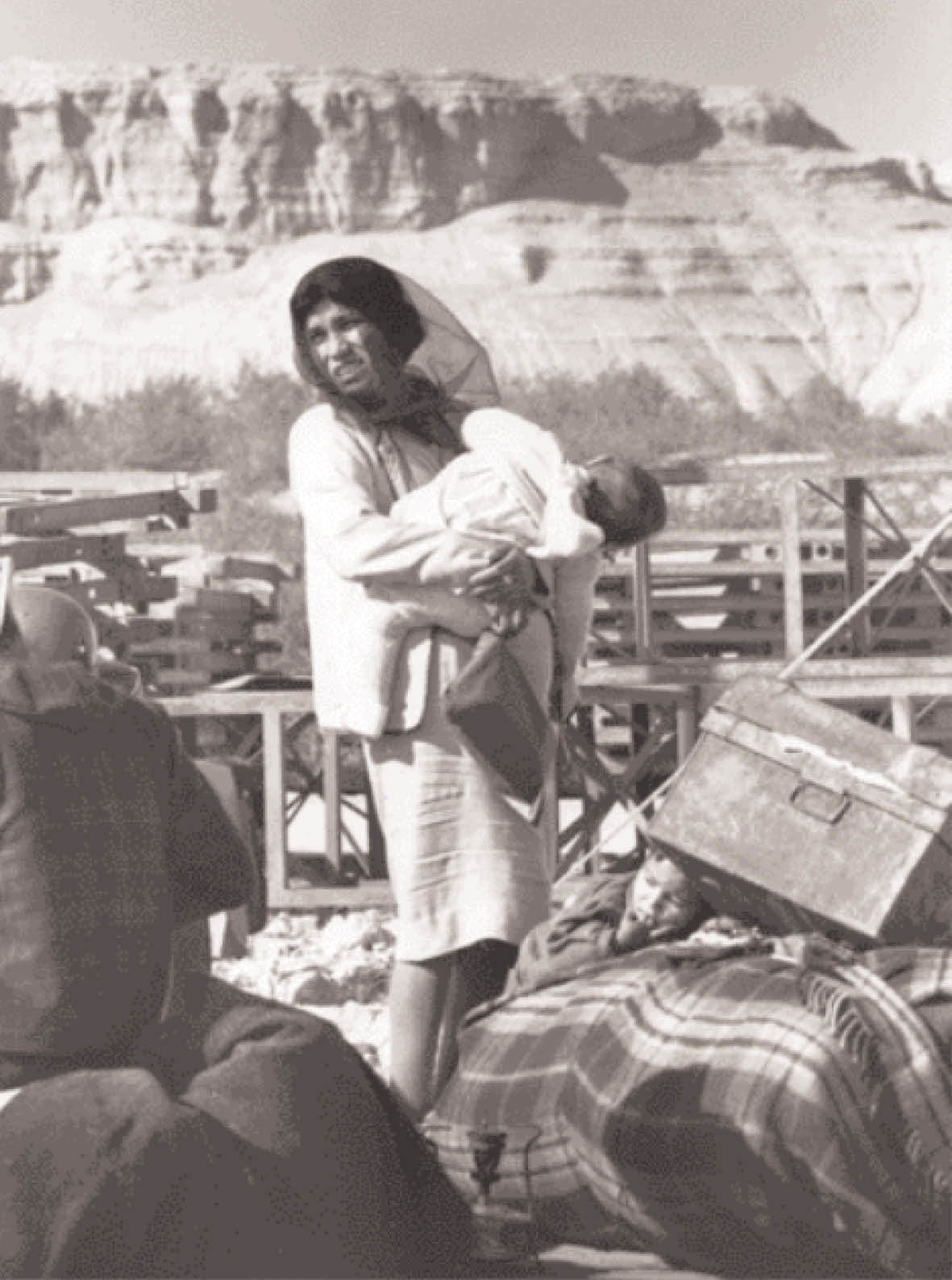
The composition directs attention to the woman’s expression and posture. She stands beside a pile of belongings, a child resting nearby. Her face conveys exhaustion and distress, capturing the emotional toll of forced movement. Suitcases and bundles serve as material indicators of what could be carried and what had to be left behind.
The photograph’s power lies in its immediacy. Whereas the Nahr al-Bared image depicts the aftermath, this one captures the process of displacement. The woman’s bodily expression communicates urgency and uncertainty, while the child underscores vulnerability. John Berger has observed that photographs arrest a moment in time, preserving it for future viewers.5 Here, the arrested moment conveys not only an individual experience but also a broader historical reality: the repetition of displacement for many Palestinians, first in 1948 and again in 1967.
Although rooted in a specific context, the image’s emotional resonance extends beyond it. The woman’s distress can be understood as representative of refugee experiences while retaining its historical specificity. This dual quality enhances the photograph’s analytical significance, allowing it to function as both evidence and symbol.
Close analysis of these images demonstrates that photographs can serve as valuable historical sources. They provide access to aspects of refugee life that written records may not fully capture: daily routines, social interactions, and material conditions. At the same time, photographs do not speak for themselves. They capture only a fragment of reality, leaving out the broader context that gives them meaning. In the case of UNRWA images, this includes the violence of 1948, the loss of homes and land, and the ongoing denial of return. The Nahr al-Bared photograph shows a functioning community but not the villages from which its inhabitants came. The 1967 image captures a moment of flight but not the forces that made it necessary.
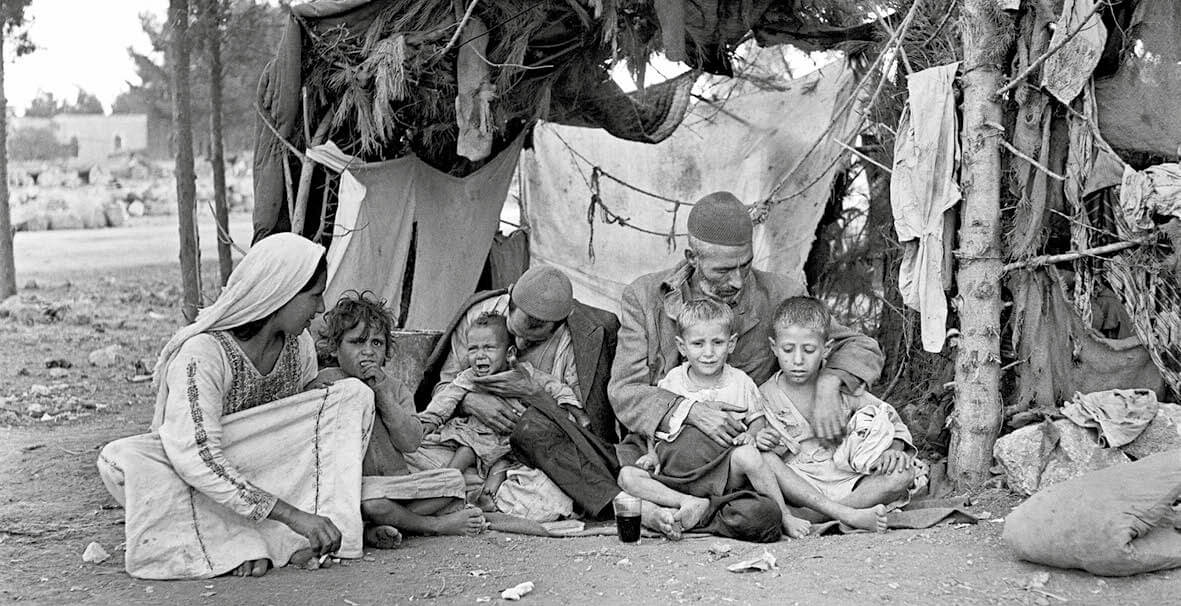
The UNRWA photographic archive offers a rich but complex resource for understanding the Palestinian refugee experience. While many images were produced within an institutional framework that emphasized humanitarian intervention, close analysis reveals details that extend beyond this framing. By focusing on visual elements – composition, gesture, material objects – it is possible to reconstruct aspects of daily life in the camps and to recover the agency of refugees themselves.
Ultimately, these photographs bridge the gap between documentation and lived experience. They allow us to engage with the history of displacement not only as a political event but as a human condition, one that continues to shape the present.
1 Jacques Derrida, “Archive Fever: A Freudian Impression,” Diacritics 25(2), 1995, 9–63.
2 Elizabeth Edwards, Raw Histories: Photographs, Anthropology and Museums, Oxford: Berg, 2001, 4.
3 John Berger and Jean Mohr, Another Way of Telling, New York: Pantheon, 1982, 97.
4 Walter Benjamin, “The Author as Producer,” New Left Review 1(62), 1970.
5 Berger and Mohr, Another Way of Telling, 117.
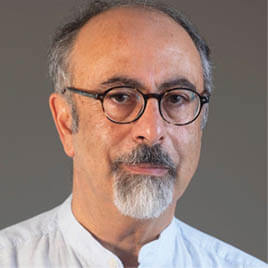
Issam Nassar is a professor of history who focuses on visual culture and currently heads the history program at the Doha Institute for Graduate Studies.
