


By Tawfiq Al-Ghussein
Trauma, when applied to nations, is often narrated as rupture, a moment of exceptional violence that interrupts an otherwise stable historical trajectory. This framing does not fit the Palestinian experience. The Palestinian condition is not best understood as a sequence of isolated shocks, however grave, but as a continuous political structure in which injury is organized, administered, and made durable across generations. What distinguishes this history is not only the scale of violence but also the way in which law, administration, diplomacy, and force have repeatedly interacted to convert violence into a governing condition rather than a temporary departure from order.
This is why Jenny Edkins remains so important to the argument. In Trauma and the Memory of Politics (2003), Edkins argues that trauma exposes the violence that is concealed within sovereign narratives and unsettles the stories that states tell about themselves. Yet her work also explains how political systems survive such exposure. Trauma is not merely suffered, it is managed as its memory is curated, legalized, displaced, or neutralized so that the structures that generated it may persist. The Palestinian case pushes that insight further. Here, trauma is not only retrospectively managed, it is continuously reproduced while being narrated, regulated, and normalized by the institutions that claim to contain conflict.
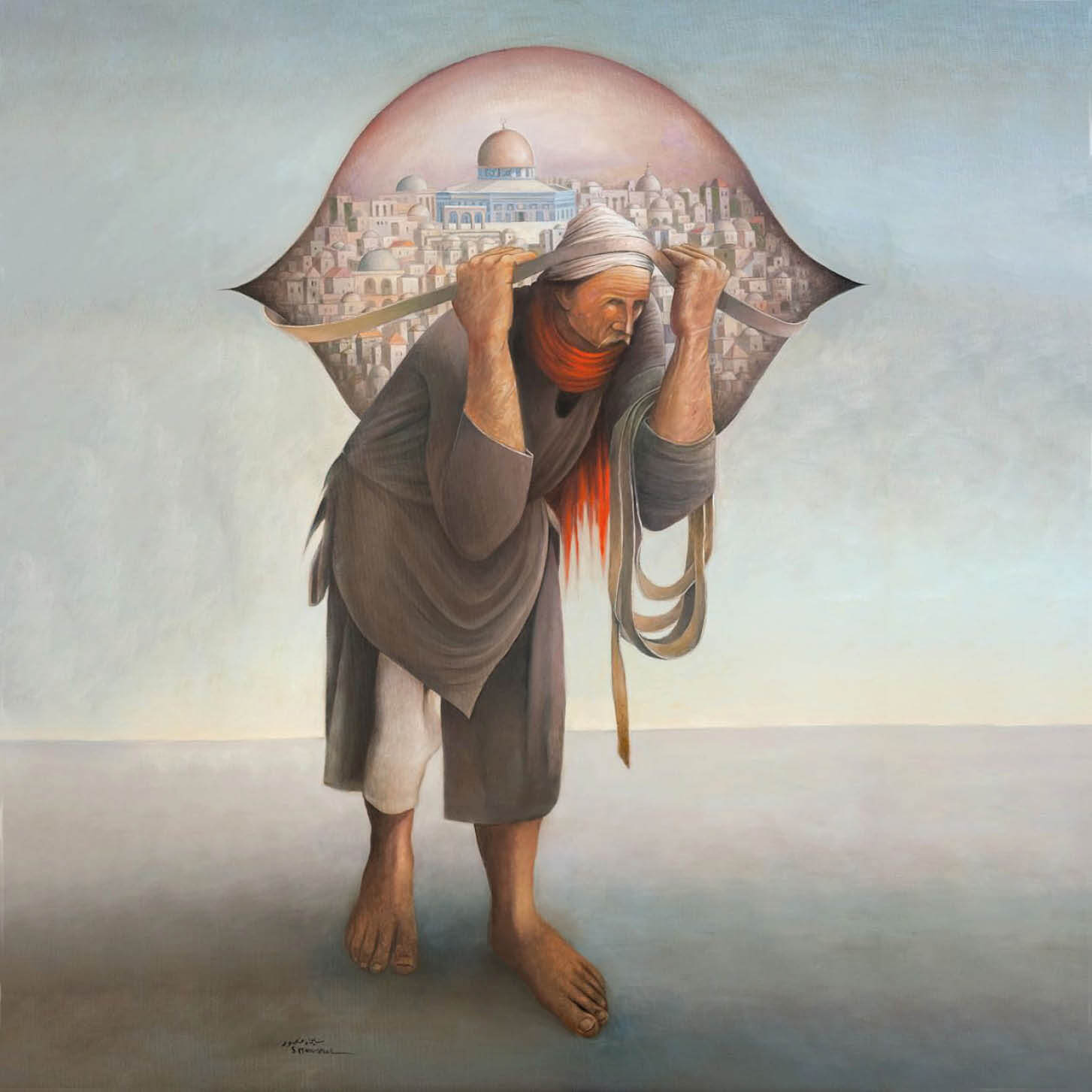
The roots of this condition lie not only in military conquest but also in imperial knowledge. The British Arab Bureau – formally established in Cairo in January 1916 under General Gilbert Clayton, with figures such as T. E. Lawrence, David Hogarth, and Ronald Storrs moving through its intellectual and administrative orbit – was far more than an intelligence office. It was a mechanism for translating Arab societies into categories that were legible to imperial rule. It gathered political, tribal, economic, and social information, then turned that information into policy. It identified intermediaries, mapped loyalties, and helped create the conceptual framework through which Britain could intervene while presenting domination as administration. Palestine, in this setting, was not simply occupied, it was first rendered governable from outside.
That imperial grammar was quickly expressed in diplomacy. The Sykes–Picot Agreement of May 1916 divided Ottoman Arab lands into zones of influence without the participation of the populations concerned. It established the principle that the region could be partitioned and administered externally, with local society treated as an object rather than a source of sovereignty.
Law, violence, and narrative converge to sustain a continuous structure of dispossession and generational harm.
The Balfour Declaration of November 2, 1917, extended that logic in a more fateful form. Arthur Balfour declared support for the establishment in Palestine of a “national home for the Jewish people,” while referring to the Arab majority only as “non-Jewish communities” whose political rights were not recognized. Crucially, this declaration was made before Britain had completed its military conquest of Palestine. It promised the future of a territory not yet under full control, and did so in language that erased the political status of its Indigenous population.
Under the Mandate, this asymmetry became institutional. Jewish immigration increased, particularly as antisemitism escalated in Europe and culminated in Nazi persecution. That context is indispensable. Yet in Palestine, immigration unfolded within a colonial legal framework that facilitated one national project while denying equivalent recognition to another. The result was not a neutral conflict, but one structured through unequal law.
Palestinian resistance to this order reached its most coherent political expression during the Arab Revolt of 1936–1939. On April 25, 1936, the Arab Higher Committee was formed under Haj Amin al-Husseini. It brought together Jamal al-Husseini, Yacoub Al-Ghussein, Awni Abd al-Hadi, Husayn Fakhri al-Khalidi, Ahmad Hilmi Pasha Abd al-Baqi, Fuad Saba, Alfred Roch, and Raghib al-Nashashibi. The committee’s importance lay in its unity. It represented the first sustained attempt to construct a Palestinian national political authority capable of coordinating resistance and articulating collective demands. Composed of religious figures, both Muslim and Christian, alongside political leaders, notables, and representatives of organized labor and trade unions, it reflected a broad social coalition rather than a narrow elite formation. It transformed a population into a political actor. That is precisely why it was dismantled. Following the assassination of Lewis Yelland Andrews on September 26, 1937, Britain outlawed the committee, arrested its leadership, and exiled key figures to the Seychelles. This was not administrative suppression but structural dismemberment. It severed political leadership from territory and fractured national organization at its most critical moment.
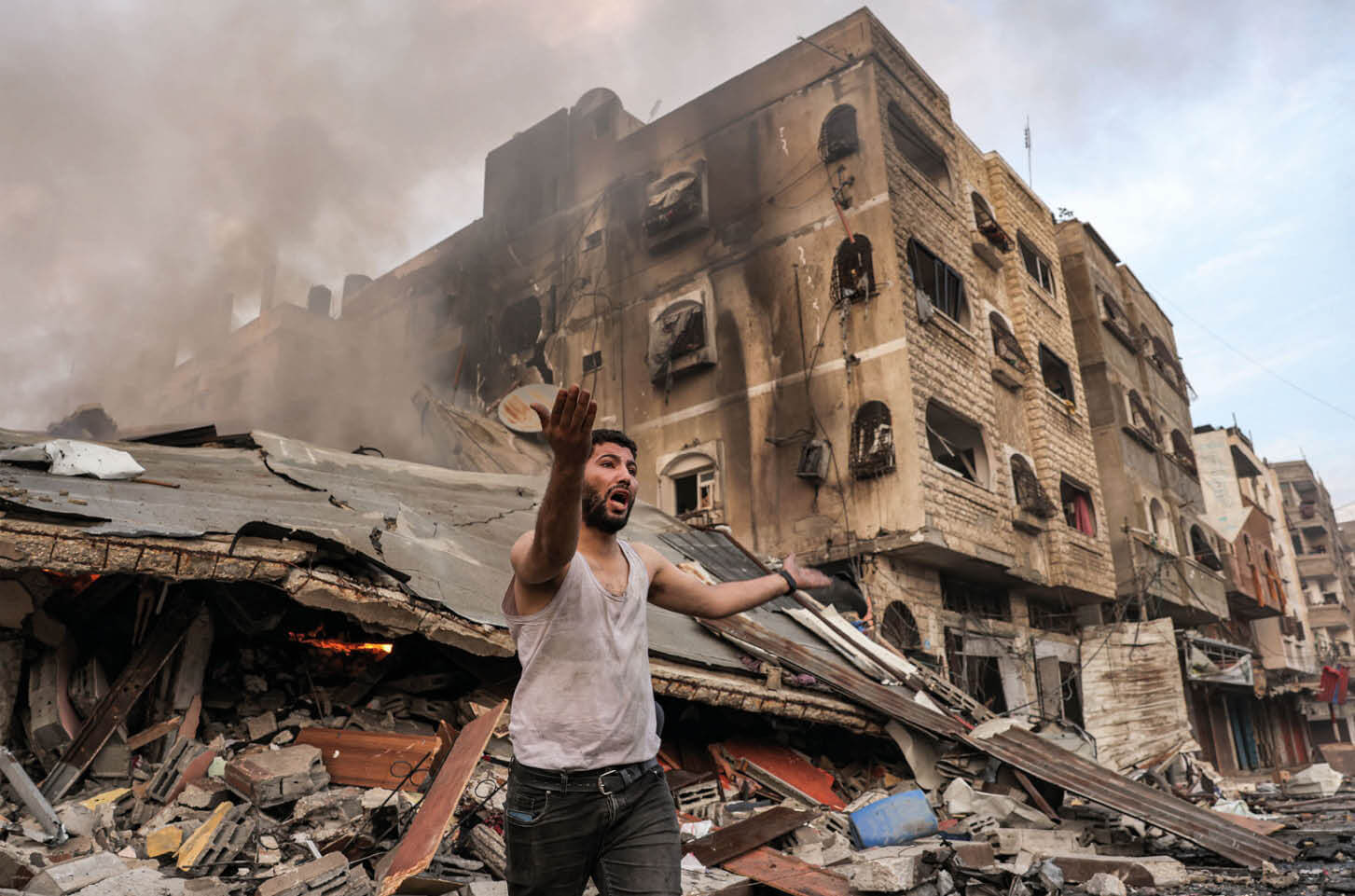
The final years of the Mandate saw escalating violence, including the assassination of Lord Moyne in 1944 and the King David Hotel bombing in 1946. Armed force became central to shaping the post-Mandate order. Within this context, the events at Deir Yassin on April 9, 1948, must be understood in full. The village, located west of Jerusalem, was attacked by Irgun and Lehi forces. It was not a major military stronghold and had reportedly maintained local nonaggression arrangements. The assault resulted in the killing of approximately one hundred civilians, including women and children. The significance of Deir Yassin lies not only in the killings themselves, but in their effect. News of the massacre spread rapidly and generated widespread fear, contributing directly to the flight of Palestinians from other areas. Violence here operated as a psychological instrument, extending beyond the immediate site and becoming part of the mechanism through which depopulation occurred.
Yet the Nakba did not produce a single, unified Palestinian condition. It fractured Palestinian society across different regimes of control. In the Gaza Strip, Palestinians came under Egyptian administration, while in the West Bank, including East Jerusalem, they fell under Jordanian rule. These were not conditions of sovereignty. Gaza was governed without granting its population full political agency, and the West Bank was annexed by Jordan in a move recognized only by a limited number of states.
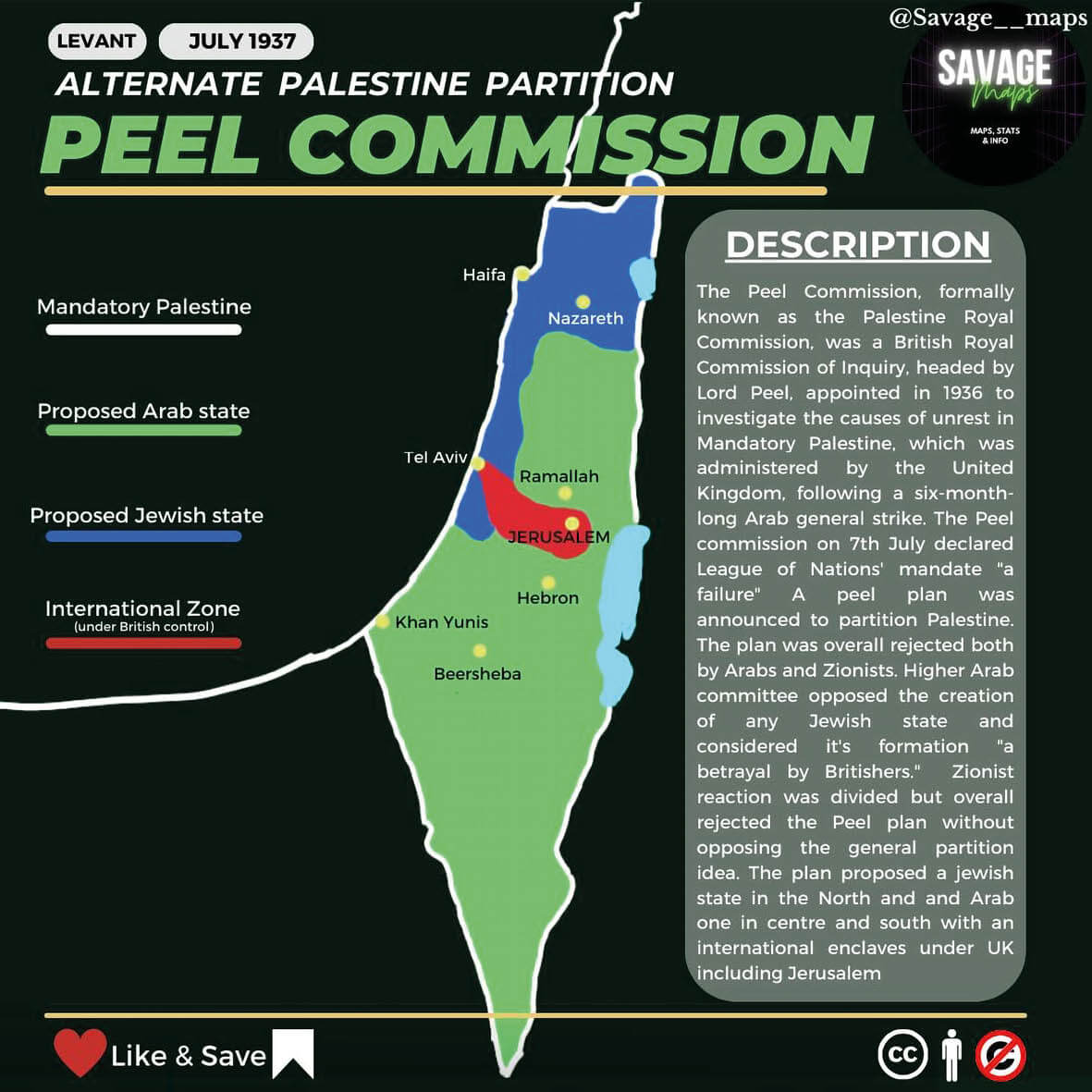
The Peel Commission of 1937 proposed partition. The St. James’s Conference of 1939 failed. The White Paper of May 1939 attempted recalibration. All revealed an imperial power attempting to stabilize a crisis it had produced, after destroying the Arab higher committee, the only unified Palestinian leadership capable of negotiating it.
For Palestinians, this period entrenched a different form of trauma. Displacement became prolonged, refugee camps became permanent, and political fragmentation deepened. Families were divided across borders, return remained unrealized, and Palestinian political expression was mediated through external state structures. The absence of an independent Palestinian political center during this period was not a passive condition; it was actively produced through regional and international arrangements that subordinated Palestinian self-determination to broader strategic concerns. Trauma, in this phase, was not only the memory of expulsion, but the lived experience of suspended political existence.
The Palestine Liberation Organization was established in 1964, prior to the 1967 war, under the auspices of the Arab League and initially led by Ahmad Shukeiri, whose leadership reflected a post-1948 phase of Palestinian political leadership that was shaped within an Arab state framework rather than an autonomous national movement. The transformation came after 1967. The defeat of Arab states and the occupation of the West Bank and Gaza created a political vacuum. Palestinian movements, most notably Fatah under Yasser Arafat, assumed control of the PLO by 1969. The organization shifted from externally mediated representation to an independent national movement that combined armed struggle with diplomatic engagement. Over time, the PLO gained international recognition, which culminated in its role in the Oslo Accords and the creation of the Palestinian Authority in 1994. Yet this did not produce sovereignty. It produced constrained administration under occupation.
Palestinian vulnerability was never confined to the territory of Mandate Palestine itself. The Sabra and Shatila massacres of September 16 to 18, 1982, in Beirut must be understood in full. Following the evacuation of the PLO under international guarantees, Israeli forces surrounded the camps and permitted the entry of the Lebanese Forces militia. Over the course of approximately two days, civilians were systematically killed, with estimates ranging from around 1,300 to 3,500 victims. Israel did not carry out the killings directly, but exercised effective control over the area, controlled access, facilitated the militia’s entry, and remained aware of the unfolding violence. The Kahan Commission later found Israel indirectly responsible, concluding that its leadership knew or should have known the risks and failed to act.
Sabra and Shatila demonstrated that displacement did not produce safety. It extended Palestinian exposure to organized violence across borders. It also revealed how violence could be mediated through proxy actors while remaining structurally enabled. The trauma produced was not only immediate but also cumulative, reinforcing the condition of insecurity in exile and embedding the understanding that refuge itself could become a site of annihilation.
Events such as the Hebron massacre in 1994 and the assassination of Yitzhak Rabin in 1995 demonstrated that violence continued to shape political limits. On February 25, 1994, during Ramadan, Baruch Goldstein entered the Ibrahimi Mosque in Hebron and opened fire on Palestinian worshippers, killing 29. The aftermath institutionalized further restrictions on Palestinians, including the division of Hebron. On November 4, 1995, Israeli Prime Minister Yitzhak Rabin was assassinated by Yigal Amir, demonstrating that violent opposition could reshape political trajectories at the highest level. Taken together, these events reveal a pattern in which violence operates as a structuring force, defining the limits of political possibility.
We learn the state of the world not through its declarations, but through what it permits. In Palestine, what is revealed is not the breakdown of order, but its design. What presents itself as crisis is, in fact, structure. The central claim is not that Palestinians have suffered a sequence of tragedies. It is that they have been made to endure a system.
The present moment represents the most explicit manifestation of this structure. Reports by Francesca Albanese document patterns of destruction, detention, torture, and sexual violence, arguing that these are systemic rather than incidental. The genocide in Gaza, carried out against a population without a sovereign army and within a territory under prolonged occupation, has produced devastation on a scale that has led to proceedings before the International Court of Justice, which recognized the plausibility of genocidal acts and ordered provisional measures. The International Criminal Court has issued arrest warrants for Israeli leadership on charges of war crimes and crimes against humanity.
Even within Israeli discourse, figures such as Ehud Olmert now invoke the language of criminality and international jurisdiction. His call for intervention by the International Criminal Court over settler violence is significant not only for its content, but for its source. It reflects a moment in which the vocabulary of international law is no longer confined to external critique, but has entered the discourse of the Israeli political establishment itself. Yet this shift does not resolve the structure, it reveals it. The language of criminality may be acknowledged, but without enforcement it risks becoming another layer of recognition without consequence.
The assassination of Count Folke Bernadotte in September 1948 demonstrated the fragility of international mediation. Israel’s declaration of independence on May 14, 1948, and the Nakba that followed displaced over 700,000 Palestinians. While Resolution 194 affirmed the right of return, it was never enforced.
A similar dynamic is visible in international diplomacy. A growing number of states have recognized Palestine, affirming in principle the right to self-determination. Yet recognition without sovereignty raises a fundamental question. What does statehood mean in the absence of control over territory, borders, and governance? Without enforcement, recognition risks becoming declarative rather than transformative, acknowledging rights while leaving the structures that deny them intact. Seen in full, this is not deviation. It is culmination.
And this returns the argument to Jenny Edkins. Trauma reveals the instability beneath sovereign order, yet here that exposure does not dismantle the system, it is absorbed into it. Unless law is enforced, accountability realized, and self-determination achieved, the structure will persist. And with it, the trauma, not as rupture, but as system.

Tawfiq Al-Ghussein is a writer and researcher on settler colonialism, religion, and political violence, exploring trauma, nationalism, and ethics. He holds a BSFS from Georgetown and an MA from SOAS, University of London.
