


By Elena Qleibo
Women in Gaza have long been central to both social reproduction and social transformation, particularly as successive political ruptures have reorganized everyday life. In the aftermath of the first and second Intifadas, mass imprisonment, the Oslo-era reconfiguration of governance, and the progressive tightening of labor mobility through permit regimes – culminating in a comprehensive closure by 2006 – have produced a durable condition of enforced immobility that has reshaped households and communities. Within this context, women have assumed expanded responsibilities in sustaining family life and social networks, yet these shifts are best understood relationally rather than as a linear narrative of “empowerment” through crisis. As men and youth were increasingly shaped by confinement, unemployment, and restricted movement, they often became more embedded in domestic and caregiving spheres, with some accounts describing strengthened partnerships and, in widowhood, closer father-child bonds. Any redistribution of responsibility, however, unfolds alongside profound psychosocial strain that can include anxiety, depression, and cumulative trauma, which are reinforced when living under blockade and with repeated loss. Against this politically imposed regime of restriction and erasure, steadfastness and storytelling operate as social practices of endurance, reproducing identity, memory, and continuity amid persistent material instability.
This reliance on storytelling is not incidental but rooted in the structure of daily life. In Gaza, existence is organized by memory and displacement, lived under persistent constraint. Storytelling situates children within a collective past, names loss without surrendering belonging, and anchors survival in social relations rather than mere endurance. These practices unfold within a dense moral world where reputation and kinship shape conduct from early childhood: “What will people say?” and the invocation of “ʿayb” (denoting that an action is unacceptable) mark the boundaries of behavior. Honor is secured through recognition, belonging provides protection. Autonomy, understood as distance from kin, carries social consequence and is negotiated within systems of obligation and mutual accountability.
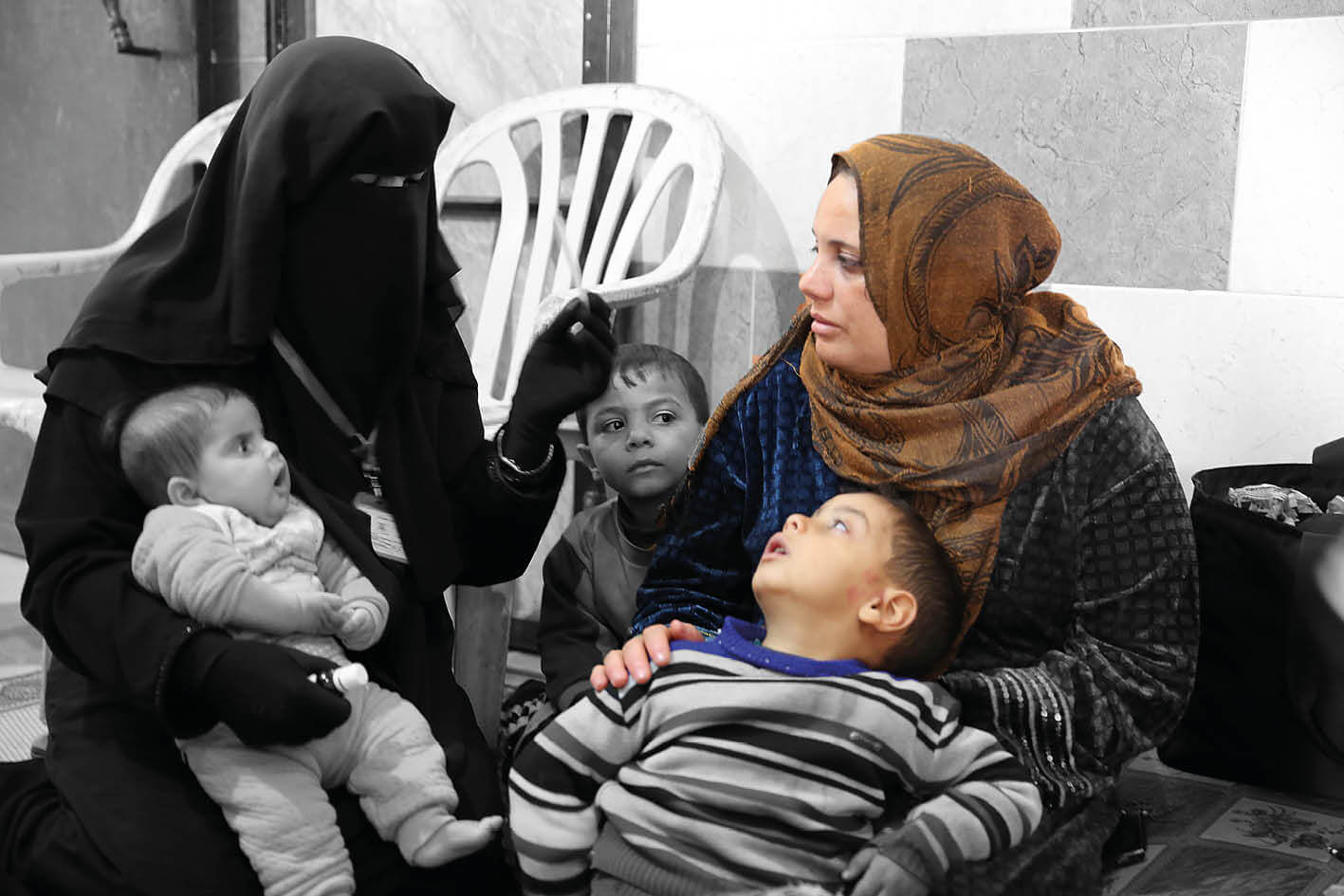
From birth, the family structures the contours of life, conferring identity and protection within an extended kin network. Unlike liberal models that privilege individual autonomy, Gazan social organization embeds the person within dense systems of obligation and reciprocity. Individuation,1 understood as a life apart from kin, is limited by these interdependencies. Life trajectories are shaped through moral and religious norms, but also through everyday practices of shared meals, caregiving, and mutual support. Among poorer households, nuclear families may include seven or more children; middle-class families often have around four. Grandparents, aunts, and other relatives frequently share the same dwelling, extending the household’s functional scope. Each unit operates as a semi-autonomous economic cell while remaining integrated within wider kin and neighborhood networks that secure survival and social recognition. Even in scarcity, families gather to share tea and bread. Commensality,2 food-centered communal life, becomes an enactment of solidarity and moral cohesion, sustained through reciprocity and care.
Across decades, Gazan women have held families together under conditions designed to break them, stepping in when husbands were imprisoned, killed, or stripped of livelihood, and shaping the spaces where children learn who they are.
Solidarity in Gaza follows a relational logic akin to Marcel Mauss’s notion of the “gift”: a system of reciprocity that binds individuals and groups through mutual obligation.3 Intensified by the mass displacement of 1948 and prolonged life in refugee camps, this logic became foundational as the destruction of homes and communities eroded the networks that had once provided protection, care, and identity. With relatives lost and social structures fractured, survival required not only endurance but the active reconstitution of ties. The reconstruction of family became a central strategy. Lineages were reworked, and forms of fictive kinship emerged in social bonds recognized as family. Neighbors became “aunts” and “uncles,” friends were incorporated as siblings, and everyday practices of shared meals and caregiving consolidated these ties. What began as pragmatic adaptation sedimented into durable belonging, embedding mutual aid within moral and religious frameworks. Family, in this context, was not merely inherited; it was actively produced to restore order after rupture.
Within this framework, family, memory, and storytelling stand as embodied claims to return. Palestinian self-determination is not a placeless abstraction to be deferred or relocated; it is anchored in territory, ancestral memory, and lived geography: the villages named in stories, the orchards recalled through scent, the houses whose keys were carried into exile with the intention and certainty of return, the streets mapped through kinship and burial grounds. To detach self-determination from the right of return is to empty it of meaning; to sever a people from the land, memory, and social fabric that anchors their collective life. The ongoing Nakba is not only material displacement; it is an assault on continuity itself – on the generational preservation of belonging that families sustain through daily acts of care, narration, and remembrance.
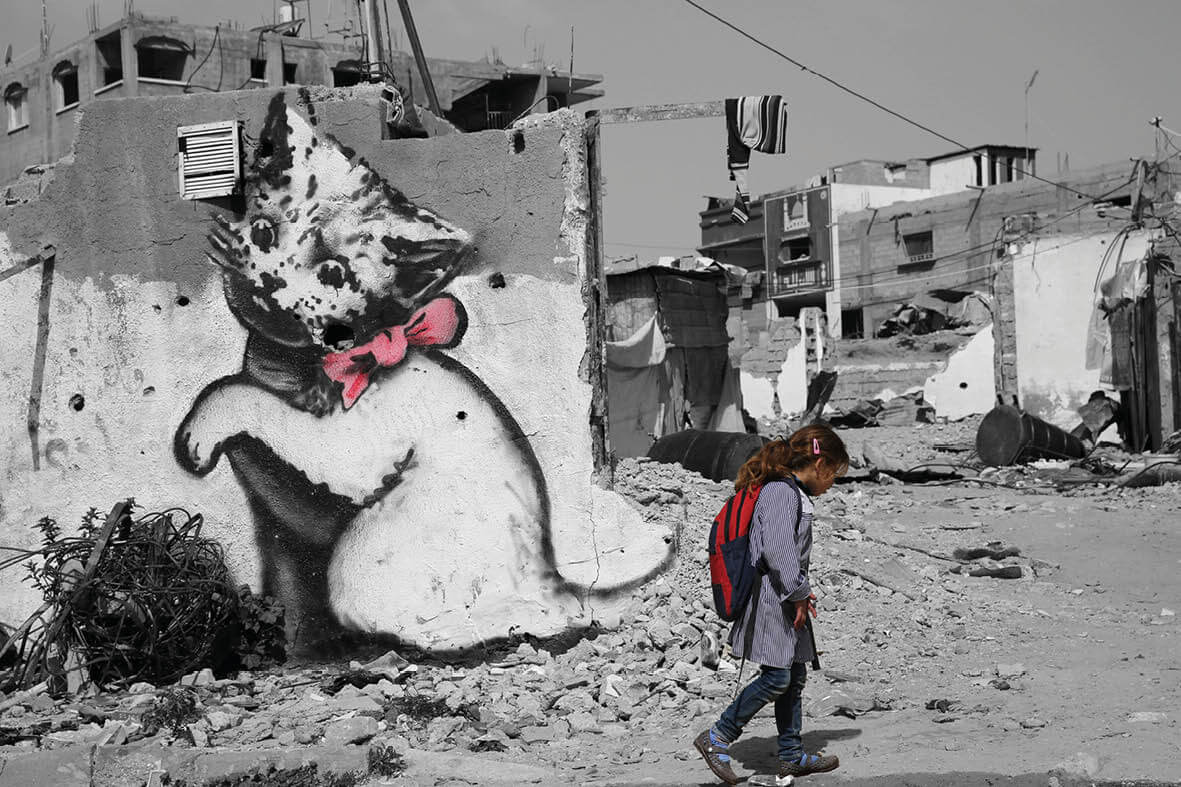
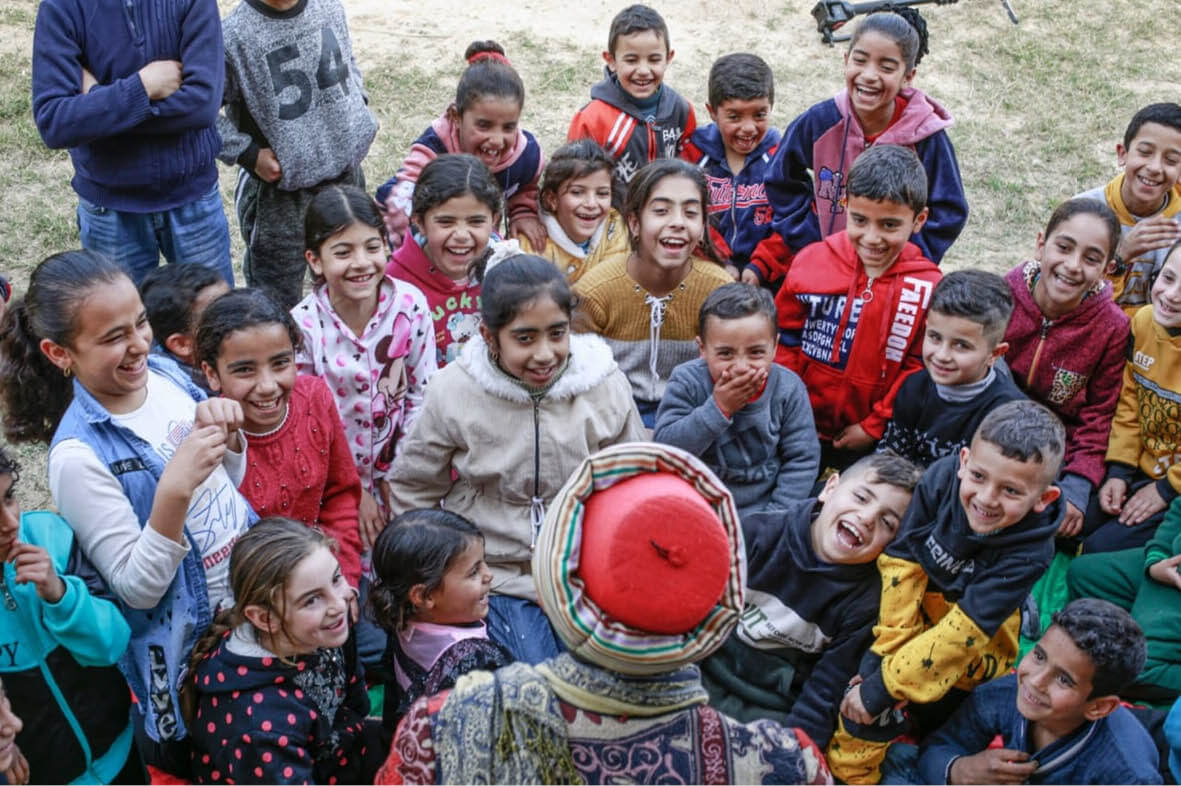
This reproduction unfolds not in abstraction but in the density of everyday relations, whether within crowded and makeshift tents, among extended kin, or through routines shaped by successive displacements. The Nakba appears not only in narrated memory but in practice: in the distribution of food, the gathering of children, and the collective weighing of decisions under constraint. Religion surfaces less as formal doctrine than as invocation, through phrases spoken to steady fear or frame moral choice.
Palestinian mothers inherit an oral tradition born of displacement: Stories told in dim circles of light were never mere diversion but orientation. They impose coherence on rupture, transmit injustice as memory, and teach endurance as practice.
Within this social structure, women play a central role in sustaining everyday life and continuity. Care unfolds in preparing food, tending to children and elders, sustaining kinship ties, and telling stories at night when children cannot sleep under bombardment, on quiet summer evenings, and in the pauses between uncertainty and fear. Storytelling steadies, anchors, and sustains them. Through these practices, values and histories persist even as homes and neighborhoods are repeatedly destroyed through prolonged processes of ethnic cleansing and, today, genocide. Under recurrent attack, it is through such ordinary acts that continuity is secured. Care thus operates as a deliberate social practice within which Gazans live, and endure, an ongoing Nakba.
In Mustafa Al Nabih’s film From Ground Zero, documenting life in Gaza since the start of the offensive on October 7, 2023, a short video titled Offerings invokes the Arabic word qurban (قربان), which means “offering” and carries a deep resonance of sacrifice. The protagonist, Diana El Shinawi, is a writer and novelist featured in the video. She had long sought to write a novel outside the traditional Palestinian narrative, focusing instead on everyday life, its passions, hopes, and love. After October 7, Diana began to question whether such storytelling was still possible, as the daily struggle to survive and care for her family consumed every moment. Her experience illustrates how the ongoing Nakba shapes not only material life but also narrative and imaginative life: the act of writing itself becomes inseparable from survival, memory, and the transmission of collective history. In this context, Diana assumes a profound responsibility as a writer who not merely tells her own story but also writes to support others, to safeguard their memories, and to give voice to lives threatened by erasure. Through the stories that she tells the children of her extended family, she restores continuity and identity, ensuring that the new generation inherits historical memory of their roots, understands their history, and carries the weight of the struggles they have endured and continue to endure. In this sense, storytelling becomes an act of defiance, resilience, and political responsibility: a refusal of erasure, a means of reclaiming humanity, and a way of continuing to live, care, and assert meaning under conditions designed to negate all three. Yet even as stories preserve memory, the realities of daily life in Gaza grow ever harsher.
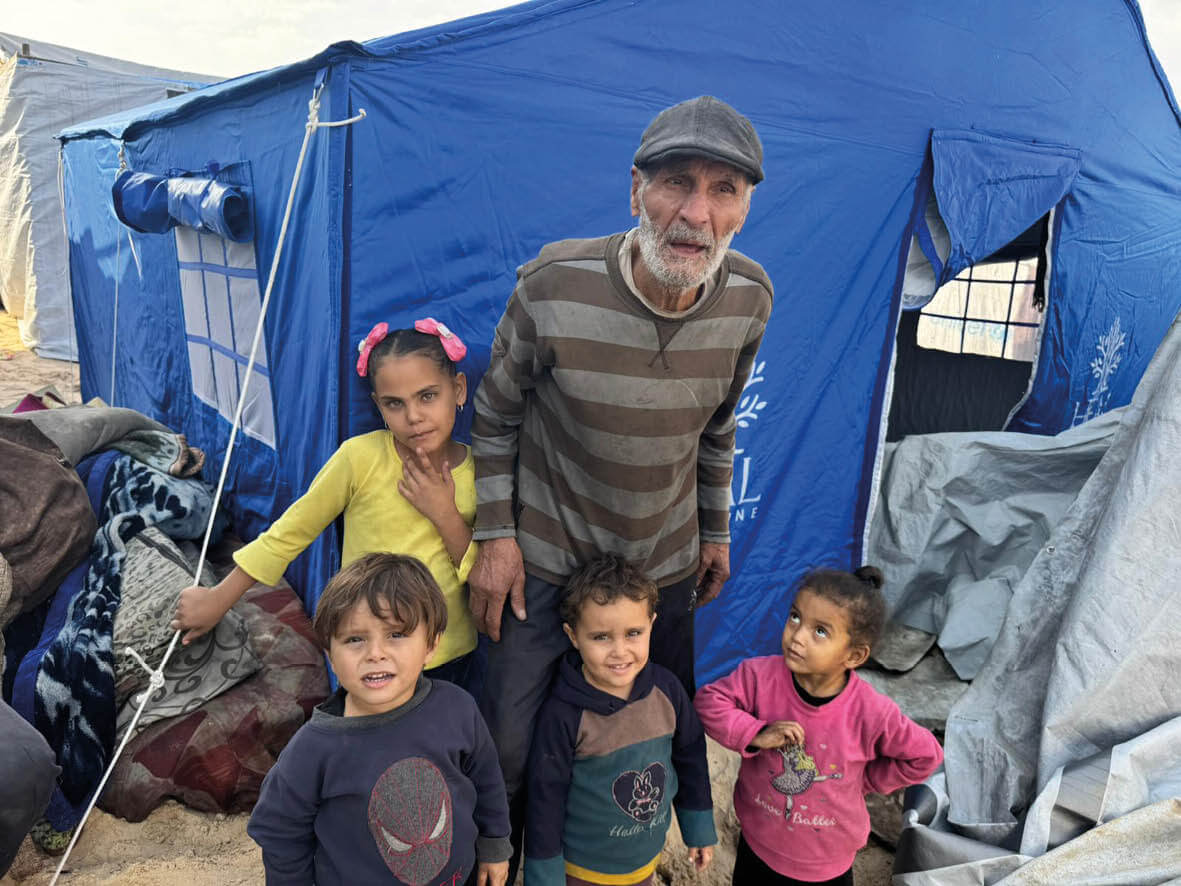
Since October 2023, unemployment has reached unprecedented levels, and many households have been partially or entirely dismembered. Diana herself has lost friends, relatives, neighbors, and most recently her father, killed amid relentless bombardment. What wounds her most is not only the loss itself, but the way the dead are reported: reduced to numbers, stripped of names, stories, and humanity, a dehumanization that echoes the ongoing violence, ethnic cleansing, and genocidal policies endured by Palestinians. When Israel’s minister of defense, Yoav Gallant, declared on October 9, 2023, that Israel was fighting “human animals” and announced a “complete siege” on Gaza, the statement articulated in stark terms a dehumanizing logic that has long structured Israel’s political imagination of Palestinian dispossession.4
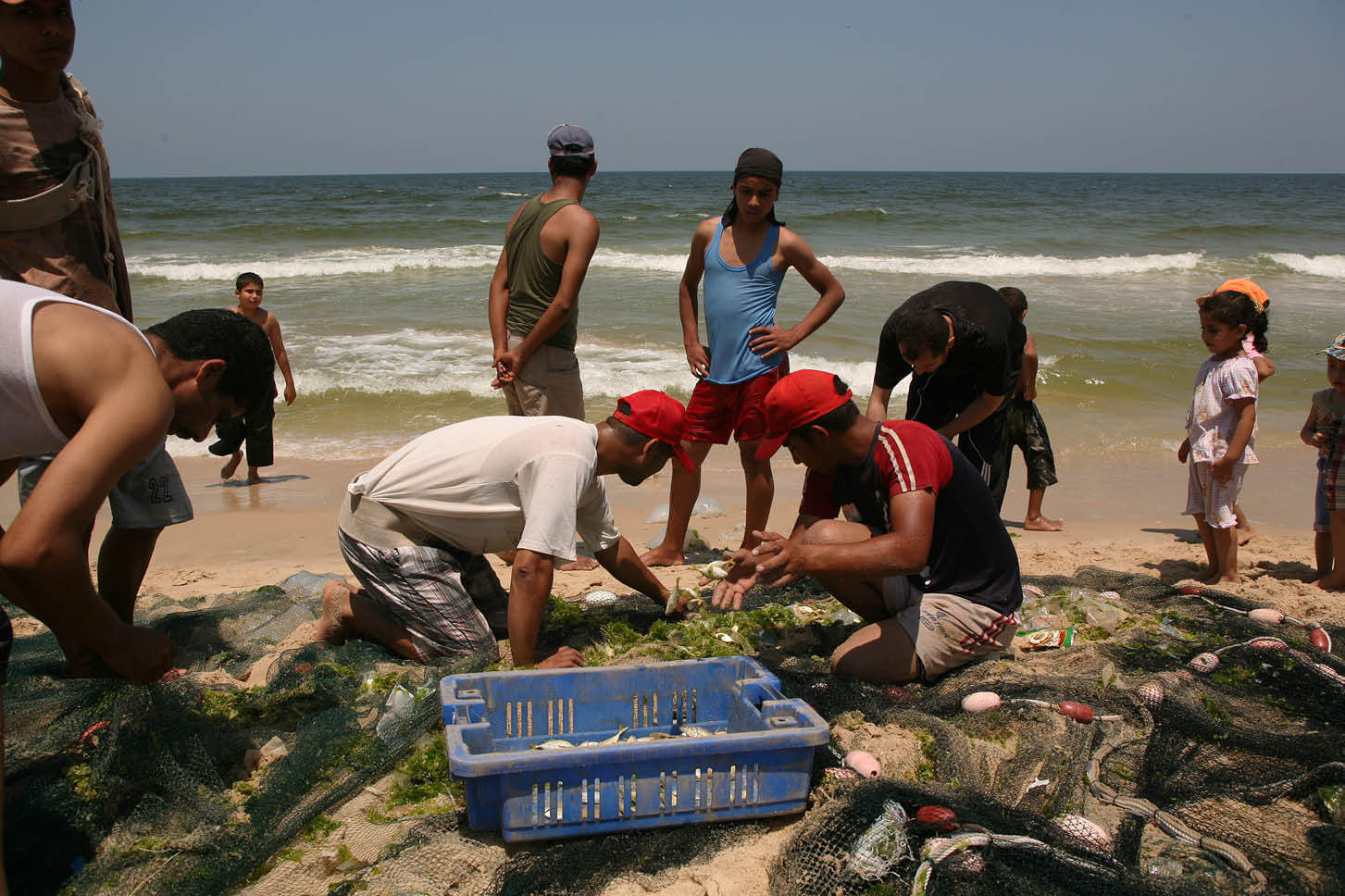
And yet, people forge a modus vivendi under impossible conditions. Entertainment was always limited, particularly for the poorest, and the seaside promenade, the corniche, remained one of the few places where people could walk, meet family and friends, drink coffee, and breathe. During the first Intifada, the sea was off-limits, a scar etched deep in collective memory. For many families, access to the sea was not just leisure but livelihood: Before the war, fishing supplied a vital source of food and income, and people would venture out despite persistent naval limits and danger.5 Gazans hoped that pauses in bombardment, ceasefires, would permit a return to the water, yet military bans and naval restrictions have frequently persisted, rendering swimming, fishing, and simple presence at the shore prohibited and perilous.6 These conditions expose a regime in which even the most elemental sustenance and the most modest forms of reprieve remain subject to control and denial.
The destruction of residential compounds in 2014 forced many nuclear families back into extended households, intensifying overcrowding and economic dependence. Subsequent military assaults compounded these pressures, but since October 7, 2023, the scale has shifted dramatically. When Israeli authorities ordered residents of Gaza City to move south, many refused, choosing the risk of death over renewed exile. Having endured repeated displacement, Gazans do not experience the Nakba as distant history but as an ongoing condition, transmitted through testimony and daily practice. For the youngest generation, past and present collapse into a single catastrophe; the Nakba persists through recurring loss and the struggle to remain.
The devastation of homes and infrastructure has displaced families yet again and, in some cases, erased entire lineages. The sharp rise in orphans, widows, and widowers is restructuring family life at speed, placing genealogical continuity under threat even as it reveals and reinforces the resilience and interdependence that sustain daily existence. In these conditions, shared meals and acts of care continue to anchor memory and belonging amid profound loss.
This latest assault is not a rupture but an intensification. It deepens an existing structure of dispossession, layering new destruction onto accumulated trauma. As new fractures tear through kinship and memory, the social fabric itself is targeted. As roughly 70 percent of those killed have been women and children, and many are still buried beneath rubble, the violence strikes at the core of continuity: care, lineage, and generational continuity.
To call this a “second Nakba” implies sequence; what persists is continuity. This is the acceleration of an unfinished historical process that has long organized Palestinian life around displacement. Erasure operates materially and generationally, threatening the transmission of belonging itself. A prior social world has collapsed; under conditions of genocide, survival depends on the reconstruction of memory and relations within the ruins.
In the midst of the debris of a collapsing social order, Diana smiles, sings, and tells stories to the children of her extended family. What once filled ordinary evenings has become deliberate practice, a way of asserting life and presence amid destruction. When she recounts the Nakba, her narration is an act of reclamation that restores continuity to a past that violence seeks to fragment. In speaking, she interrupts erasure, reclaims stolen sequence, and affirms historical presence.
Through storytelling, Diana becomes a chronicler of an ongoing Nakba, linking 1948 to the present and weaving survival and resistance into the ordinary rhythms of daily life. For a generation that is confronting displacement, orphanhood, and the erosion of early memory, the Palestinian narrative is not symbolic; it is existential.
Alongside mothers and grandmothers who sustain memory within the home, a new generation of narrators has emerged in digital spaces. Writers such as Refaat Alareer used social media and English-language writing to document life under siege and to mentor others to tell their own stories.7 In doing so, they carried the intimate work of remembrance into the global public sphere, transforming digital platforms into sites of testimony, pedagogy, and resistance.
In Gaza, survival is forged through sustained human agency under siege. Women and families sustain life through storytelling, care, and shared responsibility. Even in conditions designed to fracture continuity – or erase entire families from official records – life is rebuilt through practical acts of care and attention. Feeding, teaching, sheltering, and narrating are ways in which society reproduces itself. Through these everyday practices, collective memory outlives destruction and restores what violence seeks to erase.
This continuity is inscribed in Diana’s own family history. Her grandfather Khaled was expelled from Yaffa in 1948 and sought refuge in Gaza, living first in tents and later in cement housing, likely in Shati camp. Generations later, after October 7, 2023, Diana and her relatives were displaced once more, forced from Gaza City to the south and living again in tents that recall 1948. In recounting this history, she teaches the children that violence targets not only bodies but memory as well, seeking to sever their connection to Yaffa and to origin itself. Yet memory endures. No refugee from Yaffa – or from any city or village – renounces the right of return.
It is precisely here, under conditions of war, that women’s labor exceeds the provision of bread. Women defend identity, transmit intergenerational memory, and safeguard the narratives that bind a people under threat of erasure. History becomes a form of sustenance: Through repetition and retelling, family stories sediment into a collective record. Gaza’s memory circulates in songs, gestures, scents, and shared silences; individual suffering is absorbed into historical consciousness rather than disappearing. It persists, insisting on continuity.
1 Individuation refers to the process by which a person becomes recognized as a distinct individual with a coherent identity, often shaped in relation to family and social structures.
2 Commensality is the practice of eating together, which reinforces social bonds, kinship, and cultural norms through shared meals.
3 Marcel Mauss’s The Gift (1925) describes the gift as a system of obligatory exchange that creates social bonds through reciprocity. Gifts are both material and moral, linking individuals and groups in networks of obligation and solidarity, a useful framework for understanding relational support in contexts of displacement.
4 Quoted from Reuters, “Israel imposes ‘complete siege’ on Gaza as it battles Hamas,” October 2023.
5 Gaza’s fishing sector was once a key source of nutrition and livelihood but has been devastated by blockade and destruction of infrastructure and boats, with access increasingly restricted to only meters from the shore.
6 Even during temporary ceasefires, Israeli military orders and naval restrictions have severely limited Gazans’ access to the sea, putting fishermen at risk and causing injuries, deaths, and the near collapse of maritime livelihoods.
7 Sulaiman, Mohammed, and Yousef M. Aljamal, “Witnessing Genocide: A Biographical Narrative of the Israeli Assassination of Dr. Refaat Alareer, Gaza’s Grand Narrator and Decolonial Intellectual,” Journal of Holy Land and Palestine Studies 24(2), 2025: 181–203.
Elena Qleibo-Kogan is an anthropologist, diplomat, and writer who has lived in the Middle East since 1987. Her research was the body for her PhD doctoral thesis at the University of Bourgogne Franche-Comté, in November 2017, published in a book entitled S’en sortir sans sortir, Ethnographie de la vie quotidienne sous le blocus, Éditions le Croquant. She is continuing her research on Gaza social transformations virtually. Elena has worked in Jordan, Iraq, Syria, Lebanon, and Venezuela as a humanitarian professional and negotiator.
