


By Jason A. Terry
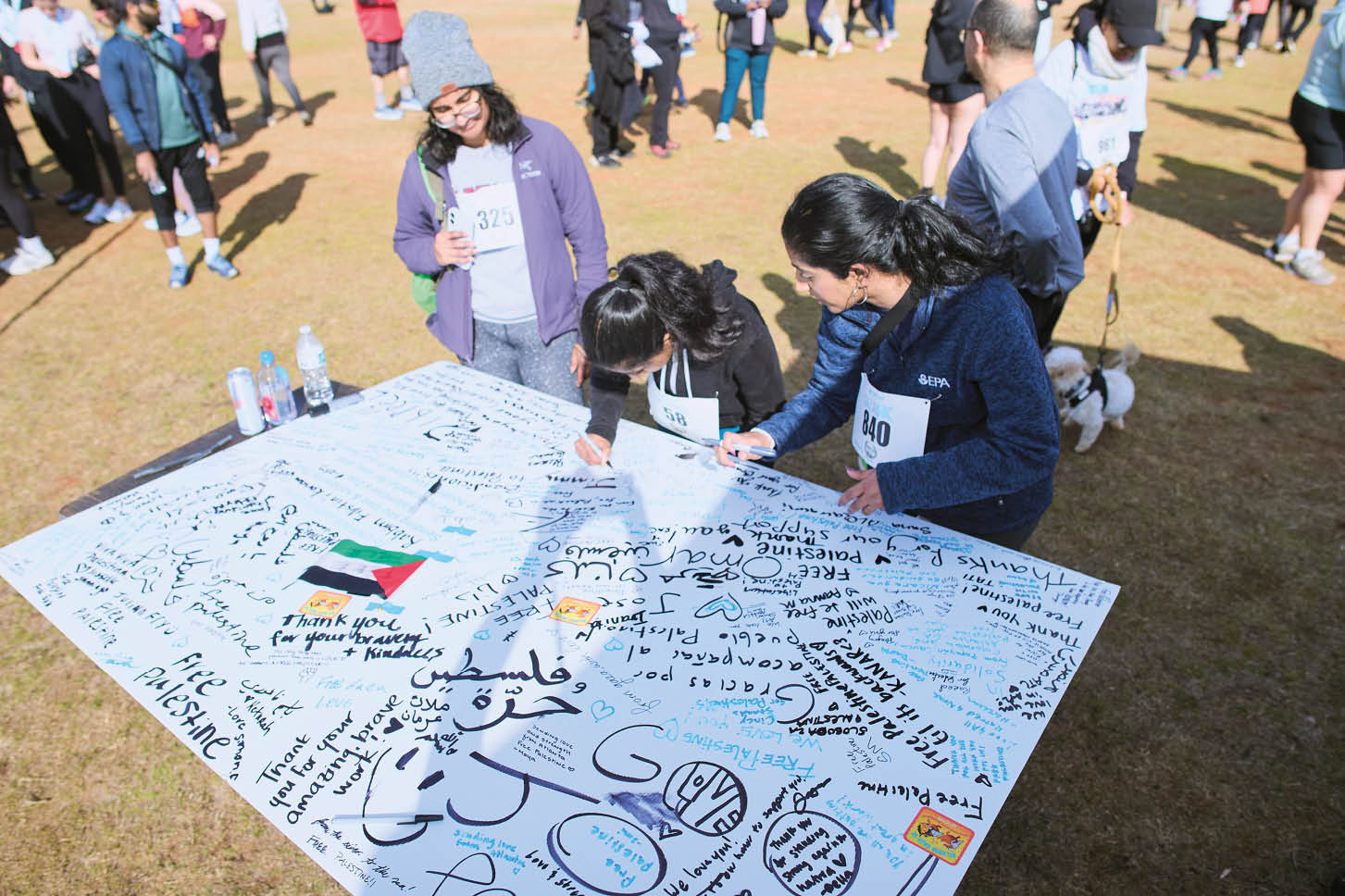
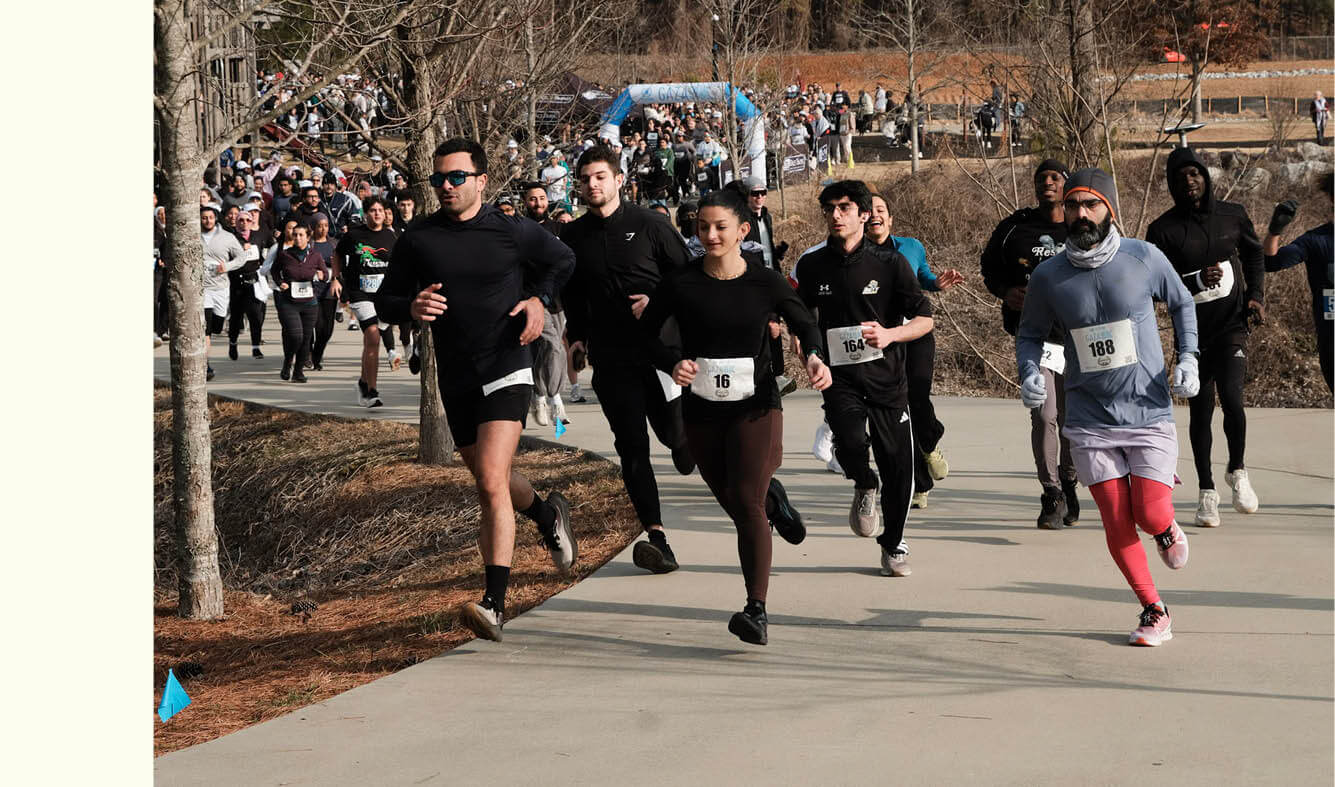
On a cold Valentine’s Day morning in Atlanta, Georgia, over 1,200 people gathered to carry on what is now a 14-year-old tradition – though they didn’t know it. To them, the UNRWA USA Gaza 5K was a new experience, never before seen in their city. To those of us behind the scenes, the Gaza 5K is a fundraising event that UNRWA USA brings to a number of cities across the United States each year; it is also a labor of love that brings us closer to the large communities of Americans who support our mission.
The Gaza 5K supports mental health care services for refugee children served by UNRWA in the Gaza Strip. For many years, UNRWA’s mental health and psychosocial support program was run out of its schools, with counselors – all of whom are Palestine refugees themselves – providing one-on-one sessions, group sessions, and outreach to parents and caregivers.
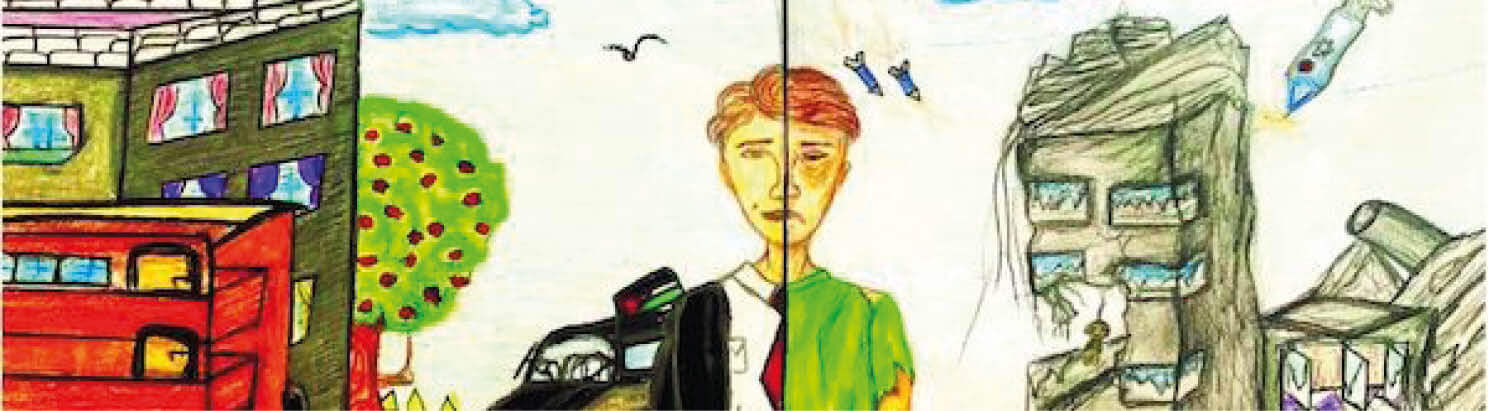
For decades, Palestinian children in Gaza have been deprived of a normal childhood. Today, a 15-year-old child in Gaza has already lived through five wars in their short lifetime. For the last nearly three years, growing up has been an unending horror show. The youngest children – just toddlers – have faced bombing, famine, and fear their whole lives.
At the Atlanta Gaza 5K, participants came from all walks of life. Maybe the word Gaza made them sign up. Maybe it was the word refugee. Maybe they wanted to burn some calories for a good cause. Or, maybe they just wanted to feel the joy of community. For those who advocate for the rights of Palestinians here in the United States, community sometimes feels like it’s all we have left.
US government policy toward Palestine since 2023 has wound a bipartisan path from enabling atrocity to humanitarian complacency. In the halls of power in Washington, DC, even the pretense of including Palestinian voices in conversations about Gaza’s future has largely disappeared. With the stroke of a pen, President Joe Biden froze all US government funding to UNRWA in January 2024. His successor, President Donald Trump, has reinforced that policy. Suddenly, the largest annual monetary contribution to the largest provider of humanitarian aid to Palestine refugees, over $300 million each year – peaking at $420 million in 2023 – was gone.
At UNRWA USA, a small nonprofit with only about 15 people on staff, the mission is simple: Do what we can to uplift the lives and livelihoods of Palestine refugees through the vehicle of UNRWA. In the last 30 months, donations have poured in from over 200,000 ordinary people, almost all of whom are in North America.
The Gaza 5K has become a huge event, with over 5,000 people running in New York City last fall, including Zohran Mamdani who is now the mayor. Celebrity voices such as Macklemore, Susan Sarandon, Mark Ruffalo, and Stephen Colbert and his staff through a donation from their Americone Dream Foundation (a partnership with Ben and Jerry’s Ice Cream), have offered their advocacy and their generosity. As multiple domestic crises unfold in the United States, more and more people are seeing the links between Palestinian oppression abroad and the oppression of marginalized groups here at home. If community is all we have left, at least that community is bustling with strength, energy, resolve, and fortitude.
If community is all we have left, then each of us must do what we can. That community will deliver hope. And one day soon, it will deliver freedom.
That community has enabled UNRWA USA to contribute over $81 million to humanitarian relief efforts in Gaza since October 2023. Of that, several million dollars have gone to support UNRWA’s mental health work in Gaza. The counselors are heroic. Through their own displacement, hunger, and loss, UNRWA’s school counselors have been working almost daily for the last 30 months to bring some semblance of calm and care to children living through unimaginable trauma. These counselors have circulated through schools-turned-shelters, conducted group sessions amid tents, and worked tirelessly using methods such as play and art therapy to help children process the horror of growing up in what experts agree is a genocide.
Some are surprised to learn that UNRWA is one of the largest providers of mental healthcare in the Gaza Strip. A team of 236 counselors, supported by 300 assistant counselors, have conducted over 340,000 mental health sessions since October 7. During that time, over 520,000 children have been reached through these services, along with another 210,000 adults.
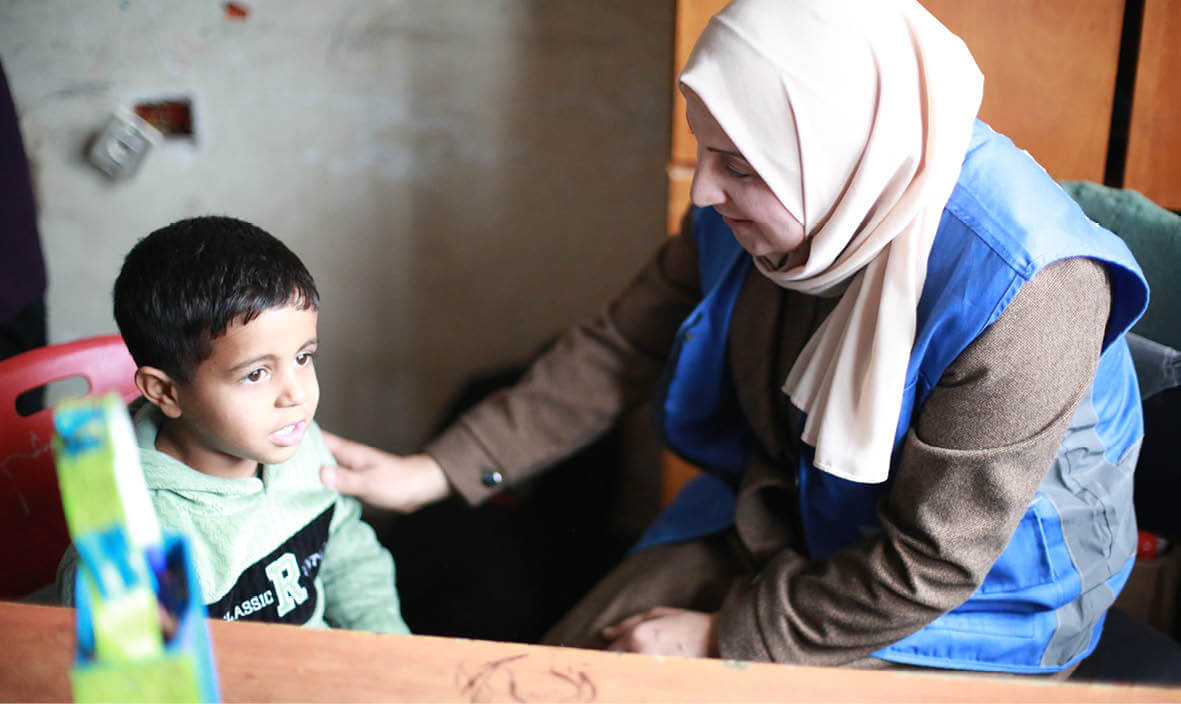
An additional 49 psychiatrists, psychologists, and counselor supervisors address more serious cases that require individualized care. When not providing direct care, UNRWA’s mental health team bolsters community awareness through information sessions on parental management of child psychosocial stressors, protecting women and children from gender-based violence, and caring for people with disabilities and special needs in a period of protracted displacement.
The last uninterrupted period of schooling in Gaza was the first six weeks of the 2023–2024 academic year. According to 13-year-old Omar, “School stopped, fear replaced safety, and many things I loved disappeared.” For many months, the only “lessons” offered were warnings about unexploded ordnance. UNRWA counselors worked quickly to fill in the gaps, organizing group activities, creating play time, and helping children try to make sense of the devastation being imposed on them.
Rana is one of UNRWA’s school counselors in Gaza. While working with a young student, she shared, “Psychosocial support is not an addition to education in times of crisis – it is its foundation. When children arrive at school carrying fear, displacement, and memories of violence, learning cannot begin until they feel safe, seen, and understood.” UNRWA began a limited Back to Learning program in October 2024, but expansion was difficult until the two-month ceasefire in early 2025. When that ceasefire was unilaterally broken, children again experienced interrupted education and compounding mental health impacts. The tools of genocide – indiscriminate killing, repeated forced displacement, famine and malnutrition, and deprivation of healthcare – fall most heavily on children. Gaza has the largest number of child amputees anywhere in the world.
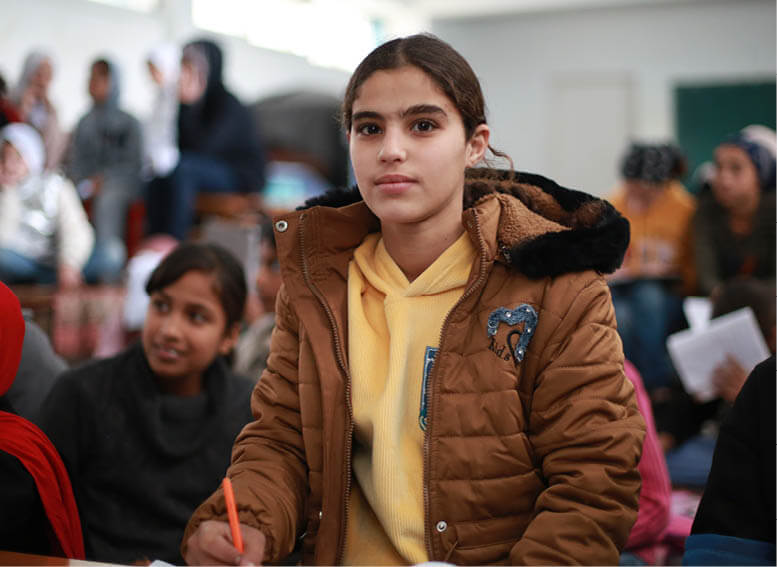
With another so-called ceasefire in place, UNRWA’s Back to Learning efforts are now moving at scale. Temporary learning spaces in 75 shelters now serve around 65,000 students each week for in-person instruction. An additional 280,000 students are served through UNRWA’s Digital Learning Platform, supported by 7,500 teachers who stay in touch with their students via WhatsApp. Printed self-learning materials are distributed to students enrolled in online instruction so they can keep up with their studies.
Shahed, an eighth-grade student whose father was killed early on, shared about her UNRWA counselors: “They encouraged me to join activities and school celebrations, and over time, I began to feel safe and hopeful again. Today, I attend school and psychosocial sessions regularly, and I even support my friends and family when they face challenges. Their guidance has taught me to manage my emotions, communicate better, and embrace life with courage.”
It’s not just students who receive mental health support. UNRWA counselors also support parents and teachers in identifying signs of distress in children who are facing constant trauma. Living in temporary shelters is in itself a stressor on children and adults alike. Maher, who serves as an UNRWA mental health focal point, describes the agency’s holistic approach: “We address multiple dimensions of well-being, including building self-confidence, emotional expression, and anger management, and improving communication and social skills.”
Young Omar puts it more succinctly: “Returning to school has given me hope again.”
Back in Atlanta, children at the Gaza 5K were playing a trivia game to learn more about Palestine and UNRWA’s essential role since the Nakba. Winning a sticker or a pin designed by a Palestinian artist helped them feel more connected to the cause. Their parents and caregivers, meanwhile, were writing letters to their members of the US Congress, demanding a restoration of government funding to UNRWA. And when the children learned that they were there to help care for their peers in Gaza, many put on a serious face and pledged to do what they could to be supportive.
Davis, one of the children participating in the Gaza 5K, raised over $1,000 from his family and friends for the event, saying humbly, “I learned something and I wanted to do something about it.”
That is, ultimately, all we ask of anyone who joins us in supporting Palestine refugees: to take up the mantle of community, stewardship, and care. It’s never too late to join in, and no action is too small. Whether you’ve got a spare $5 to donate to the cause, or you’re sitting on $500,000 and are thinking about your legacy here on earth, it’s all needed. Elected officials the world over, but especially in the United States, need to keep hearing from us.
Jason A. Terry is vice president of programs at UNRWA USA, a nonprofit organization dedicated to showing Palestine refugees that Americans care. To learn more and get involved, visit www.unrwausa.org.
