


By Deema Ershaid
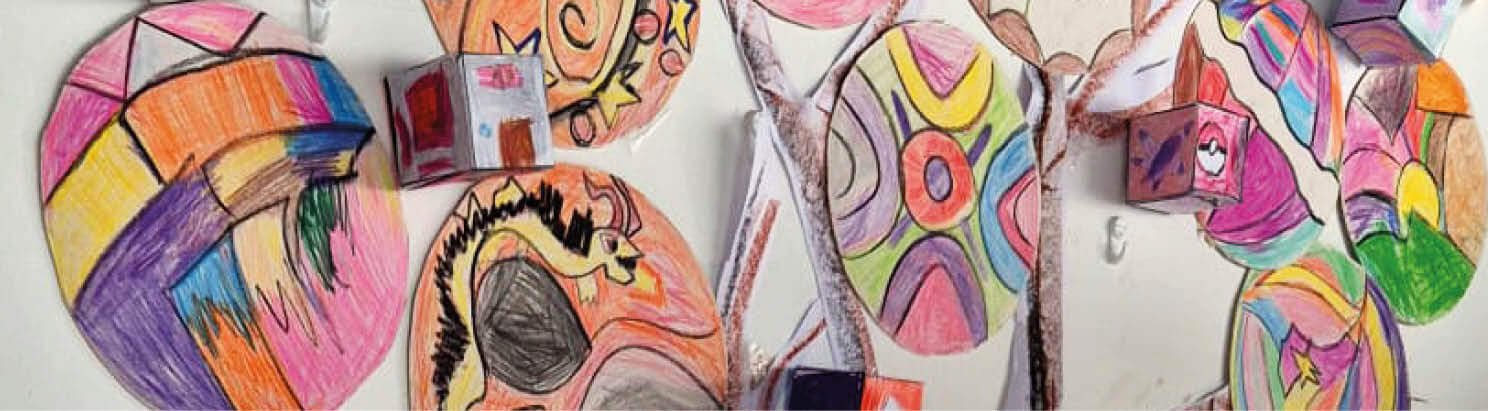
In Palestine, children learn very early that the world can shift without warning. A road closes, a wall appears where none stood before, a night becomes too loud, even the ordinary can become uncertain. And yet, in the middle of all this, children continue to do what children have always done: They imagine, they play, they notice, they invent. Give a child a pencil, a piece of clay, a brush dipped in color, or a wall to paint, and something begins to open.
This is why art matters so deeply in Palestine. It is not simply an extracurricular activity, nor a luxury to be postponed until life becomes easier. For many children, art is a language before it is a discipline; it is a way of saying what cannot yet be said clearly, or what feels too large, too complicated, or too fragile for ordinary speech. Through drawing, painting, crafting, printing, and making, children do more than create images; they make space for themselves inside a reality that often leaves too little room for childhood.
A child may draw a house, a tree, a road, a bird, or a face. To an adult, these may seem like simple subjects, but in the hands of a child, they can carry entire emotional worlds. A line can hold hesitation, a color can carry longing. Sometimes, children draw what they see; at others, they draw what they miss, and sometimes they draw the world as they wish it could be. Art allows all of this to exist at once, it does not demand that a child explain everything. Art gives form to what is felt, remembered, feared, or hoped for. In Palestine, this matters profoundly. Childhood here is too often described only through the language of hardship. Children are seen as vulnerable, burdened, anxious, and exposed. These descriptions are real, but they are incomplete. A Palestinian child is not only someone affected by difficult circumstances; a child is also a maker of meaning, a storyteller, an observer, a dreamer, and, when given the chance, an artist.
The understanding of art’s vital role has shaped the work of the Visual Arts Forum (VAF) from its very beginnings. During the second Intifada, Palestinian artists began organizing street and public art activities across villages and cities in the occupied West Bank. Art moved out of conventional spaces and into direct contact with children and youth. It became a way to express, release, gather, and connect. In those moments, children were not asked only to endure what was happening around them; they were given ways to respond to it, to mark it, and to speak through it. Out of that spirit, and out of a clear community need, the Visual Arts Forum was established in 2002 under the slogan “Art for All.”
That history still matters, reminding us that art education in Palestine did not emerge only as a cultural project, but as a human one. The forum was built on the belief that art can be part of daily life, part of social life, and part of how children learn to see themselves and the world around them. Art was understood as a means of communication, a way of strengthening identity, and a way of building a more vibrant relationship between the individual and the community.
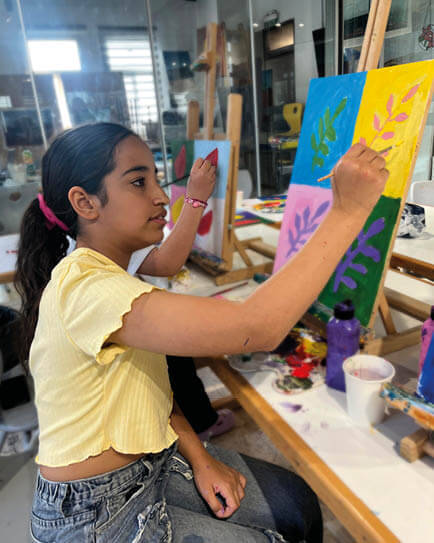
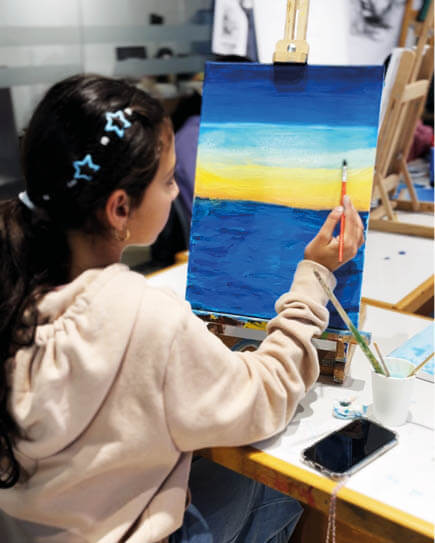
At VAF’s School of Visual Arts, children are not treated as empty vessels waiting to be filled with technique. They are approached as individuals with their own feelings, talents, observations, and inner landscapes. For younger children, learning art is closely connected to play, storytelling, movement, music, and imagination. The goal is not only to teach them how to hold a brush or mix a color but also to help them trust their expression. As children grow, they are encouraged to experiment, observe more closely, and develop their own visual language. Technique matters, of course, but so does confidence, curiosity, and voice.
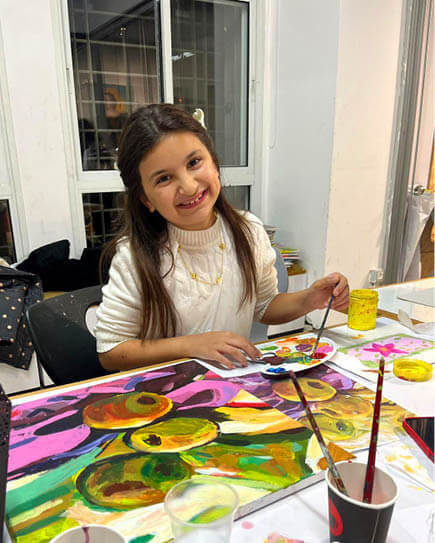
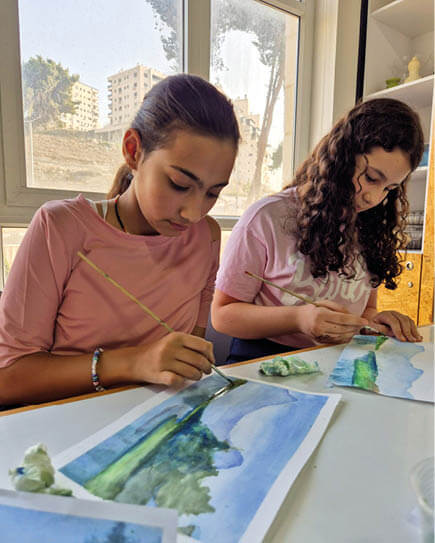
This is one of the powers of art: It teaches children not only how to make but also how to see. A still-life drawing teaches patience and attention. Watercolor teaches sensitivity to tone and mood. Clay teaches form through touch and transformation. Public art teaches collaboration and collective presence. These are artistic lessons, but they are also life lessons. They strengthen concentration, decision-making, and the ability to remain present in a task. They teach children that their choices matter, that where they place a line, how they shape a form, and what image they bring forward all have meaning.
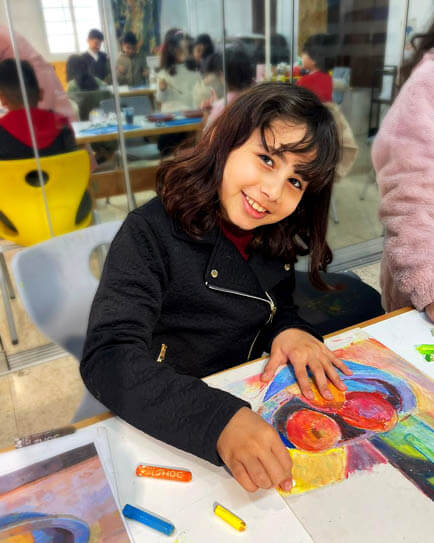
However, art does something else as well, especially in the Palestinian context. It gives children a way to process reality without being trapped inside it. Not every child can speak directly about fear, grief, confusion, or anger. Sometimes words arrive too late, or not at all. Art offers another path; through art, a child can approach difficult feelings indirectly, safely, and honestly. This does not mean that every artwork should be read as a symptom of pain. Children also make fun and playful art and, most of the time, surprising unconventional art. They experiment and invent entire worlds.
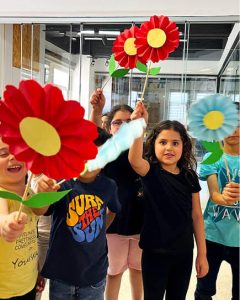
Over the years, this has become one of VAF’s core programs: using arts-based work in psychosocial support; believing that art can create a safe, nonverbal space in which children begin to release tension, process emotion, and reconnect with themselves and with others. Through drawing, collage, clay, painting, movement, and reflection, children are offered the chance to be present, expressive, and seen. In a reality where so much is interrupted, these moments become forms of continuity. They help children feel that something inside them can still move, still grow, still take shape.
Public art holds a special place in this process. When children paint together on a wall or take part in a community-based artistic activity, their ideas become visible to the wider community, as a child’s imagination takes on public presence. In a place where public space is often burdened or fractured, this has its own power. It says that children belong not only in private, protected spaces, but in the life of the community. It says that they, too, have something to contribute to the visual language of a place.
What matters when we encourage and support children in creating art is not only the activity itself, but also what it makes possible. A child in an art session is not merely being occupied. That child is practicing attention, expression, and trust in their own hand, their own eye, and their own interpretation of the world. They are learning that they can make something, that they can choose, that they can respond. For children living in conditions where so much is outside their control, this matters enormously.
Palestinian children engage culture not only by inheriting it, but by living and reshaping it through art. In their creative work, they reflect both the tangible and intangible elements of Palestinian life: olive trees, landscape, embroidery, grandmothers’ stories, weddings and funerals, memory, language, and forms of belonging tied to place. Yet this vibrant culture is not expressed only through traditional forms; it is also translated into the language of the present through illustration, photography, digital practices, and other contemporary modes that are shaped by technology and today’s speed and realities. In this way, children’s artistic expression carries both cultural memory and the pressures of the occupation, transforming them into something personal, alive, and newly imagined.
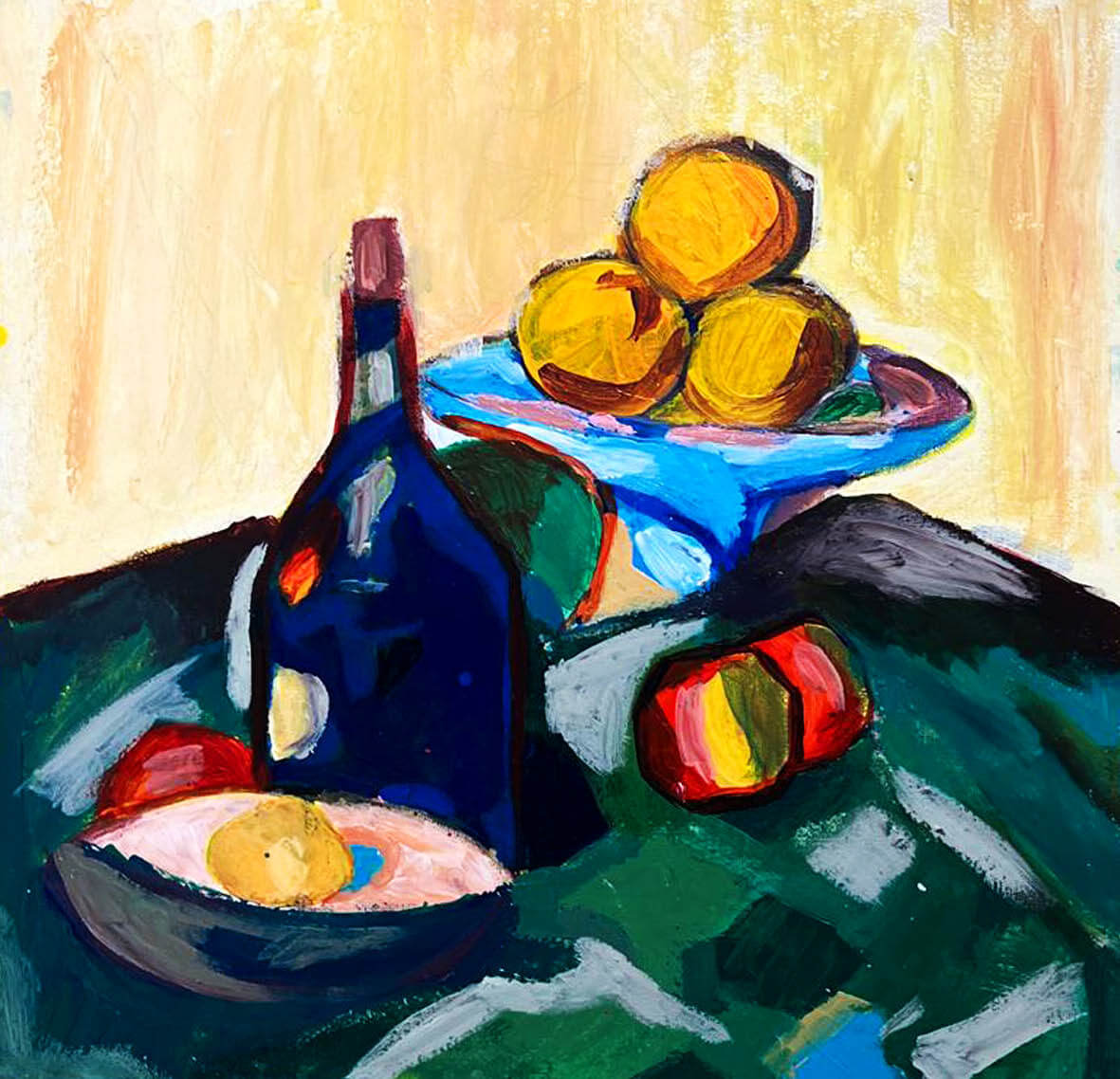
For this reason, art should never be treated as decorative or secondary in the lives of Palestinian children; it is part of what education should be. It develops perception, confidence, discipline, imagination, and the ability to give form to feelings. Through VAF’s programs, we create space for dialogue, connection, and emotional expression, allowing children not only to reflect the world around them, but also to respond to it creatively and on their own terms.
Art does not erase hardship, but it offers children moments of freedom within constraint and presence within fragmentation. In the hands of Palestinian children, art becomes more than expression; it becomes a way of sustaining culture, affirming identity, and insisting on life.
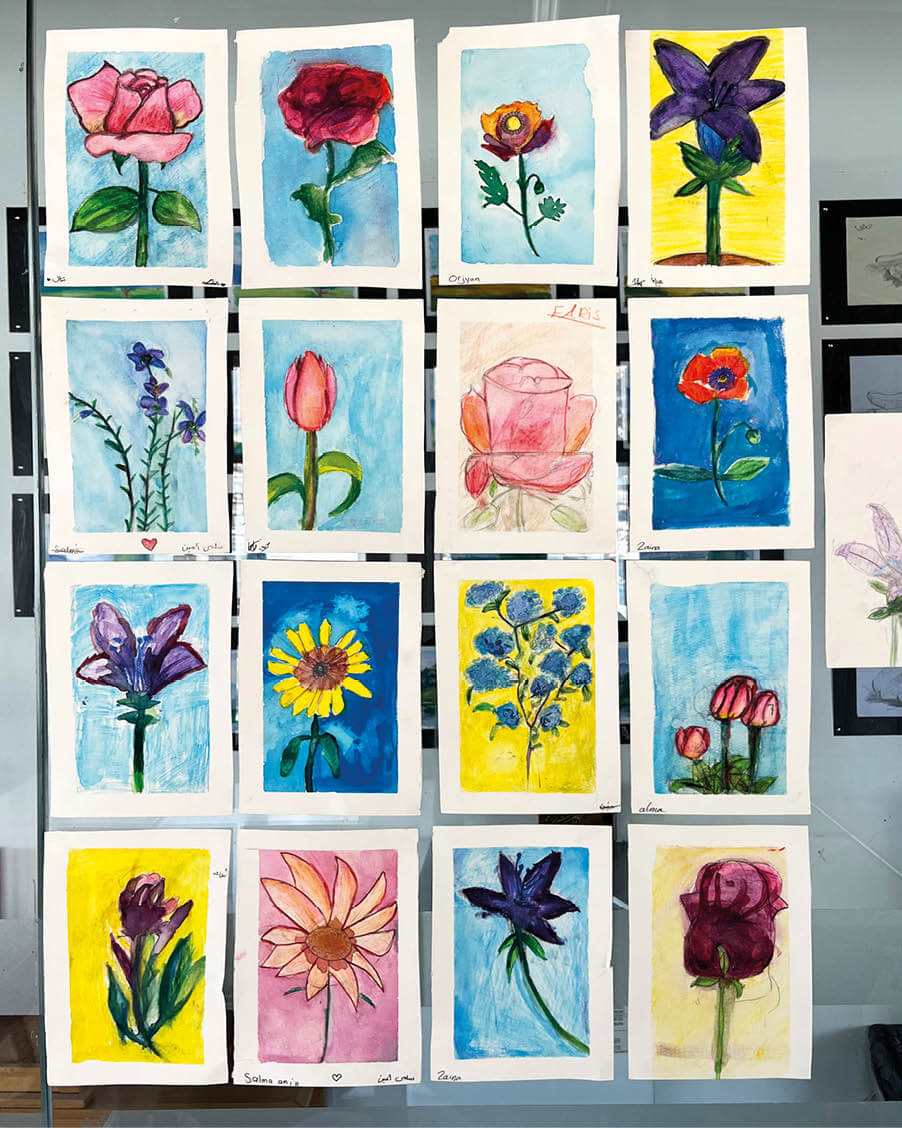
In a context where so many forces attempt to narrow a child’s horizon, art insists on expansion. It protects something essential in childhood: the right to wonder, to experiment, and to make meaning.
Deema Ershaid is the executive director of the Visual Arts Forum (VAF), a Palestinian contemporary art institution based in Ramallah since 2002. Through its School of Visual Arts and wider cultural programs, VAF creates spaces for learning, producing, creativity, cultural exchange, and critical expression for children, youth, adults, and artists
