


By Georgette Hazboun Rabadi
On a cold winter morning in Jerusalem, a young teacher stands at a checkpoint along the apartheid wall before sunrise. In her bag are lesson plans, graded papers, and a children’s story about olive trees. In her heart is a simple intention: to reach her classroom. Yet she waits, uncertain whether she will be allowed to pass. Behind her, dozens of Palestinians stand in long, quiet lines, hoping to cross in time for work. In front of her, an impersonal system determines whether she may teach her students. I remember my own mornings there, standing shoulder to shoulder with crowds before dawn, all of us carrying responsibilities that could not be postponed.

As Interim Dean of the Faculty of Education at Bethlehem University, where nearly 60 percent of our students across our bachelor’s and master’s programs come from Jerusalem, I witness the impact of this struggle every day. Our students, 90 percent of whom are women, do not simply study pedagogy; they navigate a fragmented landscape of permits, licensing systems, financial instability, and political uncertainty. For many of them, becoming a teacher is both a calling and a risk.
Education under occupation has long been recognized as particularly vulnerable. UNESCO affirms that the right to education must be protected during conflict and occupation and that education should safeguard cultural identity and human dignity.1 Yet in Jerusalem, the Palestinian curriculum – an expression of collective memory, history, and national identity – faces growing pressure.
In recent years, Israeli authorities have required changes to Palestinian textbooks used in Jerusalem schools, removing references to Palestinian history, geography, and national symbols, often under the justification of preventing incitement. For many Palestinians, recalling their culture, history, and identity is increasingly framed as a political threat. According to reports by Human Rights Watch and Palestinian educational organizations, revised textbooks have deleted maps, removed references to the Nakba, and modified terminology connected to identity.2 The message sent to children is indirect yet deeply profound: Your story can be revised, your history adjusted, and your narrative made conditional upon approval.
This is what I have come to understand as the hidden war on Palestinian education. It is not fought with tanks or airstrikes alone. It unfolds quietly in ministries, courtrooms, and classrooms. It operates through curriculum revisions, permit regimes, funding conditions, and legal restrictions. It targets not only schools, but identity itself. And in Jerusalem, it is intensifying.
For many schools, the pressure goes further. Funding and licensing are often conditioned on the adoption of the Israeli curriculum (bagrut, the Israeli national matriculation certificate required for high school graduation, university admission, and employment, typically taken in 11th–12th grade). Private and semi-private Palestinian schools in Jerusalem face an impossible choice: Accept the imposed curriculum to secure budgets and permits, or risk financial blockage and potential closure.3 Schools that resist report delays in license renewals or threats to their legal status. This is not merely a bureaucratic adjustment; it reshapes the intellectual and emotional formation of a generation. Curriculum is never neutral. It carries narratives of belonging, memory, and future possibility. When Palestinian history is diluted or removed, students internalize a fragmented identity. Education becomes a space of cognitive dissonance, where home narratives clash with textbook silences.
Teachers, too, stand at the center of this hidden war. Many Palestinian educators living in the West Bank must obtain special permits to enter Jerusalem. These permits are frequently denied or delayed, leaving classrooms without qualified staff. Women teachers are particularly affected, having to balance family responsibilities with the unpredictability of crossing systems. The United Nations Office for the Coordination of Humanitarian Affairs (OCHA) has repeatedly documented how movement restrictions disrupt access to essential services, including education.4 Many teachers in Palestinian society are women, especially in elementary schools. Moreover, their income frequently supports their families financially, while they also care for children and elderly relatives. When salaries are delayed or permits are denied, the impact is therefore not only professional but also personal and economic. Entire families are affected. In this way, the pressure placed on education also becomes a pressure placed on women.

Recent legal developments deepen the crisis. New policies restrict graduates of Palestinian faculties of education from working in schools under Israeli municipal control in Jerusalem. Degrees earned in Palestinian universities – once a badge of professional qualification – are increasingly treated as liabilities. Young graduates ask me: “If I study here, will I be allowed to teach?” This question alone reveals the distortion of a system where education is politicized to the point of professional exclusion.
The hidden war extends beyond curricula and teachers. International institutions operating in Jerusalem – many of which provide vital services in health, social work, and education – face increasing pressure regarding licensing and operational permits. When licenses are not renewed, services are suspended. When funding channels are restricted, programs shrink. Education is interconnected with these broader institutional ecosystems. When a community center closes or a scholarship program loses legal standing, the ripple effect reaches the classroom.
Imagine a classroom where students wait for a mathematics teacher who may never arrive because her/his permit was revoked. Imagine a science lab without a certified instructor because she/he lives on the other side of a wall. Education becomes irregular, unstable, and fragile.
Meanwhile, Palestinian government schools in the West Bank struggle under severe financial constraints. The Palestinian Authority faces recurring budget deficits, exacerbated by the withholding of tax revenues collected by Israel on its behalf (in violation of signed agreements). These fiscal crises directly affect teachers’ salaries, often leaving them for many months with partial or unpaid wages, forcing strikes as a last resort. Teacher strikes in the Palestinian Authority public schools are rarely about ideology; they are about survival. Educators demand the payment of delayed salaries, fair contracts, and professional recognition. Budget shortages furthermore limit infrastructure, resources, and professional development opportunities. Political instability and restrictions linked to the occupation further disrupt continuity, often reducing teaching to only two or three days per week, a reality that impacts not only students’ learning outcomes but also teachers’ families and the economy as a whole. UNESCO and UNICEF have repeatedly warned that prolonged disruptions to schooling undermine learning, social cohesion, and children’s mental well-being.5
This struggle parallels the situation in schools run by the United Nations Relief and Works Agency, UNRWA, in refugee camps, where generations of Palestinians have already endured cycles of forced displacement and loss. Refugee camps, established as temporary shelters for those uprooted in 1948 and 1967, have long depended on UNRWA to provide essential services, including healthcare and education. Today, that fragile stability is increasingly threatened. Schools that once offered safety and normalcy are being closed or demolished, and clinics that provided basic care are no longer secure. Families that were expelled decades ago now face the risk of displacement once again, without certainty, security, or access to basic services.
In both contexts – governmental schools and UNRWA schools in refugee camps in the West Bank – the disruption of education reflects a broader reality: The ongoing occupation and structural challenges risk not only learning but also identity, dignity, and the continuity of Palestinian life. A 2025 UN report highlights how displacement, restricted access to services, and interruptions to schooling have devastating effects on children and families, amplifying poverty, limiting opportunities, and threatening basic rights.6 Whether in public schools, refugee camps, or private schools, the education system is under pressure, underscoring the urgent need for sustained support, protection, and global attention.

For our applied students – those completing their practicum in governmental schools – the situation is heartbreaking. Many of these practicum students are young women preparing to become teachers. They face uncertainty about whether they will be allowed to work in Jerusalem schools after graduation. This creates stress and fear about their future. They invest years in their studies, yet they are unsure if they will be able to practice their profession. For young women especially, this uncertainty affects career planning, financial independence, and personal life decisions. Add to this situation that these young professionals enter classrooms where their mentor teachers have not received full salaries for months. They observe strikes that interrupt academic calendars. They witness exhaustion in the eyes of professionals who still insist on teaching despite financial uncertainty. For some of our Jerusalem students, commuting itself is a daily negotiation with checkpoints and transportation barriers. And yet, despite all this, classrooms persist.
I have sat in lectures at our Faculty of Education where students from Jerusalem share stories of teaching children who ask difficult questions: “Why is our map different?” “Why did my teacher disappear?” “Why do we not learn about our grandparents’ village?” “Why does my little sister in kindergarten need a permit to pass the checkpoints? “Why can’t we go to the sea?” These are not abstract inquiries; they are the lived experience of a generation raised in contested narratives.
The Fourth Geneva Convention obligates an occupying power to facilitate the proper working of educational institutions and to ensure the welfare of children.7 Yet the cumulative effect of curriculum control, permit denial, financial pressure, and legal exclusion suggests a systematic reshaping of the educational landscape. It is a form of structural domination that rarely makes headlines but profoundly shapes futures.
Education is not only about literacy and numeracy, it is about dignity. It is about the right of a child to see herself reflected in her textbooks. It is about the right of a teacher to cross a checkpoint without fearing that her profession will be suspended by a bureaucratic stamp. It is about the right of a university graduate to practice the vocation for which she trained. And it is about giving girls and young women hope for a stable future in their own communities. Teaching has long been one of the main professions through which Palestinian women contribute to society and support their families. When education becomes unstable, women’s opportunities become unstable as well. Protecting education therefore also means protecting women’s role in public and professional life.


As an educator and administrator, I often reflect on what it means that 60 percent of our students come from Jerusalem. They carry the city’s tensions into our classrooms. They bring resilience, determination, and, at times, anxiety about their professional futures. When policies render their degrees uncertain or their practicum placements unstable, the impact is not theoretical; it is personal. The hidden war on education seeks to normalize uncertainty. It attempts to transform instability into routine. It reframes identity as a curricular error to be corrected. But education in Palestine has always been more than institutional policy; it is an act of collective perseverance.
The hidden war continues, but so does the determination to teach.

In villages and cities, teachers continue to improvise when books are altered, to adapt when colleagues are denied entry, to teach when salaries are delayed. Universities continue to graduate cohorts of educators who believe that classrooms remain spaces of possibility. Parents continue to send their children to school, even when political realities intrude on the school gate. International reports consistently affirm that quality education contributes to peacebuilding, resilience, and social stability.8 To undermine it is to weaken the very foundations of a just future. The struggle over Palestinian education in Jerusalem is therefore not marginal; it is central to the broader question of rights, identity, and coexistence.
The teacher at the checkpoint eventually passes. She reaches her classroom late, but her students greet her with smiles. She begins the lesson not with politics, but with a poem about the land. In her quiet persistence lies resistance. In her daily return lies hope.
1 Brendan O’Malley,Education Under Attack, 2010: A Global Study on Targeted Political and Military Violence Against Education Staff, Students, Teachers, Union and Government Officials, Aid Workers and Institutions,UNESCO, 2010.
2 Education Cluster: Occupied Palestinian Territory, “Education Cluster Strategy: Palestine 2020–2021” 2020.
3 International Crisis Group, “Reversing Israel’s Deepening Annexation of Occupied East Jerusalem (Report 202, Middle East & North Africa),” June 12, 2019.
4 United Nations Office for the Coordination of Humanitarian Affairs (OCHA), “Factsheet: West Bank Movement and Access Update” May 2025; UNESCO, “Education in Emergencies: Ensuring the Right to Education in Emergencies and Building Resilience in the Face of Crisis”
5 International Committee of the Red Cross,Geneva Convention (IV) Relative to the Protection of Civilian Persons in Time of War, August 12, 1949 (English text).
6 United Nations Office for the Coordination of Humanitarian Affairs (OCHA), “Factsheet: West Bank Movement and Access Update,” May 2025.
7 UNICEF, “The State of the World’s Children 2024: The Future of Childhood in a Changing World,” 2024.
8 UNESCO, “Global Education Monitoring Report 2024 press release:251 Million Children and Youth Still Out of School, Despite Decades of Progress,” October 31, 2024.
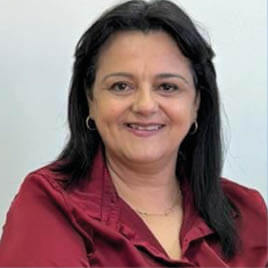
Dr. Georgette Hazboun Rabadi is currently the Interim Dean of the Faculty of Education at Bethlehem University, where she has served for several years in academic, administrative, and leadership roles while continuing to teach a range of courses and remaining deeply engaged in teacher preparation. With 34 years of experience in education, she bridges higher and school education supporting and coordinating with schools and teachers. She integrates expertise in university work, school leadership, and research, guided by her lifelong philosophy: “As long as you’re alive, you ought to learn.”
