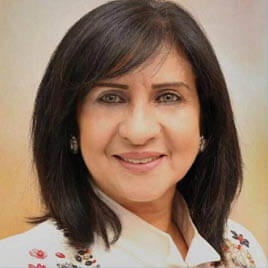
By H.E. Vera Baboun, Ambassador of the State of Palestine to Chile
Palestinian women’s leadership has long been diverse and resilient, rooted in the collective effort to sustain and serve the Palestinian nation. Across generations, women have shaped political mobilization, social organization, education, cultural preservation, and diplomacy, often operating within conditions of occupation and limited sovereignty. Emerging from both formal institutions and grassroots initiatives, their leadership reflects a continuous commitment to national identity and self-determination. My own trajectory forms part of this broader legacy of Palestinian women navigating structural and political challenges while advancing the national struggle.
dvancing the national struggle.
Understanding Palestinian women’s leadership within the Palestinian context requires acknowledging the realities of occupation, incomplete sovereignty, and the ongoing pursuit of self-determination. My trajectory has evolved within these conditions, shaped by the responsibility of representing the Palestinian nation while navigating complex political realities. The intersection of my political experience, academic engagement, personal history, gendered perspective, and my recent diplomatic mission has defined my approach to leadership, reflecting how agency is actively constructed through resilience, strategic engagement, and the deliberate advancement of national objectives.
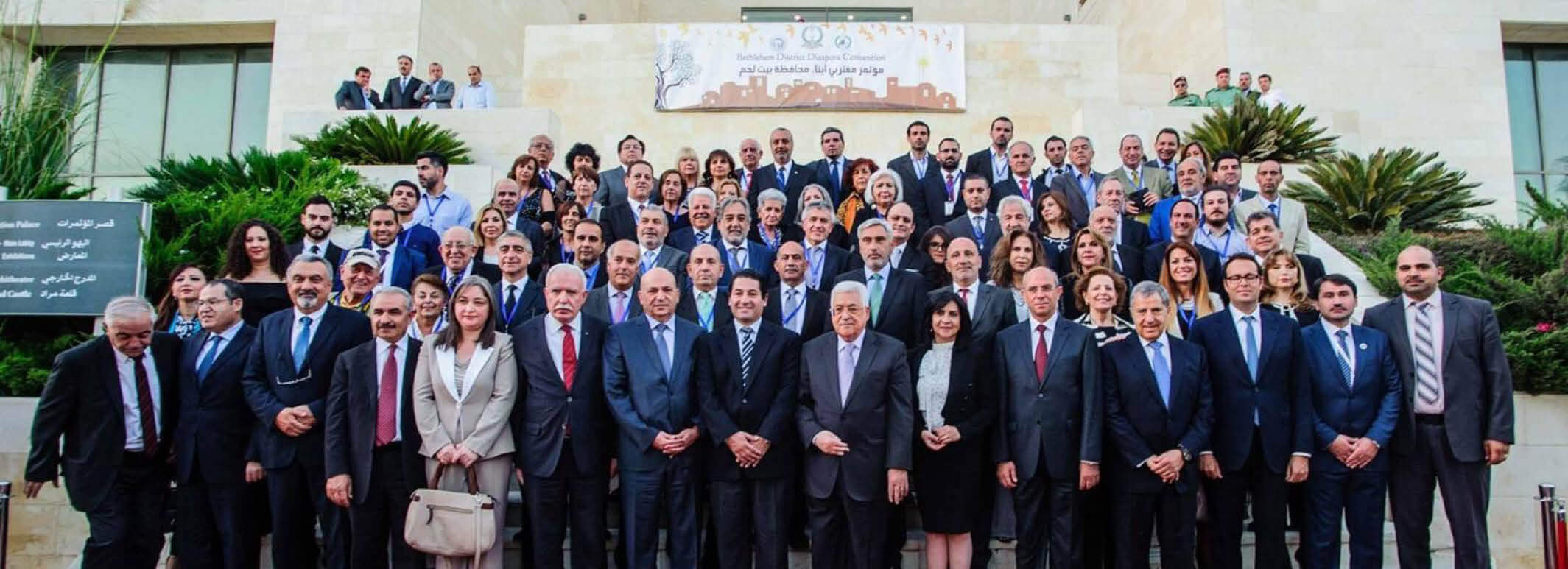
Understanding how this leadership translates into diplomacy requires examining its political foundations. My political experience, including my role as a member of the Palestinian National Council (since 2018) and the Palestinian Central Council (since 2025), and as the former mayor of Bethlehem, has profoundly informed my diplomatic voice. These roles required navigating the complexities of representation within a national movement that operates under asymmetrical power conditions and fragmented institutional realities. In such settings, political participation is not only about decision-making but about sustaining legitimacy, preserving unity, and negotiating the boundaries between aspiration and constraint. My diplomatic practice has therefore been deeply rooted in political experience – not as an abstract credential, but as a lived engagement with governance, negotiation, and collective struggle.
Serving as the mayor of Bethlehem (from December 2012 to May 2017) and as the first woman elected to this position since the establishment of the municipal council in 1872, has provided me with a formative perspective on leadership under occupation. This role revealed how governance in such contexts requires continuous negotiation between responsibility and constraint. Municipal leadership involved addressing the daily expectations of citizens – including development, public services, infrastructure, and urban planning – while operating within a framework where authority was structurally limited by external control and restricted autonomy. Decisions that would normally fall within the sovereign scope of local governance were often shaped by restrictions beyond municipal reach, transforming governance into an exercise not of full autonomy but of strategic adaptation. In this environment, leadership became less about exercising sovereignty and more about managing its absence: sustaining civic life, preserving dignity, and ensuring continuity despite fragmentation. Governance under occupation required creativity and collaboration, extending alliances beyond traditional institutional boundaries to include international partners, civil society actors, and local communities. In this sense, my mayoral experience reflected a wider pattern within Palestinian women’s leadership: transforming limitation into a space for strategic agency, and redefining leadership as the sustained work of safeguarding collective life while advancing the long-term aspiration for sovereignty.
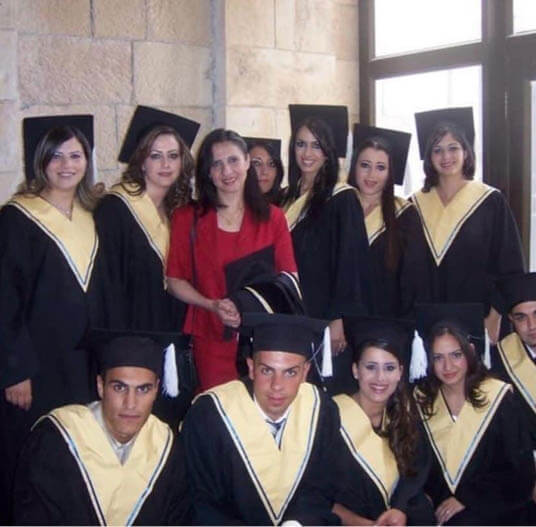
Graduation ceremony at Bethlehem University.
My leadership experience highlighted the gendered dynamics of political leadership in Palestine, where public roles are shaped by both structural realities and social expectations placed on women. My identity as a Palestinian woman shaped how I navigated leadership spaces structured by gendered norms and assumptions. Political institutions are not neutral; they are shaped by embedded norms that determine whose authority is readily accepted and whose voice is subject to greater scrutiny. I was often positioned both as a symbol of progress and under heightened evaluation. Rather than perceiving this tension as an obstacle, I treated it as an opportunity to redefine leadership through trust-building, dialogue, and collaborative engagement.
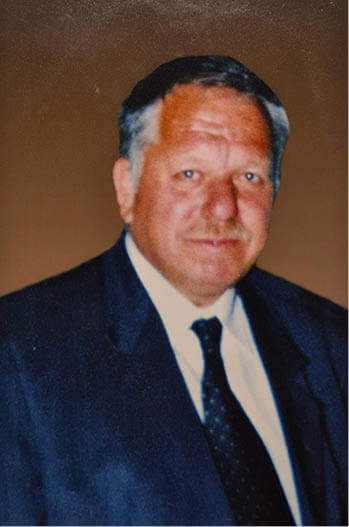
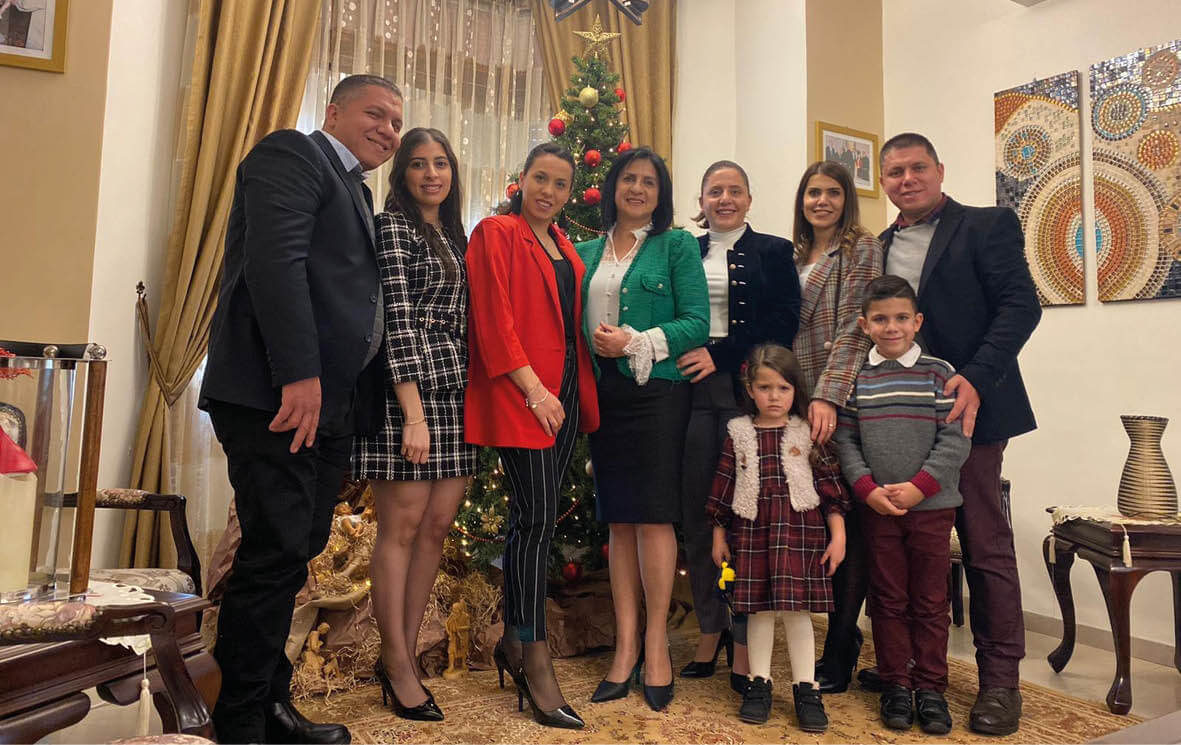
Beyond institutional and gendered dimensions of leadership, my experience has revealed how deeply the personal and political intersect under conditions of occupation. Living under occupation is not an abstract concept; it unfolds within families, communities, and the intimate realities of daily life. As a mother of five and the wife of a political detainee, I encountered its impact not only through public responsibility but also through personal vulnerability and loss. The death of my husband (Johny Baboun) in 2007 followed years of resilience and national aspirations: Johny was detained for three years during the First Intifada, his workplace was destroyed by Israeli forces during the Second Intifada, and he suffered a brain stroke during the thirty-nine days of the 2002 siege of the Nativity Church, when a total curfew was imposed on Bethlehem and Johny was separated from us for 39 days, even though he was not inside the Church. This prolonged ordeal and immense pressure tested his strength beyond human limits, and he passed away way too young after a life defined by sacrifice and an unwavering belief that Palestine would one day attain justice. Our joint journey has marked my life and reshaped my understanding of leadership as the capacity to carry personal grief while remaining faithful to my collective responsibility, deepening my commitment to public service and affirming that true leadership must be rooted in empathy, resilience, and a deep sense of both human and national responsibility.
My academic work at Bethlehem University (1990–2010) in gender studies and literature laid the intellectual foundation for my diplomatic approach, equipping me with critical tools to interpret and communicate political realities. For me, knowledge production has always informed political action, shaping how narratives are constructed and conveyed. This perspective has guided a diplomatic practice rooted in historical memory, ethical positioning, and meaningful engagement – particularly relevant in Chile’s context of an active Palestinian diaspora and strong traditions of justice and solidarity. This foundation was further strengthened through my role as the first Assistant Dean of Students at Bethlehem University (2000–2006), an administrative leadership position that extended beyond academic teaching into direct engagement with students’ lived realities. The role involved supporting students through personal and collective challenges, understanding their capacities and aspirations, and fostering an environment that responded to their social and political context. This experience deepened my understanding of identity, resilience, and education under occupation, while developing essential skills in dialogue, mentorship, institutional responsibility, and conflict resolution that later shaped my political and diplomatic practice.
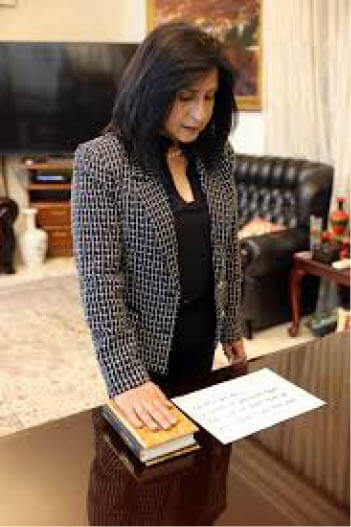
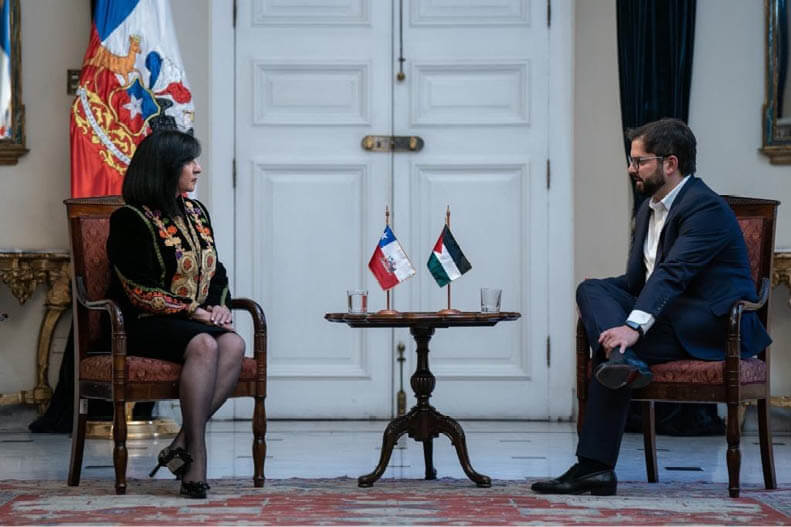
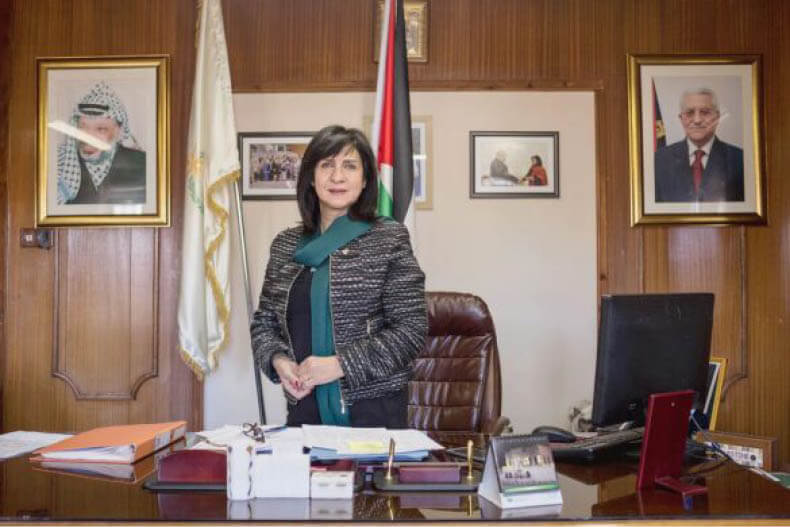
Serving as Ambassador of the State of Palestine to Chile since December 2022 has required navigating a complex diplomatic landscape marked by both significant challenges and strategic opportunities. The past two years – marked by genocide, displacement, and widespread destruction in Gaza alongside escalating developments on the ground – including the Israeli cabinet decisions of February 2026 regarding land annexation and their profound implications for the future viability of a Palestinian state – have intensified the responsibility to sustain and defend the Palestinian narrative within international discourse. This has involved consistent engagement with Chilean executive authorities, parliamentarians, political parties, multilateral representatives, media platforms, and civil society to ensure that Palestinian realities are accurately represented and firmly anchored in international legal principles. Defending the rights of my people has meant articulating a narrative that is grounded in humanitarian law, historical continuity, and the legitimate aspiration for self-determination, while safeguarding the political horizon for a viable two-state solution.
Simultaneously, Chile has offered a uniquely constructive diplomatic environment. The longstanding bilateral relations between Palestine and Chile – reinforced by Chile’s recognition of the State of Palestine and sustained political dialogue – have provided an institutional foundation for deeper cooperation. Strengthening these bilateral ties has involved expanding cultural diplomacy, enhancing academic and economic engagement, supporting parliamentary diplomacy, and fostering governmental coordination on multilateral issues. The presence of one of the largest Palestinian diasporas outside the Arab world, combined with Chile’s historical commitment to human rights and international law, has created opportunities to consolidate solidarity into structured cooperation. Through these channels, diplomacy has moved beyond reactive advocacy toward strategic partnership-building, transforming moments of crisis into opportunities to reinforce bilateral relations, mobilize international legal frameworks, and advance Palestinian representation within a principled and sustainable diplomatic framework.
My experience reflects not only a personal path but also the enduring legacy of Palestinian women whose resilience and political agency have shaped our national story across generations. In this context, leadership is neither symbolic nor peripheral; it is a deliberate act of persistence and transformation. As a Palestinian woman in political and diplomatic service, I carry both historical memory and future responsibility. This reality affirms that leadership is measured not solely by formal power but by the capacity to influence, build bridges, and uphold justice. The Palestinian experience demonstrates that voice itself constitutes power, and that principled, sustained leadership can shape international discourse even in the absence of full sovereignty.