


By Nadine Fitiani
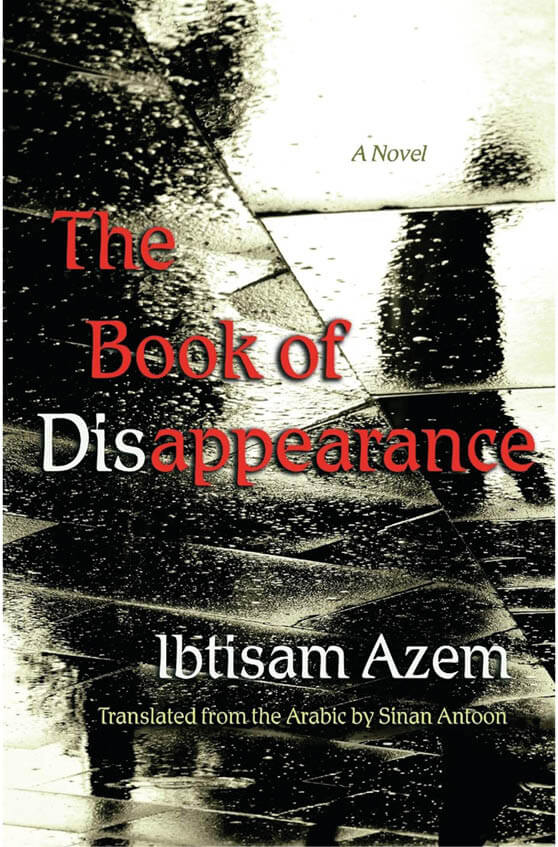
Ibtisam Azem’s novel The Book of Disappearance (2014) is set in contemporary Tel Aviv and Jaffa. The story unfolds forty-eight hours after Israelis discover that all their Palestinian neighbors have vanished. Told through alternating narrators – Alaa, a young Palestinian man who had conversed with his dead grandmother in the journal he left behind when he disappeared, and his Jewish neighbor, Ariel, a journalist struggling to understand the traumatic event. Through their perspectives, the novel stages a confrontation between two memories. Ariel is a liberal Zionist who is critical of the military occupation of the West Bank and Gaza but nevertheless believes in Israel’s project and its national myth. Alaa is haunted by his grandmother’s memories of being displaced from Jaffa and becoming a refugee in her homeland. Ariel’s search for clues to the secret of the collective disappearance and his reaction to it intimately reveal the fissures at the heart of the Palestinian question. Yet the deeper one reads, the more one realizes that Azem is not simply imagining a fantastical disappearance. She is exposing the quieter, more insidious disappearances that have shaped Palestinian life for generations: the erasure of history, the silencing of voices, and the marginalization of those who carry memory forward. For Women’s Day, Azem’s novel offers a powerful entry point into a conversation about Palestinian women, not only as characters within literature, but as the guardians of memory, the protectors of identity, and the ones who refuse to disappear even when the world tries to forget them.
On Women’s Day, it is worth recognizing that Palestinian women writers are not simply producing literature, they are preserving history. As they are documenting experiences that might otherwise vanish, they are archiving emotion, memory, and truth.
At the heart of the novel stands Alaa’s grandmother, a woman whose memories of the Nakba form the emotional and historical backbone of the story. She is not a loud character who gives speeches or leads movements. Instead, she does something far more radical: She remembers. She tells stories. She insists on naming what happened, even when the world around her prefers silence. In Palestinian society, as in many societies shaped by displacement and political violence, women tend to become the guardians of memory. They carry the stories of villages erased from maps, of homes that no longer exist, of olive trees cut down, of loved ones lost. Their memories are not simply personal, they are political. They resist the narrative that Palestinians are a people without a past.
Azem’s portrayal of the grandmother is a tribute to these women as she sheds light on how memory itself is a form of resistance, and that women are often the ones who keep that resistance alive. When Alaa disappears, his grandmother’s stories remain. Her voice becomes the last surviving thread connecting the present to the past.
The central event of the novel, the sudden disappearance of all Palestinians, can be read as a metaphor for the many ways in which marginalized groups are erased. Feminist theory has long examined how women’s labor, suffering, and contributions are made invisible. Azem extends this idea to the Palestinian context, showing how an entire people can be rendered invisible through political structures, media narratives, and historical revisionism.
Within this broader erasure lies a gendered one, as Palestinian women face a double disappearance – as Palestinians under occupation and as women within patriarchal structures. Their stories are frequently the first to be dismissed, their experiences the first to be overlooked, and their achievements are most likely to be underestimated. By centering the grandmother’s memories, Azem pushes back against this double erasure. She reminds the readers that women’s stories are not secondary; they are foundational. Without them, the collective memory collapses.
After Alaa disappears, his Israeli neighbor Ariel finds and reads his diary. This act –intimate, invasive, and morally ambiguous – becomes one of the novel’s most powerful feminist and political metaphors. Ariel, a member of the dominant group, gains access to the private thoughts of someone from the marginalized group. He becomes the interpreter, the one who decides how to understand and frame Alaa’s words.
This dynamic mirrors a long history of men interpreting women’s stories, colonizers interpreting the colonized, and dominant groups claiming authority over the narratives of the oppressed. Feminist scholars such as Gayatri Chakravorty Spivak have long critiqued this dynamic “epistemic violence.” In her essay “Can the Subaltern Speak?,” she argues that storytelling is a form of power, and that taking away someone’s story is a way of depriving them of their agency.
Ariel’s reading of the diary forces him to confront truths he had previously ignored. Yet even as he becomes more aware, he does not take action. He does not challenge the system, nor does he resist the opportunistic takeover of Palestinian homes. His awakening remains incomplete, a reminder that understanding is not the same as solidarity. In contrast, the women in the novel, like the grandmother, do not need to read someone else’s diary to understand injustice. They live it, they remember it, and they carry it in their bodies.
Writing itself becomes an act of resistance in The Book of Disappearance. Azem, as a Palestinian woman writer, participates in a long tradition of women who have used literature as a means of steadfastness and a challenge to erasure. Her work joins those of Sahar Khalifeh, Adania Shibli, Liana Badr, and many other Palestinian women authors who have insisted on telling stories that dominant narratives try to silence. Azem’s novel is a reminder that storytelling is a political act and that women have always been at the forefront of this act, even when their contributions are not fully recognized.
Moreover, The Book of Disappearance teaches readers that disappearance is not always physical. It can be historical, political, or emotional; and sometimes it is the quiet erasure of women’s stories, women’s suffering, and women’s strength. But it also teaches us that women refuse to disappear. They remember, resist, speak, write, and rebuild. Alaa’s grandmother may not be alive by the time the novel begins, but her presence is sensed throughout the entire novel. Her memories shape the narrative as her voice guides Alaa. Her stories survive even when her people vanishes. This is the power of Palestinian women: They ensure that even in disappearance, there is continuity. Even in silence, there is memory. Even in erasure, there is resistance. In a world that tries to make Palestinians disappear, it is often Palestinian women who insist on remembering and who ensure that the story continues.
On Women’s Day, it is worth remembering that books such as The Book of Disappearance invite readers to honor the Palestinian women who refuse to vanish, the mothers, grandmothers, daughters, writers, activists, teachers, and caretakers who carry the weight of history on their shoulders. Azem’s novel is not just a story about disappearance. It is a story about what remains. And what remains, more often than not, is the work of women.
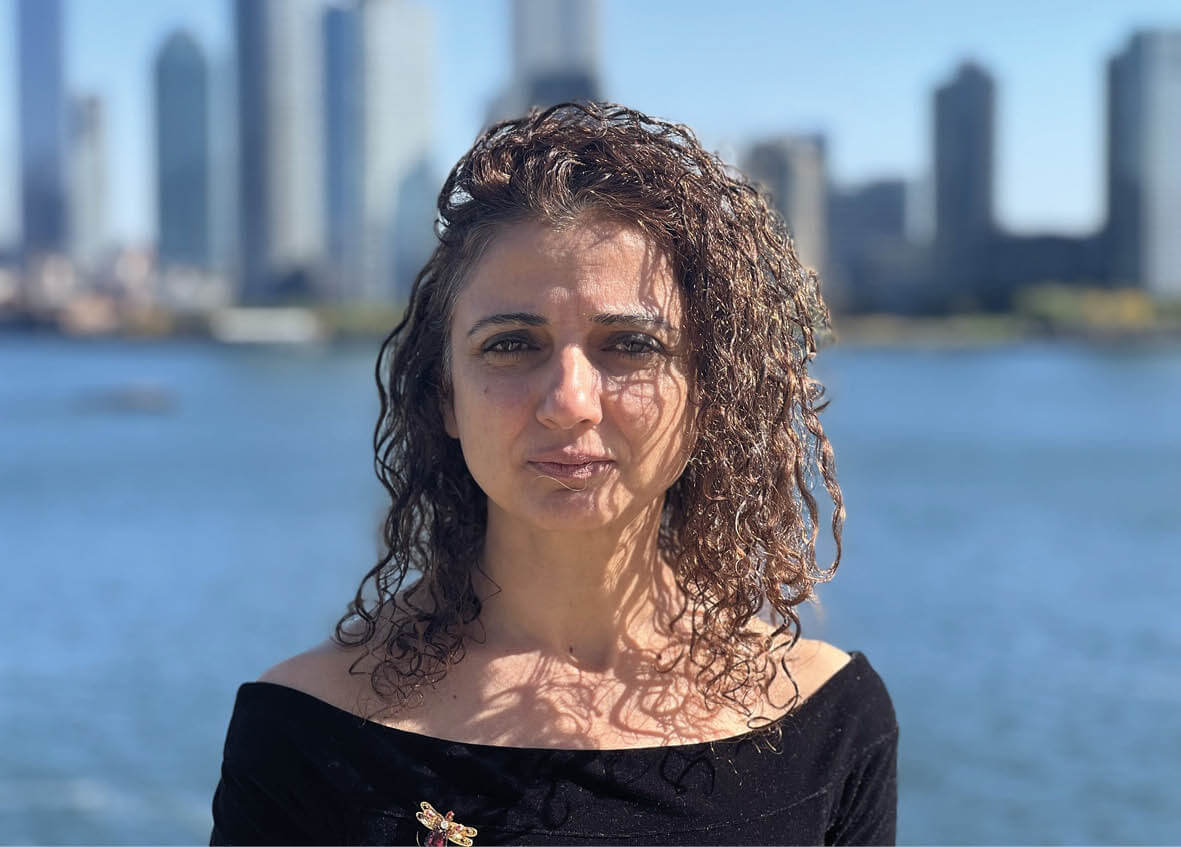
*Ibtisam Azem is a Palestinian novelist, short story writer, and journalist based in New York. She was born and grew up in Tayibe, northern Jaffa. She works as a senior correspondent covering New York and the United Nations for Al-Araby al-Jadeed newspaper. She has published two novels in Arabic: Sariq al-Nawm; Gharib Haifawi (The Sleep Thief: Gharib Haifawi, 2010) and Sifr al-Ikhtifa (The Book of Disappearance, 2014). They have been translated into several languages, including English (by Sinan Antoon), Italian, and German.

Nadine Fitiani, born in 1999 in Jerusalem, Palestine, is an alumna of Bethlehem University, where she studied English language, literature, and communication. Passionate about storytelling, writing, research, and cultural expression, she explores language as a tool for connection and identity. Her academic journey reflects a deep interest in literature and the power of words.

Your atrention of tiny things that only insiders may notice, such as reading someone else’s diaries without their approval. I would encourage writing history from real stories too. I foresee your interest in story telling indeed, but also resistance stories that are normally concealed. I encourage you to start collecting real stories especially with your intelligence and quick mind. Well done.