


By Shahd Abusalama
I was seventeen when Israel waged “Operation Cast Lead” on Gaza. It was December 27, 2008, and I was in my final year of high school, sitting for mock tawjihi (high school graduation) exams, when it felt as though a door from hell had been flung open. For twenty-two days, Gaza was hammered from land, sea, and air, sealed off from international media and aid, reduced to a laboratory and testing ground for new and old weapons; bodies being annihilated while many worldwide were distracted by New Year celebrations.
That assault marked a turning point in my life, not because it was the first I had endured, but because I was old enough to understand the violence as part of a systematic ethnic cleansing campaign that has been ongoing since 1948. The Goldstone Report, that subsequently investigated the atrocities committed during this dark period, deemed Israel’s deliberate targeting of civilians and civilian infrastructure to be part of a broader policy that is unfolding to this day with impunity.
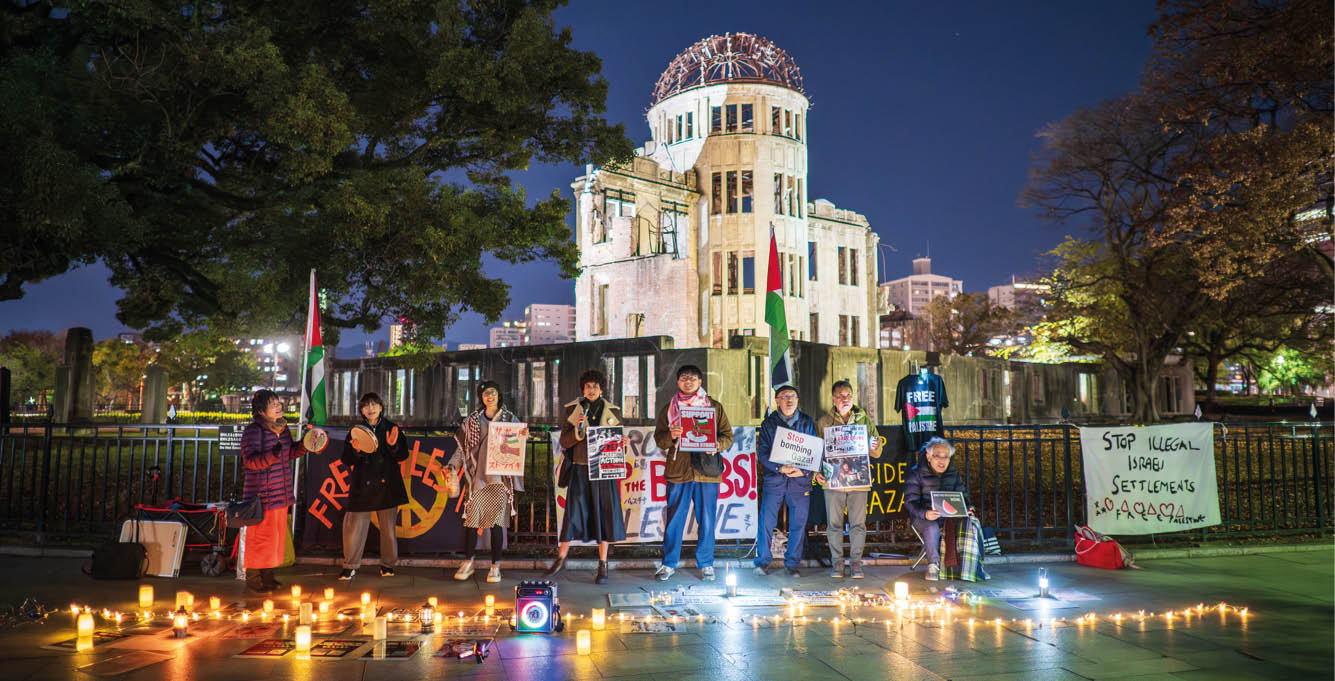
As we confront the politics of erasure, impunity, and global complicity, and fight for representation, we can draw on solidarities across borders. Whether in Gaza or Hiroshima, through the preservation of memory amid survival and collective struggle, transnational solidarity becomes an act of resistance that challenges imperial and settler-colonial violence and impunity, urges accountability, and safeguards future generations.
I was born a survivor to an uprooted family whose history mirrors the architecture of Palestinian dispossession across generations. I am the grandchild of Nakba survivors and daughter of a Palestinian ex-political prisoner who was born in 1952 and grew up knowing nothing but occupation. My mother gave birth to me in 1991 amidst a curfew and blackout imposed on Jabalia Refugee Camp, where the first Intifada had erupted in 1987. Married to a man haunted by multiple administrative detentions, my mother walked a kilometer to the Jabalia UN clinic, assisted by my grandmother Tamam, who carried a lantern in one hand and a white flag in the other, signaling to Israeli soldiers, “We are bringing a child in peace.” This didn’t protect them from harassment, including the soldiers pointing their guns at my mother’s belly. I entered the world already marked as a threat.
By the time Israel waged Operation Cast Lead, we had survived two Intifadas, yet nothing had prepared us for that winter’s brutality. Our home became a shelter for displaced families, including that of my childhood friend Alia al-Khatib. On January 5, 2009, her father Ali left to pick up some necessities for his family and check on his elderly parents, who insisted on holding onto their home in Jabalia, but he never returned; an Israeli drone strike killed him instantly, as documented by B’Tselem.1
Days later, our own home became unsafe. When our neighbor received a bomb threat, we ran into the street, barefoot, and waited at the home of neighbors nearby while fighting our worst fears: either being killed or wounded, no matter the protection measures we take, or watch our home collapse. It was psychological warfare; the bombing was never carried out. A ceasefire was declared on January 18, 2009, allowing us to return to our home.
Then came the most surreal demand of all: Return to “normal.” Go back to school. Carry on.
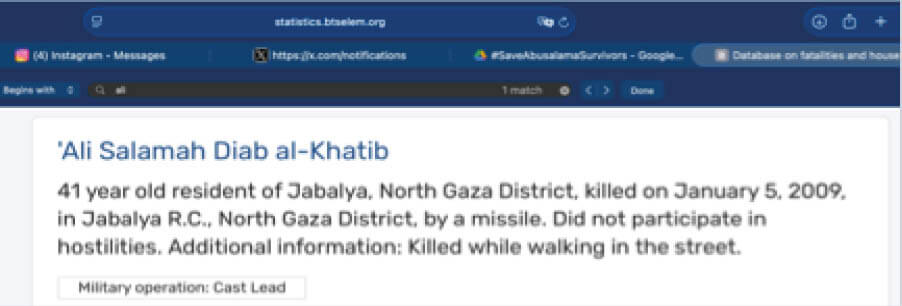
Israel then killed at least 1,417 Palestinians, mostly civilians, children and women. I comforted myself that my family did not suffer the devastating news of Ali or the horrific massacre committed against the Al-Samouni family, where I joined other local and international activists, volunteering our time to tend to their child survivors, providing English lessons, art classes, or whatever other distraction we could think of to comfort them and remind them that they were not alone. I remember asking myself: If I had been killed, would I have been reduced to a number, joining other statistics of fatalities that are forgotten as the list grows longer? A frame on a wall that fades out with the passage of time?
In 2009, Japanese war photographer and journalist Rei Shiva visited Gaza to cover the aftermath of Israel’s Operation Cast Lead. My brother Majed was his fixer, which led to Rei living for about a month in our home on Al-Saftawi Street. I shared with him my ambitions to break free and leave Gaza’s open-air prison to travel the world like him.
Refusing to die knowing nothing but a life under occupation, and unwilling to live adhering to colonial and patriarchal borders that were trying to limit my horizons, I obsessively sought to perfect my English, studying English literature at Al-Azhar University. Also, I began visiting the homes of those whose family members had been killed or detained by Israel, actively engaging in community organizations for their families’ support. I started writing for international audiences through my blog, Palestine from My Eyes, reproduced by Electronic Intifada, weaponizing every tool to carve my people’s silenced struggles into the minds and hearts of readers and urge action.
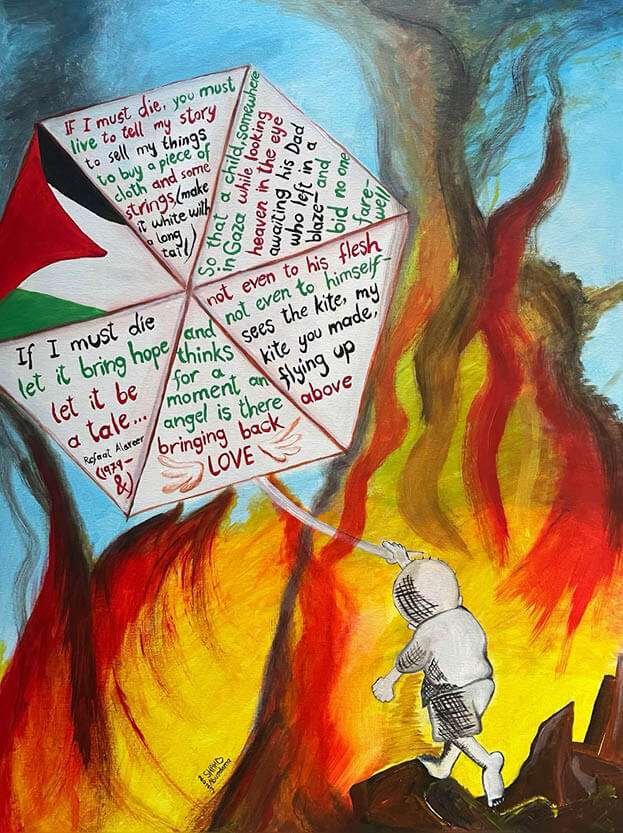
I achieved my dream of continuing higher education in the United Kingdom (2014 to 2024) but never anticipated that my decade in exile would culminate in an openly televised genocide. Jabalia Refugee Camp, where my extended family had held their ground since the 1948 ethnic cleansing of Palestine, has been entirely obliterated in the fourth invasion of northern Gaza. Every home has been demolished, dozens of relatives on both my maternal and paternal sides have been killed, and the survivors have been driven into repeated cycles of uprooting and starvation. Many of them had clung to Gaza City, refusing to abandon their homes despite the relentless terror inflicted on the northern Strip following October 7, 2023. It was devastating beyond words to witness these steadfast survivors, the ones who had never left despite everything, being forcibly expelled into the unknown in the south in September 2025. Their right to return, rebuild, and attain justice remains firmly denied by Israel, even though the acknowledgment of the Palestinian Genocide has become official, as declared by former UNRWA Chief Spokesman Chris Gunness following the publication of a report by the UN’s Independent International Commission of Inquiry on the Occupied Palestinian Territory the same month.2 This pushed me to overcome my feelings of helplessness and turn them into a labor of love for the sake of our family survivors and others who are facing unprecedented dehumanization and silencing amid the international failure to hold Israel accountable.
Central to Israeli warfare is the consistent silencing of Palestinian counter-narratives, including the deliberate targeting of intellectuals, such as my teachers Huda Hamada, Suad Hamdona, and Dr. Refaat Alareer, as well as journalists and documentary filmmakers who, over the past decade, have worked to produce alternative images and testimonies from Gaza. This includes the killing of some of Gaza’s most prominent and courageous media workers, among them figures such as Roshdi Sarraj, Anas Al-Sharif, Hossam Shabat, and Ismail al-Ghoul, and the repeated targeting of journalists like my cousin Mahmoud Abusalama, one of the last surviving prominent journalists in northern Gaza, who continues reporting despite significant risk and immeasurable loss, including the extermination of his sister Shrouq’s entire family. As of October 2025, nearly 300 journalists and media workers have been killed, according to the Shireen Abu Akleh Observatory, among the many more than the officially announced 70,654 Palestinians who have been killed in Gaza since October 7, 2023. An unknown number of victims remain trapped beneath the rubble of the annihilated Strip, unreachable and uncounted.
Just as the ethnic cleansing of Palestine in 1948 was accompanied by a systematic campaign of memoricide that aimed to erase the historical, cultural, and visual heritage of Palestinian presence, Gaza and its cultural field have been subjected to a comparable and ongoing process of annihilation. This is part of a broader strategy to reinforce hegemonic colonial narratives while undermining Palestinian claims to history, visibility, and political agency. As we experience erasure in physical and cultural terms, we must be acutely aware of the ways in which these practices aim to regulate how the Palestinian struggle is produced, circulated, and remembered; we must be part of the fight back and engage in the field of representation and knowledge production. For me, one such opportunity for engagement arrived with an invitation to visit Japan. From the US atomic bombing of Hiroshima and Nagasaki to the Japanese Red Army that in 1971 joined the Palestinians in their struggle against Western imperialism at a heavy price, Japan had long occupied my imagination. But I never imagined that my encounter with Rei Shiva in Gaza during the aftermath of 2008/9 attack on Gaza would carry me, 16 years later, to Japan, amid a horrific genocide that is continuing with impunity despite an official ceasefire; the slower pace is no consolation for the people in Gaza that were dispossessed, bereaved, and remain deprived of aid in violation of the agreement.
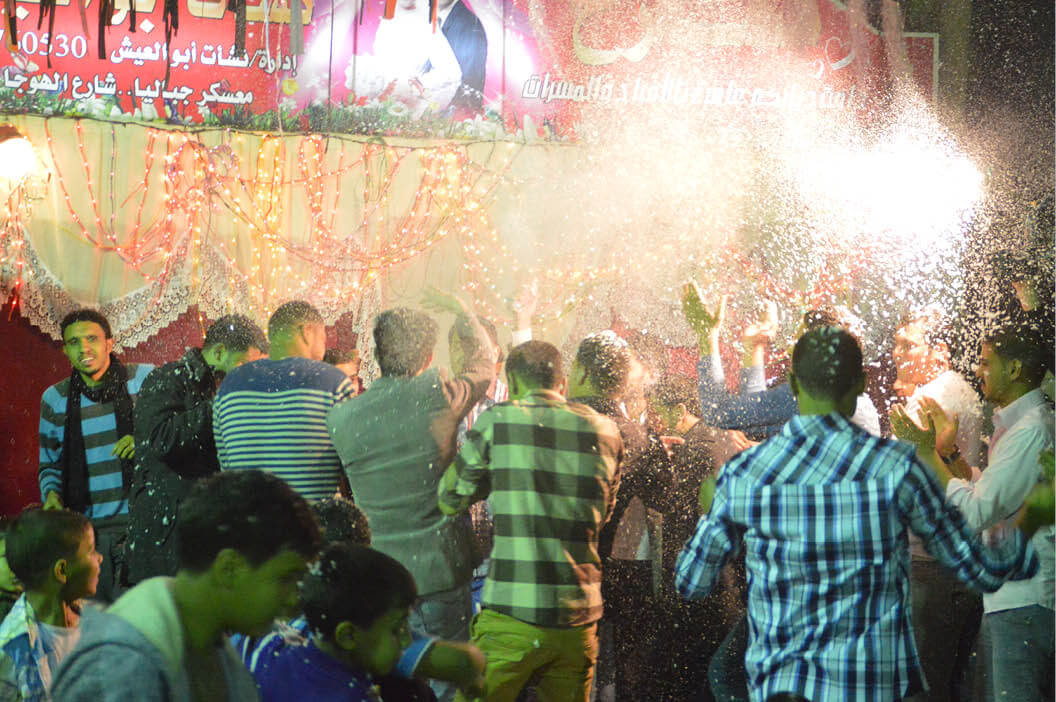
Recognizing the importance of building bridges between our communities that defy American-Zionist hegemony, I was able to address the Japanese parliament against the backdrop of a so-called “ceasefire” following over two years of the latest Israeli genocide in Gaza. I also spoke at the United Nations University, Senshu University in Tokyo, and to various local journalists. Eurasia World Film Week led me to various cinemas and cultural centers where I screened documentary films by filmmaker Mohammed Al-Majdalawi, my friend from Jabalia Refugee Camp with whom I collaborated on various projects since childhood, including And Still They Dance (2012) and Forget Me Not (2021).3
As I was weighed down by collective and personal pains from the past and present, Hiroshima was particularly triggering, though it might shock some to know that it also provided me with some comfort: The city stands as proof to people’s unbreakable desire to rise from the ashes despite the United States’ devastating atomic bombing of 1945. My visit to the Hiroshima Peace Memorial Museum felt cathartic. Hiroshima is a tragedy that history has acknowledged, studied, and commemorated, whereas for the Palestinians, annihilation is an uninterrupted process that is extending from 1947 until now.
Experts suggested in October 2025 that Israel’s bombardment of Gaza was equivalent to “approximately 13 Hiroshima-type nuclear bombs,”4 dropped on a territory that is a fraction of its size but more populated. Sorata Watanabe, who grew up in the Hibakusha Community in Hiroshima, told me, “Comparing Gaza to Hiroshima is not fair anymore.” Yet, Gaza has no memorials, no vow of “never again,” no consensus on the crime, and no naming of the perpetrators.
Instead, criminals are being rewarded. During my visit, the news blared with Donald Trump shamelessly bragging about recognizing Jerusalem as “the true capital of Israel” and signing over rights and the Golan Heights to Israel, claiming that the illegal annexation of the latter in 2019 made Israel richer by “trillions of dollars!”5 His remarks, broadcast live from a Hanukkah reception at the White House, exposes how international law is undermined and impunity deepened through US backing. My presence and interventions in Japan also exposed the contradictions of the country itself. Israeli ambassadors’ annual participation6 in Hiroshima’s memorial event to represent “the message that Israel seeks peace” normalizes the actions of a state that is founded on the dispossession and genocide of Palestinians, refuses to respect basic international nuclear weapons protocols, and fails to abide by human and humanitarian rights laws. It is a betrayal of the lessons that should be learned from “the mistakes of the past,” as Hiroshima’s Cenotaph reminds.7 The United States was never held responsible for its crimes against humanity in Japan, or its devastating direct and indirect military interventions that followed elsewhere. The culture of imperialism and impunity became a precedent that openly lives on, including in Palestine.
Nonetheless, it was comforting to attend one of the nearby weekly vigils, where I met solidarity activists who consistently protest Japan’s complicity in Israeli crimes, which has included calling for a comprehensive military embargo in light of Japanese Robotics Company FANUC’s link with Israel’s largest weapons manufacturer, Elbit Systems.8 While figures such as Donald Trump, Benjamin Netanyahu, and others responsible for annihilating Gaza portray the Strip as “uninhabitable” or a “wasteland,” Hiroshima stands as a living rebuke to that lie. Gaza will rise – if we are allowed to rebuild.
1 B’Tselem, “Fatalities: All Data [Explanation]: Khatib,” listing “Fatalities data updated until January 31, 2026, except Gaza Strip, only updated until October 6, 2023. Data regarding fatalities inside Israel doesn’t include October 7, 2023.”
2 YouTube, “The Palestinian Genocide: The Ultimate Evidence,” Double Down News, January 20, 2026.
3 For excerpts of the film shown at the award ceremony, visit YouTube, “Best Documentary Award, World Film Week, sponsored by Eurasia International Film Festival, Gaza n…,,” December 24, 2025.
4 Alaa Shamali, “200,000 Tonnes of Explosives Dropped on Gaza, Equivalent to 6 [Modern] Nuclear Bombs” The Canary, October 8, 2025.
5 YouTube, “President Trump Speaks at Hanukkah Event at the White House,” Live from Fox News, December 17, 2025, minutes 29:30 – 33:00
6 Michio Shimotaka and Michiko Tanaka, “Israel Ambassador Stares Straight Ahead at Peace Memorial Ceremony, Says “Honor to Be Invited,” While Palestinian Representative Condemns Participation” The Chugoku Shimbun–Hiroshima Peace Media Center, August 7, 2024.
7 “Cenotaph for the Victims of the Atomic Bomb (Memorial Monument for Hiroshima, City of Peace),” Hiroshima Peace Tourism.
8 Frances Madeson, “Japanese BDS Activists Are Ramping Up Their Campaign Against a Robotics Company: Japan BDS Is Claiming a Special Responsibility to End Japanese Robot Maker’s Complicity in Israel’s Genocide in Gaza” TruthOut, July 8, 2025.
9 Shahd Abusalama,Between Reality and Documentary: A Historical Representation of Gaza Refugees in Colonial, Humanitarian and Palestinian Documentary Film, I.B. Tauris, February 2025.
10 Jehad Abusalim, “Download Now | Light in Gaza: Writings Born of Fire” The Jerusalem Fund for Education and Community Development, Novermber 17, 2023.
11Gaza on Screen, oapen, 2023.
13“Shahd Abusalama,” The New Arab.
14“Shahd Abusalama,” Declassified UK.
15 Al-Assria Dabke Troupe, “ and still they dance سفراء القضية الفلسطينية” YouTube, October 8, 2013.
16 Visit Hawiyya Dance Company’s Instagram page at @Hawiyya Dabke
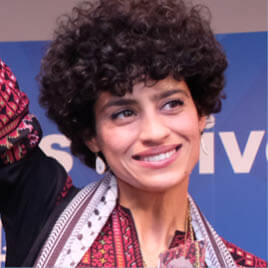
Dr. Shahd Abusalama is a Palestinian British scholar, author, and artist, born and raised in Jabalia Refugee Camp, northern Gaza, and now based in Barcelona. Her book Between Reality and Documentary (2025)9 examines representations of Gaza refugees in colonial, humanitarian, and Palestinian documentary film. She has contributed to the films Light in Gaza (2022)10 and Gaza on Screen (2023),11 and writes for The Electronic Intifada,12 The New Arab,13 Declassified UK,14 and others. A longtime member of Gaza’s Al-Assria Dabke Troupe,15 she co-founded Hawiyya Dance Company16 in London in 2017.
