


By Walid Salem
In the last decade, education in East Jerusalem bypassed the stage of Israelization and is now on the verge of scholasticide. The turning point was in 2017, when Bezalel Smotrich published the so-called “Decisive Plan” through the right-wing Shiloah Center.1 This genocidal plan gave Palestinians three options, each of which would lead to their elimination as a people: surrender their collective rights and agree to live under Israeli control as individuals who are forbidden to claim any national identity; leave their country; or fight Israel and therefore be killed as the terrorists he claims they are.
Scholasticide is the aspect of this process of elimination on the educational level. At the very least, scholasticide means the systematic destruction of education, and at its worst it refers to the total annihilation of education2 as has happened in Gaza over the last two years.3
The situation in East Jerusalem meets the definition of scholasticide. The closure of the UNRWA schools in East Jerusalem in 2025, and the closure of the Palestinian Directorate of Education in 2019, are steps on the path of the systematic destruction of Palestinian education in Jerusalem. Forbidding the use of Palestinian curricula, as carried out in East Jerusalem schools, is another aspect of this systematic destruction. Six schools tried to continue using the Palestinian curriculum but were prevented from doing so.
Palestinians are confronted with ongoing scholasticide. Al-Quds University is an example of this at the level of higher education.
Furthermore, teachers from the West Bank are denied the freedom to access schools as well as Al-Quds University branches in Jerusalem; professors, teachers, and students have been detained; campuses have been raided; and any schools that receive budgets from the government and the Israeli municipality have been obliged to follow the Israeli curriculum. These are only a few examples of our experience of scholasticide.
The first college that later became part of Al-Quds University was established in Beit Hanina in 1978 under the name of Dawa wa Usul Al Dein (Devotion and the Fundamentals of Religion) College. In 1979, the Science and Technology College was founded in Abu Dis, and in 1981, Hind al-Husseini College of Arts was established in Sheikh Jarrah. The Arabic College of Health Professions was established in Al-Bireh in 1979. The establishing of these four colleges in and around Jerusalem was an intentional act and reflects the founders’ awareness of the need to highlight the centrality of Jerusalem for Palestine and the world.
An important step for Palestinian higher education in East Jerusalem came in 1984, when the above-mentioned four colleges established a coordinating committee chaired by Sheikh Saad Eddin Al-Alami under the name of Al-Quds University. By 1986, the Faculty of Law was established, followed by the Faculty of Medicine in 1994; other colleges followed in 1995.
Today, the Al-Quds University branches in East Jerusalem have spread from the Old City to Sheikh Jarrah and Beit Hanina, and one-third of the Abu Dis campus is located within the Israeli municipal boundaries of East Jerusalem, whereas two-thirds are located beyond the Separation Wall and thus accessible to students from the West Bank.
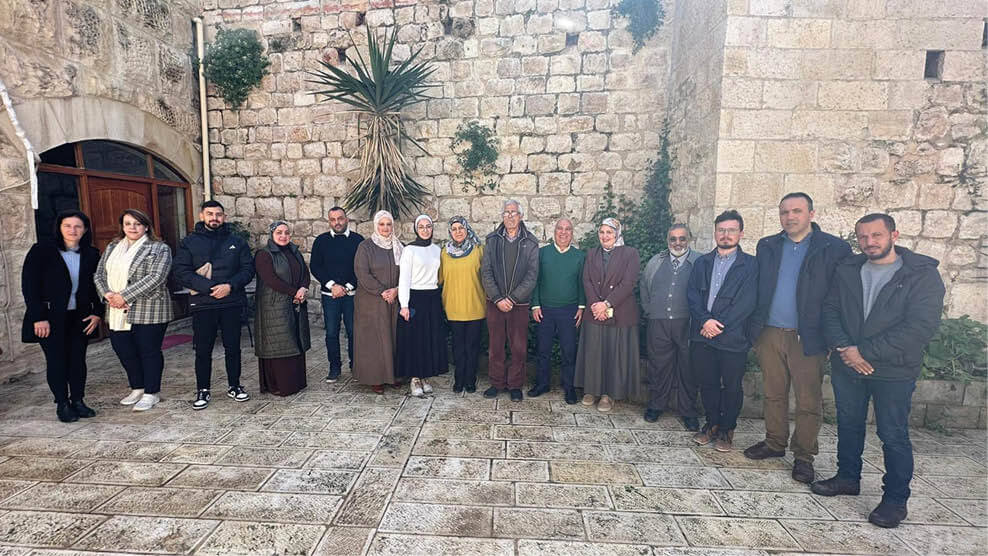
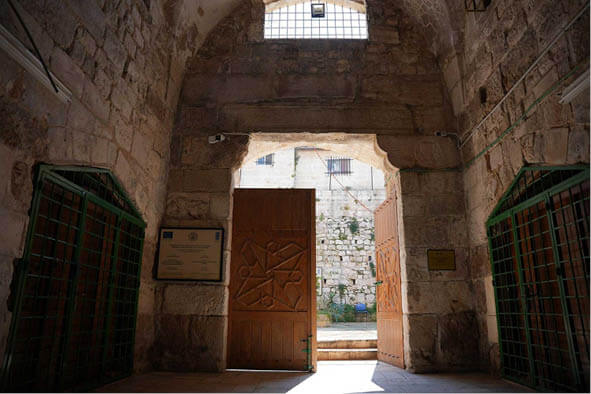
Inside the Old City walls, Al-Quds University provides education as well as community services to help the people to remain steadfast in their city through it support of four centers. The Jerusalem Studies Center in Khan Tankaz runs an MA program on Jerusalem studies. Since its establishment in 1998, hundreds of students have graduated from the center, and tens of MA theses have been produced. The center also organizes Arab education courses for foreign language speakers and conducts educational tours inside the Old City to introduce its cultural and architectural aspects to tourists and students. Moreover, the center has been producing the journal Al-Maqdisiyyah since the beginning of 2019. The journal has published 28 volumes in the Arabic language, and two volumes issued in the English language in 2025, all of them focusing on Jerusalem studies through writings by Palestinian, Arab, and international scholars.
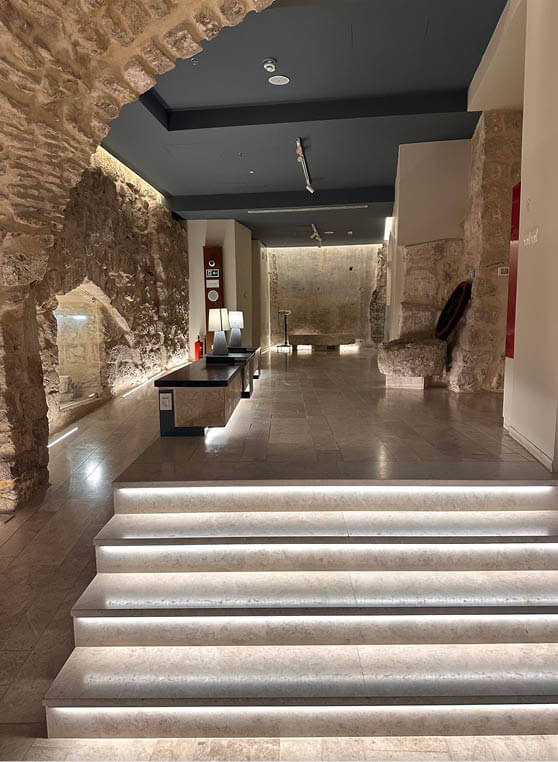
Another center supported by Al-Quds University in the Old City is the Center of Community Work, which provides legal advice to the people regarding their residency rights. It supports residents forced to deal with identity card confiscation or house demolition and helps with other legal services, in addition to participating in the international advocacy campaigns for Jerusalem and Palestine.
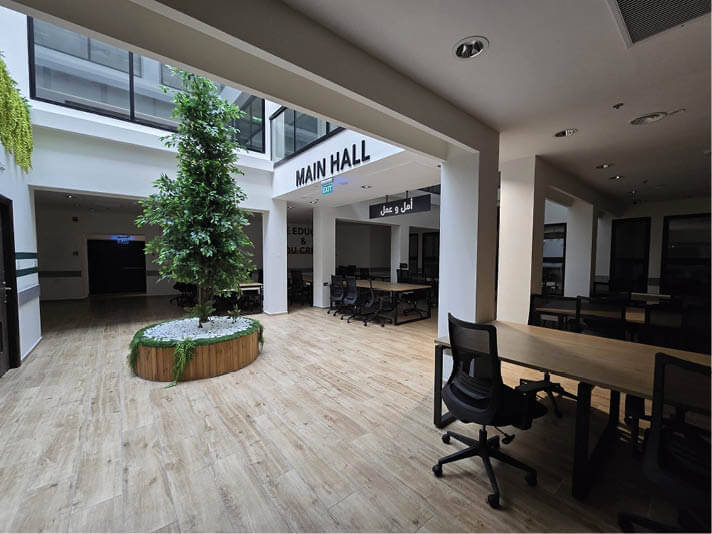
A third center in the Old City is Dar al-Consul Innovation Hub, designed to serve both youth and small businesses. It focuses on digital transformation, freelancing, and the revitalization of traditional MSMEs. The hub includes a museum, multimedia rooms, co-working desks, and fully equipped digital workstations.
Al-Quds University combines its role as an educational institution with its responsibility to the community, supporting four centers that provide a wide range of services and facilities for East Jerusalem’s residents.
A fourth center in the Old City is a community library that is open to all residents of and visitors to the Old City and East Jerusalem. The library includes hundreds of books about Jerusalem and organizes educational lectures about the city’s past, present, and future.
Outside the Old City walls, one can find Cinema al-Hamra innovation center. This hub is located in one of the city’s most vibrant commercial areas and connects the local community with innovative activities. The space includes 230 desks in co-working areas, meeting rooms for new companies, training facilities, and a small exhibition space. It is used to host workshops, startup meetups, networking events, and creative programs for youth and entrepreneurs. The center’s 120 experts on innovation and investment come from inside and outside Palestine and provide their expertise to new startups, assisting them in the preparation of feasibility studies and offering guidance in fundraising and finding grants for their projects.
Situated close to Al-Hamra Innovation Center is Hind Al-Husseini Arts College, and a few kilometers away is the Beit Hanina Campus. Both campuses include several branches of the colleges located on the main campus in Abu Dis.
Regarding education, Al-Quds University works constantly to improve the quality of its education, reaching the five-star level in the QS global rankings in 2023. It was re-selected in 2026 as the top Palestinian University by the same global system for the fifth consecutive year. Therefore, it is not by accident that 96 percent of the graduates of Al-Quds University medical colleges are successfully passing the Israeli professional exams to get hired. The university was able, after a judicial struggle, to get an Israeli court ruling in 2014 to recognize the medical certificates of Al-Quds University students. Furthermore, the university promotes qualitative research by both its scholars and the students. In recent years, the students’ research papers represented 50 percent of the university’s annual research output.
In addition to creating special educational and research programs on Jerusalem and running various hubs and venues that provide services to the community, Al-Quds University participates in and administers a variety of funds that give grants to civil society organizations in Jerusalem, such as Sandouq Qudsuna (Our Jerusalem Fund). Furthermore, the university’s campuses are always open to host civil society organization activities, whether or not they have a partnership with the university.
Moreover, Al-Quds University is increasing its partnerships with Arab and international academic institutions to promote research and joint academic initiatives and to facilitate the training of Al-Quds University students at the best universities worldwide. Examples of such partner universities include Harvard University, various German universities, and Turkish universities, including the establishment of a research center that focuses on Jerusalem at Marmara University in 2018.
To allow its students to gain hands-on training and professional experience, Al-Quds University has developed working partnerships with the Palestinian hospitals in East Jerusalem, which enables hospitals to benefit from newly gained research-based expertise. The university also runs a Dual Studies Program through which companies hire students who collect credit hours for their services in those companies during their education. The university furthermore renovated the late-nineteenth-century German consul’s building in the Old City of Jerusalem (Dar al-Consul) and 45 apartments outside the Old City. The university was also in partnership with President Abbas’ office in the development of the 2018–2022 strategic plan for Jerusalem, among many other initiatives.
In other engagements, University Society president Imad Abu Kishek is also a member of Majlis al-Awqaf, the council that is responsible for the management of the holy places in Jerusalem.
In brief, the story of Al-Quds University reveals that reaching excellence in education and serving the community qualitatively, professionally, and silently without making much noise are the best ways to support steadfastness, resist scholasticide, and avoid elimination. On the horizon, the university is seeking to become a global research university, and it is working to create the conditions to help achieve this objective.
1 Bezalel Smotrich, “Israel’s Decisive Plan,” Shiloah Center, 2017.
2 For more information, please visit the English-Arabic bilingual website “The Palestinian Revolution: Learn the Revolution,” edited by Dr. Karma Nabulsi and Abdel Razak Takriti, 2016, available at https://learnpalestine.qeh.ox.ac.uk.
3 Chandai Dasai, Sundus Hammad, Ahmed Abu Shaban, and Abdel Razik Takriti, “Scholasticide and Resilience: The Gaza Genocide and the Struggle for Palestinian Higher Education,” Curriculum Inquiry, October 9, 2025, Routledge: Taylor and Francis, pp. 6–7.
Dr. Walid Salem is a lecturer in the Jerusalem Studies Master’s Program, Jerusalem Studies Center at Al-Quds University and the editor in chief of the periodical journal Al-Maqdisiyyah, which is published by the center.
