


By Maha Abdallah
Jerusalem is not merely the occupied capital of Palestine and its people; it forms a cornerstone of Palestinian consciousness, identity, and collective presence.1 It is also a primary site where Israel imposes a multilayered system of persecution and subjugation, targeting education, dismantling social and cultural life, and reengineering the spatial and urban landscape to advance its settlercolonial project.
For over seven decades, Israel has pursued a deliberate project of de jure and de facto annexation of both West and East Jerusalem, in direct violation of international law.2 To this end, it has deployed a wide range of laws, measures, and policies designed to displace Palestinians and alter the city’s demographic, legal, spatial, and sociocultural character in order to entrench an IsraeliJewish majority and create irreversible facts on the ground.3 These efforts mirror broader patterns of Zionist Israeli supremacy that seek to subjugate Palestinians across the rest of occupied Palestine – from the Naqab to Jenin, Gaza, and the Galilee – and in exile, through similar tactics of fragmentation, dispossession, and domination.
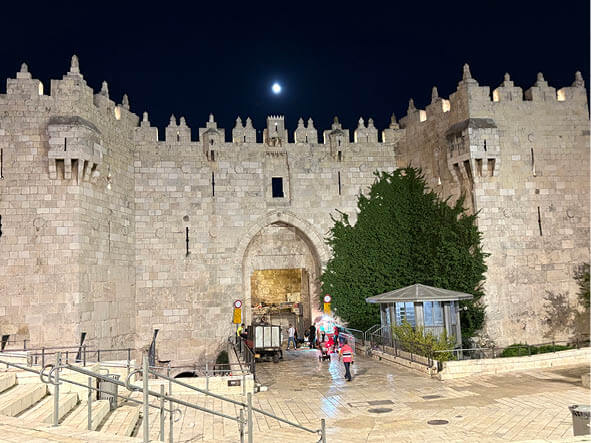
Meanwhile, the international community, particularly third states, has largely failed to meet its legal obligations, namely of nonrecognition, nonassistance, and cooperation to bring to an end serious breaches such as Israel’s apartheid, prolonged illegal occupation, and associated atrocity crimes. Instead of upholding international norms, powerful actors such as the United States have undermined Jerusalem’s internationally protected status by recognizing it as Israel’s capital and continuing to provide weapons, political cover, and economic support as Israel commits grave crimes, including acts of genocide.
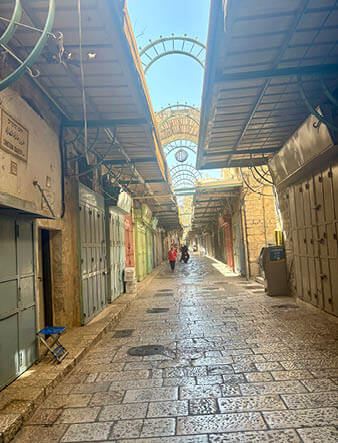
Israel has instituted an apartheid regime against the Palestinian people in their entirety, including Palestinian refugees in exile, which has served as a pillar to advancing Israel’s settler-colonial project in Palestine. The legal and administrative regime governing Palestinian life in Jerusalem constitutes not only apartheid but a project of erasure that attacks a people’s ability to survive physically, socially, and as a collective identity. Israel’s project in the city relies on military power alongside laws, military orders, courts, municipal structures, planning policies, population registries, and discriminatory legislation, all calibrated to steadily eliminate Palestinian presence while facilitating foreign settler takeover and IsraeliJewish dominance.
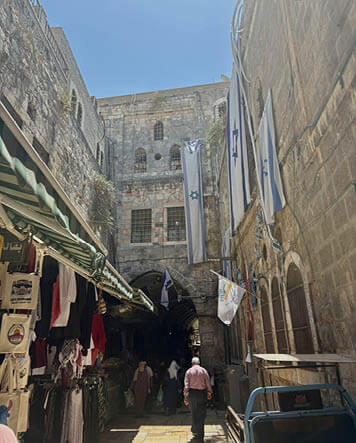
To advance these objectives, Israel has implemented a coherent system designed to maintain a demographic Israeli-Jewish majority while minimizing Palestinian presence; practices that amount to forcible transfer and expulsion, a grave breach under international humanitarian law and a war crime under the Rome Statute. (When the forcible displacement and transfer of a population is done without lawful justification and as part of a systematic or widespread attack, it constitutes a crime against humanity.) These include revocation of residency rights, discriminatory family unification rules, restrictive “center of life” requirements, systematic home demolitions, and zoning and planning regimes that severely restrict Palestinian construction while expediting settlement expansion and largescale land appropriation through the Absentees’ Property Law and “state land.”
These measures are reinforced by policies that geographically and politically isolate Palestinians in Jerusalem, restricting their movement both within the city and in relation to the rest of the West Bank and Gaza. This isolation is enforced through checkpoints and the Wall, which the International Court of Justice declared illegal in its 2004 Advisory Opinion.
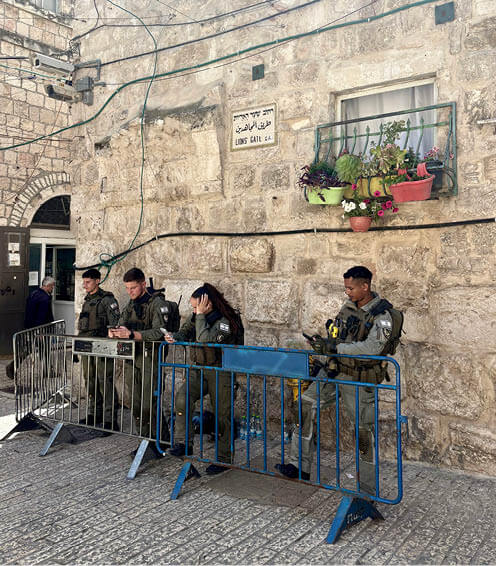
The outcome of Israel’s prolonged colonization is that there are now two populations in occupied Jerusalem living under two separate legal systems. IsraeliJewish settlers are governed by Israeli civil law and enjoy full civil, political, social, economic, and cultural rights, while Palestinians live under a web of military orders, residency regulations, and administrative controls that render their presence precarious and revocable at any time. This dual system is central to Israel’s demographic engineering of the city and exemplifies apartheid as the systematic domination of one racial group over another through inhumane acts such as forcible transfer, denial of basic rights, and persecution.
In recent years, Israel has intensified its colonization of Jerusalem and the rest of Palestine through military, political, and legal means. Settlement expansion has accelerated, control over education has deepened, new fines and taxes have been imposed, and home demolitions have surged, placing entire neighborhoods under threat of mass displacement. At the same time, Palestinian political and cultural life is being suffocated through attacks on institutions, restrictions on assembly and mourning, and pervasive surveillance and policing.
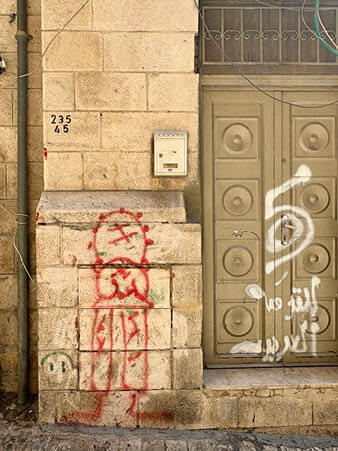
Around 350,000 to 400,000 Palestinians in Jerusalem, making up around 40 percent of the city’s population, are classified not as citizens but as “permanent residents,” a status that can be revoked at Israel’s discretion.4 Since 1967, Israel has stripped tens of thousands of Palestinians of this residency, denying them the right to live in their own city, while discriminatory family unification policies have forced couples into separation, insecure status, or exile. Urban planning has been weaponized: less than a small fraction of eastern Jerusalem is zoned for Palestinian construction despite Palestinians comprising a large share of the population, making permits rare and prohibitively expensive and pushing many to build without authorization, only to face fines and demolitions.
Punitive tools further entrench this regime. In 2018, the Knesset adopted an amendment to the Entry into Israel Law empowering the Interior Minister to revoke the permanent residency of Palestinians on grounds of alleged “breach of allegiance,” even though international humanitarian law prohibits an occupying power from demanding allegiance from the occupied population. Simultaneously, settler presence has expanded in and around Palestinian neighborhoods, with entire settler areas approved, funded, and integrated into infrastructure networks that cut through and fragment Palestinian space; a form of spatial apartheid planned and enforced.
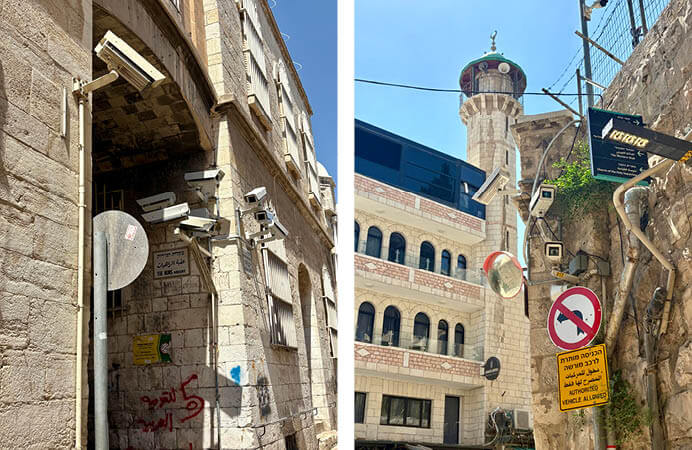
Settler organizations and state authorities use a deeply unequal legal system to evict Palestinian families in areas such as Sheikh Jarrah and Silwan on the basis of alleged historic or ideological ownership claims, while Palestinians are barred from reclaiming properties lost in Jerusalem, particularly the western side, or elsewhere inside the areas Israel took over in 1948. In Silwan, for example, families face demolition to make way for archaeological parks and tourism projects, erasing living communities in favor of a falsely curated narrative. Such practices amount to statebacked systematic transfers of land and people that constitute grave breaches of international law and may qualify as war crimes, crimes against humanity, or even genocide.
The assault is not only physical and spatial but also cultural and symbolic. Palestinian institutions, cultural centers, charities, and even international organizations in Jerusalem are frequently raided, closed, or otherwise constrained. Arabic language and Palestinian heritage are marginalized in public space, school curricula are monitored and dictated, and even funerals and public mourning are policed and criminalized, as seen starkly in the violent repression of the funeral of journalist Shireen Abu Akleh in May 2022. These practices aim to destroy not just the built environment but also the society’s identity, continuity, and memory.
What is happening in Jerusalem is one expression of a system applied across all of Palestine and targeting the Palestinian people as a whole. In the West Bank, Palestinians are confined to fragmented enclaves under permanent military rule while settlements and settler violence expand with neartotal impunity. In Gaza, the logic of elimination has produced catastrophic levels of destruction, killing, starvation, and displacement; a live-streamed genocide. In the Naqab, Bedouin communities face repeated demolitions to clear land for IsraeliJewish development.
Apartheid and genocide are distinct but connected crimes in international law. Apartheid normalizes systematic domination and dehumanization, creating conditions in which genocidal policies become not only thinkable but also executable, especially in an environment of impunity and unconditional support. Genocide includes not only mass killing but also acts intended to destroy a group through the imposition of life conditions calculated to bring about its physical or social destruction, including displacement, starvation, and the destruction of essential infrastructure and social fabric. Across Gaza, and through accelerating displacement in Jerusalem and the West Bank, this legal threshold is no longer a warning but an unfolding reality, rooted in the long, calculated process of deconstruction and destruction of the Palestinian people, known as the Nakba.
Under international law, Israel’s annexation of Jerusalem is illegal; settlements and forcible transfer are illegal; apartheid is a crime against humanity; and genocide is the gravest international crime. In July 2024, the ICJ reaffirmed that Israel’s occupation is unlawful in its entirety and confirmed that all states have binding duties not to recognize the illegal situation, not to assist in maintaining it, and to cooperate to bring it to an end, a finding later echoed by a UN General Assembly resolution calling for the occupation’s end within a year. The same court has issued legally binding provisional measures in the South Africa v. Israel case under the Genocide Convention, yet Israel has continued its policies, while major powers keep arming and shielding it, while attacking international courts and Palestinian human rights organizations engaging with them.
This raises urgent questions: Is this a failure of law, or a refusal to enforce it for geopolitical reasons? What can be done in the face of such an order? International law is deeply marked by its colonial and imperial origins, yet even imperfect legal tools have sometimes halted arms transfers, constrained corporate complicity, or opened pathways to embargoes and sanctions when combined with political mobilization. Law alone will not end the Nakba or liberate our land, body, and mind, but in a moment where evidence is overwhelming and consequence is absent, real accountability must mean cutting military, financial, and political support, imposing targeted sanctions, enacting a comprehensive arms embargo, backing ICJ and ICC processes, protecting Palestinian civil society and human rights organizations, and ending corporate profiteering from occupation and war. Documentation, strategic litigation, boycott, divestment, and sanctions remain tools of survival rather than symbolism. Jerusalem must be at the center of these efforts, even as the window to act to preserve the city narrows.
1 Malek Zablah, “The Theory of Social Resilience in Jerusalem: Between the Hegemony of Occupation and the Tools of Resistance,” Institute of Palestine Studies, August 22, 2025.
2 “Annexing a City: Israel’s Illegal Measures to Annex Jerusalem Since 1948,” Al-Haq, May 11, 2020.
3 Ibid.
4 “COVID-19 and the Systematic Neglect of East Jerusalem,” Al-Haq, July 14, 2020.
 Maha Abdallah is a graduate teaching and research assistant at the Faculty of Law, University of Antwerp. Her research investigates Zionism and the genocide of the Palestinian people, situating the Nakba as an ongoing structural process of destruction and elimination.
