


By Daoud Kuttab
For centuries, Jerusalem has been a magnet for people from around the world. Its geographic centrality at the crossroads between three continents and its profound spiritual significance have given it a name recognition few cities can claim. As the cradle of the three Abrahamic religions, Jerusalem has drawn Jewish, Christian, and Muslim believers for centuries. Its Old City – particularly Mount Moriah, believed to be the biblical site where Abraham was prepared to sacrifice his son in obedience to God – is revered by all three faiths. It is where Jesus Christ was crucified, and it is home to Al-Aqsa Mosque, Islam’s third-holiest site. Yet while this religious significance cannot be dismissed, many residents experience it as a heavy burden that overshadows the city’s cultural and social contributions. For them, the holy sites have increasingly felt like a curse rather than a blessing, as its religious centrality has often obscured its many grassroots achievements.
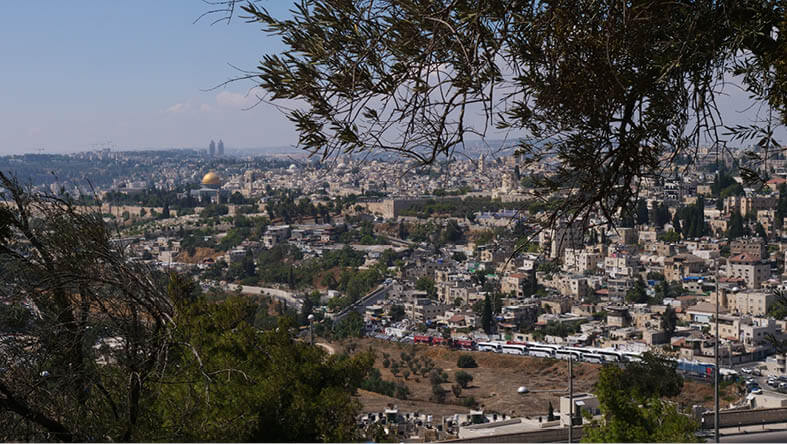
Whether due to its holy sites or for other reasons, Jerusalem has become a political magnet. No politician can survive without paying homage to the city and insisting that it be the capital of whatever entity they represent. This political fixation extends far beyond Palestinians and Israelis. American Christian Zionists have woven Jerusalem deeply into their religious-political ideology, with many relocating to the city in the belief – based on their biblical interpretations – that it will be the site of Jesus’ second coming. Some fall into what psychologists call the “Jerusalem Syndrome,” a rare psychiatric condition in which visitors experience intense religious delusions, sometimes believing themselves to be biblical figures or divine messengers.
Jerusalem has long been a cultural, educational, media, and societal hub. It is simultaneously Palestine’s political and ideological capital, a magnet for education, and a historic media hub. It features a thriving cultural scene, hosts professional unions, and boasts a vivid civic life.
Jerusalem’s importance has long extended into education, media, culture, and professional life. While religious motivations may have played a role in establishing many of its educational institutions, the result, especially in recent centuries, has been that generations of regional leaders received their foundational education in the city.
Among Jerusalem’s oldest educational institutions are the Manjakiyya School (1361), the Umariyya School, the Kamiliyya School (1413), and the Aminiyya School from the Mamluk era. Modern institutions such as the Frères School (1876), the German Schmidt School (1886), St. George’s School (1899), and Ibrahimiyya College (1931) demonstrate the depth and longevity of Jerusalem’s educational heritage.
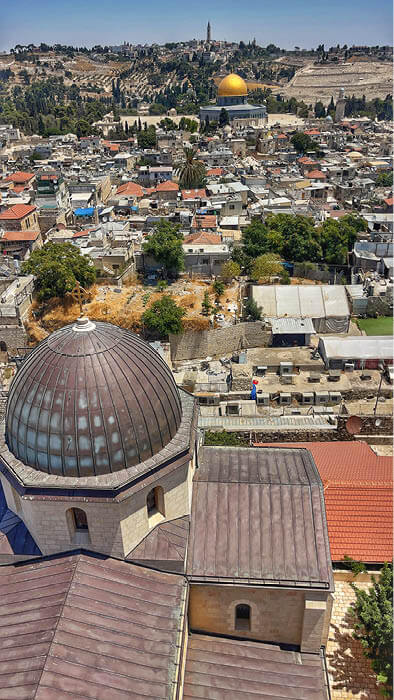
As a historic media hub, Jerusalem was a vibrant center of publishing in the early twentieth century, home to newspapers, magazines, and book presses. After the Ottoman Empire eased press censorship in 1908, Arabic, Hebrew, and Ottoman Turkish papers flourished. Although World War I halted most activity, the British Mandate (beginning in 1920) ushered in a diverse and prolific media environment. By the mid-1930s, more than 250 Arabic and 65 non-Arabic newspapers and magazines circulated in Mandatory Palestine, with Jerusalem as a major hub for the Arabic press.
After the shock of the 1967 occupation, the PLO gained influence. But soon, grassroots and nonprofit organizations reemerged, leading to a cultural renewal in the visual arts, music, and theater. Jerusalem’s civil society associations enjoyed slightly more freedom than their counterparts in the rest of the occupied territories, as they were governed by civilian rather than military law.
Radio added even greater influence. In 1936, the British established the Palestine Broadcasting Service (PBS) with studios in Jerusalem, broadcasting in Arabic, English, and Hebrew. After 1948, Jordan continued operating the station, now based in Ramallah, whose Arabic music programs even attracted Israeli listeners. “Huna al-Quds,” Jerusalem’s pioneering station, became the second radio station in the Arab world after Cairo Radio.
Jerusalem’s cultural life was equally vibrant. Cinemas and theaters flourished, and leading Egyptian and Lebanese artists competed for the opportunity to perform before packed Jerusalem audiences. After the Nakba, East Jerusalem’s cultural scene thrived even further and was immortalized in Fairuz’s famous song “Zahrat al-Mada’in,” one of the most beloved songs in the entire Arab world.
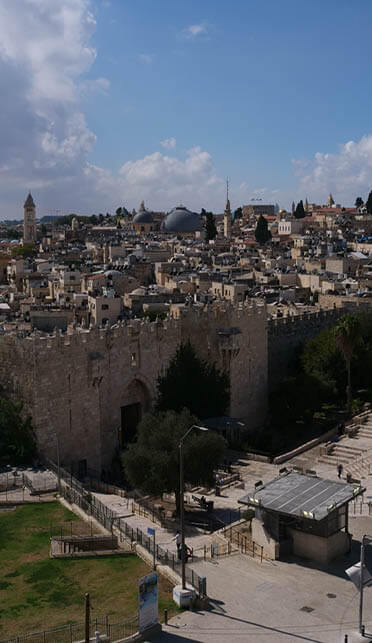
Jerusalem was also a center for professional life. Major unions, including doctors’ and engineers’ associations, based their headquarters in the city, drawing professionals from across Palestine and Transjordan.
The 1967 war and Israel’s occupation of East Jerusalem caused an immediate suspension of many educational institutions, especially after Israel imposed its curriculum during the 1967–68 school year. A mass boycott by Palestinian students forced Israel to reverse course and allow private and waqf schools to maintain the Jordanian tawjihi curriculum, with coordination for matriculation exams continuing through Palestinian education committees.
While the first Intifada amplified Jerusalem’s leadership, the Oslo Accords brought setbacks rather than fulfilling their initial promise. Jerusalem has faced three decades of restrictions, and religious symbolism has replaced the realm of national and cultural identity.
By the mid-1970s, as the PLO gained influence, grassroots cultural and nonprofit institutions re-emerged. Some represented the continuation of older traditions; many others were entirely new. Artists such as Suleiman Mansour and Nabil Anani reshaped Palestinian visual culture – Mansour’s iconic image of a porter carrying Jerusalem on his back became a symbol of the era.
Nationalist music flourished through pioneers such as Mustafa al-Kurd and George Qurmuz, whose songs, often set to the poetry of Mahmoud Darwish, became anthems of the struggle. The Sabreen music group, founded in 1980 by Said Murad and featuring vocalist Kamilya Jubran, blended Western and Arab musical forms into a distinctive sound of resistance.
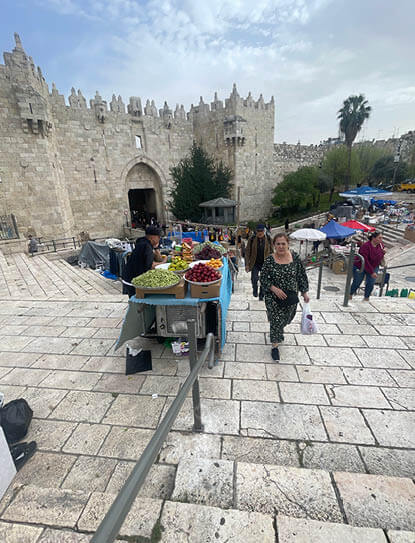
Theater became a vital outlet for Palestinian national expression. Beginning with the Balalin troupe and later the El-Hakawati Theatre, founded by François Abu Salem, the son of a French doctor who treated Palestinians during the occupation, the movement embraced collective, improvised creation. Productions such as In the Name of the Father and the Mother, Mahjoub Mahjoub, and One Thousand Nights of a Stone Thrower toured widely. The troupe eventually purchased the neglected Nuzha Theatre, transforming it into the Palestinian National Theatre, still commonly known as El-Hakawati.
Jerusalem became fertile ground for civil society organizations, aided by the fact that Israeli civilian law, rather than military law, applied in the city. Activists enjoyed slightly more space to operate than their counterparts in Ramallah, Nablus, Bethlehem, or Gaza. Cultural initiatives from Jerusalem spread outward, inspiring art galleries, music festivals, such as the famous Ramallah Summer Festival, and theater troupes.
The PLO’s influence from abroad helped energize unions, women’s groups, student bodies, human rights centers (such as Al-Haq), and nationalist municipalities. Newspapers such as Al-Fajr and Al-Quds, both based in Jerusalem, elevated these grassroots activities across the West Bank and Gaza.
The First Intifada further amplified Jerusalem’s cultural and political role. Figures such as Faisal Husseini, Sari Nusseibeh, and Hanan Ashrawi – all Jerusalemites – became leading voices of Palestinian nationalism. Israel’s refusal to allow Jerusalemites to join the Palestinian delegation to the Madrid Peace Conference forced the creation of a separate steering committee, largely composed of Jerusalem leaders. Hanan Ashrawi ultimately served as spokesperson for the Palestinian delegation.
Although the Oslo Accords initially appeared promising, they quickly resulted in the isolation of East Jerusalem. The eight-meter-high concrete separation wall and the strict permit regime severely undermined Jerusalem’s cultural and civil society life. Activities shifted to Ramallah, while Jerusalem audiences dwindled. Most Palestinians were barred from entering the city, and vehicles with West Bank plates were prohibited. Israeli authorities increasingly cracked down on activities perceived as linked to the Palestinian Authority, even banning children’s puppet festivals at El-Hakawati by military order.
Since the assassination of Yitzhak Rabin and the rise of Benjamin Netanyahu, Israeli policies in East Jerusalem have become even more restrictive. Despite this, some institutions – including the Palestinian National Theatre, Yabous Cultural Centre, and Old City galleries – have persisted, though under constant pressure. Police frequently raid events minutes before they begin, declaring them illegal.
Where the first three post-occupation decades saw flourishing cultural and grassroots life, the past two decades have seen a shift toward religious struggle. The Palestinian national spirit – once expressed through music, art, and theater – has been forced into battles over Islamic and Christian holy sites and the right to worship freely.
The struggle for national and religious identity in Jerusalem has become deadlier. Israel has killed and injured hundreds, demolished homes, restricted movement, and issued bans preventing Jerusalemites from entering Al-Aqsa or, conversely, from entering West Bank cities.
The grassroots national movement that thrived in the twentieth century is now largely absent, surviving mainly through struggles over religious freedoms. Much of the cultural movement has migrated to Ramallah, Bethlehem, and the diaspora, while its remnants in Jerusalem fight for survival in the hope that a political breakthrough might restore something of the golden age.
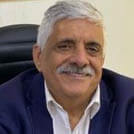 Daoud Kuttab is an award-winning Palestinian journalist from Jerusalem.
