


By Heather Bursheh
In a city where cultural identity is constantly under threat, the National Conservatory of Music (NCM) has become one of Jerusalem’s most resilient institutions. For almost thirty years, it has worked quietly yet decisively against cultural erasure and urban segregation, ensuring that Jerusalem’s Palestinian and Arab identity survives and thrives.
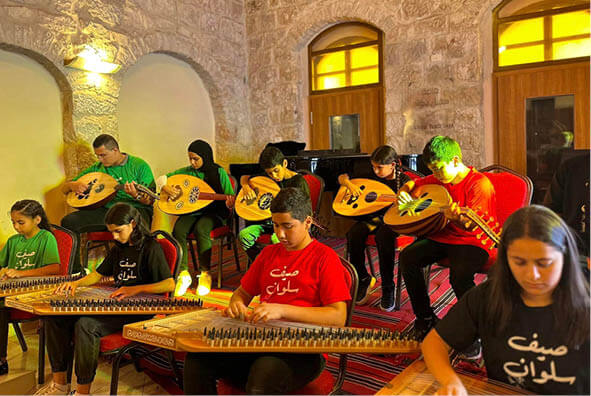
The conservatory began with a simple but ambitious vision: that every Palestinian home should enjoy a living, creative musical culture. What started modestly has become Jerusalem’s most influential Palestinian music institution, a cultural anchor at a time when Palestinian presence is increasingly fragmented by political pressures, geographic barriers, and systematic restrictions.
Palestinians in Jerusalem face ongoing marginalization through policies that restrict movement, limit cultural development, and reduce access to cultural spaces. Against this backdrop, the NCM remains one of the few artistic institutions deeply rooted in the community and open to all.
The National Conservatory of Music provides a musical lifeline, building a generation of musicians against all odds amid efforts to silence and marginalize Palestinian cultural voices.
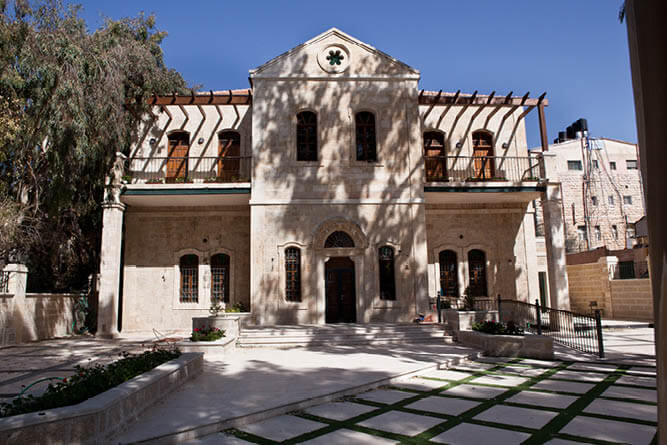
Beit al-Shihabi – the conservatory’s home – is preserved as a cultural and architectural landmark. Built in the late nineteenth century, it stands as a testament to Jerusalem’s Arab heritage at a time when many historic Palestinian buildings have been confiscated or erased. For students and families, it is more than a school; it is a space of continuity and cultural affirmation.
Each year, around 300 students attend lessons and participate in ensembles and community programs in this historic building. For many, it is one of the few cultural institutions accessible without checkpoints, restricted zones, or surveillance. It remains a sanctuary where Palestinian identity is nurtured rather than constrained.
One of the NCM’s major achievements is the training of a generation of Palestinian musicians and educators. Today, 95 percent of its academic staff are Palestinian, and over 60 percent are conservatory graduates. This reflects a deliberate strategy to build local capacity to sustain the core programs, given restrictions on international cultural workers, the lack of free movement between Jerusalem and the West Bank, and otherwise limited work opportunities for musicians and producers of culture. By investing in local talent, the NCM has created a sustainable musical ecosystem. Its graduates now perform and teach locally and internationally, and contribute significantly to Palestinian cultural life.
There are many documented examples of Israeli authorities targeting Palestinian cultural institutions in Jerusalem. On July 22, 2020, Israeli forces raided the NCM and the Yabous Cultural Centre, as well as the home of their directors, Suhail Khoury and Rania Elias. Computers and documents were confiscated, and both were arrested and interrogated before being released on bail hours later.
In recent years, overt repression has been compounded by new policies of soft domination, framed as “inclusion.” Israeli government-backed music schools and arts programs in East Jerusalem now offer subsidized or free classes funded by state taxation, aiming to normalize the presence and permanence of Israeli state structures in Palestinian daily life. Meanwhile, Palestinian institutions such as the NCM rely on fundraising, local supporters, and international donors. This asymmetry – combined with legal and security pressures – risks sidelining Palestinian cultural organizations and elevating state-aligned narratives.
For the NCM and similar institutions, continuing to operate under these conditions is both cultural preservation and cultural resistance.
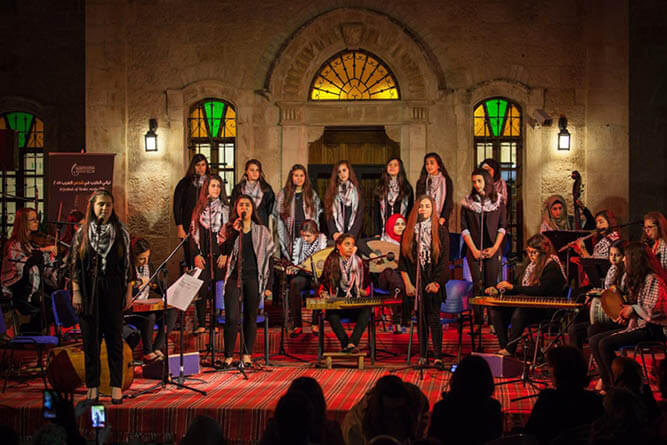
Cultural erasure occurs not only through silencing voices but by shrinking the spaces where expression is possible. Raids and temporary closures of venues such as Yabous and the Hakawati Theatre have affected Jerusalem’s cultural sphere. The NCM responds by bringing music directly into public life. Its students and ensembles have presented hundreds of performances in Jerusalem, attended by tens of thousands of Palestinians – disrupting invisibility and helping rebuild shared cultural space.
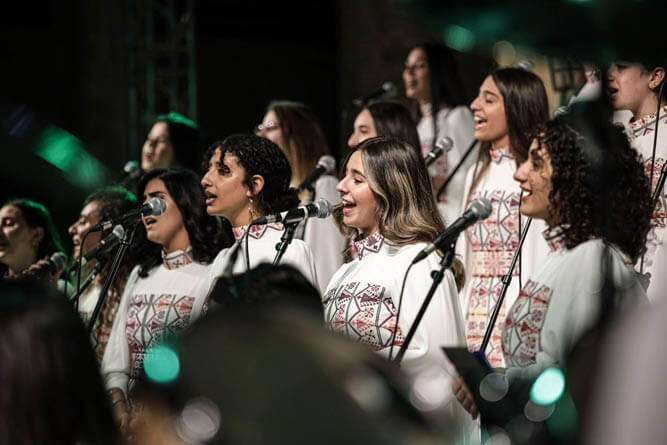
The annual Layali al-Tarab fi Quds al-Arab festival is a key expression of this mission. For more than a decade, it has placed Arabic music at the heart of Jerusalem’s cultural calendar. Held outdoors in the beautiful grounds of the historic Shihabi building, the festival turns public space into a stage, reaching broad audiences, and reaffirming cultural visibility and community connection.
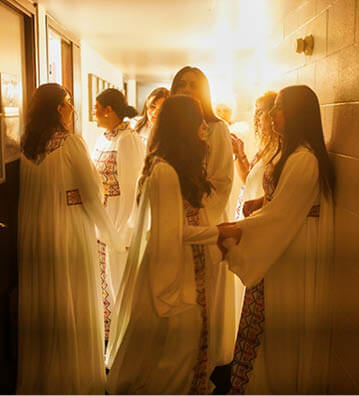
One of the NCM’s most innovative initiatives, the Banat al-Quds (Daughters of Jerusalem) ensemble, brings together young women singers and musicians to perform Arabic music in new ways. Founded in 2013, it has performed internationally, including in Greece, Norway, Jordan, Qatar, Kuwait, UAE, UK, and Ireland, carrying Jerusalem’s musical identity abroad and asserting a narrative that refuses marginalization.
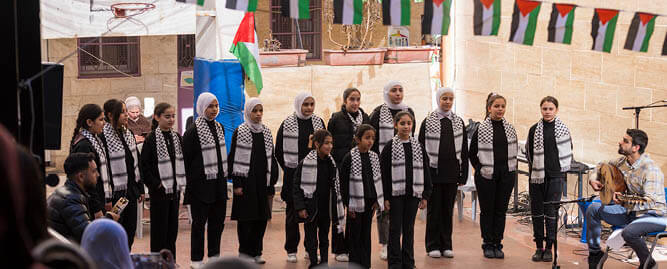
The NCM’s community programs have extended into areas such as the Old City and the Shu’fat refugee camp, offering group lessons at no cost. Its outreach program currently provides free wind-band lessons to Jerusalem schoolchildren to ensure equitable access to cultural participation.
The NCM also runs creative arts camps during school holidays, offering joyful spaces in a city where young people have limited access to safe recreational areas. In a context of segregation and restricted mobility, these programs build confidence, creativity, and community cohesion.
Financial pressure also threatens cultural life in Jerusalem. A deepening crisis has been triggered by political conditions imposed by several European donors, in addition to conditions already levied by American state organizations. These restrictions effectively criminalize the Palestinian struggle for freedom and self-determination. The NCM rejected these conditions on principle, preserving its integrity but losing long-standing financial support. Despite this setback, it continues its mission, finding new ways to sustain its programs and its presence in Jerusalem.
In a city where cultural life is constantly tested, the National Conservatory of Music stands as one of Jerusalem’s strongest expressions of Palestinian continuity. By nurturing musicians, reclaiming public space, and upholding its principles despite political and financial pressure, it shows that cultural life can endure and grow even under constraint. In a city where segregation threatens to fragment community life, the NCM stands as a powerful model of resilience, shaped by music, rooted in identity, and sustained by the collective will to remain visible, connected, and culturally alive.
Heather Bursheh is a musician, educator, and flute instructor at the Edward Said National Conservatory of Music and the bachelor of music program at Birzeit University. Her work encompasses performance, professional development for instrumental teachers, and scholarship focused on music education and musical life in Palestine.
