


By H.E. Mohammad Al Amour
In my role as minister, I review reports filled with data and projections. But the true state of our nation is not found in spreadsheets. It is found in the eyes of a young entrepreneur in Gaza coding through a power cut, in the calloused hands of a farmer in the Jordan Valley, and in the quiet determination of a woman in Nablus managing her family and a small business against all odds. From the heart of our collective pain rises their unbreakable will to build.
My mission, and the mission of this government, is to serve that will. The path forward demands more than reconstructing what was destroyed; it requires a fundamental shift from a mindset of mere survival to one of productive action. Economic resilience is not a government slogan; it is the foundation of our dignity.
For decades, we have seen our economic potential systematically stifled. An economy does not breathe when it is choked by 898 checkpoints and barriers. A business cannot grow under these conditions. Those 60 million lost work hours represent trucks of fresh produce spoiling in the sun, and skilled workers standing for hours in line, all just to get from one place to another This reality was designed to force dependency, trapping us in a cycle of temporary aid. But a life lived on aid is not the future our people demand or deserve. The only dignified alternative is to build for ourselves, driven by the ingenuity I see in every corner of Palestine.
Behind the headlines of checkpoints and barriers, a different story is unfolding in Palestine. It’s the story of a young woman launching a tech startup, an artisan preserving our heritage, and a farmer adopting green technology. Our government’s role is to empower their spirit. We are building an economy where a business can be registered in five minutes, where honest entrepreneurs get a second chance, and where our products can reach any shelf in the world. This is how we build our future: not by waiting for permission, but by creating a new reality, one success story at a time.
Our vision is to cultivate an economy that creates real opportunities for our people. This vision rests on three commitments:
First, we will empower our local producers and connect them to the world. I have seen the quality of Palestinian goods, the craftsmanship, the innovation. Our identity is woven into what we create. That is why we are proud of the new TURATHI Center, funded by our partners in India, which is dedicated to preserving our cultural heritage by empowering artisans with modern technology. We are boosting exports through the TASDEER program that gives companies the tools to compete globally. And through the SAWA 2 project, we are helping small businesses adopt green and circular economy practices.
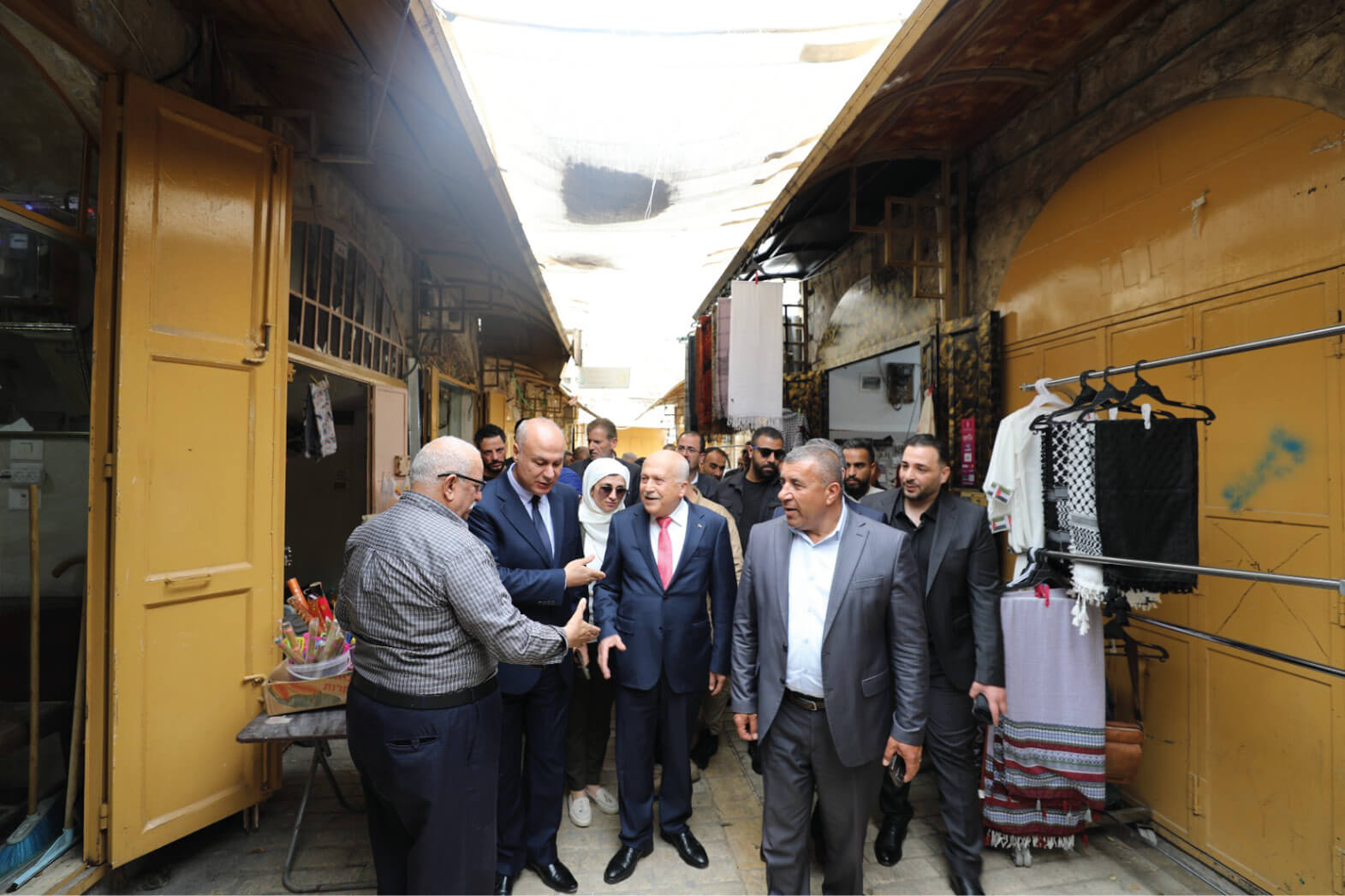
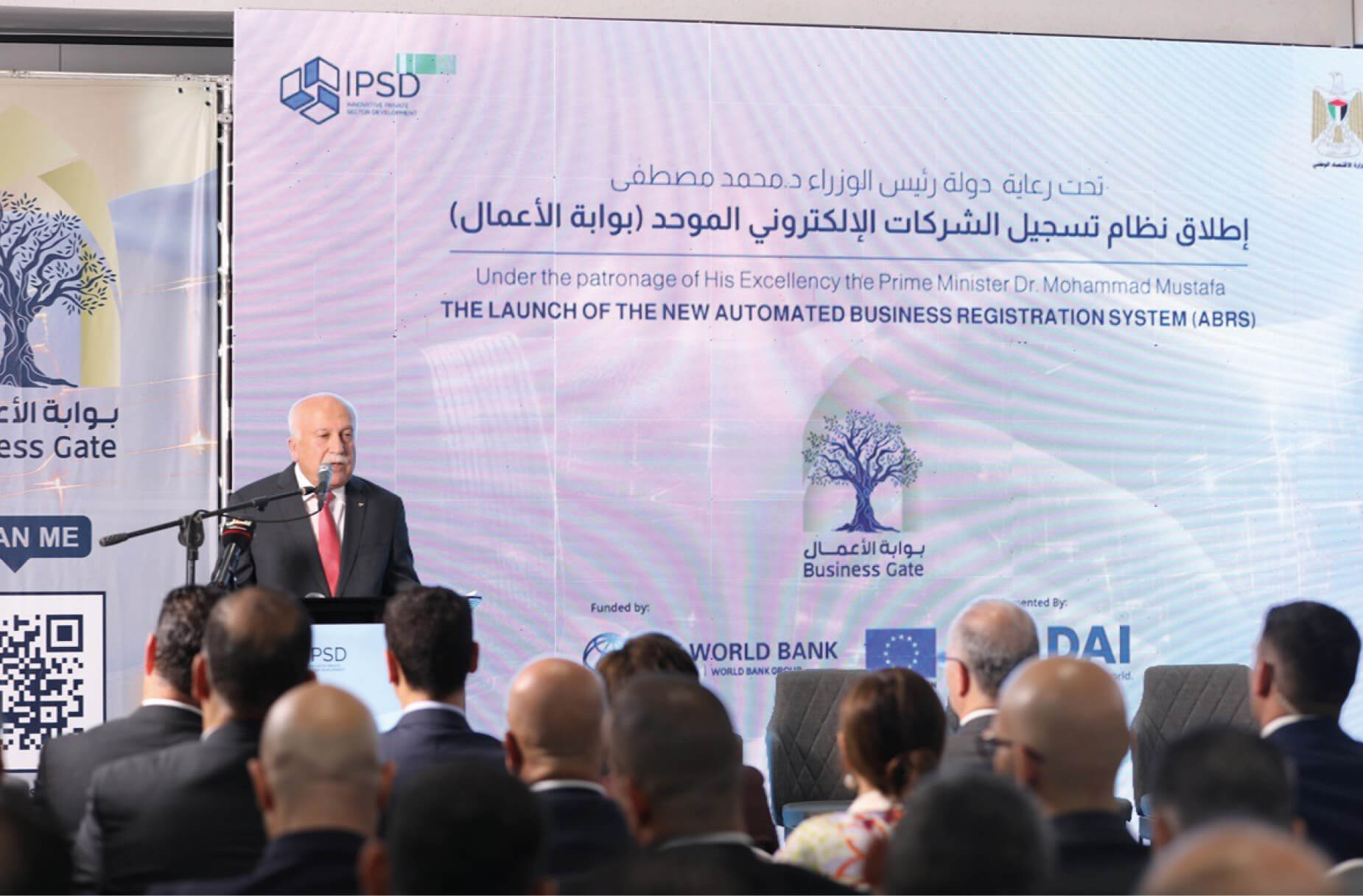
Second, we will ensure that everyone has a fair chance to succeed. A resilient economy leaves no one behind, especially our women and youth. This is why we are launching the PROSPER project with support from Canada, a five-year initiative to create sustainable jobs for women and youth in the vital sectors of agribusiness and renewable energy. We are unlocking our tech potential through the $24 million IPSD project, which provides direct grants to innovative startups. And through the A-FIN II program, we are working with banks to see the person behind the loan application and providing entrepreneurs with the financial literacy to turn their vision into a viable business.
Third, we will build a government that serves, not suffocates. We are building a modern regulatory environment that fosters trust and growth. We recently approved the E-commerce Law to protect digital transactions. Critically, we are finalizing a modern Insolvency Law, because a strong economy is one that gives honest businesses and individuals/consumers a second chance to rehabilitate, not one that punishes failure. A sound insolvency framework encourages new investment, guarantees fairer access to credit for our small businesses, and strengthens our entire financial system. By also joining the global GS1 organization, we are enabling our products to carry internationally recognized barcodes, opening the doors to global supply chains.
This vision is not a dream. For those looking to invest in Palestine, we are creating a secure and predictable environment with a new Investment Law that protects your contributions.
To our partners and our diaspora, we say: Join us in building a new model of partnership. Let’s move beyond temporary funding and co-invest in projects that create a future. We seek partners who will help us build capacity, measure our shared success through clear, tangible results, and solve root problems for good.
Skeptics will ask how this is possible. My answer is that we build our sovereign future in the present. Every company we register in five minutes, every law we modernize, and every product we prepare for a global shelf is a brick in the foundation of the independent Palestine to come. We do this not as a substitute for our political rights, but as a powerful expression of them.
Ultimately, economic freedom is the path to political freedom. Palestinians do not aspire merely to survive; we are determined to build, to create, and to thrive. Our work is to plant the seeds of a dignified future worthy of the unwavering steadfastness of our people.
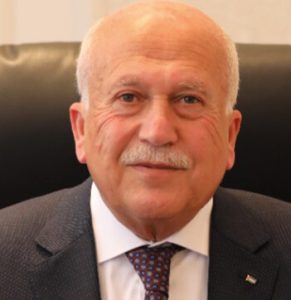
H.E. Eng. Mohammad Al Amour is the Minister of National Economy of Palestine. A distinguished business leader with extensive experience in the private sector, he has founded several successful companies and previously served as chairman of the Palestinian Federation of Business Associations. As minister, he is focused on advancing institutional reform and building a resilient, self-reliant economic future for Palestine.
