


By Raja Khalidi
Economists following Palestinian economic development issues are no longer surprised by the volatile and uncertain economic scene and by the recurrence of structural economic challenges, which result from over 55 years of occupation of Jerusalem, the rest of the West Bank, and the Gaza Strip. Developmental, economic, and social goals as well as technical concepts and solutions have been adopted over the years to address problems that, at their core, are produced by unresolved political contradictions that arise from the limited legal jurisdiction of the Palestinian Authority (PA) and its diminished political reach.

Anyone following this journey, especially since the Oslo era, knows well how the concepts, programs, and policy and economic priorities of the PA on one hand and the donor countries and their international organizations on the other have intertwined. The latter come with messages, goals, templates, and methodologies of “sustainable development” that they aim to plant in Palestine in the hope that they will sprout in the form and substance of good “Palestinian economic governance.” Perhaps the most enduring among these various concepts summarizes the thinking that has predominated in attempts to deal with the conflict over the many decades of Palestinian economic history: It acknowledges that there can be no development under prolonged occupation, and proposes “steadfastness” as an attainable goal for economic policies – indeed steadfastness was the only feature one could hope for in the pre-2023 stagnation phase.
Over its long history, the concept of sumud, steadfastness, has generated numerous studies and writings that blend its various meanings and contexts, which has led to a distancing from its original meaning and intent. Modern variant terms have been floated, such as “resistant” or “emancipatory” steadfastness, which aim to recognize the original meaning of the concept that included the acknowledgment of the Palestinian right to resist the occupation and efforts to achieve independence and true sovereignty.
For the past 30 years, we have witnessed the various stages of international aid to Palestine, delivered within mandates of either “promoting the peace process” (international donors) or “providing assistance to the Palestinian people” (UN agencies). Aid flows have approached a total of 44 billion dollars over those three decades. Each phase had its specific goals that changed according to political shifts and international funding agendas. Since the mid-2010s, serious discussions have taken place between donors and Palestinian partners regarding the future role of donor funding, especially with the lack of any political horizon. The realization of the dead end of Oslo/Paris challenged the conventional development-aid concepts that might have justified continued intervention (and spending) in Palestinian economic, political, security, and financial affairs under an Israeli occupation that clearly is showing no signs of packing up.

On the eve of the 2023 war, a press release issued by the World Bank – donors’ preferred intellectual patron – regarding new programs planned for the Palestinian water sector reads as if that institution had discovered how to reinvent the Palestinian developmental wheel. This old wine in new bottles called for terms to keep pace with the current phase and take into consideration the Palestinians’ political sentiments and their frustration with the entire international community for leaving Palestine “behind the curve.”
What may have gone unnoticed, however, by those who follow the World Bank’s work in Palestine, which of course has delivered a lot of good results over 30 years, is the dressing up of such routine projects in a locally colored guise, framing them in ways that aim to give momentum and charm to what are actually very mundane infrastructure projects. Such work has for over half a century been at the heart of the Bank’s global mandate. In Palestine, however, such projects are presented as “enhancing Palestinian water resilience and sustainability,” which seems to be a nice way of saying that Israel controls all Palestinian water resources.

So where, one might ask, did they come up with this developmental concept and this catchy term? At first glance it may seem that the Bank’s use of the term resilience (sumud) in the Palestinian context reflects a concept that has been derived from international developmental experiences, localized, and translated into the Palestinian context in order to frame international programs, as evidenced by its use by several countries and donor institutions that operate in Palestine. But could it be that the concept of sumud (originally translated as “steadfastness”) has its Palestinian history, one that is unrelated to the international understanding of the word or the purpose of its use at this particular stage?
To appreciate the meaning of “steadfastness” in the post-2023 context – where it permeates the discourses and policies of a wide spectrum of Palestinian and international institutions as a central goal of their funding – it is useful to delve a bit into its history. Each party that uses the term does so based on its own vision and interests, without there necessarily being a common understanding between what the World Bank, the PA, or any economic researchers or policy makers might mean by incorporating the concept into their discourse. While the concept of steadfastness is translated into technical applications through development plans and projects by donor countries in various sectors, aiming to achieve family, community, or natural resource resilience, it is worth noting the origin of the concept, its intention and meaning that date back to an entirely different era.

Sumud’s first developmental translation was in a distinctly political and Palestinian context: It was conceived 50 years ago, when the “Egyptian victory” in the October 1973 war led to a political process that resulted in the first Arab-Israeli normalization agreement while also proving a setback for the unified Arab stance and for Palestinian aspirations for an independent Palestinian state. At that stage, only 10 years had passed since the occupation of the West Bank, Jerusalem, and the Gaza Strip, and the economic situation of the Palestinian people in the occupied territories was not yet threatened, although regional developments were beginning to threaten the liquidation of the entire Palestinian cause.
Therefore, when in 1978 the Arab Summit was held in Baghdad, with the aim of a pan-Arab isolation of Egypt , its slogan was “The Conference of Confrontation and Steadfastness.” This reflected the Arab opposition to the Israeli-Egyptian-American alliance, and ensured a united Arab position that rejected normalization and stressed the persistence of the Palestinian people in their land and their ability to confront the occupation. This means that the underlying political motivations for the concept’s entry into the political scene were liberationist and humanitarian, and that steadfastness and resistance were understood not as separate notions but rather as complementing each other.
In the decades that followed the Baghdad Summit, the concept was readily taken up by Palestinians to frame important developmental political initiatives that were introduced both from within the occupied territories and outside. Thus, in the early 1980s, in both Jerusalem and Amman, two ambitious economic programs were established.
The first was a comprehensive Palestinian embodiment of the concept of practical steadfastness, realized through the convening of the Development for Steadfastness Conference in 1981 in Jerusalem, organized by the Arab Thought Forum. This conference resulted in a monumental research book to which the first generation of Palestinian sociologists, economists, and planners contributed, led by the engineer and activist Ibrahim Dakkak. This valuable collection formed a reference for original scientific research from the front lines, analyzing the devastating effects of the occupation on all aspects of Palestinian life, and proposing policies and strategies to ensure development and steadfastness. The aim was to strengthen the struggle to end the occupation and dismantle the settlements, a goal that at the time seemed reasonable and enjoyed broad Arab and international consensual support.
A parallel development was the establishment of the Joint Jordanian-Palestinian Committee to Support Steadfastness in the Occupied Territories, which served in the 1980s as a clear indication of new Arab alliances. It particularly aimed at mending the rift between the Palestinian and Jordanian sides, ten years after the battles between the Jordanian army and the Palestinian resistance. The committee was tasked with managing the Supporting Steadfastness Fund to which Arab states contributed around half a billion dollars over the following years (rather than the billion originally pledged). The committee allocated these funds to agricultural, cooperative, housing, educational, productive, media, and research projects in the form of grants and loans (mostly nonrepayable), distributed through institutions and individuals with affiliations to both sides in one way or another. The Jordanian side was headed by the Minister of Occupied Territories Affairs, while the Palestinian side was headed by Khalil al-Wazir (Abu Jihad), the military commander of Fatah in the occupied territories. He certainly appreciated the importance of material support to people’s steadfastness under occupation, but his primary focus, until his assassination in 1988, remained on integrating development into a broader doctrine of resisting the occupation.
Thus, within a few short years of Palestinian economic history, a dilemma emerged that remains valid to this day. It is perhaps the only one that can be considered meaningful in the context of confronting a war of extermination: the correlation between efforts to achieve a degree of development to bolster the necessary human, social, and economic resilience and those to enable the Palestinian people to resist colonialism and defeat the occupation. Simply put, Palestinian economic resilience is meaningless, and possibly self-defeating, when detached from steadfastness/resistance. This bold phase of organized Palestinian action, directed both internally and externally, was followed by the years of the first Intifada and its various radical economic and social movements, alongside violent resistance.

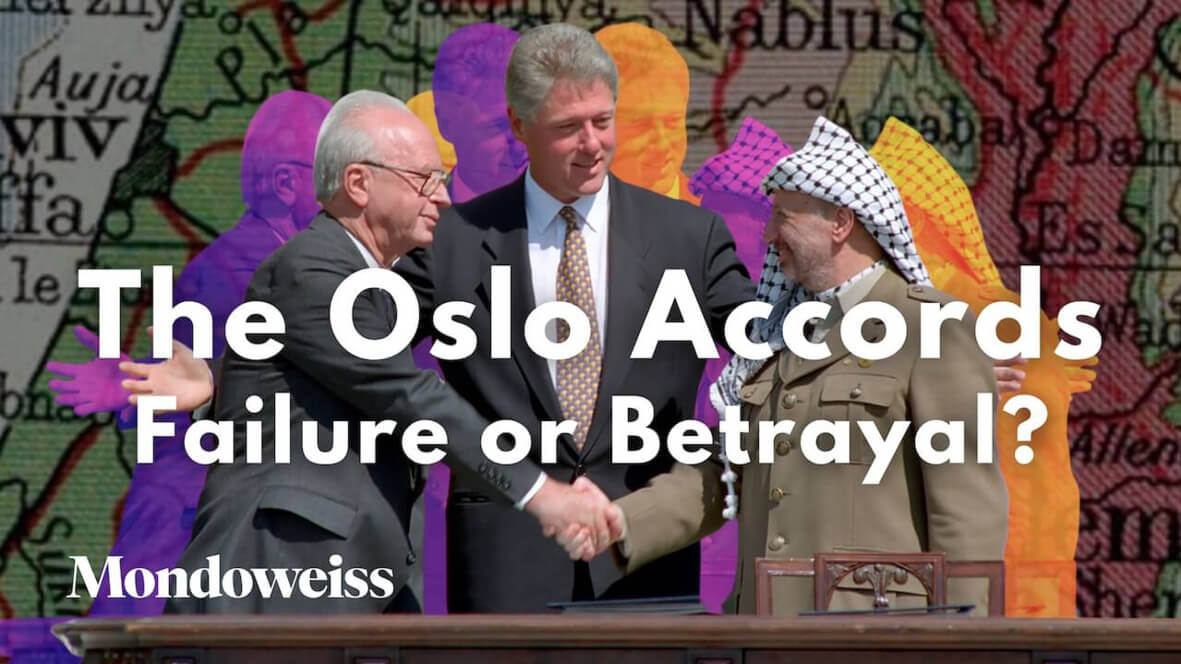
However, the Palestinian development vision, struggle, and aspirations were radically transformed following the shift in political circumstances and the balance of power, particularly after the Gulf War and the 1991 Madrid Conference. Then came the achievement of Professor Yusif Sayigh and a team of experts, drawn on talent from within and outside Palestine, who in 1993 developed the Development Program for the Palestinian National Economy for the Palestine Liberation Organization (PLO). Yet this monumental vision could not withstand the recalibration of Palestinian development aspirations by the political limits of non-sovereign development that were agreed by the PLO under the Oslo/Paris Accords, beginning in 1993. For a couple decades at least, sumud was largely relinquished to the back pages of Palestinian development doctrine.
Fast forward to 2023: On the eve of the war, the PA was on the verge of adopting a development program to lock in a less politicized interpretation of the concept to batten down the hatches and weather an assumed six years of no political horizon. This latest iteration (promoted by a well-intentioned but weary UN agency) dubbed “transformative resilience,” appropriated the term to suit a liberal, nonconfrontational agenda, much like its use in promoting routine infrastructure projects. This latter formulation is perhaps the most insidious yet floated, as the intended transformation is supposedly toward a better life: jobs, services, and other individual gains, without offering any real change to the structural problem of occupation and the denial of sovereignty. Those promoting this resilience message do not claim that it would bring the Palestinian people closer to their national goal of independence, only that it may enable them to not be erased or left behind by globalization.
At the same time, even in the wake of the Gaza War earthquake, we witness the continued use of the resilience slogan by Palestinian leaders who call on the people to rally around it in the absence of any alternatives beyond supporting the people’s continued presence on their land. At points in the war, many Gazans on social media disparaged their compatriots in the West Bank and elsewhere for saluting their sumud at a moment when they were facing extinction.
This raises critical questions for observers of the Palestinian political and development landscape as to how and why the organic link between resilience and resistance in the Palestinian vision has been abandoned, whereby development and resilience become ends in themselves, no longer fashioned as a means to liberation. We have already seen how international parties sympathetic to the Palestinian cause (without being able to address the root cause of the Palestinian people’s deprivation of their rights) can find a plausible justification for continuing to support the Palestinian people, using program themes that align with Palestinian development plans, which were themselves formulated with the aim of supporting steadfastness.
The question, already legitimate before 2023 and pressing today, is whether the experience of 30 years of transitioning from an authentic development doctrine to imported interpretations of it – without achieving development or realizing the project of liberation and independence – will be repeated in the indefinite normalization of the term “steadfastness,” as it is transformed into a repetitive pattern of planning and Palestinian life and aspirations.

The harmony between international actors and the PA on the strategy of resilience might be seen as reflecting best practices in international aid provision, that is, international funding that responds to the visions of the recipient. However, the problem here is that despite the convergence on the broad slogan, this agreement masks a “dialogue of the deaf” between the two sides in Palestine. The Palestinian people always understood and practiced in their daily lives steadfastness as a means to liberation, not as an end in itself, a goal, or a mere living condition. For donors, it’s a buzz word.
While Palestinians legitimately can claim copyright to the concept of sumud, this comes not out of attachment to the term, but from compulsion: Meanwhile, friendly donor countries and agencies, despairing any radical change in the status quo, have surrendered to the power of Israeli colonialism on the ground and globally. Even in the face of a devastating war of extermination targeting everything Palestinian, their programs, policies, and projects for Palestinian steadfastness are stripped of any liberationist vision or objective, especially under the pressure of Israel and the United States, as they dehumanize their assistance to Palestine. They are detached from the obligation of working to implement international resolutions and agreements that are supposed to protect and realize Palestinian rights, and they refrain from any confrontation with unilateral Israeli actions.
At a moment when steadfastness is no longer the challenge that Palestinian development is facing, and confronting the impacts and risks of genocide will continue to be a primary goal, survival becomes the overarching theme for tomorrow. There are no textbook or World Bank policies for managing an economy amidst a genocide, except surviving it and repulsing it. While donor programs may succeed in providing relief to the Palestinian people by providing basic necessities and fostering limited technical improvements – however beneficial in themselves – the history books will explain most likely that such engagement perpetuated the occupation and, even worse, risked complicity in its crimes.
Raja Khalidi is a development economist who has widely researched, published, and lectured on Palestinian economic conditions in Lebanon, in the Arab region in Israel, and in the occupied territories. After serving as senior economist with the United Nations Conference on Trade and Development (UNCTAD-Geneva) until 2013, between 2019 and 2025, he was director-general of the Palestine Economic Policy Research Institute (MAS), the premiere Palestinian economic think tank.

Sumud it is used so much by Palestinian from Masafer Yatts, Jordan vally , popular struggle committee for their resistance to stay in the land – youth Sumud Thank you this week in Palestine