


By Oroub El-Abed
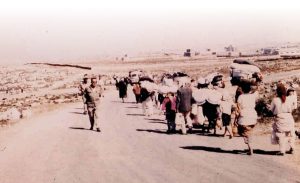
The Palestinian refugee experience is one of the most protracted in modern history. More than seventy years after the 1948 Nakba, over 15 million Palestinians remain scattered across the world. Around six million live in urban settings in Jordan, Lebanon, and Syria, while others continue to endure cycles of displacement in Gaza and the West Bank. Yet despite this centrality, Palestinian refugee voices have consistently been sidelined in official negotiations. The Oslo process, for instance, relegated the refugee issue to the margins by treating it as a “final status” question. Meanwhile, humanitarian agencies such as UNRWA – though indispensable in providing services – have largely institutionalized refugees as passive beneficiaries rather than political actors in their own right. This persists even though more than 22,000 of UNRWA’s own teachers are Palestinian refugees themselves.1
Gayatri Spivak’s famous question “Can the Subaltern Speak?” resonates powerfully in the Palestinian context.2 Refugees are rarely heard as political subjects with rights; instead, they are spoken about in terms of humanitarian need, security risk, or demographic burden. Their political claims and demands for legal protection are either ignored or deliberately silenced. This erasure reflects wider colonial and imperial structures that render Palestinian suffering visible only when framed as humanitarian victimhood, but illegible when expressed as organized resistance.
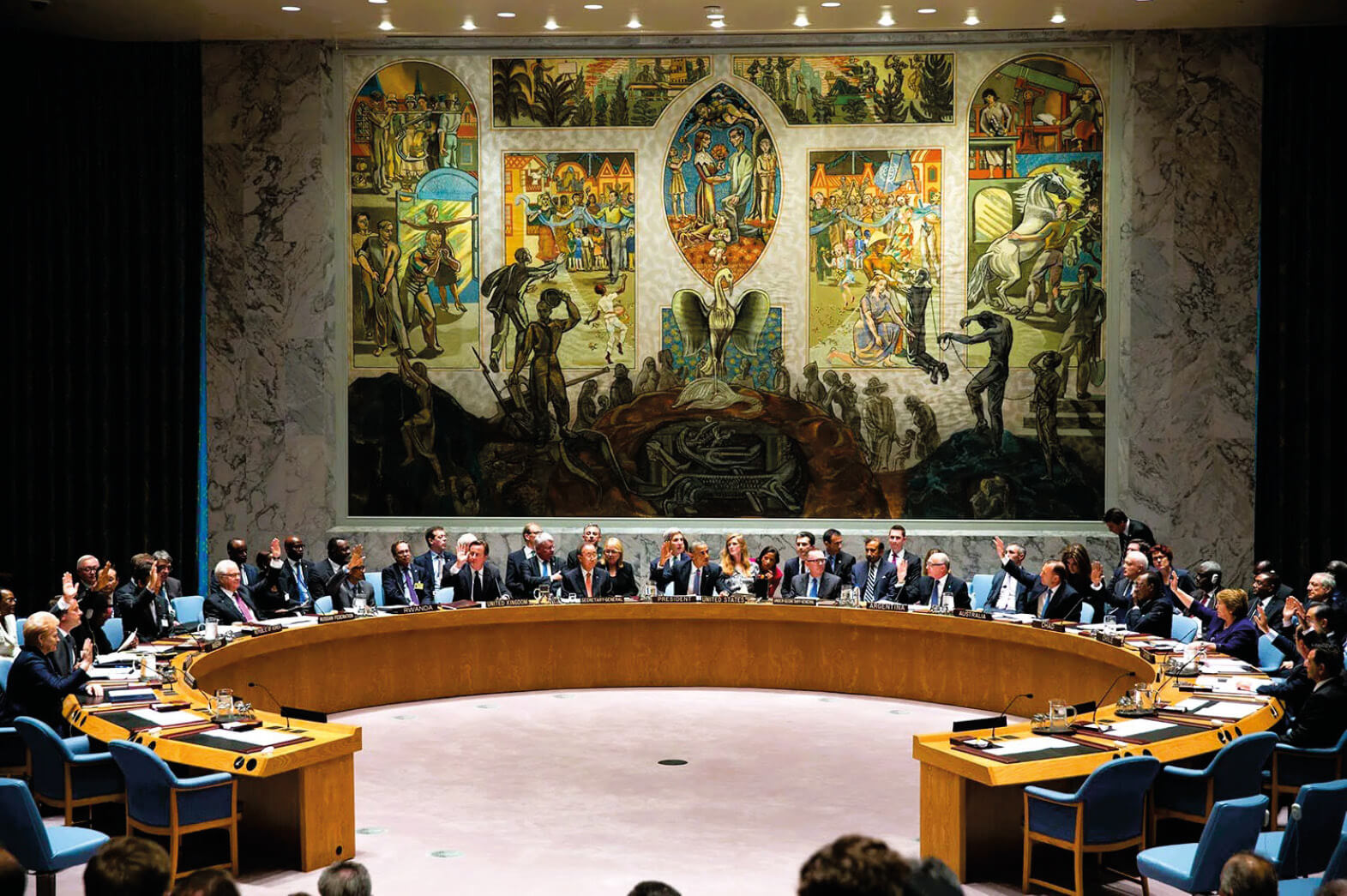
Palestinian refugees’ suffering is not confined to occupation, spatial confinement, or denial of rights under Israeli control. It also extends to conditions of limbo in host countries, where many are denied permanent residency, legal protection, or the right to full participation in society. Generations remain stranded in spaces where their mobility is restricted, their livelihoods are precarious, and their futures uncertain. International institutions – including the UN – have repeatedly failed to secure even the most basic human rights guarantees for these communities, leaving Palestinians unprotected caught between exclusion at home and neglect abroad.
Palestinian and refugee voices must be centered in scholarship, policy, and activism in the struggle for justice, rights, and return.
The silencing of Palestinian voices has always gone hand in hand with the systematic colonial transfer of indigenous Palestinians. Since the earliest stages of the Zionist project, displacement has been both a by-product of conflict and a deliberate strategy. As early as 1879, when the first Zionist agricultural colonies were established in historical Palestine, the idea of removing Palestinians from their land was tied to the vision of creating an exclusive Jewish homeland. This strategy reached its most violent expression in 1948, when David Ben-Gurion, the founding prime minister of Israel, described Palestinian removal as “easier than [that] of any other”3 precisely because of the assumption that neighboring Arab societies shared culture, religion, and geography, making integration possible elsewhere. This logic reduced Palestinians to a population that could be transferred at will, stripped of their rootedness, and economically integrated into the vastness of the Arab world as per the Interim Economic Survey Mission and the UNRWA working agenda. It has been an argument not only for dispossession but for erasure: if Palestinians could be absorbed by “similar” societies, their claim to a distinct homeland could be denied, and their very identity rewritten as interchangeable with other Arabs.
The strategy has gone beyond territorial conquest. It has been an assault on culture and history, attempting to sever Palestinians from their ancient presence on the land, including their origins as Canaanites whose ties long predate modern national claims. This has entailed an assault against generations, dismantling the bonds to the past, family roots, and space. For Palestinians, the denial of belonging has gone far beyond the question of homeland – it has been a denial of their very existence. Those forced from their homes are not simply people displaced by war; they are confronting a system designed to make their uprooting permanent, their absence normalized, and even their starvation reframed as a grotesque form of “diet” against obesity. Their right to return – whether to the houses of their refuge in Gaza following the Nakba or to the ancestral homes of their forebears – is rendered unthinkable in dominant narratives. The persistent refusal to recognize Palestinian refugees, who resist against the colonial status quo, as political subjects is not new but a continuation of the same logic that has long sought to erase them. To deny their voice is to deny the memory, and the future, of Palestine itself.
Nowhere is the insistence on Palestinian voice more urgent than in Gaza. Subjected to recurrent wars, a 17-year blockade, and now devastating destruction that amounts to the continuation of ethnic cleansing, Gaza embodies both the precarity and resilience of Palestinian life. The international community often frames Gaza through the language of “humanitarian crisis,” yet this vocabulary strips the violence of its political roots. As scholars such as Ilana Feldman and Noura Erakat argue, the crisis in Gaza cannot be divorced from the structures of settler colonialism and military occupation.4
The urgency of Palestinian voice is no less evident in the West Bank, where daily realities of settler colonialism unfold in insidious but equally devastating ways. Settler attacks against civilians, often carried out under the protection of the Israeli military, have become routine, targeting homes, schools, and farmers tending their land.5 Roads are cut and restructured into a network of “belt roads” that carve up Palestinian towns and villages into isolated enclaves, echoing the logic of South African bantustans under apartheid.6
This fragmentation is not incidental; it is a calculated system of control, designed to make Palestinian life unlivable and entrench permanent separation. The violence extends to the land itself. Centuries-old olive trees, symbols of rootedness, livelihood, and continuity, are routinely uprooted, burned, or destroyed by settlers.7 Sacred spaces in Hebron, Nablus, and Jerusalem are frequently violated, transforming places of worship and community into contested battlegrounds. In Hebron, ethnographic work has documented how checkpoints, curfews, and settler harassment around the Ibrahimi Mosque structure every aspect of Palestinian daily life.8 In Jerusalem, Palestinians face not only the violation of settlements but also systematic attempts to erase their presence from the city, whether through home demolitions, residency revocations, or restrictions at Al-Aqsa Mosque.9 Like Gaza, the West Bank embodies both precarity and steadfastness, enduring structured, legalistic, bureaucratic, and normalized exclusion.10 Elisions of citizenship, rights, land access, and mobility are embedded in the mundane workings of discriminatory Israeli law, administration, and military orders. Palestinians continue to resist the fragmentation of their land and the desecration of their heritage, insisting on their right to remain, to worship, and to live freely. To center their voices is to hear not just stories of dispossession, but affirmations of belonging that defy the machinery of apartheid.
The narratives of Palestinian refugees must shape global discourses on colonialism, liberation, and epistemic justice.
Outside Palestine, refugee camps remain vital spaces of both exile and belonging. In Lebanon, Syria, and Jordan, camps have long been portrayed as sites of poverty and violence. Yet ethnographic research shows that camps are also repositories of collective memory and resistance.11 Oral histories of ethnic cleansing circulate across generations, embedding the right of return as a nonnegotiable principle in everyday life. In Jordan, where over two million registered refugees reside, Palestinians negotiate their identities as both citizens and refugees, navigating complex realities of integration and exclusion.12 By foregrounding their perspectives, the struggle for rights extends beyond repatriation – it encompasses claims to political voice, labor rights, and recognition in host societies. Such narratives complicate simplistic portrayals of refugees as passive victims. Instead, they reveal them as active participants shaping their futures, whether through grassroots organizations, educational initiatives, or transnational advocacy networks.
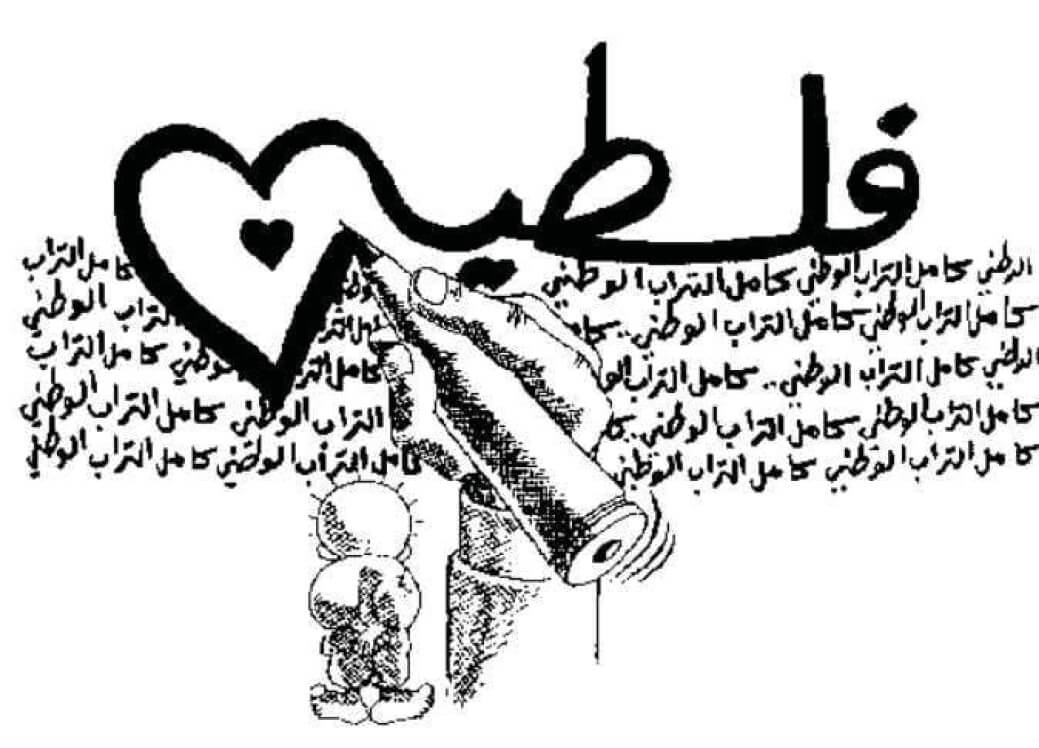
The Palestinian diaspora, from Chile to the United States to Europe, adds another dimension to the conversation on voice and return. Across continents, these communities carry with them the memory of displacement, weaving it into art, literature, and activism that keep the call for justice alive. Edward Said described exile as both a profound loss and a vantage point for critique.13 Today, Palestinian writers, artists, and organizers in the diaspora embody this duality. They connect their own struggles with global movements for decolonization and racial justice, transforming exile into a platform for solidarity and resistance. Initiatives such as the Palestinian National Conference, the Popular Conference for Palestinians Abroad, and the 14 Million Palestinian Initiative reflect the agency and determination of Palestinians in the diaspora to remain engaged and politically active. The resonance of Palestinian activism with movements like Black Lives Matter demonstrates how diaspora voices not only amplify Palestinian claims but also situate them within a broader fight against settler colonialism and systemic racism. In this way, Palestine is reframed as part of a universal struggle for justice – one that binds communities together across borders.
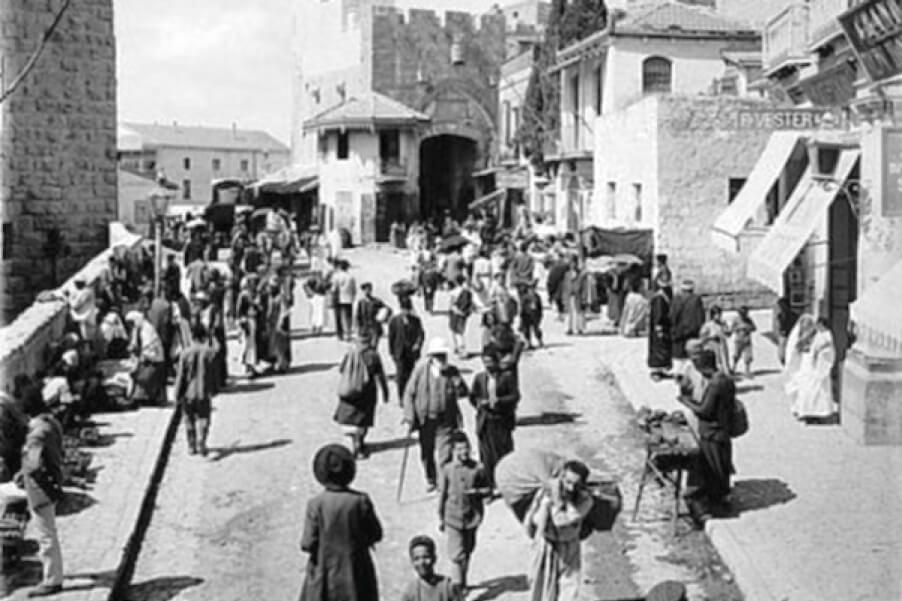
Central to Palestinian voices is the demand for the right of return, enshrined in UN Resolution 194 but consistently deferred or dismissed in international negotiations. Critics often portray return as unrealistic, yet refugees themselves articulate it not only as a legal claim but as an existential and moral necessity. Anthropological research shows that the idea of return is deeply interwoven with identity, memory, and dignity.14 Moreover, Palestinians define return in diverse and evolving ways. For some, it entails physical repatriation to ancestral lands. For others, it involves recognition, reparations, and the ability to live with dignity in historic Palestine. What unites these perspectives is the refusal to accept erasure. By centering refugee narratives, scholars and policymakers confront the reality that Palestinian futures cannot be charted without acknowledging these voices.
Academic engagement with Palestine carries responsibilities. Too often, scholarship reproduces hierarchies of knowledge, privileging international experts over Palestinian researchers and community voices. Calls for epistemic justice demand that those who live the struggle also define it.15 This requires not only citing Palestinian voices but also integrating their perspectives into the frameworks that guide analysis. Methodologically, this means decolonizing knowledge production, privileging oral histories, grassroots archives, and collaborative research practices that shift authority toward Palestinian communities. Politically, it entails resisting frameworks that reduce Palestinian claims to humanitarian appeals, insisting instead on centering rights, liberation, and justice as Palestinians themselves define them.
Exclusion is a form of violence.
To center Palestinian and refugee voices is to reframe the Palestinian struggle from the ground up. It is to listen to Gazans who speak of survival as resistance, to refugees in camps who preserve the right of return across generations, and to diaspora activists who link Palestine to global decolonial struggles. Their narratives unsettle dominant paradigms, reminding us that justice for Palestine is not a matter of policy negotiation alone but of recognizing the people whose lives embody the struggle. For scholars, policymakers, and activists, the task is clear: Palestinian futures cannot be imagined without Palestinians at the center. Anything less perpetuates the silencing that has long defined this history.
1 Julie Peteet, Landscape of Hope and Despair: Palestinian Refugee Camps, University of Pennsylvania Press, 2005; Sari Hanafi, Governing Palestinian Refugee Camps in the Arab East: Governmentalities in Search of Legitimacy (Working Paper #1, Issam Fares Institute for Public Policy and International Affairs, American University of Beirut), 2010.
2 Gayatri Chakravorty Spivak, “Can the Subaltern Speak?” in Marxism and the Interpretation of Culture, University of Illinois Press, 1988; and Oroub El-Abed, Unprotected: Palestinians in Egypt since 1948, Institute for Palestine Studies, 2014.
3 “The transfer of Arabs is easier than the transfer of any other [people]. There are Arab states around… And it is clear that if the [Palestinian] Arabs are transferred this would improve their situation and not the opposite,” David Ben Gurion, cited in Benny Morris, The Birth of the Palestinian Refugee Problem, 1947–1949, Cambridge University Press, 1987.
4 Ilana Feldman, Life Lived in Relief: Humanitarian Predicaments and Palestinian Refugee Politics, University of California Press, 2018; and Noura Erakat, Justice for Some: Law and the Question of Palestine, Stanford University Press, 2019.
5 B’Tselem, State Business: Israel’s Misappropriation of Land in the West Bank, 2021.
6 Eyal Weizman, Hollow Land: Israel’s Architecture of Occupation, Verso, 2007; and Gershon Shafir, A Half Century of Occupation: Israel, Palestine, and the World’s Most Intractable Conflict, University of California Press, 2017.
7 Lori Allen, The Rise and Fall of Human Rights: Cynicism and Politics in Occupied Palestine, Stanford University Press, 2013.
8 Helga Tawil-Souri, Dina Matar, Gaza as Metaphor, Hurst & Company, 2016.
9 Daniel Seidemann, Jerusalem: The Dangers of the Status Quo, Chatham House, 2012.
10 Adi Ophir, Michal Givoni, Sari Hanafi (eds.), The Power of Inclusive Exclusion: Anatomy of Israeli Rule in the Occupied Palestinian Territories, Zone Books, 2009.
11 Rosemary Sayigh, “Palestinians in Lebanon: Harsh Present, Uncertain Future,” Journal of Palestine Studies, 27(1), 37–53, 1998.
12 Oroub El-Abed, “The Discourse of Guesthood: Forced Migrants in Jordan,” in Anita Fabos and Riina Isotalo (eds.), Managing Muslim Mobilities: Religion and Global Migrations, Palgrave Macmillan, 2014.
13 Jalal Al Husseini, “Jordan and the Palestinians,” in Atlas of Jordan, Ifpo, pp. 230–245, 2013.
14 Edward Said, Reflections on Exile, Granta, 1984.
15 Rosemary Sayigh, “Palestinians in Lebanon: Harsh Present, Uncertain Future,” Journal of Palestine Studies, 27(1), 37–53, 1998; and Sari Hanafi, Palestinian Refugees: Identity, Space and Place in the Levant, Routledge, 2008.
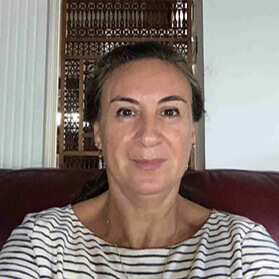
Dr. Oroub El-Abed is an adjunct associate professor at Birzeit University and a nonresident fellow at the Centre for Conflict and Humanitarian Studies in Doha. She holds a PhD in political economy of development from SOAS, specializing in forced migration. Her research focuses on refugees and vulnerable minorities in the Middle East, with extensive experience advising policymakers and international organizations. She is currently designing and leading Gilded Roots, a mobile exhibition archiving Palestinian displacement as a living tool of memory and refuge.

This is a thoughtful and eloquent exploration of voice, power, and representation, offering readers a nuanced understanding of how narratives are shaped, constrained, and amplified within political contexts. I appreciate the care with which the article centers lived experience while critically examining the structures that determine whose voices are heard and whose are marginalized. The writing is both reflective and incisive, striking a balance between analytical depth and moral clarity. Overall, it is a meaningful and humane contribution that encourages attentive listening, ethical engagement, and a deeper respect for the politics of expression.