


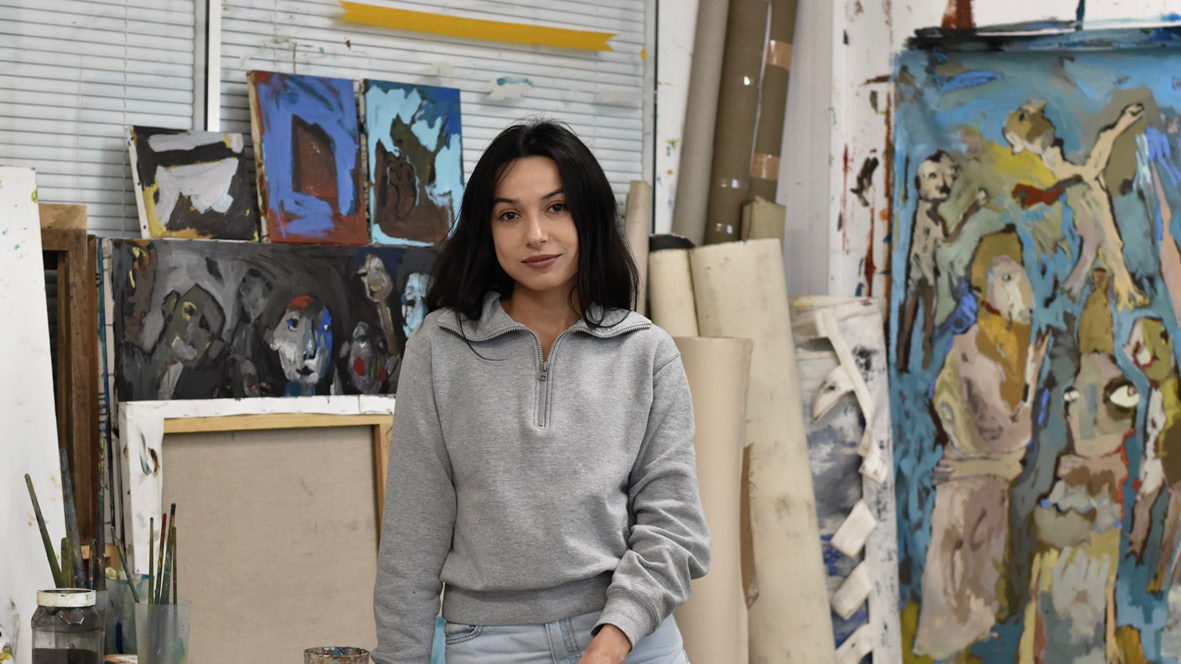
Palestinian artist Reem Al-Natsheh has long turned to the power of stories to shape her artistic journey. Her paintings, deeply inspired by Palestinian folktales, weave together imagination, collective memory, and lived experience to create a visual language that speaks both to the past and to the current reality in Palestine.
Palestinian art-lovers or fans can find her work at the Palestinian Artists’ Consortium Website, where they can see how Reem turns Palestinian traditional folktales into paintings. These folktales passed down through generations are cultural and political metaphors that reveal the fabric of Palestinian identity. “The folktale is a reflection of people’s cumulative culture,” she explains. “It embodies the national character, imagination, and resilience of our people.” In her work, Reem reinterprets these oral traditions by visually reconstructing their characters and narratives in an abstract way. She describes her style as “naïve and primitive art in a contemporary dialogue,” where childlike wonder and historical depth converge.
One of her most striking inspirations is the tale of Nos Nsais, the small but extraordinary child born from a magical apple. In Reem’s retelling, this character embodies resistance against oppression, transforming from a folkloric hero into a metaphor for the Palestinian struggle for justice. The magical apple, she suggests, symbolizes the possibility of radical transformation, challenging unjust realities while inspiring liberation.
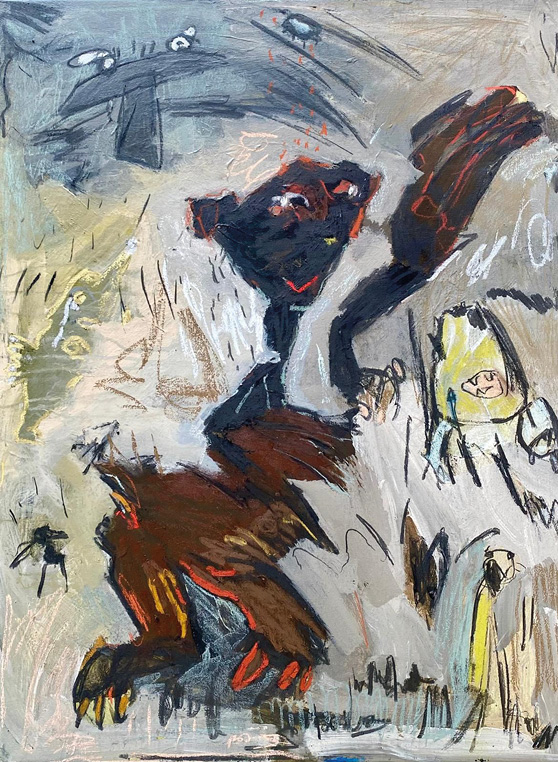
Beyond storytelling, Reem’s work grapples with the profound concepts of home and exile. Growing up under occupation, with restricted movement and fragmented towns and cities, she internalized a paradoxical sense of belonging and estrangement. “Being in a place doesn’t always mean truly being there,” she reflects. This paradox continues to shape her exploration of homeland and exile, where memory, geography, and personal experience intersect. Her art transforms the idea of home into both a dreamscape and a metaphor – a space where resilience, nostalgia, and transformation coexist.
The themes of displacement, resistance, and identity are central to her visual language. Reem uses abstraction and layering to express the tension of these experiences. Characters in her paintings often appear suspended, fragmented, or in metamorphosis, reflecting the fragile yet persistent nature of identity under displacement. “The layering process,” she explains, “is a testimony of identity – never fixed, always evolving.” In some works, earlier layers resist disappearance, while in others they merge, mirroring how collective and personal histories coexist in Palestinian life.
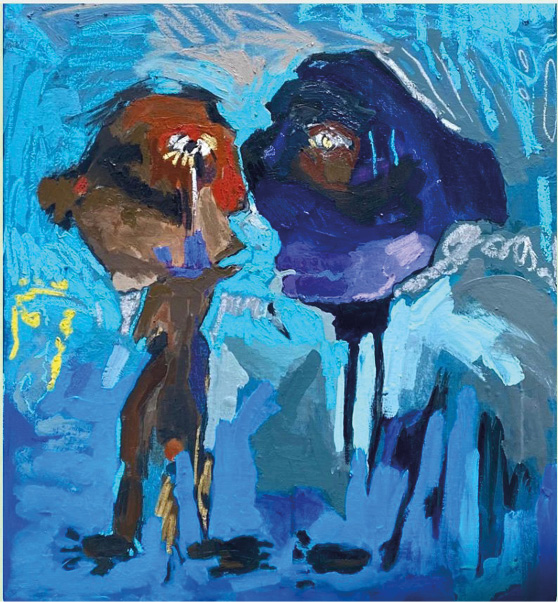
Her artistic evolution has also been shaped by political realities. From witnessing the second Intifada to the ongoing wars on Gaza, Reem has experienced the deep imprints of violence and dispossession. She recalls soldiers invading her school and neighborhood, and how, as a child, she mistook these intrusions for normal life. With time, she understood them as dehumanizing acts – experiences that now underpin the urgency of her art.
Yet, amid pain, Reem insists on the necessity of hope. “Hope and pain are intertwined,” she says. “If art leans too much on hope, it risks becoming detached from reality; if it dwells only on pain, it risks despair. My challenge is to balance the two.”
For Reem, resistance is both sacred and multifaceted – political, cultural, personal. Art, she believes, is a vital form of cultural resistance: a way of challenging dominant narratives, sustaining collective identity, and inspiring resilience. While it may not directly alter power structures, it ensures that the stories of her people continue to be told, remembered, and reimagined.
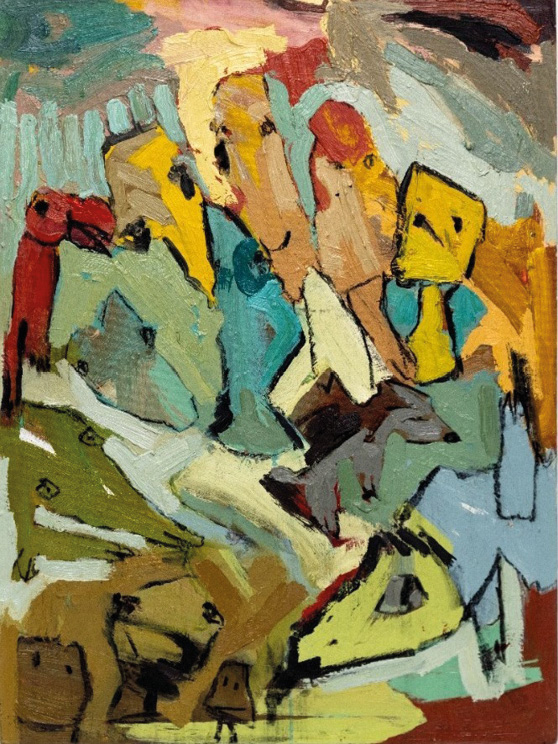
Through her brush, Reem transforms folktales into living testaments of survival, creativity, and defiance. In doing so, she reminds us that stories – like art – can resist erasure and nurture the hope for liberation.
