


By Aimee Shalan
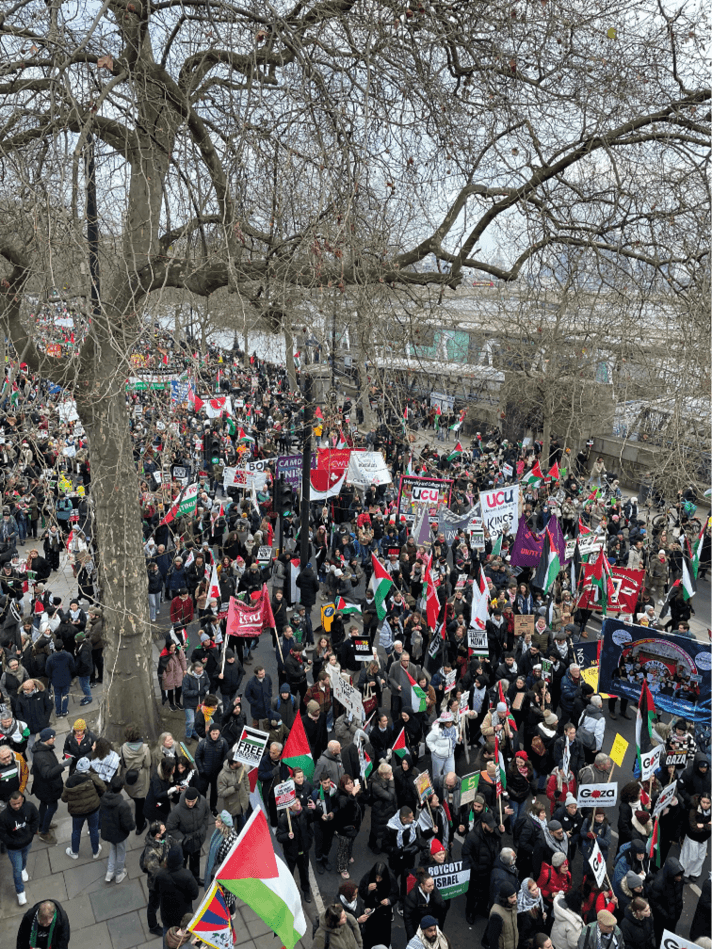
Being a Palestinian in Britain has never been easy, but over the past six months, the political establishment, the mainstream media, and educational and cultural institutions have closed ranks in unprecedented attempts to consolidate their censorship and repression of Palestinians and our allies. But, despite attempts to silence our voices, to depict support for Palestinian liberation as “extremist,” and to stifle public protests with the introduction of draconian legislation and governmental guidelines, we have witnessed the biggest national protests in support of Palestine in British history, with hundreds of thousands of people taking to the streets every other week, again and again. And as I write this, hundreds of trade unionists are blockading major arms factories in England and Scotland that are manufacturing weapons supplied to Israel – a testament to the tireless work of groups such as Workers for Palestine.
As Israel’s genocide in Gaza continues, and the surveillance, incarceration, and killings of Palestinians across historic Palestine intensifies, the extent to which Palestinian lives are considered to be of lesser value by the British establishment could not be clearer. Politicians across the political spectrum have given Israel the green light to commit atrocities with impunity, while pressure to silence and erase Israel’s long-standing history of oppression, and Britain’s ongoing role in it, has been massively stepped up.
The effort and resources being put into quelling calls for Palestinian freedom, justice, and dignity are testament to the power and resilience of Palestinian voices and allied activists who refuse to give in to fatalistic or cynical indifference, or attempts to immobilize history and maintain an unjust order.
The coalition of groups organizing the national marches calling for a ceasefire in Gaza includes the Palestine Solidarity Campaign (PSC), whose director is a British Palestinian, and the Palestinian Forum in Britain, a Palestinian-led organization working to serve the Palestinian community here. For many years, these groups have played a key role in shifting public opinion toward support for Palestinians during every major military assault by Israel – from its invasion of Lebanon and siege of Beirut in 1982 (when the PSC was established), the devastation it wreaked on Palestinian communities during the first and second intifadas, and its war on Lebanon in 2006, to its attacks on Gaza in 2008/9, 2012, 2014, 2018–19, and during the Unity Intifada of 2021. PSC is the largest Palestine solidarity organization in Europe with close to 100 branches in towns and cities across Britain, and affiliations from 15 trade unions that represent millions of British workers. Since October 7 last year, the number of those signing up to receive regular information from PSC has grown from over 75,000 to close to 300,000.
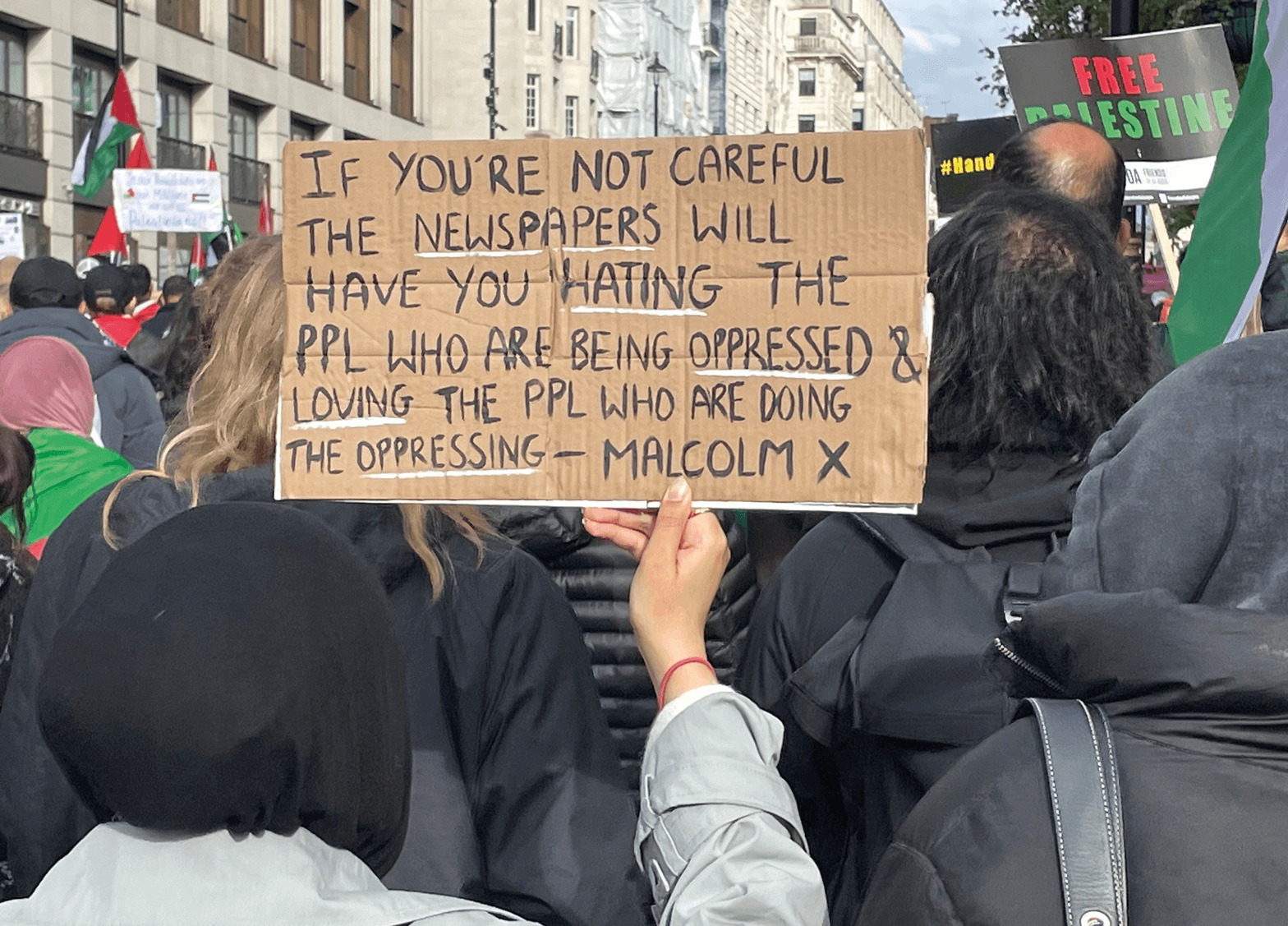
Each Israeli assault has strengthened the foundations of a Palestinian solidarity movement that over the past six months has grown in a quite extraordinary way. The movement’s power is similarly rooted in the dedication of many members of the Palestinian diaspora who have been working in different ways across a wide variety of grassroots, alternative media, and human rights organizations, as well as cultural and educational institutions. It is precisely because of the strength of our message that the British government has been doubling down on deepening its support in recent years for an ideology bent on privileging Israel’s status and stability at the expense of Palestinian lives, history, and culture.
Methods of repression have included: threats to withhold funds from public institutions; attacks on nonviolent civil society tactics, such as Boycott, Divestment and Sanctions (BDS), which push for Israel’s accountability; the demonization and defamation of individuals and organizations; and the chilling effect of the highly controversial International Holocaust Remembrance Alliance (IHRA) definition of antisemitism, which many British cultural and educational institutions have been pressured into adopting and which is being used to justify virtually any allegation of antisemitism. All of this promotes a climate that encourages cancellations of Palestinian-related events and self-censorship because people are either too frightened or exhausted by the relentlessness of attacks to speak out.
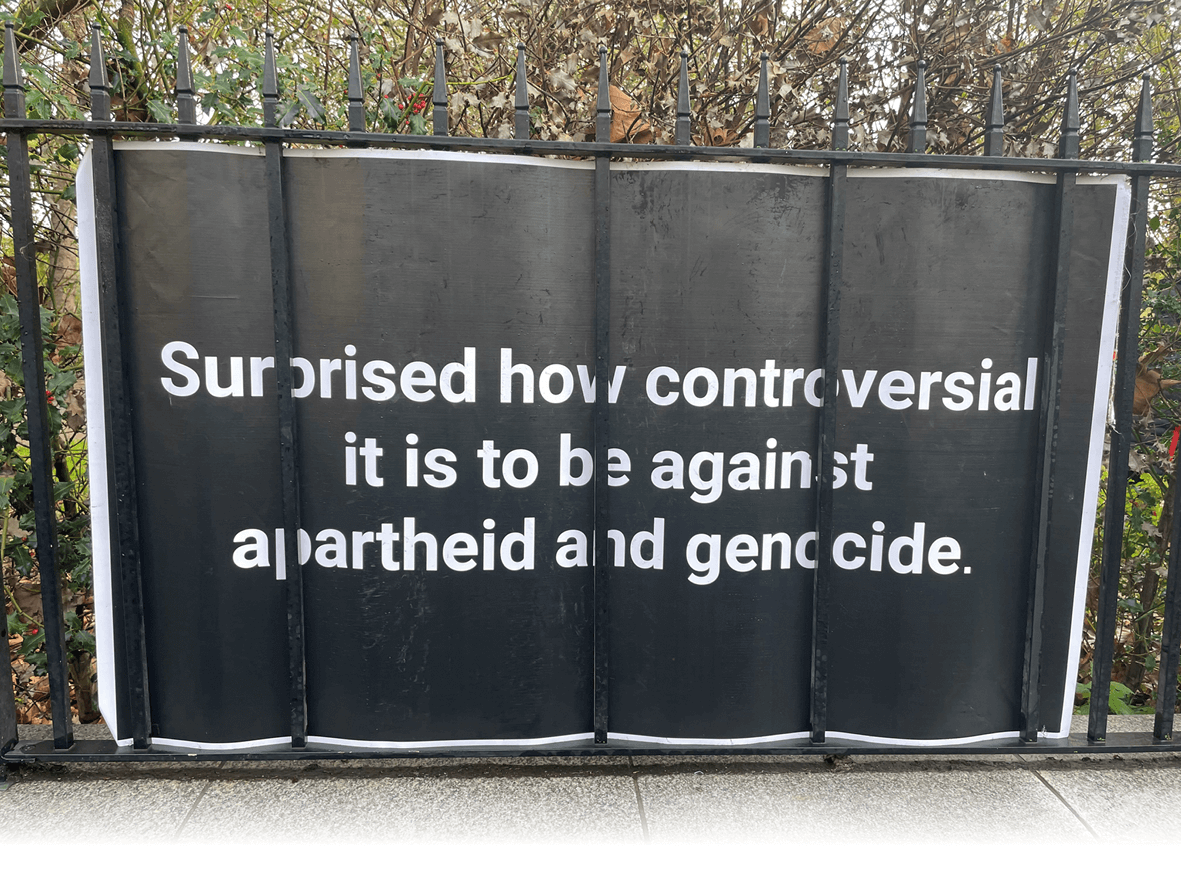
Yet as these efforts escalate, Palestinian activists and their allies are proving all the more determined to push back. In 2016, the British Palestinian Committee (BPC), an independent group of British Palestinian academics, lawyers, human rights defenders, analysts, and others advocating for Palestinian rights, was set up with the aim of ensuring that British-Palestinian voices are integral to public discourse and policymaking on Palestine. The BPC focuses on three key areas: shifting policy paradigms to uphold and defend Palestinian rights; reclaiming and expanding civil society space to ensure that Palestinians and other marginalized communities play an active role in the public sphere; and strengthening presence, connections, and impact by integrating Palestine together with other anti-colonial and anti-racist causes in Britain. Over the past six months, the committee has been intensifying its engagement with senior political figures, helping to coordinate urgent work within the wider ecosystem for Palestinian rights, while expanding its own network of British Palestinians and articulating Israel’s atrocities of genocide across major media outlets.
The pro-Israeli bias of Britain’s mainstream media has gone into overdrive since October. A recent report by the Centre for Media Monitoring (CfMM) based on the largest statistical analysis of media coverage during the first month of Israel’s invasion and bombardment of Gaza, scrutinizing 176,627 news clips across 12 (mainly British) news channels, as well as an estimated 25,515 online news articles from 28 media websites, has shown the extent to which coverage has favored Israeli narratives over the framing and context of Palestinian voices. Representatives and supporters of Israel have been allowed to dehumanize Palestinians on air, with no substantial pushback from news presenters, who have exhibited significant lapses in basic fact checking and verification. Palestinian symbols, including the Palestinian flag, have been used to illustrate stories on “antisemitism,” and the use of terms such as “ethnic cleansing” or “genocide” has been dubbed “loaded” and “inflammatory.” The stamina and eloquence of Palestinians in Britain, many of whom have lost family members in Gaza and who have continued to go on air to speak the truth, have been remarkable in the face of such hostility.
British schools and universities, many of which have adopted the IHRA definition, have attempted to severely limit the space for Palestinians to assert their rights. On October 17, 2023, a letter was sent to UK schools and colleges by Secretary of State for Education Gillian Keegan, Minister for Schools Nick Gibb, and Minister for Skills, Apprenticeships and Higher Education Robert Halfon. The letter echoed the sentiments of a previous letter sent to all head teachers by the former education secretary in the aftermath of a wave of protests in solidarity with Palestinians during the Unity Intifada in 2021. The three ministers expressed unwavering solidarity with Israel, referring to the £3 million of extra funding earmarked by the prime minister to provide political support to Israel through the Community Security Trust, “to protect schools, colleges, nurseries and synagogues and other Jewish community buildings.” They did not use the words “Palestine” or “Gaza” once. While the letter purports to take a stand against discrimination and bias, in reality it stifles pupils of Palestinian origin from speaking about their own history and lived experience and censors pupils wishing to show solidarity with Palestine.
The appalling injustice of the British government’s diplomatic and military support for Israel while it commits genocide in Gaza is keenly felt by Palestinian students who are intensely aware of the hypocrisy of their schools – many of which encouraged them to organize events in solidarity with Ukraine but are now suggesting that a bake sale in support of the people of Gaza is “too political.” Gillian Keegan and Robert Halfon also sent a letter a few days earlier to every university vice chancellor expressing concern repeatedly and at length about statements by student societies that support Palestinians, which might be felt as hurtful by Jewish students, “given that so many have friends and family based in Israel.” They made no reference at all to the potential distress or protection of Palestinian students, including those with family in Gaza. Instead, they told VCs to pay particular attention to any invitations issued by staff and students about the issue and to ensure that any such events do not provide a platform for “illegal speech.”
It is in this context that the Palestine Youth Movement in Britain has extended its Ghassan Kanafani Resistance Arts Prize for 2023–24, with the aim of providing a space for youth to re-engage with the Palestinian narrative and explore the complexity of Palestinian identity in the shataat (exile). The prize, which is open to Palestinian and Arab youth between the ages of 16 and 30 who currently reside in Britain, focuses on the legacy of resistance among Palestinians and how to resist oppression in their particular context.
Palestinian faculty, researchers, and students at universities across Britain are also playing an active role as part of Scholars Against the War on Palestine (SAWP), a transnational coalition of scholars who represent the social sciences, humanities, medicine, law, and science, technology, engineering, and mathematics, heeding the call from Palestinian higher education institutions and the Palestinian Campaign for the Academic and Cultural Boycott of Israel (PACBI) for the academic world to take urgent action to stop Israel’s genocide in Gaza.
Similarly, attempts to silence the voices of Palestinians and their allies in the cultural sphere are being tackled head on. The cancellation of the Eurovision Party London, one of the city’s biggest and most popular live broadcast parties, was announced on March 17 by the Rio Cinema in East London, citing Israel’s participation in the contest as the reason for the cancellation. This is in response to PACBI’s Boycott Eurovision campaign.
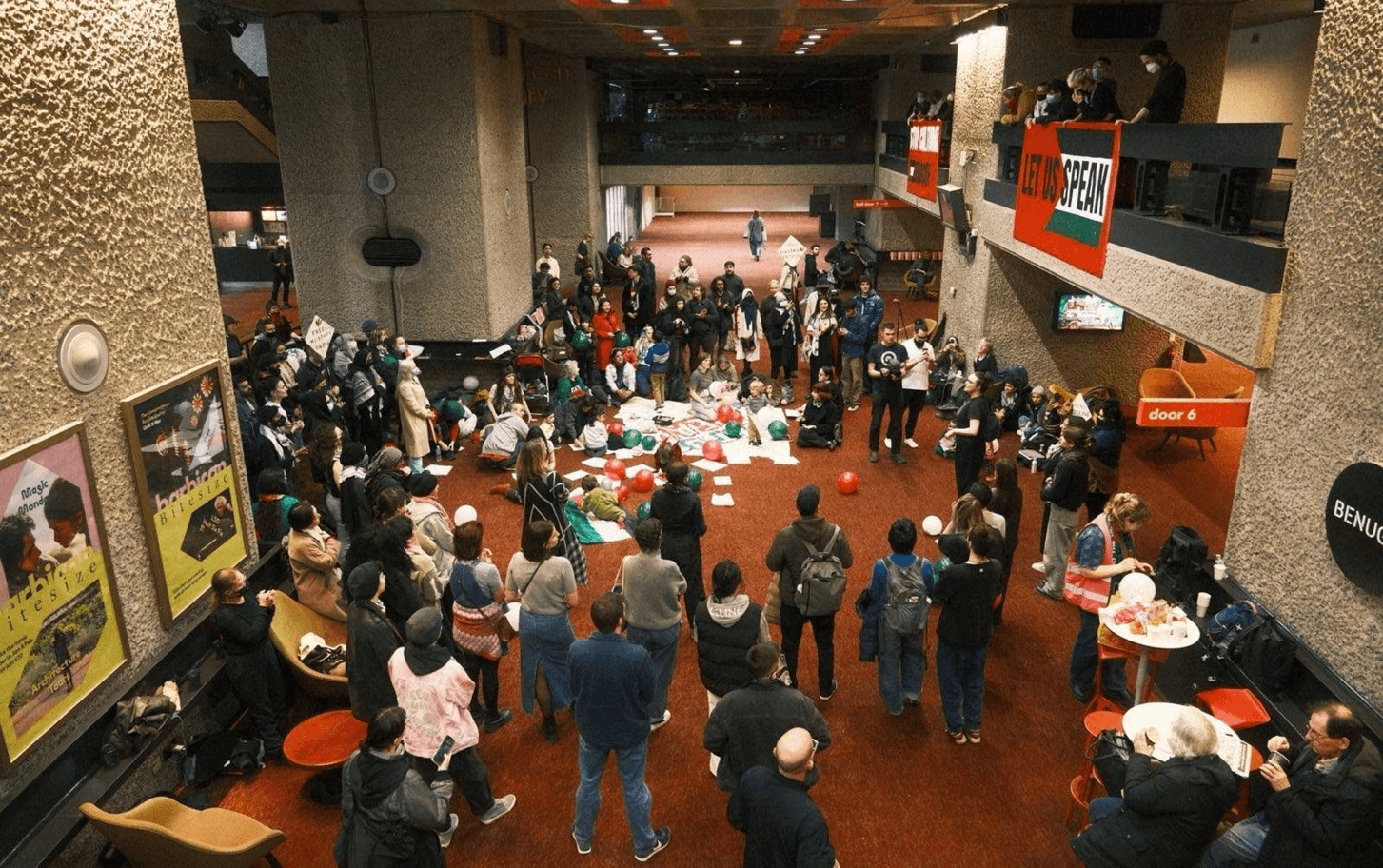
And on March 16, 2024, Culture Workers Against Genocide occupied the Barbican Centre in London, protesting its complicity in censorship – which has inspired several high-profile artists to withdraw from its programming – by staging a “guerrilla festival” of Palestinian art, filling its foyer with poetry and dance by Palestinian artists. The group is demanding full transparency over the Barbican’s decision-making process, the inclusion of Palestine in its Anti-Racism Action Plan, and a public apology from the center for all historic cancellations of Palestinian and pro-Palestinian voices.
The hostility waged against Palestinians by the British establishment is having the opposite effect. The actions mentioned above are just a few examples of the many and diverse forms of solidarity activism in Britain today. The wave of protests across the country since the beginning of Israel’s genocidal assault is reshaping perceptions. And as support continues to grow, more and more groups and individuals are seeking to deepen their understanding of Palestine and to develop their skills to be more effective advocates. As a result, in the past two and a half months alone, Makan, the educational organization I work for, has trained more advocates wanting to speak up for Palestinian freedom, justice, and dignity than during the whole of last year.
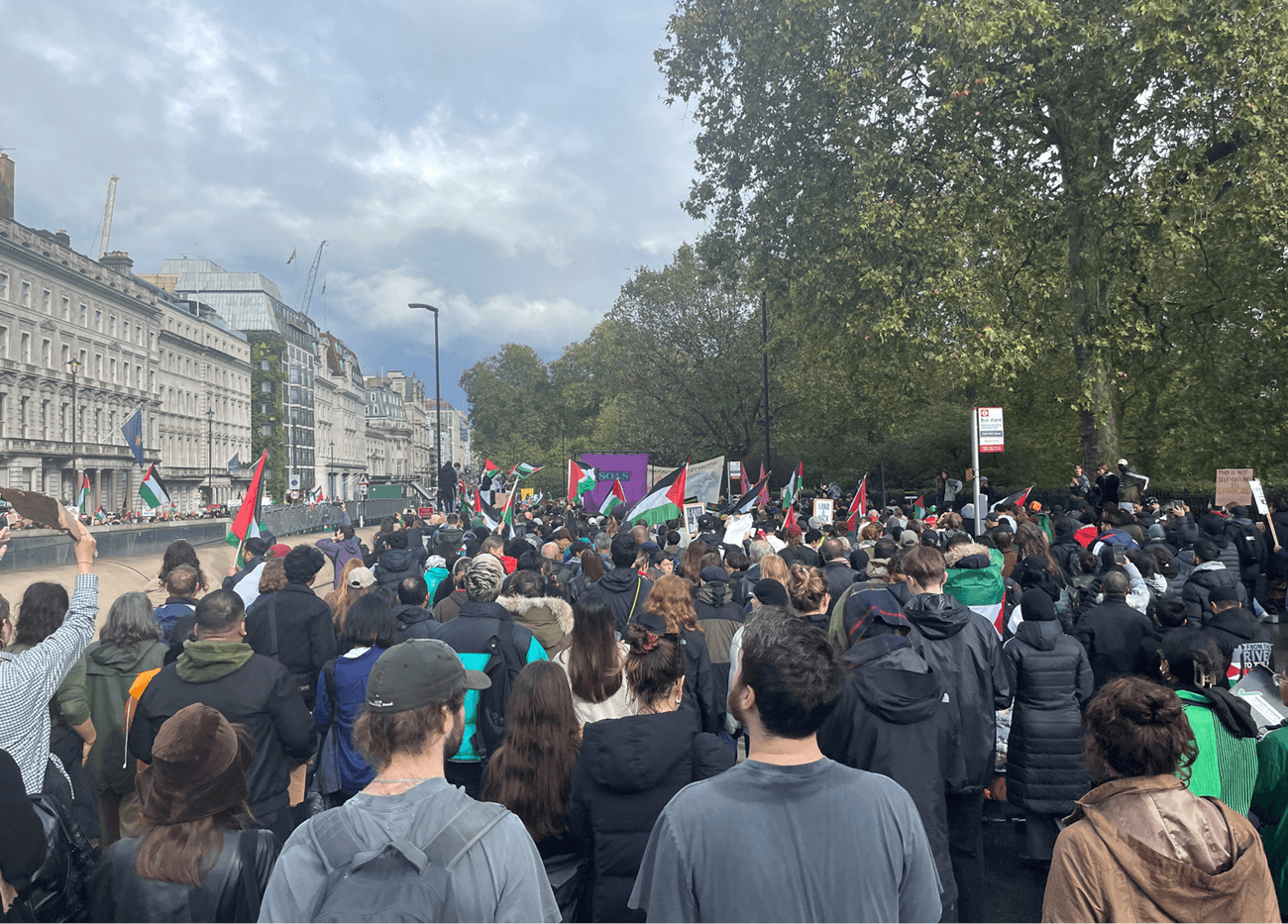
Efforts to quell support for Palestinian liberation simply aren’t working. For Palestinians in Britain, despair isn’t an option. Together with our allies we are more mobilized than ever before.
