By Micaela Sahhar
I once lived very near the little bar on a popular strip in Melbourne’s inner north, which I am now looking for with fellow Palestinian poet Hasib Hourani two nights after New Year’s.
Neither of us has heard of the collective Vibe Union, which wrote to us not a week earlier, seeking out Palestinian voices to platform in light of the appalling and ongoing crisis in Gaza. The Australian Palestinian voice is too often framed in the adversarial terms of Zionism, but this group seems supportive. So like many diasporic Palestinians in Australia endeavoring to support initiatives that foreground Palestinian voices and are willing to learn, we accept.
In deep summer, the vibrant streets of Melbourne (rightly called Naarm, the Aboriginal name for the area) become a ghost town, and I expect to find only a small if committed crowd from the local poetry scene in attendance. So we are entirely unprepared when we arrive at a bar teeming with people. From behind the microphone I look at a sea of faces Hasib and I have never met, draped in keffiyehs, who have all come to hear readings by Palestinian poets. Older than Hasib, I can remember a not-so-distant time when audiences for Palestine were small, comprising only the friends we’d invited. This unfamiliar audience listens intently and cheers uproariously as each of us shares our writing.
The support attracted by this small event is just one demonstration that community interest and engagement have been undiminished in Australia. Within days of Israel’s strikes against Gaza in October 2023, a national collective led by Palestinian creatives published an open letter by Australian artists that registered dismay at the dearth of concern expressed by our government for Palestinian rights and lives, though it had been quick to register solidarity with Israel after October 7. The letter quickly received over eighteen hundred signatures, including those of many high-profile and award-wining writers and artists. It was published in Overland Literary Journal, an outlet with a long-standing history of support for Palestine, something for which they should be commended as the Palestinian community’s staunchest allies in the Australian publishing landscape.
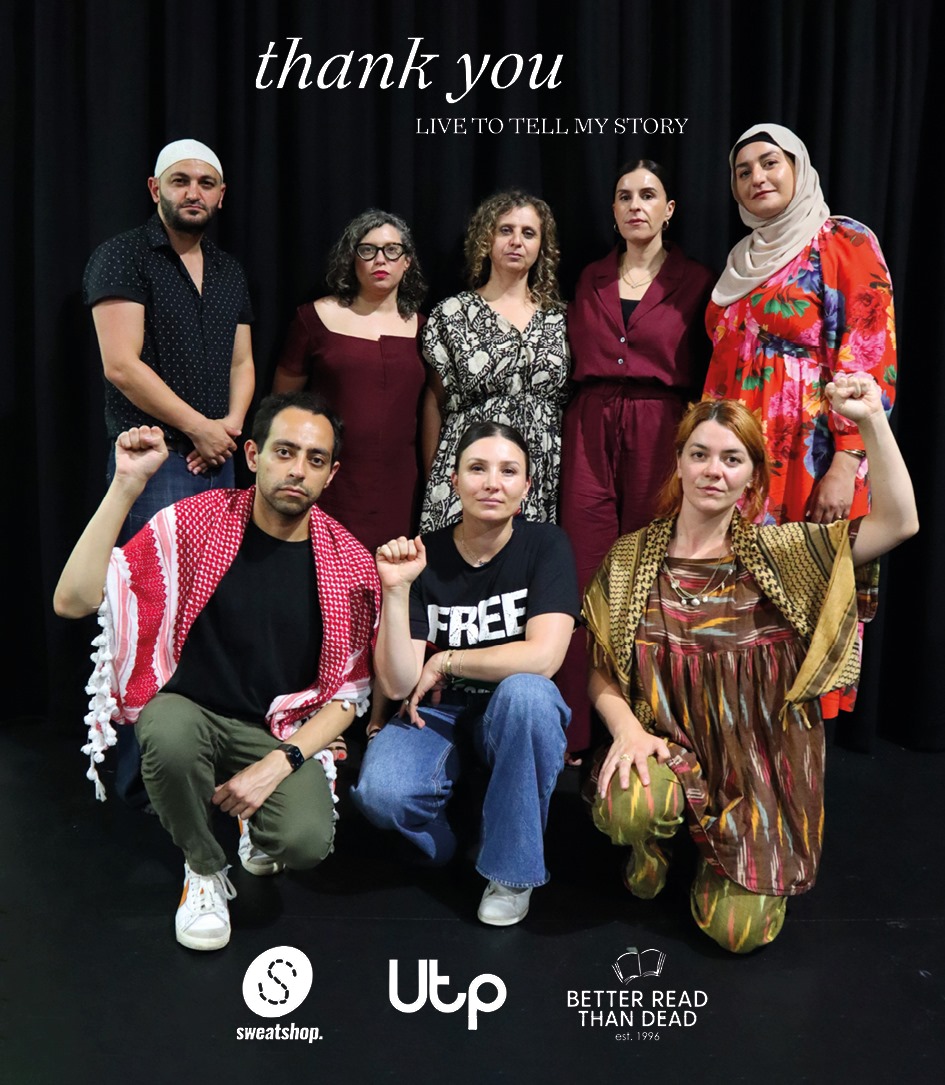
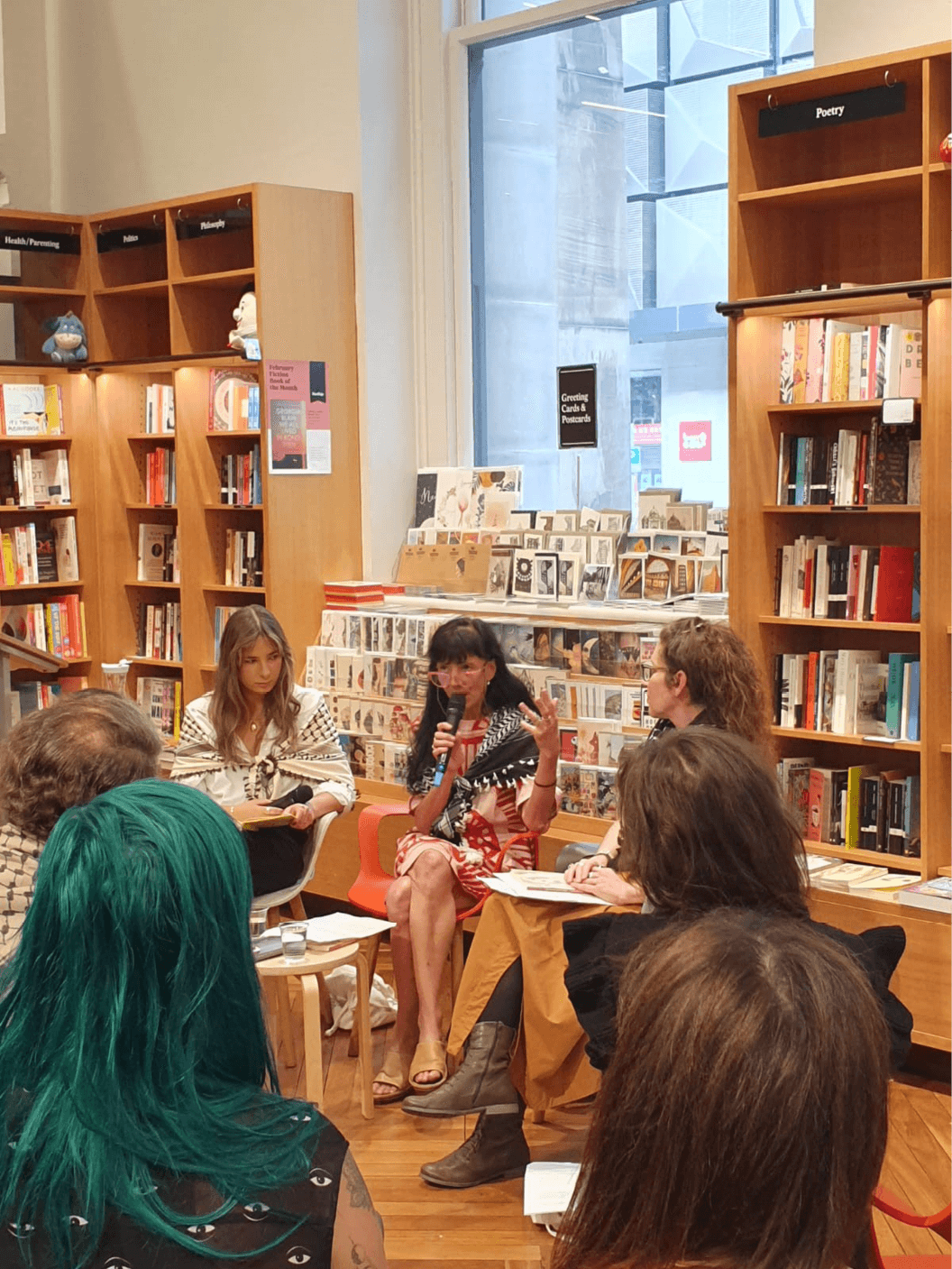
Support from the arts community in Australia has continued apace. Sydney- based Sweatshop, a writing collective for POC and First Nations writers, has held multiple fundraising initiatives since October, including a sold-out event on Gadigal country (Sydney) to pay tribute to murdered Gazan poet and academic Reefat Alareer. Australian Palestinian and Aboriginal poets also participated in the virtual 24-hour International Reading for Freedom of Expression & Solidarity with Palestine, coordinated by leading Palestinian writers Sara M. Salah and Dr. Samah Sabawi. Many in the literary community have platformed Palestinian voices in recent book launches, including Wiradjuri writer and academic Jeanine Leane at the launch of her powerful collection Gawimarra Gathering. At the 2024 Victorian premier’s Literary Awards ceremony, two prizewinners, Aboriginal writers Melissa Lucashenko and Ellen van Neerven, accepted their awards on stage draped in keffiyehs. Directors of Australian writers’ festivals have similarly stood steadfast with Palestinians despite a barrage of Zionist complaints. For the second year running, director of the Adelaide Writer’s Week, Louise Adler, has programmed Palestinian writers despite outrage at her 2023 inclusion of an unprecedented number of Palestinian writers. In Melbourne, Indigenous festival curator Dr. Mykaela Saunders and festival director Michaela McGuire have been unmoved by controversy over their programming of an event in the May 2024 Melbourne Writers Festival that centers Palestinian-Aboriginal solidarity.
For five months, concerned Australians have turned out at weekly rallies in Sydney, Adelaide, Canberra, Melbourne, Brisbane, and Perth, alongside other cities across the country, joining in the struggle for Palestinian justice and liberation. These are organized by diverse place-based committees. Many convoys have been arranged to take the protests directly to the federal government in Canberra, the nation’s capital, and the long-standing Aboriginal Tent Embassy, founded more than fifty years ago on the lawns of Parliament House, has affirmed its solidarity with Gaza. These weekly actions will continue until further notice. While on the steps of the Victorian Parliament, people can join the Sit-Intifada any day of the week, an initiative that has maintained Palestinian presence and increased awareness in Melbourne’s Central Business District since October.
While protest numbers are difficult to determine, longtime Gumbaynggirr activist Professor Gary Foley estimates that as many as 100,000 people have turned out at rallies in Melbourne alone. Foley has supported Palestinian activists on rally stages and in many other forums over the last five months and for fifty years. Anyone who has been to a rally can see the growing public support for Palestine in Australia despite the underreporting of participants in the Australian media. Yet the media’s underreporting of rally attendance is a comparatively minor offence, given the glaring deficits in Australian media coverage on Palestine both recently and historically.
The first public protest against media silence, media ethics, and the failure to report occurred mere weeks after Israel’s assaults began. Palestinian activists focused attention on the Melbourne headquarters of the Australian national public broadcaster, the Australian Broadcasting Corporation (ABC). A flagship ABC current affairs show, the 7.30 Report, had contacted Amin Abbas, chair of the Australian-Palestinian charity organization Olive Kids, to assist them in a story on events unfolding in Gaza. The program had contracted a Palestinian videographer in Gaza, Rushdie Sarraj, to create footage for the piece. Before the story aired, Sarraj was killed in an Israeli air strike. Abbas contacted the 7.30 Report to request that appropriate tribute be paid to their employee when airing the story. He was ignored, the package was never shown, and Sarraj’s killing was noted only in an anemic ABC statement that expressed sorrow over his passing.
A silent vigil to protest the ABC’s failure to inform the public of the circumstances of Sarraj’s death, or to acknowledge his vital work as a journalist in Gaza, was planned at the Melbourne ABC offices. Abbas says the vigil organizers were flooded with media requests and public interest after a tweet went viral, but no adequate statement has ever emerged on the part of the ABC.
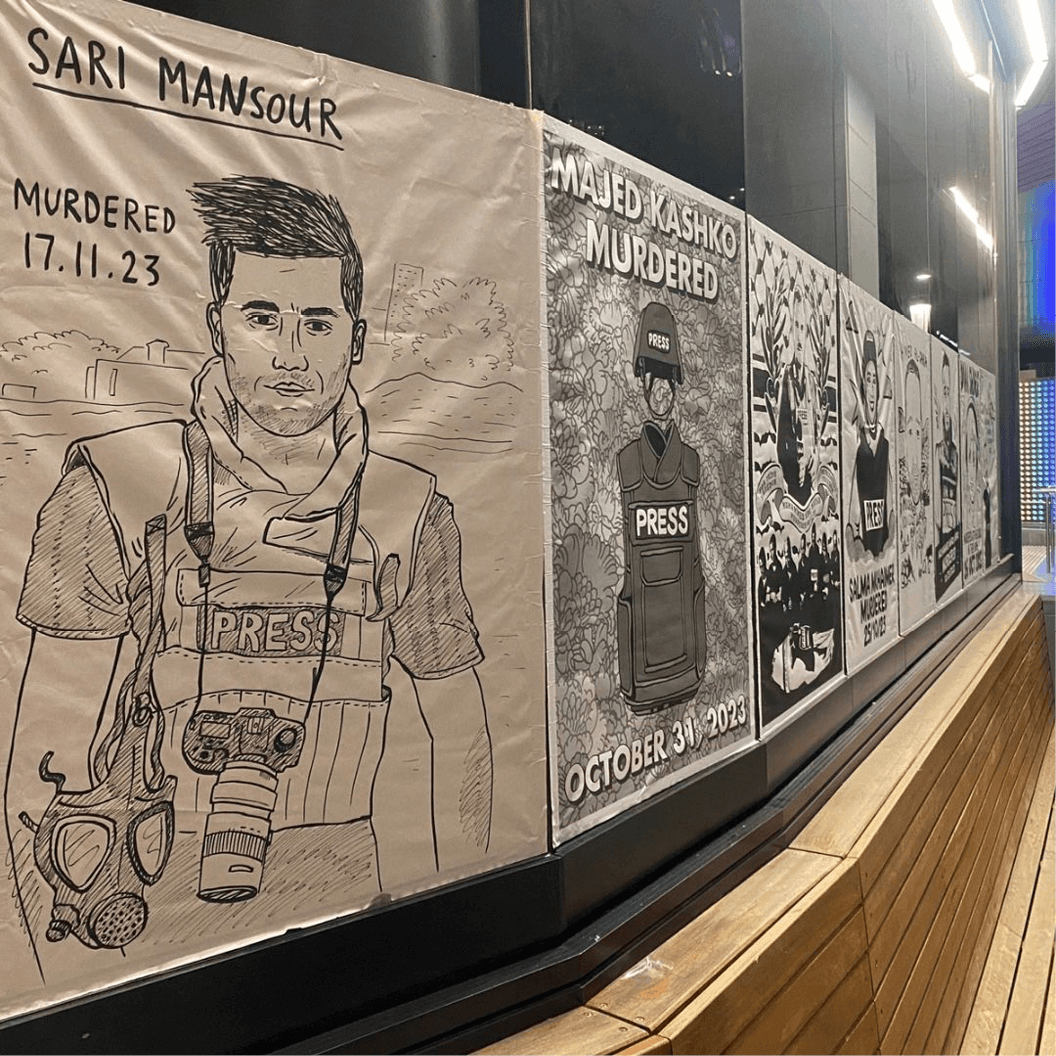
In mid-December, a collective of forty artists, including Palestinian artist Sofia Sabbagh, installed illustrated portraits of forty journalists on the windows of ABC’s Melbourne offices. Sabbagh’s portrait of Rushdie Sarraj drew a clear link to the broadcaster’s failure to adequately recognize the murder of their Palestinian colleagues in Gaza. The illustrations were torn down, which led the collective to describe the ABC’s response as a double erasure and a silencing of media workers, a vast number of them journalists murdered in Gaza.
The Palestinian community in Australia has built significant networks over decades with First Nations people who have endured similar histories of settler-colonial erasure, land theft, dispossession, and violence, which they continue to resist. In 2019, this culminated in a Black-Palestinian solidarity conference convened by Gary Foley, Ali Kazak, and Suzannah Henty. A second solidarity conference was hosted by the Australia Palestine Advocacy Network (APAN), the leading Australian body for Palestinian organizing in Australia, in 2023. One group for Palestinian youth that was supported by APAN in its infancy, Hirak, has been strengthened by such opportunities to meet in person – since its members are drawn from Palestinian diaspora organizers across Australia. In recent months, Hirak has met community demand for information with an online summer school on the history of settler colonialism and resistance in Palestine. Many other ad hoc virtual teach-ins have been organized throughout this time. As Noura Mansour, APAN’s advocacy lead noted to me, relationships of this kind have enabled the Australian Palestinian community to respond quickly to requests for Palestinian speakers while APAN continues to support actions across the country.
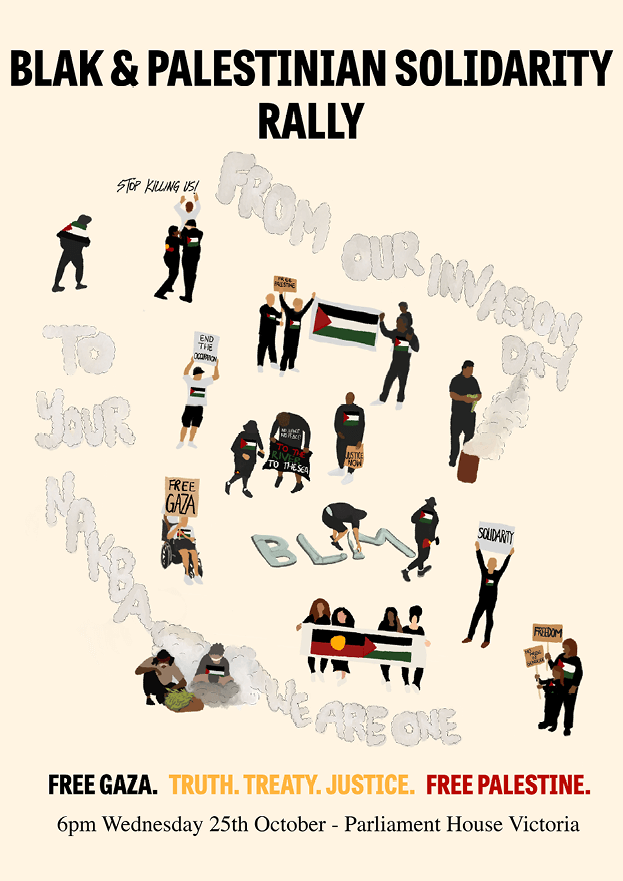
The generosity of the First Nations community to Australian Palestinians during a time of genocide has been abundantly evident notwithstanding the flashpoint for attention and mourning occasioned by the desultory result of the October 2023 referendum in Australia, which sought to enshrine an Aboriginal voice to parliament in the constitution, and failed. In its wake, a nationwide day of action was called. In Melbourne, Warriors of the Aboriginal Resistance (WAR) were quick to extend a platform of unequivocal solidarity to Palestinian speakers, amplifying the atrocities in Gaza as our Palestinian community stands with the Indigenous people of this country, amplifying the community’s call for truth, treaty, and justice. Koori artist Gabi Briggs solidified this generosity in beautiful illustrations for the event which reiterated the connection, stating “From Our Invasion Day to Your Nakba.”
As Darumbal and South Sea Islander scholar Dr. Amy McQuire affirmed shortly after the referendum results emerged that despite this national shame, Aboriginal people must continue to amplify Palestinian voices because the work against colonialism is global. Since October, Briggs has illustrated a digital initiative, Blackfullas for Palestine, which has been endorsed by a diverse cohort of First Nations voices from across the country, and which “aims to uplift Palestinian voices” and document joint actions. The Victorian Aboriginal Legal Service issued a powerful institutional statement reinforcing these strong ties. Similarly, at the large rallies held every January 26 to protest “Australia Day” – the national public holiday rightly called Invasion Day by many members of the First Nations community and their allies – First Nations organizers made space once again for Palestinian speakers, and many among the tens of thousands who rallied were armed with banners that expressed mutual solidarity from each community.
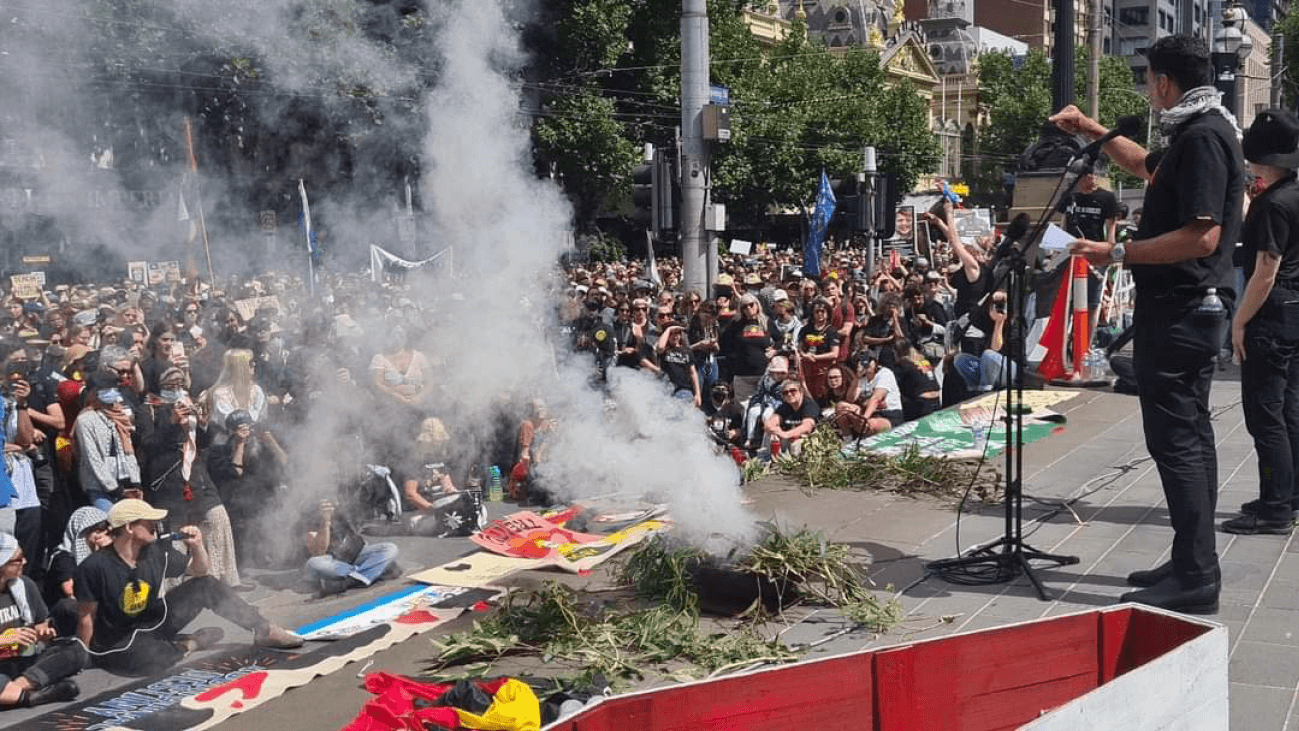
In addition to the sight of Palestinian flags alongside Aboriginal ones at rallies, the Palestinian flag has been raised at a series of town halls across Melbourne following council resolutions to stand in solidarity with Palestine, given the failures of government at the state and federal levels. The first council to fly the Palestinian flag in Australia was that of Canterbury-Bankstown, an area in southwest Sydney with a large Arab population, though such initiatives have not found broader support in the city. However in Melbourne, since November, a host of council motions have been passed, first in Merri-Bek, an area with an historically significant Arab population, followed by others in six more local government areas. These areas represent more than one-fifth of the population of just over 5 million in Melbourne. In these council areas at least, local communities are offering a beautiful message of solidarity with Palestinians that says, “we will fly your flag for you, until you can fly your own in a liberated Palestine.” Meanwhile in Adelaide, activism coordinated by locally based Australian Friends of Palestine Association at the internationally renowned music festival, WOMAdelaide, is underway to protest the inclusion of headliner Ziggy Marley, whose musical output belies his outspoken support for Israel, “even during its current genocidal operation in Gaza.”
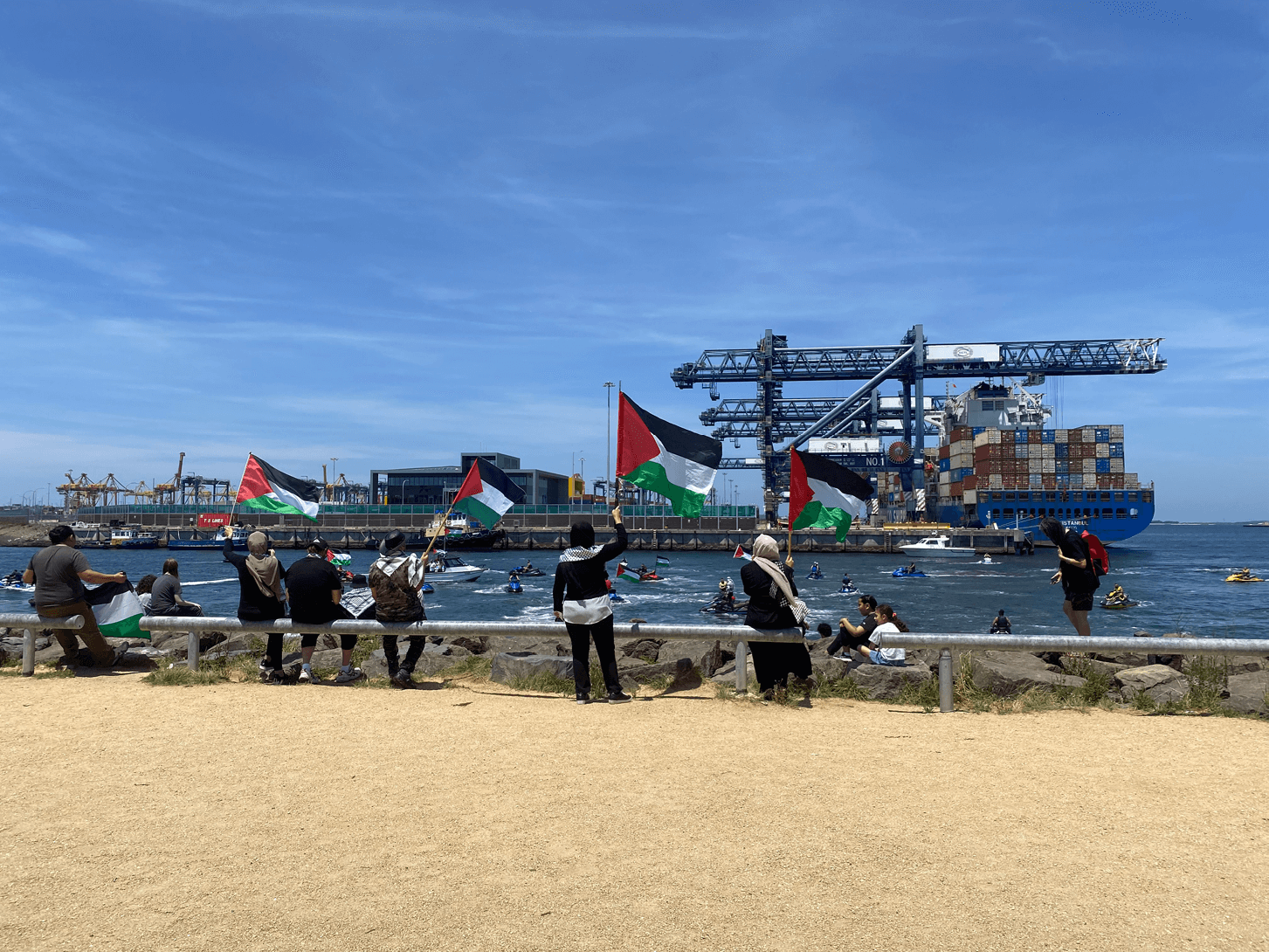
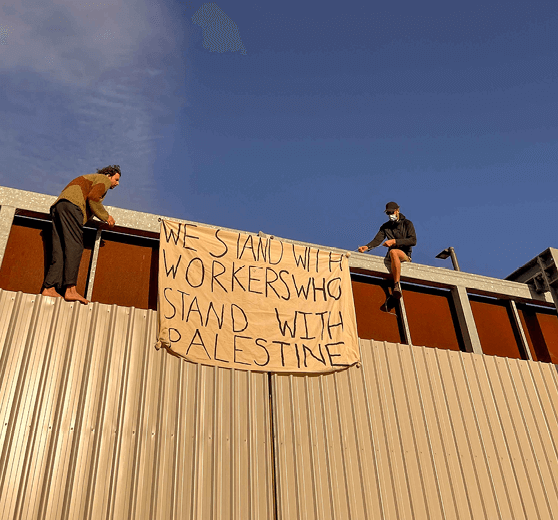
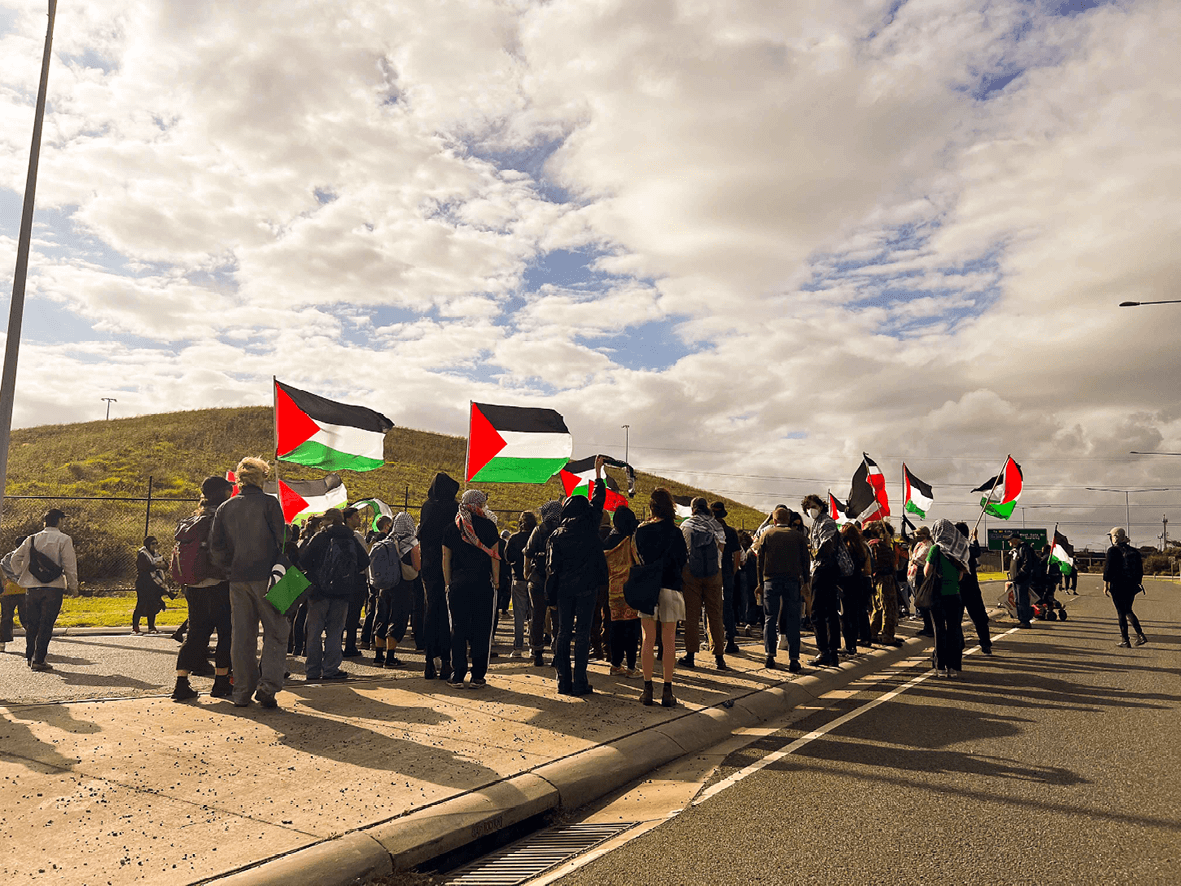
Beyond symbolic action, Palestinian organizers and allies have taken practical steps to disrupt Israeli operations through a successful blockade in January of the Israeli-owned ZIM Ganges container ship at Port Melbourne, Australia’s largest commercial port. Protesters blockaded the docking of the ship over four days and a picket was respected by six consecutive shifts of port workers, before Victorian police violently broke up the scene. Community organizer and scholar, Tasnim Sammak reflecting on the action said: “It’s been inspiring to organize industrial action that furthers the Palestinian struggle. The four-day Zim Ship Community Picket that we held with Unionists for Palestine and Black People’s Union was historic. It shows that we can disrupt the supply chain funding the genocide.” Attention on Zim shipping also resulted in protests at Port Botany in New South Wales in November, where organizers arranged convoys from Sydney to attend. Jet skis took to the water with Palestinian flags, creating what one protester described as “a spectacle seared into my memory forever. It was glorious.”
This account reflects my limited knowledge of actions since October. There is a great deal more happening, too much to cover, and not all of which I am aware of; my apologies to those involved in such action for these oversights. I am in admiration of the ongoing efforts of this fierce and brilliant diaspora community to keep fighting indefatigably for justice – for the people of Gaza and for everyone who stands against state violence, racism, and settler-colonial oppression. And to our Palestinian brothers and sisters across Occupied Palestine, know that we of the Australian Palestinian diaspora will continue to use our voices, and amplify yours, until we are together again in a Liberated Palestine.